TL;DR
Fit&Well published a four-exercise weights routine from Pilates instructor Victoria Repa, combining familiar strength moves with an emphasis on controlled movement, breathing and alignment. The report recommends beginning with one round, using a weight that leaves two or three controlled repetitions in reserve, and resting 45 to 60 seconds between exercises.
Fit&Well has published a four-exercise weights workout from Pilates instructor Victoria Repa, combining squats, lunges, a bridge and side-lying leg lifts with an emphasis on breathing, posture and controlled movement. The routine is presented as an approachable option for people who want to add resistance to Pilates-inspired exercise; the report does not provide independent evidence that this specific workout improves alignment or produces particular health outcomes.

Get wellness gear delivered free with Prime
- Fast, free delivery on millions of items
- Prime Video, Amazon Music and more included
- Member-only deals all year
Repa, identified by Fit&Well as the founder of workout app BetterMe, says adding weights can be a next step for people who already enjoy Pilates and want more challenge. She describes the movements as remaining low-impact, while added resistance asks muscles to work harder. The outlet frames the routine around applying Pilates principles to movements commonly found in resistance training.
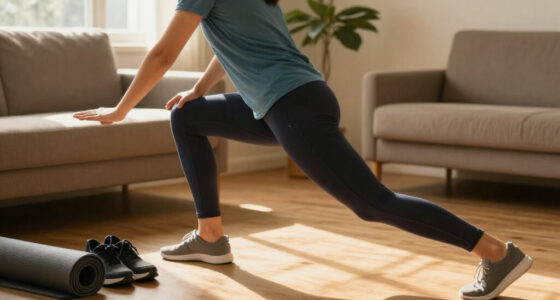
The four exercises are a weighted squat for 8 to 12 repetitions, a standing lunge with light dumbbells for 6 to 8 repetitions on each side, a weighted Pilates bridge for 10 to 12 repetitions, and a side-lying leg lift with an ankle weight for 8 to 10 repetitions on each side. Fit&Well advises resting 45 to 60 seconds between moves.
For the squat and lunge, the instructions emphasize keeping the feet grounded or aligned and moving with control. In the bridge, a dumbbell rests across the hips with a folded towel underneath for cushioning; participants hold it securely as they raise and lower their hips. For the side-lying lift, the report calls for a light ankle weight, steady hips and toes facing forward. Repa recommends choosing resistance that would still allow two or three more controlled repetitions. Beginners are advised to start with one round and try two once more confident.
Adding Resistance to Pilates Moves
The workout offers readers a specific way to combine resistance exercises with Pilates-style control, rather than treating the two as mutually exclusive. Its guidance on modest starting volume and manageable resistance may help people understand how the routine is intended to be scaled, although individual ability and technique will vary.
Fit&Well says weight training can support muscle development and bone health, while Pilates encourages posture, mobility and alignment. Those are broad descriptions of the exercise approaches, not measured results from this four-move routine. The source provides no trial, outcome data or comparison showing that this workout itself changes alignment, strength or bone health.
Products Worth Considering

BowFlex Results Series 552 SelectTech Adjustable Dumbbell

BowFlex Results Series SelectTech Adjustable Dumbbells (Pair)

Withings Sleep Under-Mattress Sleep Tracking Pad
As an affiliate, we earn on qualifying purchases.
From Mat Work to Weights
Fit&Well notes that the original form of Pilates is commonly described as centering on 34 mat movements, while contemporary classes and routines may incorporate weights and additional exercises. Repa’s routine follows that broader approach: it uses conventional strength movements but asks participants to focus on posture, breathing and controlled execution.
The report presents the workout as beginner-oriented and recommends starting with one round, rather than prescribing a long session or heavy load. It does not say that the four exercises represent a complete Pilates program or replace instruction in the method.
“If you enjoy Pilates and feel ready for a little more of a challenge, adding weights can be an approachable next step.”
— Victoria Repa, Pilates instructor and founder of BetterMe, quoted by Fit&Well
Evidence and Individual Suitability
The Fit&Well report does not give a publication date, cite research testing this exact routine, or report measured results from people who completed it. It is therefore unclear how much the workout may affect strength, posture or alignment, and outcomes will depend on factors such as starting fitness, technique and consistency.
The report also does not provide modifications for injuries, balance limitations or other health conditions. Readers should use loads they can handle with control, stop if an exercise causes pain, and seek qualified professional guidance if they have a pre-existing condition or are unsure whether the routine is suitable. A light ankle weight and a secure, cushioned dumbbell setup are specified for the relevant moves.
How to Start the Routine
The next step for readers following the published plan is to complete one round, using the listed repetition ranges and resting 45 to 60 seconds between exercises. Repa’s advice is to select a resistance that leaves two or three controlled repetitions in reserve; the report suggests progressing to two rounds once the person feels more confident.
Fit&Well does not announce a follow-up study, schedule or further development. Any decision to increase the load or volume should depend on maintaining steady technique and comfort, rather than treating the suggested progression as a requirement.
Key Questions
What exercises are in the workout?
The four moves are weighted squats, standing lunges with light dumbbells, weighted Pilates bridges and side-lying leg lifts with an ankle weight.
How many rounds should beginners do?
Fit&Well recommends beginning with one round. It says people can try two rounds once they feel more confident with the routine.
How much rest does the plan recommend?
The listed guidance is 45 to 60 seconds between each move. The report gives repetition ranges for every exercise, including separate counts for each side where applicable.
How heavy should the weights be?
Repa advises choosing resistance that would still allow two or three more controlled repetitions. The source does not prescribe a specific weight, so the appropriate load will vary by person and exercise.
Has this specific workout been shown to improve alignment?
The report describes alignment and control as principles of the routine, but it provides no study or measured results showing that this particular four-exercise plan improves alignment.
Source: fitandwell.com