
TL;DR
A Fit&Well report says heels lifting during a squat can reflect limited ankle movement, but may also be related to hip mobility or strength. It recommends suspension-trainer squats, slow sit-to-stands and supported deep-squat holds as gradual ways to practice the movement; the exercises are not a diagnosis or a guaranteed fix.
A Fit&Well report describes three modified squat exercises for people whose heels lift during a squat, while cautioning that the movement can have more than one possible cause. Limited ankle movement is a common explanation, the report says, but hip mobility or strength may also play a part; it does not offer an individual diagnosis or establish that the exercises will work for everyone.

Get wellness gear delivered free with Prime
- Fast, free delivery on millions of items
- Prime Video, Amazon Music and more included
- Member-only deals all year
The report says restricted ankle dorsiflexion—the shin’s ability to move forward over the foot—can make it harder to squat deeply with the heels down. Calf or ankle tightness may contribute. It also says that, for some people, particularly those with weak or tight hips, heel lift could be a protective response. The article does not provide an assessment method to distinguish these causes, and its explanation should be treated as general exercise guidance.
Its first option is a suspension-trainer squat. Holding the straps provides support while the person bends the knees and lowers into a squat, then pauses briefly and stands by pushing through the heels. The report suggests gradually relying less on the straps as control and strength improve.
The second exercise is a slow sit-to-stand from a sturdy chair, performed without pushing off with the hands. The third is a supported deep-squat hold with the heels raised on thin plates or wedges. The report advises lowering the support gradually over time. It suggests practicing the variations before progressing to three sets of one minute each, with a minute of rest between sets, once technique feels confident.
Building Control Before Depth
The advice matters because a visible movement issue does not necessarily point to a single tight muscle or joint. If someone assumes the problem is only in the calves, stretching them may not address other factors that affect how the hips, knees and ankles move together. The report’s alternatives let readers scale the squat rather than force a deeper position immediately.
That is practical guidance, not a clinical finding: the source provides no study results, measurements or evidence that the three exercises correct the issue in every case. People should stop if an exercise causes pain, and seek advice from a qualified health or fitness professional if they have an injury, persistent discomfort or a condition affecting movement. A heel lift by itself does not establish a diagnosis.
Products Worth Considering
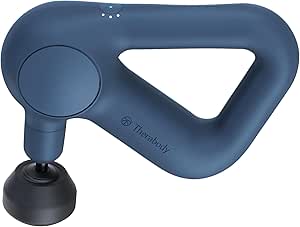
Theragun Relief Massage Gun

Oura Ring 5 Smart Ring, Silver, Size 8

Garmin Forerunner 570 GPS Running Smartwatch, 42 mm, Aluminum Bezel, Bone/Mango
As an affiliate, we earn on qualifying purchases.
Why Squat Heels May Rise
The report presents ankle dorsiflexion as one possible factor. During a squat, the shins move forward as the knees bend; if that movement is restricted, some people may find it difficult to descend while keeping the heels grounded. The report also raises hip mobility and strength as possible considerations, especially when the body appears to use heel lift as a protective strategy.
Its proposed sequence moves from added support to greater independent control: use straps to explore the squat, practice a controlled chair stand, then hold a deeper position with the heels supported. This is a progression described by Fit&Well, not a formal rehabilitation program. The source recommends practicing over several weeks but does not specify a tested schedule or provide outcome data.
““The ankles and calves often get the blame when someone can’t sink into a deep squat without their heels lifting.””
— Fit&Well report
The Cause Varies by Person
The report does not establish why a particular person’s heels lift, how often each possible cause occurs, or whether one of the three exercises is more effective than the others. It supplies no clinical tests, research citations or comparison data in the provided material. It is also unclear how the suggested routine should be adapted for people with pain, prior injuries or limited balance.
The exercises are general suggestions, not a substitute for personalized assessment. A reader who cannot squat comfortably, or whose movement is accompanied by pain or worsening symptoms, should get guidance from a qualified professional rather than push through the position.
Progress Gradually and Reassess
The approach outlined by Fit&Well is to practice the easier versions first, improve control over time and reduce support gradually. For the deep-squat hold, that means lowering the heel lift as comfortable; for the suspension squat, it means leaning less on the straps. The report offers no fixed timeline beyond saying the work may be repeated over a few weeks.
Readers should judge progress by comfortable, controlled movement rather than by reaching a particular depth or completing a set number of repetitions. If symptoms persist or the exercise causes pain, the next step is an assessment from a qualified health or fitness professional. No further findings or follow-up evidence are included in the source material.
Key Questions
Does heel lift always mean my ankles are tight?
No. The Fit&Well report names limited ankle dorsiflexion as one possible factor, but also discusses hip mobility or strength. Heel lift alone cannot identify the cause.
Which three exercises does the report suggest?
It describes a suspension-trainer squat, a slow sit-to-stand from a sturdy chair, and a deep-squat hold with the heels supported on plates or wedges.
Should I force my heels to the floor?
The report recommends supported variations and gradual progress, rather than forcing depth. Stop if you feel pain, and seek professional guidance for persistent discomfort or a movement-related condition.
How often should I do the exercises?
The source advises practicing the movements first and, once technique feels confident, suggests three one-minute sets of each, resting one minute between sets. It does not give a research-based schedule or specify that this routine suits everyone.
Source: fitandwell.com