
Red light therapy stimulates your hair follicles at a cellular level by enhancing blood flow, increasing cellular activity, and encouraging regeneration. It activates cells within your follicles, boosting production of energy (ATP) that supports repair and growth. Regular use can help dormant follicles enter the growth phase, resulting in thicker, healthier hair. This safe treatment also reduces scalp inflammation and creates a better environment for hair growth. Keep exploring to discover how this therapy can boost your hair health further.
Key Takeaways
- Red light therapy stimulates scalp cells, enhancing cellular activity crucial for healthy hair follicle function.
- It improves blood circulation, delivering essential nutrients and oxygen to support follicle vitality.
- The therapy activates dormant hair follicles, encouraging their transition into the growth phase.
- Regular treatment reduces scalp inflammation, creating a healthier environment for hair regeneration.
- Overall, red light therapy promotes stronger, thicker hair by supporting follicle regeneration and resilience.
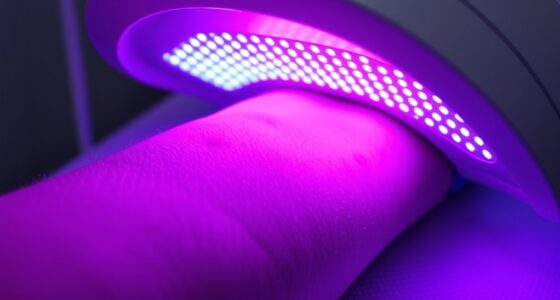
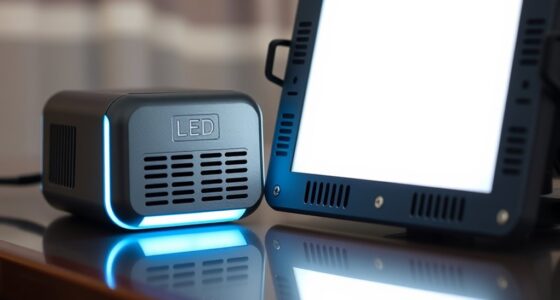
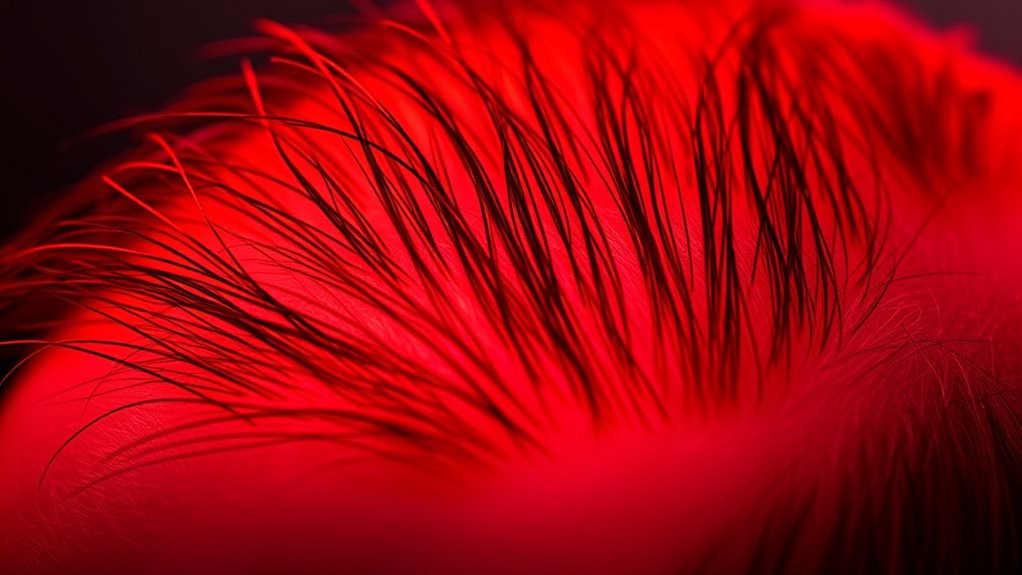
Red light therapy has gained popularity as a non-invasive treatment to improve hair follicle health and combat hair loss. When you use red light therapy devices, you stimulate your scalp in a way that encourages better blood flow and cellular activity. This process, known as scalp stimulation, plays a vital role in revitalizing hair follicles. By exposing your scalp to specific wavelengths of red light, you activate the cells within your hair follicles, promoting their regeneration and overall health. This stimulation helps to counteract the effects of aging and damage that can slow down hair growth over time.
The key benefit of red light therapy is its ability to trigger follicle regeneration. When your hair follicles are healthy and active, they produce stronger, thicker hair strands. The therapy works by increasing the production of adenosine triphosphate (ATP), the energy source for cells, which enhances cellular repair and growth. As your scalp receives consistent treatment, the hair follicles become more resilient, reducing hair thinning and shedding. Over time, you may notice an improvement in hair density and a healthier scalp environment. This process is especially beneficial for individuals experiencing early signs of hair loss or thinning, as it helps to restore the natural cycle of hair growth.
You might find that regular red light therapy sessions not only stimulate the scalp but also support the natural regeneration process of your hair follicles. The therapy encourages dormant follicles to re-enter the growth phase, making it easier for your hair to regrow thicker and fuller. By maintaining consistent treatment, you amplify this regenerative effect, ensuring your scalp remains healthy and your hair continues to grow effectively. Additionally, red light therapy can reduce inflammation and improve circulation, which further enhances the environment for follicle regeneration. This creates a positive feedback loop where healthier follicles lead to better hair growth, and improved growth encourages even more follicle activity. Cellular activity is a fundamental aspect of healthy hair growth and overall follicle vitality.
Frequently Asked Questions
How Quickly Can I Expect Visible Results From Red Light Therapy?
You can typically expect visible improvements within 8 to 16 weeks of consistent red light therapy. Treatment duration varies based on individual hair loss severity and session frequency. As you continue, you’ll notice increased hair density and healthier follicles. Staying committed to your routine is key, and most users see gradual results over time. Keep track of your progress, and don’t get discouraged if changes take a little longer.
Are There Any Side Effects or Risks Associated With Red Light Therapy?
Red light therapy is generally safe, but you should watch out for potential skin irritation, especially if you have sensitive skin. Protect your eyes, as there are some eye safety concerns, so wearing goggles during treatment is recommended. While side effects are rare, it’s best to follow usage instructions carefully and consult a healthcare provider if you experience any discomfort or unusual reactions.
Can Red Light Therapy Be Combined With Other Hair Treatments?
Think of red light therapy as a symphony conductor, harmonizing with other treatments for ideal results. You can absolutely combine therapies, creating a treatment synergy that boosts hair health. Many find that combining therapies like minoxidil or PRP with red light therapy enhances overall effectiveness. Just make sure you consult your healthcare provider to tailor a safe, effective plan, maximizing benefits while minimizing risks.
Is Red Light Therapy Effective for All Types of Hair Loss?
Red light therapy can be effective for various types of hair loss, but its success depends on the underlying causes. If your hair loss results from androgenetic alopecia or other treatable conditions, this therapy may stimulate follicles and improve growth. However, for hair loss caused by scarring or medical issues, treatment options might differ. Consult a specialist to determine if red light therapy suits your specific hair loss causes and explore effective treatment options.
How Often Should I Undergo Red Light Therapy Sessions for Optimal Results?
You should aim for red light therapy sessions 3 times a week for about 15-20 minutes each, as consistent treatment boosts hair follicle health. Imagine your scalp gradually becoming healthier and thicker with regular sessions. Sticking to this schedule maximizes benefits, so keep up with the recommended frequency and treatment duration. Over time, you’ll notice improvements as your hair follicles respond positively to this routine.
Conclusion
If you’re worried that red light therapy might not make a difference, give it a fair try. Many people see noticeable improvements when they stay consistent. Remember, hair health isn’t just about quick fixes—it’s about caring for your follicles over time. With patience and regular use, you could support your hair’s resilience naturally. Don’t dismiss the potential—sometimes, small, steady steps make the biggest impact on your confidence and well-being.