To safeguard your eyes during LED treatments, always wear specialized goggles with filters designed for the device’s light wavelength. Make sure they fit snugly and block out harmful rays like UV or blue light. Keep a safe distance from the light source, follow the manufacturer’s instructions carefully, and avoid looking directly into the LEDs. Staying vigilant about these safety steps ensures your eyes stay protected, and you’ll discover more helpful tips as you explore further.
Key Takeaways
- Always wear properly fitted, certified protective goggles designed for LED therapy during treatments.
- Confirm if the device emits UV or blue light, and choose treatments with appropriate filters or protections.
- Avoid looking directly into the LED light source and maintain a safe distance during sessions.
- Follow manufacturer instructions carefully and limit treatment durations to reduce exposure risks.
- Consult an eye care professional if you have existing eye conditions or wear contact lenses before starting LED treatments.
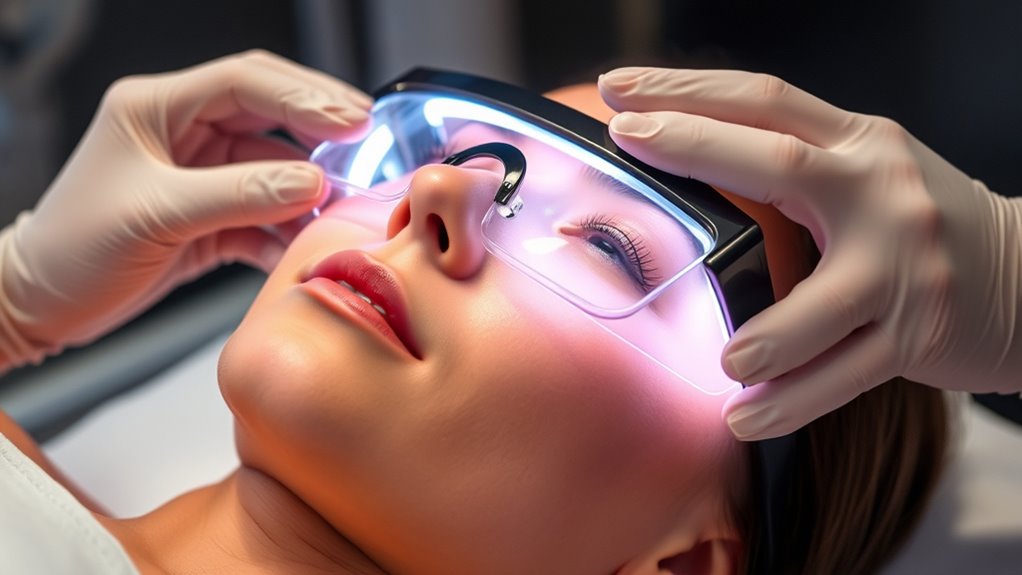
LED treatments can effectively improve skin health, but protecting your eyes during the process is essential. While LED light therapy is generally safe, the intense light exposure can pose risks if your eyes aren’t adequately protected. The primary concern is UV protection, even though most LED devices emit specific wavelengths that are less harmful than UV rays from the sun. However, some LED devices can produce UV or blue light that may cause eye strain, discomfort, or long-term damage if not properly managed. That’s why understanding eye safety and implementing appropriate protective measures is vital before starting any LED treatment.
Protect your eyes during LED treatments with proper safety measures to prevent strain and long-term damage.
When preparing for an LED session, always check if the device has built-in safety features or recommended protective accessories. Wearing specialized goggles designed for LED therapy helps shield your eyes from direct light exposure. These goggles are usually made with filters that block harmful wavelengths, reducing the risk of eye strain and potential damage. It’s important to ensure that the goggles fit snugly and cover your eyes completely, preventing any light leaks that could reach your eyes and compromise their safety. Never underestimate the importance of eye safety; even brief exposure to intense light during treatments can cause discomfort or harm if your eyes aren’t properly protected.
Another key step for protecting your eyes involves understanding UV protection. Although LED devices often emit visible light rather than UV rays, some may produce small amounts of ultraviolet light, which can be damaging over time. To be safe, opt for LED treatments that specify UV protection or ensure your goggles offer UV filtering. Avoid looking directly into the LED light source during treatment, and follow the manufacturer’s instructions carefully. Limiting your exposure time and maintaining a safe distance from the device also helps minimize potential risks to your eyes.
Additionally, it’s important to stay informed about AI safety considerations and updates, as technological advancements can influence the safety features of LED devices and related protective measures. If you’re prone to eye conditions or wear contact lenses, consult with a healthcare professional before beginning LED therapy. They can recommend specific protective measures tailored to your needs, such as additional eye shields or alternative treatment settings. Keep in mind that eye safety isn’t just about protecting your vision during treatment; it’s about safeguarding your overall eye health in the long term. Proper precautions, including UV protection and suitable eye safety gear, make sure you enjoy the benefits of LED therapy without risking unnecessary harm. By taking these steps seriously, you can confidently incorporate LED treatments into your skincare routine while keeping your eyes protected.
Frequently Asked Questions
Are There Any Long-Term Risks Associated With LED Eye Exposure?
There are minimal long-term risks associated with LED eye exposure when proper eye safety measures are followed. Research shows that LED light, when used correctly, doesn’t cause lasting damage to your eyes. However, prolonged or intense exposure without protection could potentially lead to strain or discomfort. To minimize these risks, always wear protective eyewear and follow recommended guidelines during treatments, ensuring your eye safety and reducing any long-term concerns.
Can Children Safely Undergo LED Treatments Without Eye Protection?
Child safety is paramount, so children should always wear eye protection during LED treatments. Their eyes are more sensitive, and exposure to LED light without protection can cause potential harm. Never allow a child to undergo LED treatments without proper eye shields, as this minimizes risks and guarantees safety. Always follow professional guidelines and consult with a healthcare provider to confirm that LED therapy is suitable for children and that eye protection is properly used.
How Often Should I Replace My Protective Eye Gear?
Have you ever wondered how often you should replace your eye protection? Typically, you should replace your protective eye gear every six to twelve months, depending on use and wear. This guarantees ideal eye protection during LED treatments. Regularly inspecting your gear for cracks or damage is vital—if you notice any, replace it immediately. Maintaining proper replacement frequency keeps your eyes safe and assures the gear’s effectiveness during every session.
Do Certain Eye Conditions Increase Risk During LED Treatments?
Pre-existing conditions and eye sensitivity can increase your risk during LED treatments. If you have conditions like glaucoma, retinal issues, or are particularly sensitive to light, you should consult your eye doctor before proceeding. These conditions may make your eyes more vulnerable to LED exposure, so it’s crucial to get personalized advice. Always inform your practitioner of any eye sensitivity or medical history to ensure safe treatment and proper eye protection.
What Should I Do if I Experience Discomfort or Pain During Treatment?
If you experience discomfort or pain during LED treatments, stop the session immediately. Use discomfort management techniques like closing your eyes or shielding them with protective goggles. Communicate with your technician about the pain so they can adjust the treatment or stop it if necessary. Prioritizing pain prevention guarantees your safety and comfort, and always follow recommended guidelines for eye protection to prevent any adverse effects.
Conclusion
Remember, your eyes are the delicate windows to your world, and safeguarding them during LED treatments is like shielding a priceless gem. Wear protective goggles as a sturdy shield against the bright, unyielding light, and stay vigilant to keep your vision clear and vibrant. By taking these simple steps, you’re acting as a guardian, ensuring your eyes remain the eye-catching masterpieces they’re meant to be—bright, beautiful, and protected from harm’s shadow.