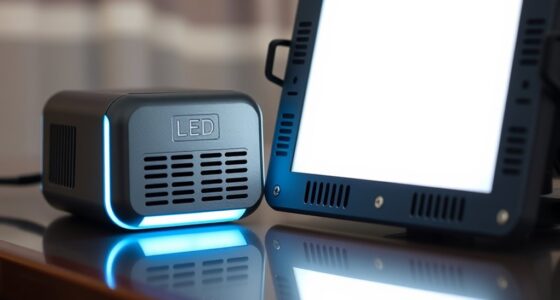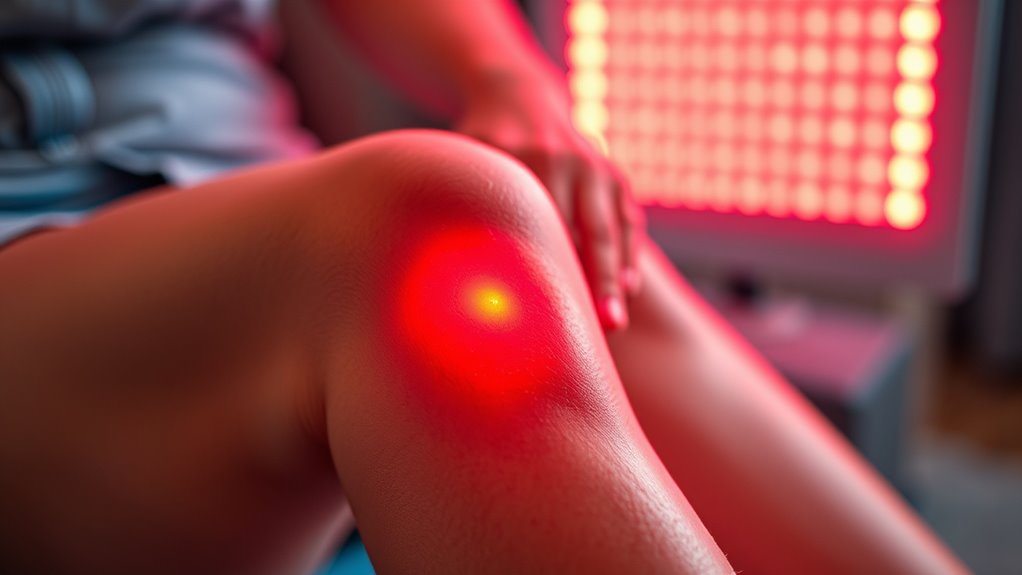

Red light therapy can help reduce joint pain by stimulating cellular activity and decreasing inflammation, offering a safe, non-invasive alternative to medications. Many users experience minimal side effects, like mild warmth or redness, making it suitable for ongoing use. While it shows promise, results vary depending on individual factors and treatments. To get the most out of this therapy, learn more about proper use and how it can fit into your overall pain management plan.
Key Takeaways
- Red light therapy stimulates cellular activity to reduce inflammation and promote tissue repair in joints.
- It is a safe, non-invasive treatment with minimal side effects like warmth or mild skin redness.
- Effectiveness varies; it works best when combined with other therapies and consistent use.
- Not a guaranteed cure; results depend on individual health, severity, and treatment regularity.
- Always consult a healthcare provider before starting, especially if on medications or with existing health conditions.

If you’re dealing with joint pain, you might find relief through red light therapy, a non-invasive treatment gaining popularity for its potential to reduce inflammation and promote healing. Many people explore alternative therapies to manage joint discomfort, especially when traditional medications cause unwanted side effects or when they seek more natural options. Red light therapy fits into this category, offering a treatment that doesn’t involve drugs or invasive procedures. Instead, it uses specific wavelengths of light to penetrate the skin, stimulating cellular activity and encouraging tissue repair. This approach can be particularly appealing if you’re concerned about side effects common with medications, such as gastrointestinal issues, fatigue, or dependency.
Unlike some conventional treatments, red light therapy generally has a low risk of side effects. Most users report minimal or no adverse reactions, making it an attractive option for those wary of drug interactions or allergic responses. You might experience a slight warmth or tingling during a session, but serious side effects are rare. Because it’s non-invasive, you won’t have to worry about infections, scars, or lengthy recovery times associated with surgery or injections. This safety profile encourages many to incorporate red light therapy into their broader pain management routines, often alongside other alternative therapies like acupuncture, physical therapy, or supplements.
Red light therapy is a safe, non-invasive option with minimal side effects for joint pain relief.
However, it’s important to recognize that red light therapy isn’t a guaranteed cure. While many individuals experience significant relief, results can vary based on factors like the severity of your joint issues, consistency of treatment, and overall health. You should also consider potential side effects, even if they’re uncommon. For example, some users might encounter mild skin irritation or temporary redness. If you have sensitive skin or skin conditions, it’s wise to consult with a healthcare provider before starting sessions. This helps ensure that red light therapy complements your existing treatments and doesn’t interfere with any ongoing medical plans.
Moreover, because alternative therapies like red light therapy are still being studied, scientific evidence supporting their long-term effectiveness is evolving. Always approach these treatments with realistic expectations and consider them as part of a thorough management plan. Combining red light therapy with other proven methods can enhance your overall results and reduce reliance on medications with undesirable side effects. Before beginning any new therapy, it’s best to discuss it with your healthcare provider, especially if you’re taking medications or have underlying health conditions. This way, you can enjoy the potential benefits of red light therapy with peace of mind, knowing it aligns safely with your health goals.
Frequently Asked Questions
How Quickly Can I Expect Pain Relief After Starting Red Light Therapy?
You can typically expect relief onset within a few sessions, often after 1 to 2 weeks of consistent red light therapy. Timing expectations vary depending on your condition’s severity and individual response, but many people notice reduced pain and improved mobility sooner than you might think. Keep using the therapy regularly, and you’ll likely experience steady progress toward joint pain relief in the coming weeks.
Are There Any Long-Term Risks Associated With Red Light Therapy?
You might wonder about long-term safety and potential side effects of red light therapy. Generally, it’s considered safe when used properly, with minimal risks. However, some people could experience temporary redness, irritation, or eye strain. Long-term risks are rare, but it’s wise to follow recommended guidelines and consult your healthcare provider if you notice any adverse effects. Staying informed guarantees safe, effective use over time.
Can Red Light Therapy Be Combined With Other Joint Pain Treatments?
Yes, you can combine red light therapy with other joint pain treatments. Many find that integrating red light therapy as a complementary therapy enhances overall relief. It’s important to discuss treatment integration with your healthcare provider to guarantee safety and effectiveness. Combining therapies like physical therapy, medications, or acupuncture alongside red light can offer a more thorough approach, potentially accelerating recovery and reducing pain more effectively.
Is Red Light Therapy Effective for All Types of Joint Pain?
Red light therapy can be effective for many types of joint pain, especially when joint inflammation and cartilage degeneration are involved. You might notice relief from symptoms like stiffness and soreness, but it doesn’t work equally for everyone or all conditions. While it’s beneficial for some, others with severe damage may need additional treatments. Always consult a healthcare professional to determine if red light therapy suits your specific joint issues.
What Is the Recommended Duration and Frequency of Treatment Sessions?
You should aim for session durations of about 10 to 20 minutes, depending on your device and pain level. Typically, treatment frequency is 3 to 5 times a week initially, then tapering off as your symptoms improve. Consistency is key, so stick to a regular schedule. Always follow your healthcare provider’s advice and the device instructions to guarantee safe and effective results.
Conclusion
Red light therapy offers a promising, drug-free way to ease joint pain and improve mobility. You might be surprised to learn that over 70% of users report significant relief after just a few sessions. It’s an easy addition to your routine that could make a real difference. Give it a try—you might find yourself moving more comfortably and enjoying life a little more each day. Why not see if red light therapy can work for you?