
RF treatments can be safe for darker skin tones when you choose the right device and follow proper protocols. It’s important to work with experienced professionals who select technology designed to minimize heat buildup in melanin-rich skin. Using appropriate energy levels and following pre- and post-treatment care reduces risks of pigmentation changes or scarring. If you keep these factors in mind, RF can offer effective results safely—more details will help you make informed choices.
Key Takeaways
- Proper device selection with precise targeting minimizes heat buildup and reduces pigmentation risks in darker skin.
- Using lower energy settings and newer RF technologies enhances safety for pigmented skin tones.
- Pre- and post-treatment sun protection and skincare help prevent pigmentation changes and complications.
- Consulting qualified professionals ensures personalized assessment and safe RF treatment planning for darker skin.
- Awareness of potential risks and adherence to safety protocols are essential to avoid hyperpigmentation or scars.
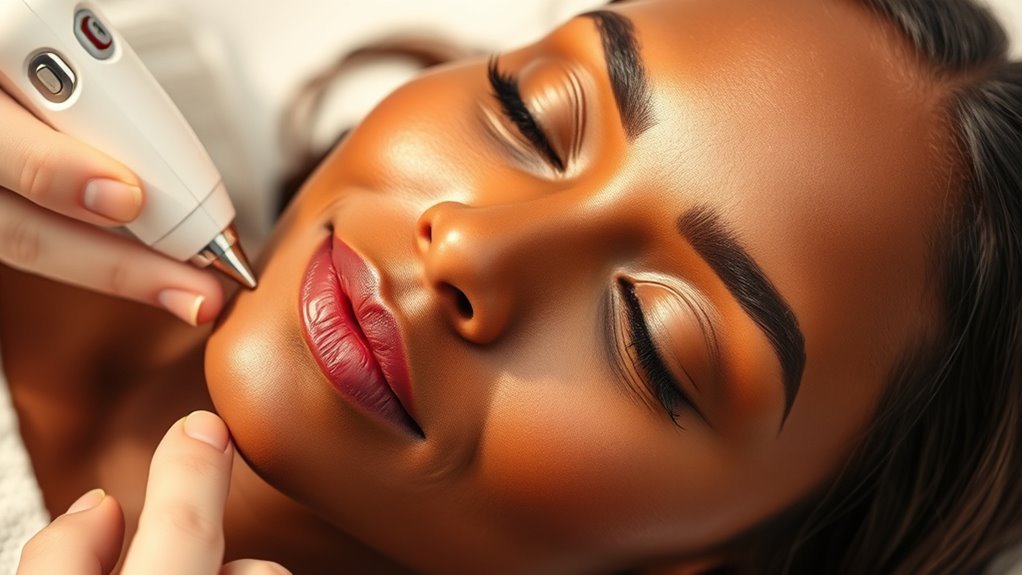
If you’re considering RF treatments and have darker skin tones, it’s essential to understand the safety considerations involved. One of the primary concerns with RF procedures is skin pigmentation concerns, which can become problematic if not properly managed. People with darker skin have more melanin, making their skin more prone to hyperpigmentation or even hypopigmentation after treatment. This is why treatment suitability guidelines are fundamental. Not all RF devices or techniques are suitable for darker skin; some may increase the risk of uneven pigmentation or scars. To guarantee safety, it’s imperative to consult with a qualified practitioner who understands these nuances and can recommend appropriate settings and protocols based on your skin type.
Understanding skin pigmentation concerns helps you make informed decisions about whether RF treatments are right for you. Devices that emit high energy or use aggressive settings can cause heat buildup in the skin, which may trigger pigment changes. That’s why newer RF technologies, such as those with precise targeting or lower energy levels, are often preferred for darker skin tones. These devices minimize the risk of disrupting melanin and help guarantee a more even outcome. Additionally, your practitioner should perform a thorough assessment, including evaluating your skin type and medical history, to determine if you’re a suitable candidate. Following treatment suitability guidelines isn’t just about safety—it also increases the likelihood of achieving desired results without unwanted side effects.
Choosing RF devices with lower energy levels and proper assessment ensures safe, even results for darker skin tones.
Precautionary measures are also essential in managing skin pigmentation concerns. For example, avoiding sun exposure before and after treatment helps reduce the risk of pigmentation changes. Your practitioner might recommend topical treatments or specific skincare routines to prepare your skin and protect it during the healing process. It’s also important to disclose any history of pigmentation issues or skin conditions during your consultation. These details guide the provider in customizing the treatment plan and selecting the safest, most effective parameters for your skin type. Additionally, staying informed about creative practice and how it fosters resilience and experimentation can help you approach cosmetic procedures with confidence and open-mindedness.
Ultimately, RF treatments can be safe for darker skin tones when you follow proper guidelines and work with experienced professionals. Educate yourself about skin pigmentation concerns and treatment suitability guidelines, and don’t hesitate to ask questions about device technology, safety procedures, and expected outcomes. With the right approach, RF treatments can deliver benefits like skin tightening and rejuvenation without compromising your skin’s health or color. Just remember, safety always comes first, especially when dealing with darker skin tones, where pigmentation concerns require extra attention.
Frequently Asked Questions
Can RF Treatments Cause Hyperpigmentation in Darker Skin?
RF treatments can cause hyperpigmentation in darker skin if the device isn’t used properly. The hyperpigmentation risk increases with devices that aren’t specifically designed for darker skin tones or if the treatment isn’t tailored to your skin type. To guarantee device safety, choose a practitioner experienced with darker skin, and make sure they use appropriate settings. Properly performed, RF treatments are generally safe and effective for darker skin.
Are There Specific RF Devices Suited for Darker Skin Tones?
Yes, there are specific RF devices suited for darker skin tones. These devices prioritize skin safety and compatibility by using lower energy levels, advanced cooling systems, and precise targeting to reduce risks like hyperpigmentation. When choosing a device, verify it’s designed for darker skin, and consult with a trained professional. This approach helps you achieve effective results while minimizing potential side effects related to skin safety and compatibility.
How Do RF Treatments Compare to Other Skin Tightening Methods for Darker Skin?
Sure, RF treatments are pretty popular, but when it comes to darker skin tones, they might not be the best choice. Alternative treatments like laser or ultrasound can be safer, especially when considering skin tone considerations. RF may offer convenience, but you could risk hyperpigmentation or burns if not carefully chosen. Always weigh your options and consult a specialist who understands how your unique skin responds to various skin tightening methods.
What Are the Long-Term Risks of RF Treatments for Dark Skin?
RF treatments generally pose minimal long-term risks for darker skin, especially when device safety and skin type considerations are properly addressed. You might experience temporary side effects like redness or swelling, but serious issues are rare. To guarantee safety, choose experienced practitioners who tailor the treatment to your skin type, and always follow post-treatment care instructions. This approach helps minimize risks and promotes effective, safe results over time.
Should Darker Skin Individuals Avoid RF Treatments Altogether?
Should darker skin individuals avoid RF treatments altogether? Not necessarily. While safety concerns and skin tone variations are valid, many practitioners use specific RF settings to minimize risks. If you consult a dermatologist experienced with darker skin, you can determine if RF treatments are suitable for you. Always prioritize professional guidance to ensure safety and effective results, rather than avoiding treatments solely based on skin tone.
Conclusion
So, if you’re worried about RF treatments turning your beautiful, darker skin into a fiery, unrecognizable mess, rest assured — they’re safer than you think. With proper expertise, these treatments can work magic without risking your skin’s harmony. You don’t have to shy away from modern skincare miracles just because of your tone; you’re on the edge of a revolution that promises glowing, flawless skin — safely, confidently, and beautifully.