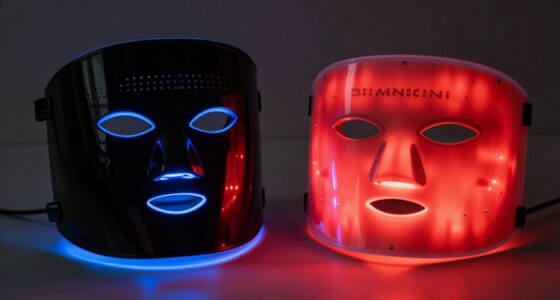
Choosing between near-infrared and red light therapy depends on your goals. If you want to improve skin health, reduce wrinkles, and target surface issues, red light works best since it penetrates about 8-10 mm into the skin. If you’re aiming for deeper relief, like easing muscle soreness or joint pain, near-infrared penetrates up to 40 mm and addresses internal tissues. Understanding which wavelength matches your needs helps you get better results—keep exploring to discover which option suits you best.
Key Takeaways
- Red light primarily targets surface tissues, promoting skin rejuvenation and cosmetic improvements.
- Near-infrared penetrates deeper, effectively addressing muscle, joint, and bone-related issues.
- Choose red light for skin health; opt for near-infrared for internal pain relief and recovery.
- Combining wavelengths can enhance overall therapeutic outcomes based on specific goals.
- Understanding tissue depth and treatment aims guides which wavelength matters most for your needs.

When it comes to light therapy and related applications, understanding the differences between near-infrared and red light is essential. Both types of light are used in phototherapy, offering distinct benefits depending on your goals. Red light, typically in the 620-750 nanometer range, is well-known for its ability to promote skin health and healing. It penetrates the skin to a moderate depth, generally around 8-10 millimeters, making it effective for targeting surface tissues. This skin penetration depth allows red light to stimulate collagen production, reduce inflammation, and accelerate tissue repair. If your aim is to improve skin tone, diminish wrinkles, or treat superficial injuries, red light can deliver notable phototherapy benefits with minimal discomfort.
Red light penetrates skin to promote healing, collagen production, and reduce inflammation for surface tissue benefits.
In contrast, near-infrared light operates at longer wavelengths, roughly 750-1,100 nanometers. Its longer wavelength means it can penetrate much deeper into tissues—up to 30-40 millimeters—reaching muscles, joints, and even bones. This deep skin penetration makes near-infrared light particularly valuable for addressing internal issues like muscle soreness, joint pain, or inflammation that extends beyond the surface. Because it reaches deeper tissues, near-infrared phototherapy benefits include enhanced blood flow, reduced inflammation, and faster recovery for more complex or chronic conditions. Recent studies emphasize the importance of understanding wavelengths and tissue interaction to optimize phototherapy outcomes, helping practitioners tailor treatments for specific tissue depths and conditions. Recognizing wavelength-specific tissue effects can further improve treatment precision and effectiveness.
However, both types of light can be complementary. Red light’s efficacy in skin regeneration makes it ideal for cosmetic applications, while near-infrared’s capacity to reach deeper tissues positions it as a tool for physical therapy and pain relief. When choosing between them, consider your specific goals: surface-level skin improvements or deeper tissue healing. If you’re seeking skin rejuvenation, red light’s targeted approach offers considerable benefits. But if your focus is on alleviating muscle pain or boosting recovery from injuries, near-infrared’s deeper penetration provides a significant advantage. Additionally, recent research highlights that combining wavelengths can enhance overall therapeutic outcomes, leveraging the strengths of both light types for comprehensive care.
Ultimately, your decision should align with what you want to achieve from phototherapy. Recognize that both types of light have their unique strengths, and in some cases, combining them can maximize overall benefits. By understanding skin penetration depth and the phototherapy benefits each offers, you can make informed choices that support your health and wellness goals more effectively.

Red Light Therapy for Face and Neck, 8 Colors Red Light Therapy Mask Set with 850nm Near Infrared, 3000mAh Rechargeable 6-in-1 Red Light Mask Skin Care Device for Skin Rejuvenation, Anti-Aging
【Red Light Therapy for Face & Neck】Experience professional skincare at home. Our red light therapy mask set combines…
As an affiliate, we earn on qualifying purchases.
As an affiliate, we earn on qualifying purchases.
Frequently Asked Questions
Can Both Lights Be Used Simultaneously for Better Results?
Yes, you can use both lights simultaneously for better results, but consider light synergy and therapy timing. Combining near-infrared and red light can enhance overall benefits, as they target different layers of tissue. However, it’s crucial to space out sessions properly to maximize effectiveness and avoid overstimulation. Pay attention to your body’s response, and consult guidelines or a professional to develop a safe, effective routine tailored to your goals.
Are There Any Side Effects From Long-Term Near-Infrared Exposure?
They say “prevention is better than cure,” and long-term near-infrared exposure might carry some risks. While most users experience minimal side effects, potential tissue damage or long-term safety concerns can arise with excessive use. It’s best to follow recommended guidelines, avoid overexposure, and consult a healthcare professional if you notice any adverse effects. Staying cautious guarantees you enjoy the benefits without risking your health.
How Do Different Wavelengths Affect Skin Penetration Depth?
Different wavelengths influence skin penetration depth through their unique absorption properties. Shorter wavelengths, like red light, are absorbed more superficially, affecting only the outer skin layers. In contrast, near-infrared wavelengths penetrate deeper because of lower absorption and scattering, reaching muscles and tissues beneath the skin. Your skin tissue interaction varies accordingly, with longer wavelengths offering deeper therapeutic effects, while shorter wavelengths focus on surface-level benefits.
Is There an Optimal Duration for Each Light Therapy Session?
Timing is everything, so stick to the ideal session duration for your therapy. Generally, sessions last about 10-20 minutes, but this can vary based on your goals and device specifications. To maximize benefits, follow manufacturer guidelines or consult a professional for personalized advice. Remember, overdoing it might backfire, so aim for consistent, moderate sessions to see the best results without risking skin irritation or fatigue.
Do Certain Skin Types Respond Better to Red or Near-Infrared Light?
Your skin type influences how you respond to red or near-infrared light. Lighter skin tones typically absorb red light better, making it more effective for surface treatments. Darker skin tones might respond better to near-infrared light, which penetrates deeper without causing surface irritation. Understanding your skin tone helps optimize light absorption, ensuring you get the best results from your therapy. Always test small areas first to see how your skin reacts.

Lifepro Near Infrared Red Light Therapy for Body Joints & Muscles Wellness Support, Lumicure Portable Red Light Therapy Torch with 630nm, 660nm, 850nm LEDs – Support Daily Relaxation and Comfort
PREMIUM INFRARED RED LIGHT DEVICE: The LifePro LumiCure red light therapy lamp combines 3 wavelengths of soothing light,…
As an affiliate, we earn on qualifying purchases.
As an affiliate, we earn on qualifying purchases.
Conclusion
So, which light truly makes the biggest difference for your goals? Whether you’re aiming to boost healing, improve skin, or enhance performance, understanding the unique benefits of near-infrared and red light helps you make smarter choices. Don’t just settle for one—consider how combining both could maximize your results. Are you ready to harness the power of light to take your wellness journey to the next level? The right choice might be just a switch away.

Red Light Therapy Pad for Body Back Knee Shoulder Hands Feet Portable 660nm 850nm Home Use 3 Chips in 1 Infrared Wrap Belt Gift for Women Men (Corded)
bonodave Corded Red Light Pad: RL absorded, feeling gentle warm, makes body feel comfort, supports 10HZ pulse mode…
As an affiliate, we earn on qualifying purchases.
As an affiliate, we earn on qualifying purchases.

Zarbaha Red Light Therapy Bulb 660nm Red & 850nm Near Infrared, Light Therapy Bulb, E26/27 Base Lamp with Power Cord, Home Wellness & Muscle Recovery, 18 LED, 54W, Combo Device for Face & Skin Health
Optical lens design: Zarbaha red light therapy bulb is equipped with super large optical lens with 30-degree glass…
As an affiliate, we earn on qualifying purchases.
As an affiliate, we earn on qualifying purchases.