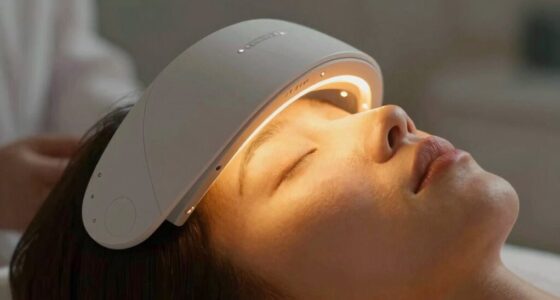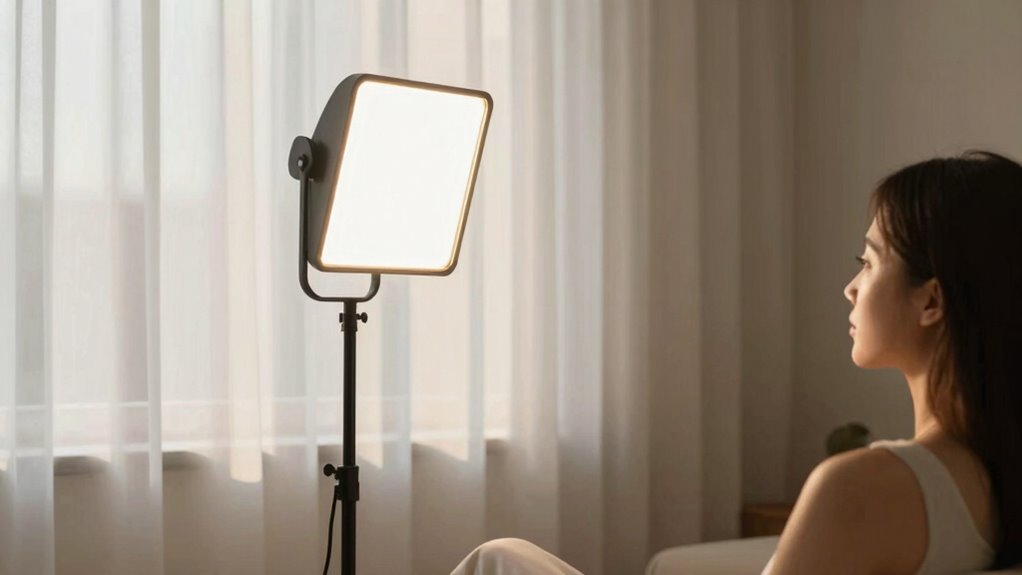
To avoid doing too much with light therapy, stick to recommended times of 20-30 minutes, preferably in the morning, and don’t overdo sessions to prevent overstimulation or disrupting your sleep cycle. Use adjustable brightness equipment and listen to your body’s signals, like headaches or eye discomfort. It’s also essential to balance artificial light with natural daylight. Keep an eye on your response, and if you want to learn more about safe use tips, there’s plenty of helpful info to explore.
Key Takeaways
- Stick to recommended durations (20-30 minutes) and avoid longer sessions to prevent overstimulation.
- Use light therapy in the morning, not late in the day, to prevent sleep disruption.
- Choose adjustable, appropriate-intensity devices to prevent discomfort from excessive brightness.
- Monitor for symptoms like headaches or eye strain and reduce exposure if they occur.
- Balance artificial light with natural outdoor light during the day for optimal circadian alignment.
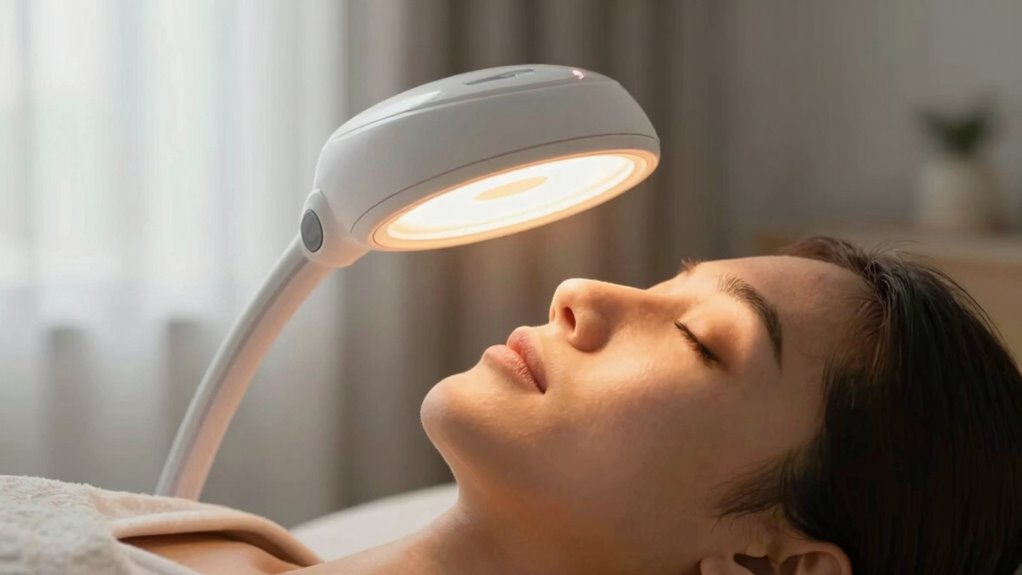
Light therapy can be an effective way to boost your mood and regulate your sleep, but it’s important to use it correctly. When used properly, it can help reset your circadian rhythm, the internal clock that controls your sleep-wake cycle, and support your overall well-being. Many people turn to light therapy to compensate for a lack of natural sunlight, especially during shorter winter days, but overdoing it can have unintended consequences. To avoid doing too much, you need to understand the balance between exposure and safety.
Using light therapy wisely can improve your mood and sleep—balance exposure for safe, effective results.
First, be mindful of how much light you’re exposing yourself to each day. Most light therapy devices recommend about 20-30 minutes per session, ideally in the morning. Staying within this time frame helps prevent overstimulation and minimizes the risk of disrupting your circadian rhythm or causing eye strain. If you’re using light therapy to boost Vitamin D levels, keep in mind that while light exposure can influence Vitamin D synthesis in your skin, the therapy lamps used for circadian regulation are not a substitute for sunlight. Overexposure won’t necessarily increase Vitamin D production and could lead to discomfort or other issues.
You also want to pay attention to the timing of your sessions. Exposing yourself to bright light at the right time helps align your circadian rhythm with your daily schedule, enhancing sleep quality and mood. Too much exposure at the wrong time, particularly late in the day, can delay your sleep onset or cause insomnia. Consistency is key, so try to stick to your schedule and avoid irregular or excessive sessions. Remember that natural light remains the best source for regulating your circadian rhythm, so supplement your light therapy with outdoor time during the day when possible. Understanding circadian rhythms can help you better optimize your light exposure for overall health. Additionally, being aware of light exposure guidelines can help you establish safe and effective routines.
Additionally, monitor how you feel during and after light therapy. If you experience headaches, eye discomfort, irritability, or trouble sleeping, it might mean you’re overdoing it. Reduce your exposure time or frequency and consult a healthcare professional if symptoms persist. Be cautious about the intensity of the light you use. High-intensity lamps are effective but can be overwhelming if used improperly. Using a device with adjustable brightness allows you to tailor the therapy to your needs without going overboard. Recognizing the importance of natural light and its role in circadian regulation can help guide your overall approach to light exposure. Incorporating proper light timing strategies can further enhance the positive effects while minimizing risks. Additionally, understanding how light intensity impacts your comfort and safety is crucial for a balanced approach.
Ultimately, moderation and proper timing are your best strategies to avoid doing too much with light therapy. By respecting your body’s natural rhythms and understanding how light influences both Vitamin D production and your circadian rhythm, you can harness its benefits safely and effectively.

Verilux HappyLight Lumi Plus – Light Therapy Lamp with 10,000 Lux, UV-Free, LED Bright White Light with Adjustable Brightness, Countdown Timer, & Detachable Stand – Boost Mood, Sleep, and Focus
Bright Light Therapy: HappyLight Lumi Plus delivers up to 10,000 Lux of UV-Free, LED, full-spectrum light for effective,…
As an affiliate, we earn on qualifying purchases.
As an affiliate, we earn on qualifying purchases.
Frequently Asked Questions
Can Light Therapy Cause Skin Burns or Irritation?
Light therapy can cause skin burns or irritation if your skin sensitivity is high or if you don’t follow device safety guidelines. To prevent this, start with shorter sessions and gradually increase exposure. Always use devices designed for safety and follow the manufacturer’s instructions carefully. If you notice redness, pain, or irritation, stop immediately and consult a healthcare professional. Proper precautions help you enjoy benefits safely without skin damage.
Is It Safe to Use Light Therapy Daily?
Imagine a gentle sunrise warming your face—using light therapy daily can be safe if you follow guidelines. You should consult your healthcare provider and consider alternative treatments or natural remedies as complementary options. While daily use may boost mood and circadian rhythm, overdoing it risks skin irritation or eye strain. So, start with short sessions, monitor your response, and adjust accordingly for safe, effective benefits.
What Are the Signs of Overexposure to Light Therapy?
You might notice circadian disruption, feeling out of sync with your sleep schedule, or eye strain, like discomfort or headaches, if you’ve overexposed yourself to light therapy. Other signs include headaches, nausea, or irritability. If these symptoms occur, it’s a sign to cut back on sessions. Listening to your body is key—if you experience these symptoms, reduce exposure and consult a healthcare professional to prevent further issues.
Should I Consult a Doctor Before Starting Light Therapy?
Yes, you should consult a doctor before starting light therapy. They can recommend alternative treatments or suggest lifestyle adjustments to improve your condition safely. A healthcare professional helps determine if light therapy is appropriate for you and guides you on proper usage to prevent overexposure. This guarantees you get the benefits without risking side effects, especially if you have underlying health conditions or are taking medications.
Are There Specific Times of Day Best for Light Therapy Sessions?
Ever imagine catching the sunlight at its brightest? The ideal timing for light therapy is typically during morning sessions, ideally within the first hour of waking. This helps reset your internal clock and boosts your mood for the day. Avoid late afternoon or evening sessions, as they might interfere with your sleep. So, embrace morning light therapy to maximize benefits without disrupting your natural sleep cycle.

Circadian Optics Lumos 10,000 Lux Light Therapy Lamp | Seen On Shark Tank
Seen In The Tank | 10,000 LUX Brightness: Experience the sun lamp that impressed the Sharks! The lamp…
As an affiliate, we earn on qualifying purchases.
As an affiliate, we earn on qualifying purchases.
Conclusion
Remember, light therapy is like a gentle sunrise—you want it to brighten your day, not burn out your glow. Think of it as tending a delicate flame: too much can flicker out your energy, too little leaves you in shadows. Keep your sessions balanced, like a soft dawn breaking after a long night. By listening to your body’s whispers, you’ll find the perfect rhythm to harness light’s healing power without overwhelming your inner glow.

SUXIO Light Therapy Lamp – 10000 Lux Therapy Lights, 3 Timing & Mode Happy Lamp, Touch Control Daylight Lamp with Memory Function, Portable Light Therapy Box for Home/Office Use As Lift Mood
【3 Mode Therapy Light】 – Our light therapy lamp with 3 modes, respectively emitting 4000-7000-10000 Lux, Each time…
As an affiliate, we earn on qualifying purchases.
As an affiliate, we earn on qualifying purchases.

Caromolly Light Therapy Lamp, Sunlight Lamp 10000 Lux with Remote Control, 3 Color Temperature & 4 Brightness Level & Timer, Daylight Lamp for Home, Office, Decoration
UV-Free Light Therapy Lamp: Our happy therapy light lamp emits 10,000 lux(max) mimetic natural light, which provides a…
As an affiliate, we earn on qualifying purchases.
As an affiliate, we earn on qualifying purchases.