

AI skin analysis can be a helpful shortcut, providing quick skin health assessments and personalized advice from just a smartphone scan. However, it also involves sharing sensitive health data, raising concerns about privacy, data security, and ethical use. Companies can collect, store, or even sell your personal info, which may lead to risks if not properly managed. If you’re concerned about these issues, exploring further will give you a clearer picture of how to protect yourself.

Get wellness gear delivered free — and shop member deals
- Fast, free delivery on millions of items
- Access to Prime Big Deal Days deals on October 6–7
- Prime Video, Amazon Music and more included
Key Takeaways
- AI skin analysis offers quick, personalized skin assessments, saving time and avoiding in-office dermatologist visits.
- It involves collecting sensitive health data, raising ethical concerns about transparency and informed consent.
- Data privacy risks include potential hacking, unauthorized sharing, and challenges in controlling personal information.
- Regulatory oversight is essential to ensure responsible data handling and prevent misuse of AI technology.
- Users must evaluate provider transparency and security measures to balance benefits with potential data privacy risks.
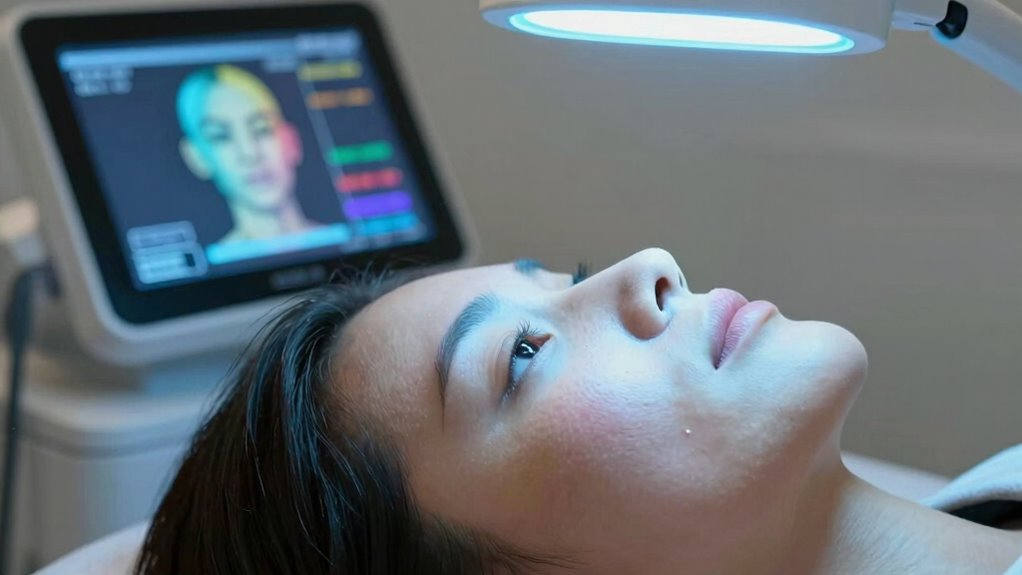
Have you ever wondered how technology can now assess your skin’s health in a matter of seconds? Thanks to AI skin analysis, what once required a visit to a dermatologist can now be done with a quick scan from your smartphone. This technology uses advanced algorithms to evaluate your skin, identifying issues like acne, wrinkles, pigmentation, and even potential skin cancers. It’s convenient, fast, and can provide personalized skincare advice instantly. But as impressive as this sounds, it also raises some important questions about ethics and data privacy.
AI skin analysis offers quick, personalized skin insights but raises important ethical and privacy concerns.
When you use AI skin analysis tools, your images and personal data are often uploaded to cloud servers or stored within app databases. This process involves collecting sensitive health information, which makes ethical concerns unavoidable. You might wonder whether the companies behind these tools are handling your data responsibly or if they’re just collecting it for profit. Transparency becomes vital here—are you informed about how your data is being used, shared, or sold? Without clear policies, you risk unknowingly giving away more personal information than you realize, which could be exploited or misused. ethical concerns around consent also come into play—do you truly understand what you’re agreeing to when you upload your photos? If companies aren’t transparent, they could be crossing ethical boundaries by using your data for purposes beyond your consent. Moreover, with the rapid development of AI technology, the potential for misuse increases, emphasizing the importance of oversight and regulation.
Data privacy is another major concern. When you submit your images, they are stored on servers that could be vulnerable to hacking or breaches. Despite encryption and security measures, no system is completely foolproof. The risk of your personal health data falling into the wrong hands is real, especially if the company sharing or selling data doesn’t prioritize security. Additionally, there’s the question of long-term data storage—how long is your data kept, and can you delete it if you change your mind? These are critical issues because once your data is out there, it’s challenging to control how it’s used or who has access to it. Considering the security measures implemented can help you better understand the level of protection your data receives. Furthermore, ongoing regulations in data privacy are constantly evolving, influencing how companies should manage your information responsibly. Staying informed about data protection standards can help you advocate for better safeguards.
While AI skin analysis offers a helpful shortcut to understanding your skin, it’s essential to stay aware of the potential pitfalls. You should always ask who is behind the technology, how your data is protected, and whether you’re comfortable with the risks involved. Ethical concerns and data privacy aren’t just technical issues—they’re central to maintaining your trust and ensuring that this powerful technology benefits you without compromising your rights. As AI continues to evolve, staying informed and cautious will help you make smarter choices about using these tools.
As an affiliate, we earn on qualifying purchases.
Frequently Asked Questions
How Accurate Is AI Skin Analysis Compared to Dermatologists?
AI skin analysis can be quite accurate, but it doesn’t match the expertise of dermatologists. It’s helpful for identifying skin aging signs and suggesting cosmetic improvements, yet it might miss subtle issues or underlying conditions a professional would catch. You can rely on AI for quick insights and personalized recommendations, but for precise diagnosis and tailored treatment, consulting a dermatologist remains the best option to address your skin concerns thoroughly.
Can AI Detect All Skin Conditions Effectively?
AI can detect many skin conditions effectively, but it’s not perfect. It’s good at identifying issues like skin pigmentation and acne detection, providing quick insights. However, some conditions, especially subtle or rare ones, may still require a dermatologist’s expertise for accurate diagnosis. While AI is a helpful tool, it shouldn’t replace professional advice, especially for complex or persistent skin problems.
Is My Skin Data Shared or Stored Securely?
Think of your skin data as a treasure chest; you want it kept safe. Yes, your data is stored securely, but it’s essential to stay aware of security concerns and data privacy policies. Reputable AI platforms encrypt your information and limit access, but always read privacy policies before sharing. Trustworthy providers prioritize your privacy and security, giving you peace of mind that your sensitive skin data remains protected from misuse or breaches.
How Often Should I Use AI Skin Analysis Tools?
You should use AI skin analysis tools once a month to monitor skin hydration and aging signs effectively. Regular use helps you track changes in your skin, identify dehydration, and spot early signs of aging. Remember, overusing these tools might lead to unnecessary worry or data fatigue. Keep a consistent schedule, and combine results with a good skincare routine to maintain healthy, youthful skin.
Does AI Analysis Work on All Skin Tones Equally?
Does AI analysis work equally on all skin tones? Sadly, no. Skin tone bias and cultural differences can influence results, making some skin tones less accurately assessed. It’s like trying to fit a square peg in a round hole—you might get close, but it’s not perfect. Developers are working to improve accuracy across diverse skin tones, but for now, be aware that AI tools may not be entirely universal.
As an affiliate, we earn on qualifying purchases.
Conclusion
Think of AI skin analysis as a double-edged sword—offering a treasure trove of insights but risking drowning you in data. It’s like trying to navigate a dense forest with a flashlight; you might find hidden gems, but you could also stumble over confusion. Ultimately, it’s a helpful shortcut if you use it wisely—like a map guiding you through the wilderness. Just remember, sometimes, the simplest path leads to the clearest destination.
dermatology skin analysis device
As an affiliate, we earn on qualifying purchases.
As an affiliate, we earn on qualifying purchases.
As an affiliate, we earn on qualifying purchases.
Fall Picks
fall essentials
As an affiliate, we earn on qualifying purchases.