
TL;DR
Jim Keller’s startup announced plans to build a factory dedicated to mass-producing small chip fabrication units. This development could impact chip manufacturing scalability and supply chain resilience.
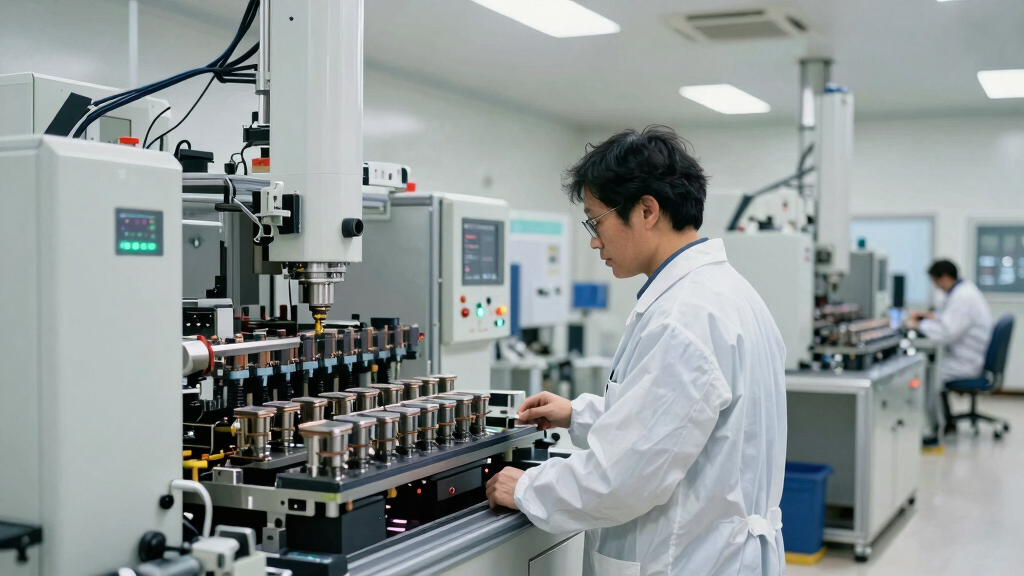
Jim Keller’s startup has announced plans to build a factory dedicated to mass-producing small semiconductor fabrication units, or ‘small chip fabs,’ a move aimed at transforming the landscape of chip manufacturing. This initiative is significant because it could enable more flexible, localized, and scalable production of chips, impacting supply chains and industry dynamics.
According to Keller’s company, the factory will focus on producing compact, modular chip fabrication units designed to be more accessible and affordable than traditional large-scale fabs. The company has not yet disclosed the exact location or timeline for the factory’s construction but confirmed that the project is in the planning and development phase. Jim Keller, a renowned chip architect and industry veteran, is leading the startup, which aims to address current manufacturing bottlenecks and reduce dependency on large, centralized fabs. Industry analysts note that this approach could democratize chip production, allowing smaller companies and regions to develop their own manufacturing capabilities. The startup’s plans have garnered attention from investors and industry observers eager to see whether this model can be scaled effectively.Potential Impact on Semiconductor Manufacturing Ecosystem
This development could significantly alter the traditional semiconductor supply chain by enabling smaller, more localized chip production facilities. If successful, it might reduce reliance on a handful of massive fabs, lower costs, and increase resilience against disruptions. For industry stakeholders, this could mean faster innovation cycles, more competitive markets, and expanded access to advanced manufacturing technology. However, the feasibility of mass-producing small chip fabs at scale remains to be demonstrated, and the economic viability of this approach is still uncertain.

DynMach WDR-60-5 50W 5V 10A Compact, Reliable DIN Rail Power Supply for Semiconductor Manufacturing – 32mm Wide, 180-550VAC, High Stability
Clean, Stable Power for Sensitive Semiconductor Equipment: This power supply delivers a stable and low-noise 5V/10A output, crucial…
As an affiliate, we earn on qualifying purchases.
As an affiliate, we earn on qualifying purchases.
Industry Shift Toward Modular and Flexible Chip Production
Jim Keller’s move comes amid broader industry trends emphasizing modular, flexible, and localized manufacturing solutions. Over recent years, the chip industry has faced supply chain disruptions, geopolitical tensions, and rising costs associated with building and operating large fabs. Keller’s startup aims to counter these challenges by offering smaller, more adaptable fabrication units that could be deployed in various regions. Keller, known for his work on advanced processors and chip architectures, previously contributed to major industry developments, including his roles at AMD and Apple. The concept of small, mass-produced fabs has been discussed in industry circles for years, but Keller’s startup appears to be the first to seriously pursue large-scale manufacturing of such units.
“Our goal is to democratize chip manufacturing by making small, modular fabs accessible and affordable for a broader range of companies and regions.”
— Jim Keller

Jiawu IC Tester, All in One Electrical Optical Mechanical Transistor Diode Tester, LED Chip with Modular Integration for Drive Modules Electronic Components Maintenance
[All in One Solution] Integrated electrical optical mechanical testing system eliminates need for additional equipment providing comprehensive diagnostics…
As an affiliate, we earn on qualifying purchases.
As an affiliate, we earn on qualifying purchases.
Uncertainties Surrounding Feasibility and Scale
It is not yet clear how quickly the factory will be built, whether the small fabs can be produced at a cost-effective scale, or if the technology will meet industry performance standards. Details about funding, regulatory approvals, and specific manufacturing processes remain undisclosed. Experts caution that while the concept is promising, practical challenges in scaling small chip fabs could limit its immediate impact.
compact semiconductor fab tools
As an affiliate, we earn on qualifying purchases.
As an affiliate, we earn on qualifying purchases.
Next Steps for Factory Development and Industry Response
The company plans to provide updates on the project’s progress over the coming months, including potential pilot manufacturing runs and partnerships. Industry observers will be watching for technical demonstrations, funding announcements, and regulatory milestones that could validate the feasibility of this approach. If successful, the startup could begin initial production within the next 1-2 years, with broader industry adoption potentially following.

Fuzion Digital Gram Scale with 2 Trays, 500g/ 0.01g Small Jewelry Scale, 6 Units Gram Scales Digital Weight Gram and Oz, Tare Function, Digital Herb Scale for Food, Mini Reptile
Gram Scale: Capacity x Readability: 500g x 0.01g. Min: 0.03g. Permissible Error: +/- 0.02g. Stainless steel platform, durable…
As an affiliate, we earn on qualifying purchases.
As an affiliate, we earn on qualifying purchases.
Key Questions
What are small chip fabs?
Small chip fabs are compact, modular semiconductor manufacturing units designed to produce chips on a smaller scale than traditional large-scale fabs. They aim to be more accessible and flexible for localized production.
Why is Jim Keller’s startup focusing on this technology?
Keller’s startup aims to address current supply chain bottlenecks, reduce costs, and democratize access to chip manufacturing by enabling smaller, more distributed fabrication facilities.
When could these small fabs be in mass production?
The company has not provided a specific timeline, but initial pilot projects could occur within the next 1-2 years, depending on development progress and funding.
What challenges might this approach face?
Technical scalability, cost-efficiency, and industry performance standards are potential hurdles. The feasibility of producing high-quality chips at scale in small fabs remains uncertain.
How might this impact the global chip industry?
If successful, it could decentralize manufacturing, lower entry barriers, and increase supply chain resilience, potentially transforming industry dynamics.
Source: hn