TL;DR

Get wellness gear delivered free with Prime
- Fast, free delivery on millions of items
- Prime Video, Amazon Music and more included
- Member-only deals all year
NASM-certified trainer Kelsey Sherwin shared a six-exercise warm-up she says she performs before weight training. The sequence combines mobility and activation movements, but the source does not report measured performance results or evidence that this particular routine prevents injuries.
Personal trainer Kelsey Sherwin has shared a six-exercise warm-up she says she performs before lifting weights, offering readers a short movement sequence to try before a strength session. The advice, published by Fit&Well, is a trainer’s recommendation rather than a reported study or a guarantee of improved performance or injury prevention.
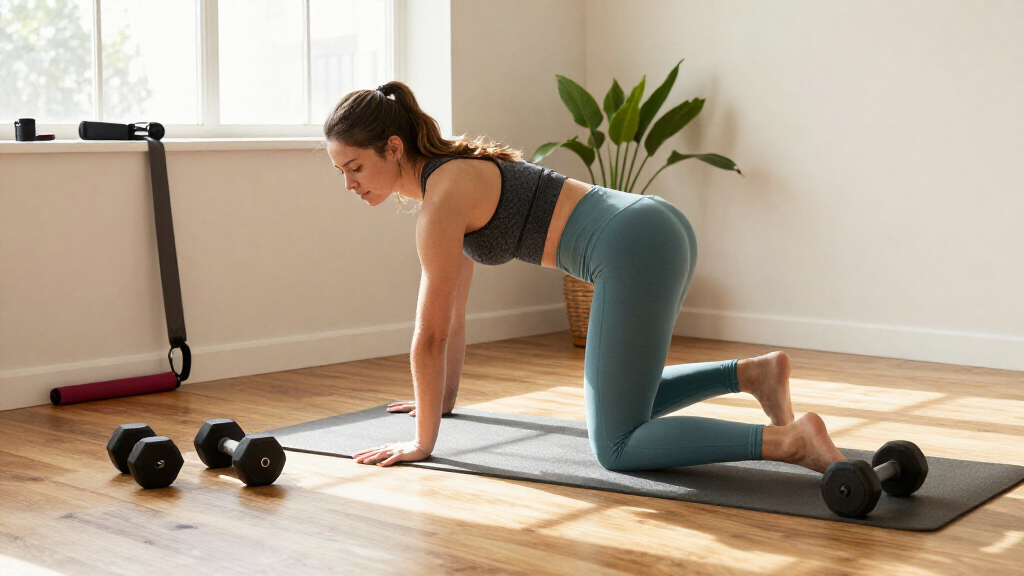
Sherwin, identified in the report as a NASM-certified trainer and strength-training specialist with Raeya Wellness in Los Angeles, says the sequence is intended to activate muscles used during a workout and help a person focus before lifting. She recommends running through six movements: march and reach, the world’s greatest stretch, plank shoulder taps, squat to press, hip hinge and banded side steps.
The routine moves from bodyweight movements into exercises using dumbbells and a looped resistance band. The report gives a time or repetition guide for each: one minute of marching and reaching; 30 seconds per side for the stretch; 20 shoulder taps per side; 10 to 15 squat-to-press repetitions; 10 to 15 hip hinges; and 10 banded steps in each direction.
Some exercises require equipment. The squat to press uses dumbbells, while the side steps use a short loop band placed above the knees. The other movements use body weight. Fit&Well presents the sequence as a possible pre-lifting warm-up, not as a workout plan or a substitute for instruction tailored to an individual’s ability.
A More Structured Start to Lifting
The routine gives lifters a specific sequence rather than relying on a few general movements before beginning a session. Its combination of marching, stretching, core control and loaded movement may help users rehearse actions they will use during exercise, though the report does not measure that effect.
Sherwin’s advice also underlines that warm-ups can be matched to the activity planned. The article says a walking session and an arm-focused workout may call for different preparation. For readers, the practical point is to choose movements relevant to the session and suited to their current mobility and fitness, rather than assuming one routine fits every exercise or person.
Products Worth Considering

Therabody Theragun Mini 3rd Generation Massage Gun, Black

Hyperice Normatec 3 Leg Compression Boots – Standard Size

BowFlex Results Series SelectTech Adjustable Dumbbells, Pair
As an affiliate, we earn on qualifying purchases.
How the Six Moves Are Ordered
The sequence begins with march and reach, performed standing for one minute, then moves to the world’s greatest stretch for 30 seconds on each side. The stretch starts in a high plank; the exerciser steps one foot outside the same-side hand, lowers an elbow toward the floor and rotates the torso while raising the arm.
Next come plank shoulder taps, with 20 repetitions on each side while trying to keep the body steady. The squat to press follows for 10 to 15 repetitions, combining a squat with a dumbbell press overhead. The hip hinge, also prescribed for 10 to 15 repetitions, cues the exerciser to push the hips back while keeping a slight bend in the knees. The sequence ends with banded side steps, 10 in each direction.
The report describes the movements and their suggested dosage but does not provide a total duration for the entire routine. Actual time will vary with pace, equipment setup and rest between movements.
What the Report Does Not Establish
The Fit&Well report does not say that Sherwin’s six movements have been tested as a set, nor does it provide performance measurements or injury data. The claims about blood flow, mobility, performance and injury risk are attributed to Sherwin; they should not be read as proof that this particular routine produces those results for every lifter.
The report also does not specify how readers should modify the sequence for pain, injuries, limited mobility or medical conditions. It does not give a required weight for the dumbbell exercise or a resistance level for the band. The suggested repetitions and times are guidance from the article, not individualized programming.
Adapting It Before a Session
Readers who choose to try the sequence can follow the stated repetitions and times while using a comfortable range of motion and manageable loads. The article advises that warm-ups should relate to the planned activity, but it does not prescribe how to change this routine for specific training goals.
Anyone unsure whether a movement is appropriate, or who has an existing injury or health condition, can seek guidance from a qualified fitness or health professional. Fit&Well’s report does not announce a follow-up test or provide a next publication milestone; whether the routine changes an individual’s workout experience remains a personal matter, not a result established by the report.
Key Questions
What warm-up does trainer Kelsey Sherwin recommend before lifting?
Her six-move sequence is march and reach, the world’s greatest stretch, plank shoulder taps, squat to press, hip hinge and banded side steps.
How long does the warm-up take?
The report gives one minute for marching and reaching and 30 seconds per side for the stretch, plus repetition targets for the other exercises. It does not provide a total routine time.
What equipment is needed?
The squat to press uses dumbbells and the side steps use a short looped resistance band. The other listed movements are bodyweight exercises.
Does the routine prevent injuries or guarantee better performance?
No such result is established in the report. Sherwin describes potential benefits of warming up generally, but Fit&Well provides no study or outcome data for this specific sequence.
Can everyone use this warm-up as written?
The report does not offer individualized modifications. People with pain, an injury or a health condition should consider professional guidance and use movements and loads appropriate to their abilities.
Source: fitandwell.com