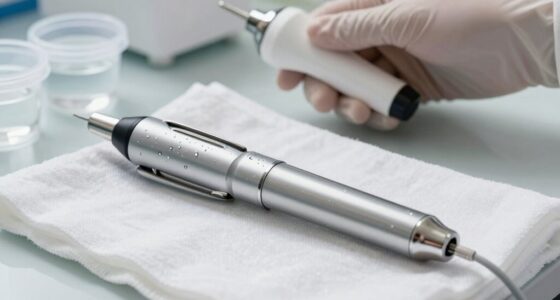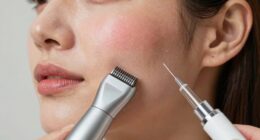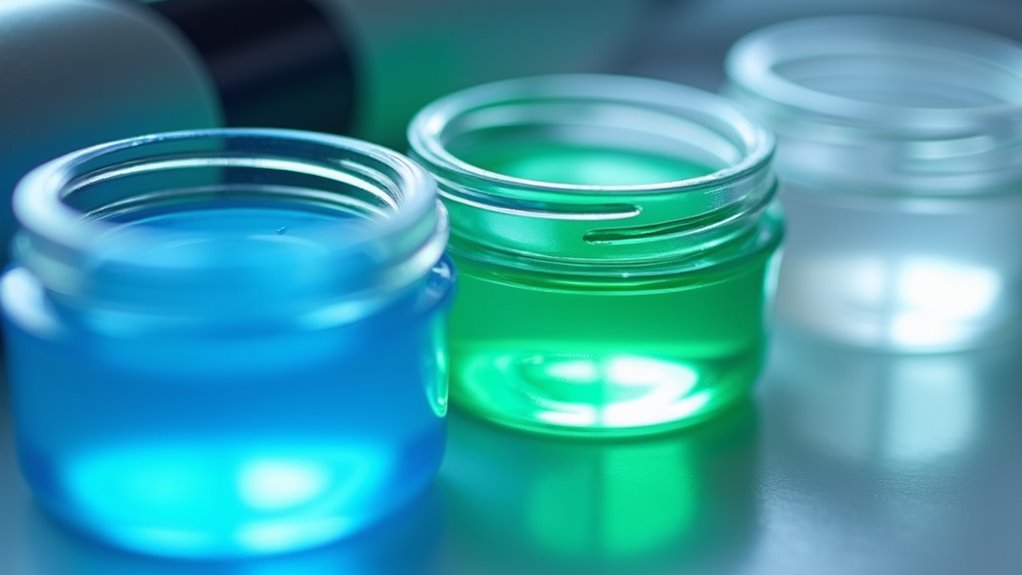

You need different gels for RF and ultrasound devices because each technology requires specific conductivity to work effectively and safely. RF devices rely on gels with the right electrical properties to transmit energy deep into the skin without overheating or causing irritation. Ultrasound gels, on the other hand, need to efficiently conduct sound waves for targeted treatment. Using the wrong gel can reduce results or even cause harm. Keep exploring to learn how to pick the best gel for each device.
Key Takeaways
- RF and ultrasound devices require gels with specific conductivities to optimize energy transfer and ensure safety during treatment.
- Different gels prevent device overheating and improve image clarity by matching each technology’s unique operational needs.
- Using the correct gel enhances treatment efficacy by reducing energy loss and ensuring consistent, targeted delivery.
- Compatibility of gels with device specifications minimizes risks of skin irritation, allergic reactions, and equipment damage.
- Proper gel selection supports optimal patient comfort and results by providing appropriate consistency and conductivity for each device type.
Understanding the Different Technologies Behind RF and Ultrasound Devices
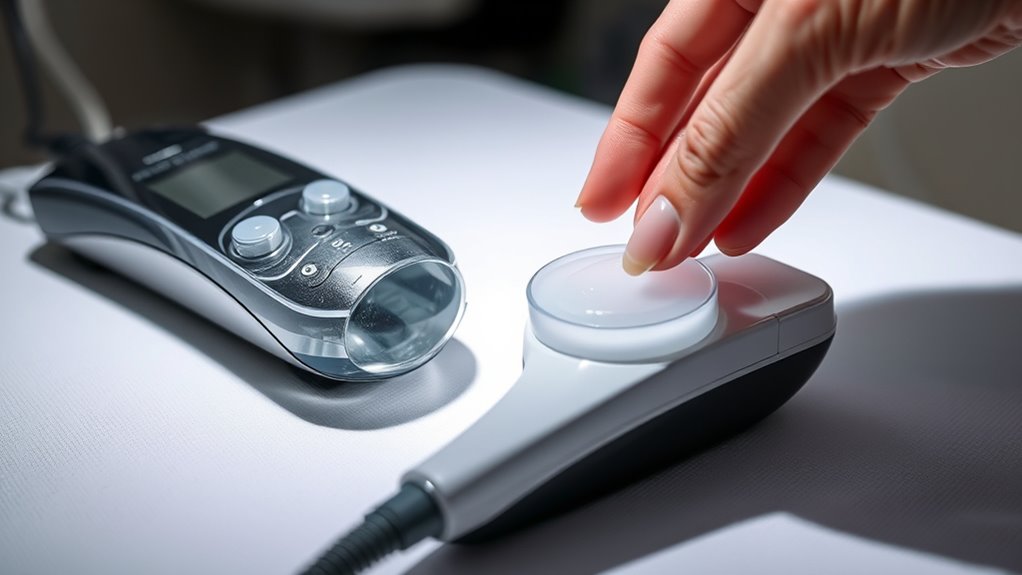
Understanding the different technologies behind RF and ultrasound devices is essential to grasp how these treatments work. RF devices use radiofrequency energy to heat deep skin layers, stimulating collagen production. Ultrasound devices, on the other hand, utilize high-frequency sound waves to target specific tissue depths. The gel formulation plays a vital role in ensuring proper energy transmission, acting as a conductive medium between the skin and the device. Proper device calibration is crucial for both technologies, as it ensures energy delivery is accurate and effective. Each device requires specific settings tailored to its technology to optimize results. Additionally, contrast ratio impacts how well the device can produce clear and detailed images, which is fundamental for precise treatment targeting. Recognizing these differences helps you understand why specific gels are necessary for each treatment and how precise calibration impacts safety and efficacy.
The Role of Conductive Gels in Ensuring Effective Energy Transmission
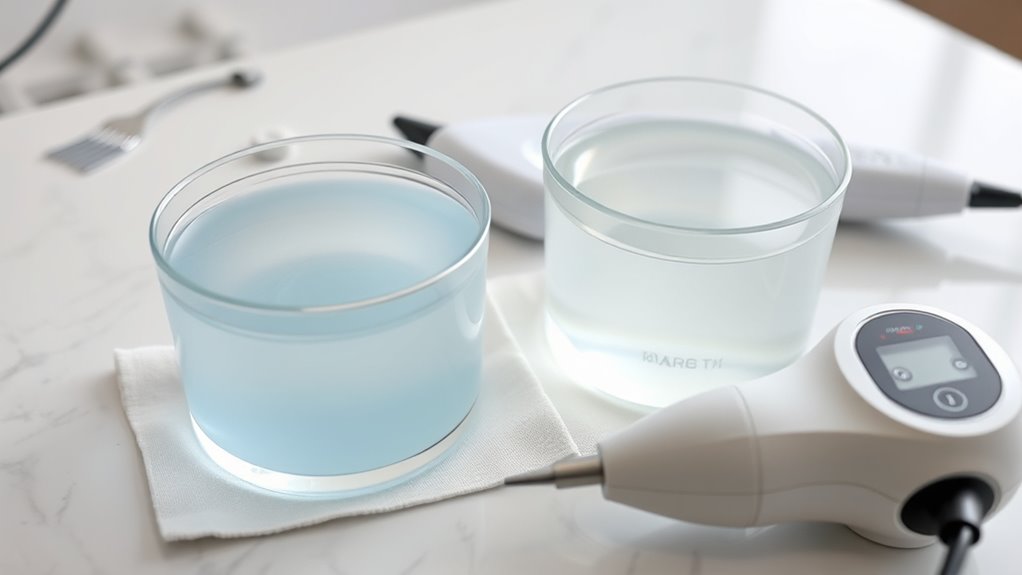
Conductive gels are key to ensuring that energy from RF and ultrasound devices reaches the targeted tissues effectively. The gel’s consistency plays a crucial role; it must be thick enough to stay in place yet conductive enough to transmit energy efficiently. A gel that’s too thin might leak or slide, reducing contact quality, while one that’s too thick can hinder movement and coverage. Proper gel packaging helps maintain the gel’s integrity, preventing contamination and drying out, which could impair performance. Using the right consistency and secure packaging guarantees the best contact between the device and skin, maximizing energy transmission. This reliable conduction results in more effective treatments and minimizes energy loss, making the right gel choice essential for successful outcomes. Additionally, choosing gels with advanced formulations can enhance conductivity and patient comfort during procedures.
Why Using the Correct Gel Enhances Safety During Treatments

Using the correct gel during RF and ultrasound treatments substantially enhances safety by reducing the risk of skin irritation and burns. Proper gel thickness ensures ideal energy transfer and prevents overheating that can harm your skin. Additionally, correct storage conditions maintain the gel’s consistency and effectiveness, reducing contamination risks. Always choose gels formulated specifically for your device type to avoid adverse reactions. Keep gels in a cool, dry place, and check expiration dates regularly to guarantee safety. Using the right gel minimizes discomfort and potential complications during treatments. Maintaining proper indoor air quality is also essential for overall health and safety.
Impact of Inappropriate Gels on Treatment Outcomes and Skin Health

Using the wrong gel can lower the effectiveness of your treatments and lead to subpar results. It may also cause skin irritation or discomfort during procedures. Additionally, incompatible gels can damage devices or interfere with their proper functioning. To ensure optimal performance, always select gels compatible with your device’s technology, such as those designed specifically for RF or ultrasound treatments technological compatibility.
Reduced Treatment Effectiveness
When inappropriate gels are used during RF and ultrasound treatments, the effectiveness of the procedures can markedly decline. Using gels with the wrong gel consistency can hinder proper energy transmission, reducing results and prolonging sessions. Thick or uneven gels cause gaps between the device and skin, impairing the delivery of targeted energy. Additionally, poor gel packaging may lead to contamination or improper application, further diminishing treatment efficacy. When the gel isn’t suited for the device or treatment type, you risk subpar outcomes and wasted time and resources. Selecting the right gel ensures consistent contact and ideal energy transfer, which is essential for achieving desired skin tightening or rejuvenation effects. Proper gel choice directly impacts your treatment success and overall skin health. Recognizing these factors can help you optimize energy transfer and improve treatment outcomes.
Increased Skin Irritation
Have you ever considered how the wrong gel can cause skin irritation during RF and ultrasound treatments? Using gels with unsafe or incompatible ingredients can lead to redness, itching, and discomfort, compromising patient comfort and safety. Poor gel ingredient safety increases the risk of allergic reactions or chemical burns, which can hinder healing and prolong recovery times. When skin irritation occurs, customer satisfaction drops, and trust in your practice diminishes. Choosing the right gel ensures compatibility with your device and minimizes adverse reactions. Proper gels promote healthy skin, reduce irritation, and contribute to better treatment outcomes. Ultimately, selecting the appropriate gel not only protects your patients’ skin but also enhances their overall experience, reinforcing your reputation for safety and professionalism. Recognizing the importance of product compatibility can further improve treatment efficacy and patient satisfaction.
Device Compatibility Issues
Ever wonder how incompatible gels can hinder your device’s performance and compromise skin health? Using the wrong gel formulation affects conductivity and can lead to substandard results. It may cause uneven energy delivery, reducing treatment effectiveness. Incompatibility can also increase skin irritation, compromising patient comfort and safety. To avoid these issues, choose gels designed specifically for RF or ultrasound devices. Proper gels enhance user comfort and ensure peak device function. Selecting vetted gels that meet industry standards can further safeguard treatment quality and patient safety.
Compatibility of Gels With RF and Ultrasound Equipment
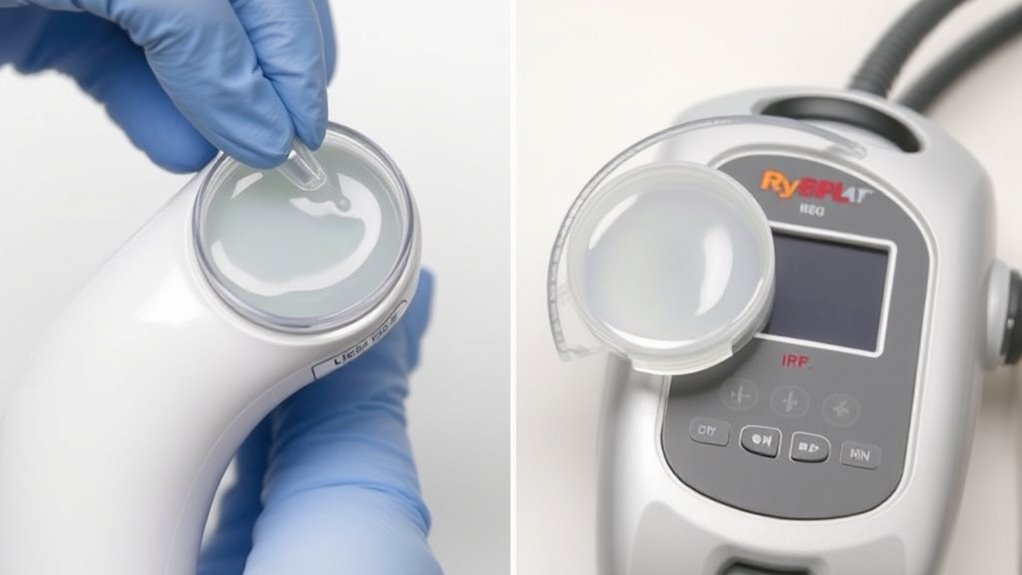
Ensuring your gel is compatible with your RF or ultrasound device is vital for effective treatment. You need to think about gel conductivity to prevent signal loss and optimize performance. Additionally, using device-specific gel formulations can help avoid issues and prolong your equipment’s lifespan. Being aware of proper relationship communication can also help in understanding device requirements and troubleshooting potential problems.
Gel Conductivity Compatibility
The conductivity of gels used with RF and ultrasound devices directly affects their performance and safety. If the gel conductivity isn’t compatible with the device, you risk poor signal transmission, uneven results, or even safety issues. Choosing the right gel formulation ensures ideal performance. To do this, pay attention to:
- Ensuring the gel’s conductivity matches device specifications
- Using gels designed specifically for RF or ultrasound, as their formulations differ
- Avoiding gels with inconsistent or unstable conductivity
- Regularly reviewing regulatory updates to ensure your gel choices remain compliant
Matching gel conductivity with your device’s requirements helps maintain effective energy transfer and reduces risks. Remember, the wrong gel formulation can lead to subpar results or potential harm, so always verify compatibility before application. Proper gel selection is key to safe, effective procedures.
Device-Specific Gel Formulations
Different RF and ultrasound devices require gels specifically formulated to match their unique energy transfer needs. These device-specific gel formulations guarantee peak performance and safety during procedures. Using the right gel minimizes energy loss, enhances image quality, and prevents skin irritation. Mismatched gels can compromise device safety, risking overheating or inadequate contact that affects results. Always check manufacturer recommendations for gel compatibility with your equipment. Properly formulated gels support effective energy conduction and protect both the device and patient. Additionally, using gels designed for specific modalities can improve device efficiency and ensure consistent results. By choosing the correct gel for each device, you ensure safety, improve treatment outcomes, and extend your equipment’s lifespan. Don’t underestimate the importance of using the right gel formulations—your device’s performance depends on it.
Selecting the Right Gel: Factors to Consider for Optimal Results

Choosing the right gel is crucial for achieving peak results with RF and ultrasound devices. The gel’s consistency affects how well it transmits energy, so select one that matches your device’s requirements. Additionally, proper storage conditions are essential to maintain gel efficacy; keep gels in a cool, dry place away from direct sunlight. When selecting a gel, consider:
- Gel consistency: ensures ideal energy transfer and comfort during procedures
- Compatibility: matches your device’s specifications for best results
- Storage conditions: preserves gel quality and prevents spoilage
Best Practices for Applying Gels During RF and Ultrasound Procedures
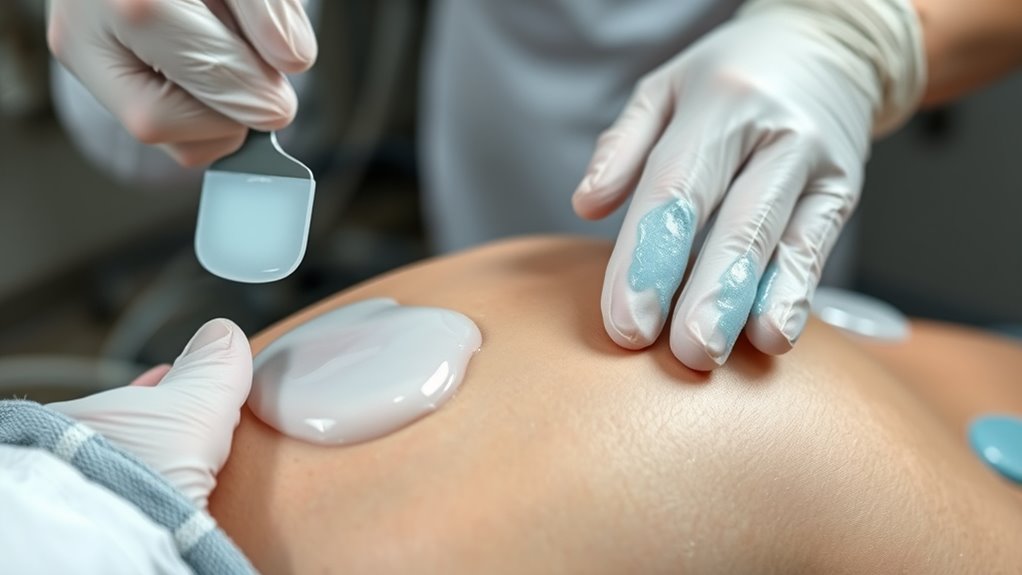
Applying gel correctly is essential for maximizing the effectiveness of RF and ultrasound treatments. Use proper gel application techniques by applying a generous, even layer to ensure good contact between the device and skin. Avoid air pockets, which can reduce treatment efficiency, by spreading the gel smoothly. Keep the gel at a comfortable temperature to enhance patient comfort strategies—warm gel often feels more soothing. Regularly check the gel’s coverage during the procedure, reapplying as needed to maintain consistent contact. Remember, a thin, uniform layer minimizes gel waste and optimizes transmission. Prioritize patient comfort by informing them about the process and addressing any sensitivities. Following these best practices ensures effective treatment delivery and a positive patient experience.
Frequently Asked Questions
Can I Use the Same Gel for Both RF and Ultrasound Treatments?
You might wonder if you can use the same gel for both RF and ultrasound treatments. While it might seem convenient, gel composition and device compatibility matter. RF gels are specially formulated to conduct radiofrequency energy efficiently, whereas ultrasound gels are designed to transmit sound waves. Using the wrong gel could reduce effectiveness or even damage your device. Always choose gels recommended for each device to guarantee safety and ideal results.
How Often Should I Replace Gels to Maintain Treatment Effectiveness?
Think of your gel like a fresh fruit; it stays best when used within its gel shelf life. You should replace it regularly to guarantee ideal treatment effectiveness. Store gels properly with gel storage tips—keep them in a cool, dry place and sealed tightly. Check the expiration date often, and don’t use expired gel, as it can compromise results. Regular replacement keeps your treatments safe and effective.
Are There Specific Ingredients to Avoid in RF or Ultrasound Gels?
When choosing RF or ultrasound gels, you should consider ingredient safety and gel composition. Avoid gels with harsh chemicals, fragrances, or alcohol, as they can cause skin irritation or interfere with device performance. Look for products with safe, hypoallergenic ingredients designed for medical use. By paying attention to gel composition, you guarantee effective treatment and minimize risks, making your procedures safer and more comfortable.
Do Gels Affect the Longevity of RF and Ultrasound Device Components?
While gels might seem simple, they can impact your device’s longevity through gel conductivity and contamination. Poor quality gels or those not suited for RF or ultrasound can cause buildup or corrosion, risking damage over time. Using the right gel minimizes contamination and maintains ideal conductivity, protecting your device components and ensuring consistent performance. Always choose gels designed specifically for your device type to prolong its lifespan and effectiveness.
Can Gel Choice Influence Patient Comfort During Procedures?
Gel choice directly impacts patient comfort during procedures. Proper gel application guarantees smooth movement of the device, reducing discomfort. Using the right gel minimizes skin irritation and helps maintain good contact, enhancing the overall patient experience. When you select a high-quality, compatible gel, patients feel more at ease, making their procedure more effective and less stressful. Focus on gel application to optimize both comfort and treatment outcomes.
Conclusion
So, next time you’re tempted to reuse that generic gel, remember: your skin’s safety and your results deserve better. Mixing up the wrong gel with your fancy RF or ultrasound device isn’t just a faux pas—it’s a recipe for less-than-stellar outcomes and skin drama. Treat your equipment and your skin like royalty. After all, investing in the right gel is the tiny step that keeps your treatments smooth, safe, and sensational. Don’t skimp—your skin’s worth it!