Blue light therapy is a proven way to relieve Seasonal Affective Disorder symptoms by mimicking natural sunlight and helping regulate your internal clock. To get the best benefits, sit in front of a 10,000 lux light box for about 20-30 minutes each morning, with your eyes open but not staring directly into the light. Consistency is key, and adjusting the routine can help minimize side effects. If you want to learn more about how to use it effectively, keep exploring this topic.
Key Takeaways
- Blue light therapy mimics natural sunlight to alleviate SAD symptoms and boost mood during winter months.
- Use a 10,000 lux light box for 20-30 minutes each morning for optimal results.
- Position the light at an angle with eyes open without staring directly at it.
- Consistent daily sessions in the morning help regulate circadian rhythms and improve energy.
- Monitor for side effects like eye strain, adjusting distance or duration as needed, and consult a healthcare provider if necessary.
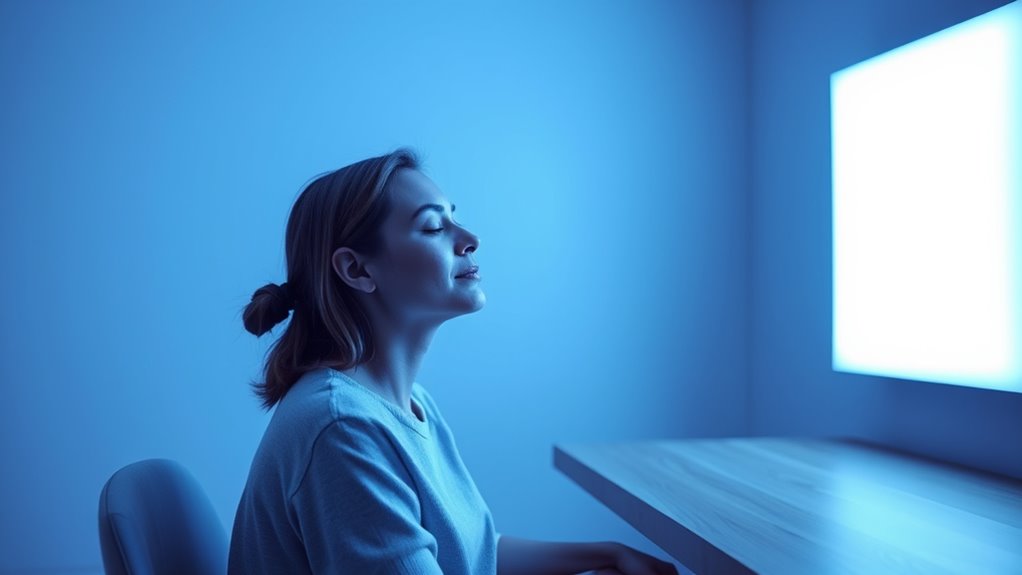
If you struggle with feelings of depression and low energy during the shorter days of winter, blue light therapy might offer relief. Many people find that exposure to specific wavelengths of light can help regulate their circadian rhythms and improve mood. To get the most benefit, it’s essential to understand how to use a light box effectively. The key to success lies in consistency and proper timing. Light box effectiveness depends largely on your daily exposure routines, so establishing a routine that fits your schedule is vital. Ideally, you should sit in front of the light box each morning, shortly after waking up, for about 20 to 30 minutes. During this time, you want to ensure that your eyes are open and directed toward the light, but you don’t need to stare directly into the source. Instead, position the light box at an angle that allows the light to reach your eyes indirectly, mimicking natural sunlight.
Choosing the right light box makes a difference. Look for one that emits the appropriate intensity—generally, 10,000 lux is recommended for effective treatment. Make sure it’s designed specifically for light therapy and has been tested for safety and efficacy. When starting your daily routine, begin with shorter sessions if you’re new to light therapy, then gradually increase to the recommended duration. Consistency is vital, so try to incorporate your light exposure into your daily schedule without skipping days. Skipping sessions can diminish the benefits and delay your progress.
It’s also important to note that the timing of your exposure impacts its effectiveness. Morning sessions tend to be the most beneficial for alleviating SAD symptoms because they help reset your internal clock. If you find that morning light doesn’t suit your routine, speak with a healthcare provider about alternative timing options. Keep in mind that some people experience minor side effects like eye strain or headaches, but these usually subside after a few days of regular use. Adjusting the distance between you and the light box or reducing the exposure time can help minimize discomfort.
10,000 lux blue light therapy light box
As an affiliate, we earn on qualifying purchases.
As an affiliate, we earn on qualifying purchases.
Frequently Asked Questions
Can Blue Light Therapy Be Combined With Medication for SAD?
Yes, you can combine treatments like blue light therapy with medication for SAD, but you should always check medication safety with your healthcare provider first. Combining treatments can enhance your mood improvement, but it’s crucial to confirm they’re compatible and won’t cause adverse effects. Your doctor can guide you on the best approach, helping you safely integrate blue light therapy with any prescribed medication for ideal results.
What Are the Potential Long-Term Effects of Blue Light Therapy?
You might wonder about the long-term safety and sustained effectiveness of blue light therapy. Research suggests that, when used appropriately, it’s generally safe with minimal side effects, but long-term effects aren’t fully comprehended yet. Regular use can maintain its effectiveness over time, but it’s wise to consult your healthcare provider periodically to ensure continued safety and to monitor how well it works for you in the long run.
Is Blue Light Therapy Safe for Children or Teenagers?
Think of blue light therapy as a trusted guide, but one that needs careful handling. It’s generally safe for teen use when supervised by a healthcare professional, but child safety is a priority—its effects on young eyes aren’t fully comprehended yet. Always consult your child’s doctor first, weigh potential benefits against risks, and ensure proper eye protection. Your vigilance helps ensure safe, effective treatment for your child’s well-being.
How Does Blue Light Therapy Compare to Other Light Treatments?
You’ll find that blue light therapy has a favorable comparative efficacy compared to other light treatments, often providing quicker relief. Its side effect profile is generally mild, with fewer issues like eye strain or headaches. While full-spectrum or white light therapy covers broader wavelengths, blue light targets specific receptors, making it a popular choice for those seeking a focused, effective treatment with minimal discomfort.
What Should I Do if Blue Light Therapy Doesn’T Work?
Think of your treatment journey as steering through a vast forest. If blue light therapy doesn’t work, don’t hesitate to explore alternative treatments like medication or counseling. Consult your healthcare provider about therapy adjustments—perhaps changing the light’s intensity or duration. Staying open to different options helps you find the right path, ensuring you don’t get lost and continue progressing toward better mental health.
As an affiliate, we earn on qualifying purchases.
Conclusion
So, next winter, when the days are gloomier than your Monday mornings, just grab a blue light and pretend you’re basking in the Caribbean sun. Who needs tropical getaways when you’ve got a fancy lamp? Blue light therapy might not turn you into a sun-kissed superstar, but it’s a bright idea for fighting off those seasonal blues—without the sunscreen or awkward beach selfies. Shine on, you hopeful sun-chaser, shine on.
light therapy device for seasonal affective disorder
As an affiliate, we earn on qualifying purchases.
As an affiliate, we earn on qualifying purchases.
As an affiliate, we earn on qualifying purchases.