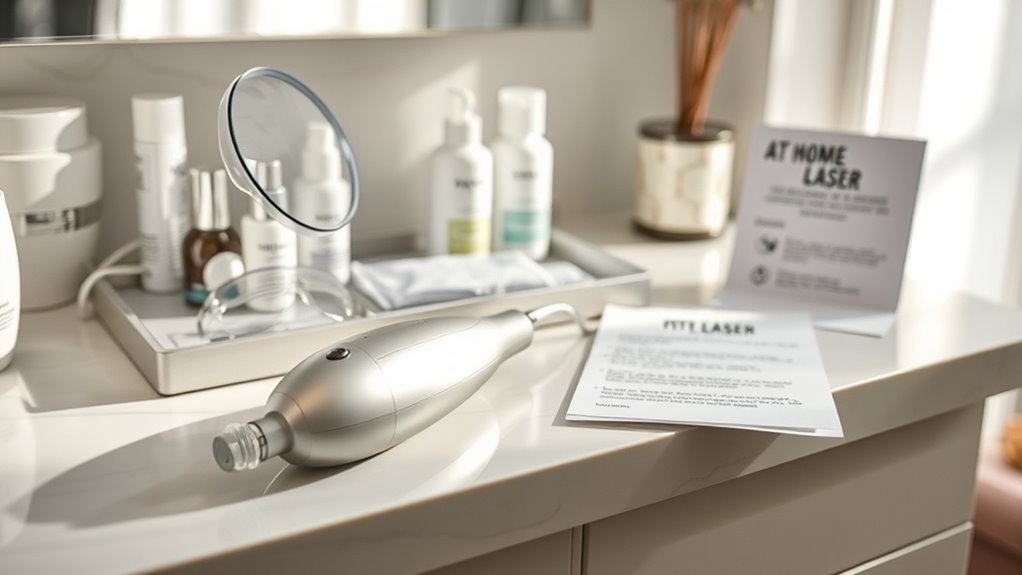

To avoid common mistakes with at-home laser treatments, always follow the manufacturer’s instructions carefully, verify your skin is properly prepared, and perform a patch test first. Don’t skip safety precautions like wearing protective eyewear and avoiding makeup or lotions beforehand. Be consistent with your schedule and avoid using heavy creams that may irritate your skin. Staying informed and vigilant will help prevent setbacks—keep going to discover more tips to optimize your results safely.

Get wellness gear delivered free — and shop member deals
- Fast, free delivery on millions of items
- Access to Prime Big Deal Days deals on October 6–7
- Prime Video, Amazon Music and more included
Key Takeaways
- Always read and follow the manufacturer’s instructions carefully before use.
- Perform a patch test to check for adverse skin reactions prior to full treatment.
- Ensure skin is clean, dry, and free of lotions or oils to maximize safety and effectiveness.
- Wear protective eyewear and avoid direct eye exposure during laser sessions.
- Maintain consistent treatment schedules and avoid skipping prep steps for optimal results.

At-home laser treatments can be an effective way to improve your skin, but only if you avoid common mistakes. The first step toward safe and successful results is understanding laser safety. Without proper precautions, you risk burns, pigmentation changes, or other skin damage. Always read the manufacturer’s instructions thoroughly before starting. Make sure your device is approved for at-home use and follow safety guidelines carefully. Wearing protective eyewear is often recommended to shield your eyes from laser light. Keep the treatment area clean and free of makeup, lotions, or oils to prevent adverse reactions. If you have any skin conditions or are unsure about your skin’s suitability for laser therapy, consult a dermatologist beforehand. Failing to prioritize laser safety can lead to unnecessary complications and setbacks in your skincare journey.
Equally important is skin preparation, which sets the foundation for effective treatment and minimizes risks. Before you begin, ensure your skin is fresh and clean. Gently wash the area with a mild cleanser and pat it dry—nothing abrasive or irritating. Avoid sun exposure for at least a few days before treatment, as tanned or sunburned skin can increase the likelihood of side effects like hyperpigmentation. Applying a soothing, fragrance-free moisturizer can help keep your skin hydrated, but avoid heavy creams or products with active ingredients that could cause irritation. Some devices recommend shaving the area beforehand to ensure the laser targets hair follicles directly and to reduce the risk of skin burns. Also, check if you need to perform a patch test on a small area first; this can help you gauge how your skin reacts before committing to a full treatment. Proper skin preparation not only improves the effectiveness of the laser but also reduces discomfort and potential complications. Understanding dream symbols related to health can sometimes help you recognize early signs of skin issues or reactions.
Remember that at-home laser treatments aren’t a quick fix. Consistency, patience, and proper technique are key. Skipping steps like thorough skin prep or ignoring safety instructions can compromise your results and your skin’s health. Keep in mind that these devices aren’t suitable for everyone—certain skin tones and conditions may require professional evaluation. By taking laser safety seriously and preparing your skin properly, you set yourself up for safer, more effective treatments. With careful attention to these aspects, you can enjoy smoother, clearer skin without the pitfalls that often come with improper at-home laser use.
at-home laser hair removal device
As an affiliate, we earn on qualifying purchases.
As an affiliate, we earn on qualifying purchases.
Frequently Asked Questions
Can At-Home Laser Treatments Permanently Remove Hair?
At-home laser treatments can markedly reduce hair growth, but they usually don’t permanently remove hair. Laser hair removal targets hair follicles to slow regrowth, yet some hairs may come back over time. Always prioritize safety concerns by following instructions carefully to avoid skin damage. While consistent use can lead to long-lasting results, complete and permanent removal typically requires professional treatments. Stay cautious and manage expectations for best results.
Are There Any Skin Conditions That Prevent Laser Use?
Certain skin conditions, like high skin sensitivity or immune conditions, can prevent you from safely using laser treatments. If you have eczema, psoriasis, or a compromised immune system, laser therapy might worsen your skin or cause adverse reactions. Always consult a dermatologist or healthcare professional first. They can evaluate your skin’s health and determine if laser treatments are suitable, helping you avoid potential complications or damage.
How Often Should I Replace the Laser Device?
Think of your laser device as a trusty steed—regular care keeps it running smoothly. You should replace your device based on the manufacturer’s recommended replacement schedule, typically after 3-5 years or once it shows signs of diminished effectiveness. Proper device maintenance, including cleaning and following usage guidelines, guarantees safety and peak results. Don’t wait until it’s too late; staying proactive helps you achieve the best at-home laser treatment outcomes.
Is It Safe to Use Laser Treatments During Pregnancy?
During pregnancy, it’s safest to avoid laser treatments altogether. Pregnancy safety is a top priority, and laser contraindications include hormonal changes and skin sensitivity that can make treatments risky. You should consult your healthcare provider before using any laser devices while pregnant. Typically, professionals recommend postponing laser treatments until after delivery to prevent potential harm to you or your baby.
Can Laser Treatments Cause Long-Term Skin Damage?
Laser treatments can cause long-term skin damage if you don’t prioritize laser safety and consider your skin sensitivity. If you use the device improperly or ignore skin reactions, you risk permanent scars or discoloration. Always follow instructions carefully, perform patch tests, and consult a professional if unsure. By being cautious and attentive to your skin’s response, you can reduce the risk of lasting damage and enjoy safe, effective results.
As an affiliate, we earn on qualifying purchases.
Conclusion
By staying informed and following proper guidelines, you can safely enjoy the benefits of at-home laser treatments. Remember, rushing or ignoring instructions increases the risk of adverse effects. Are you willing to compromise your skin’s health for quick results? Prioritize patience and caution, and you’ll achieve smoother, healthier skin without unnecessary mistakes. With careful attention, at-home laser treatments can be a safe and effective part of your skincare routine.
As an affiliate, we earn on qualifying purchases.
pre-treatment skin cleansing products
As an affiliate, we earn on qualifying purchases.
As an affiliate, we earn on qualifying purchases.
Fall Picks
fall essentials
As an affiliate, we earn on qualifying purchases.