Infrared heat warms objects and people directly with electromagnetic waves, providing instant, efficient comfort without relying on air circulation. Unlike traditional systems that heat the air through convection, infrared heats surfaces, furniture, and skin, leading to more even warmth and fewer drafts. It’s often more cost-effective, energy-efficient, and easier to control, especially with smart systems. If you want to understand how this technology offers better comfort and savings, keep exploring the details.

Get wellness gear delivered free with Prime
- Fast, free delivery on millions of items
- Prime Video, Amazon Music and more included
- Member-only deals all year
Key Takeaways
- Infrared heat directly warms objects and people, while traditional systems heat the air through convection.
- Infrared provides immediate, uniform warmth without relying on air circulation, unlike convection-based heating.
- Infrared systems are more energy-efficient, reducing waste from duct losses and cycling inefficiencies.
- Infrared radiation is safe and does not pose health risks like ultraviolet rays; it is part of the electromagnetic spectrum.
- Infrared heating requires less maintenance and integrates easily with smart home systems for precise control.
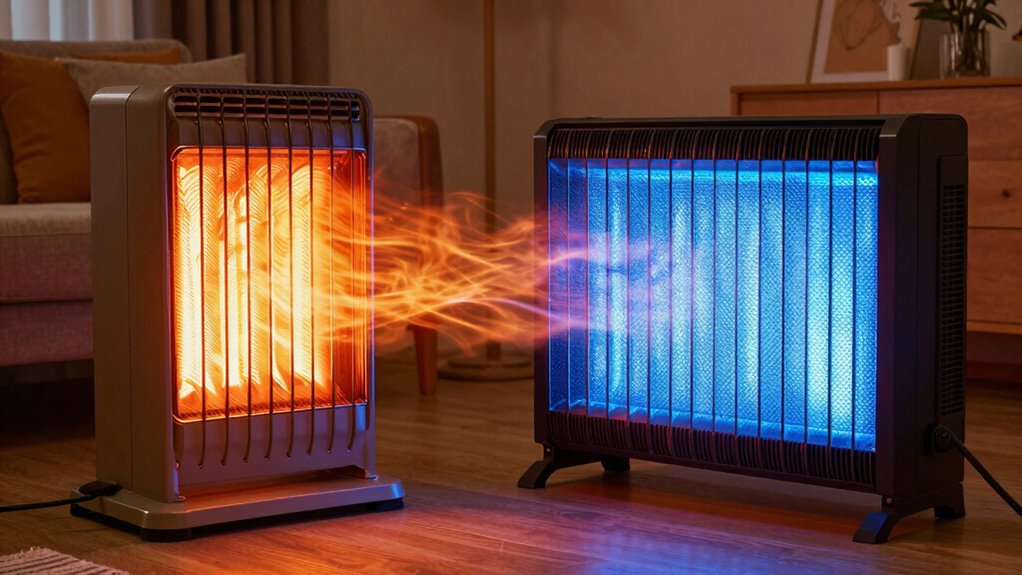
When choosing a heating system, understanding the differences between infrared heat and traditional heat can help you make an informed decision. Traditional heating methods, like central furnaces or radiators, warm the air through convection currents. As the air heats up, it rises, creating circulation that distributes warmth throughout a room. This process can be inefficient, often leading to uneven temperatures and energy waste, since much of the heat is lost through ducts or windows. In contrast, infrared heat directly warms objects and people within its line of sight, much like the sun’s rays. Instead of heating the air, infrared panels emit electromagnetic waves that transfer energy via infrared radiation.
Infrared heating warms objects directly, offering faster, more efficient comfort without relying on air circulation.
A key distinction lies in how each method interacts with your environment. Traditional systems rely heavily on convection currents, which involve warm air rising and cooler air sinking, establishing ongoing circulation patterns. These currents can cause drafts or uneven heating, especially in larger spaces. Infrared heat, on the other hand, bypasses the air altogether, heating surfaces, furniture, and your skin directly. This results in a more consistent and immediate warmth, without the drafts or temperature stratification common with convection-based systems. Additionally, infrared heating can be more compatible with smart home integration, allowing for more precise control and energy management. Infrared systems also tend to be more cost-effective over time due to their lower energy consumption and maintenance requirements.
Another important difference involves ultraviolet radiation. While infrared radiation is part of the electromagnetic spectrum, it’s not the same as ultraviolet radiation, which is often associated with sunlight and can cause skin damage. Infrared heat produces longer wavelengths that are safe and comfortable for indoor use. Unlike ultraviolet rays, infrared waves don’t pose health risks and are focused on delivering warmth efficiently. Infrared heating systems also tend to be more energy-efficient because they don’t waste energy warming the air that quickly disperses. Additionally, infrared heating often contributes to improved indoor air quality, since it doesn’t circulate dust and allergens as much as traditional systems. Infrared systems tend to be more energy-efficient because they don’t waste energy warming the air that quickly disperses. Instead, they focus energy directly where it’s needed, cutting down on energy bills and providing faster comfort. Traditional systems can cycle on and off frequently, wasting energy in the process, especially if rooms are poorly insulated. Infrared heaters work more steadily, maintaining consistent warmth without constantly running.
Products Worth Considering

Philips Sonicare DiamondClean Smart 9300 Electric Toothbrush, Black

Levoit Vital Pet Pro Smart Air Purifier for Pets, White

Hyperice Hypervolt 3 Percussion Massage Gun with Heated Head and Premium Carry Case
As an affiliate, we earn on qualifying purchases.
Frequently Asked Questions
Can Infrared Heaters Be Used Outdoors Effectively?
Yes, infrared heaters can be used outdoors effectively. They are designed with outdoor durability and weather resistance in mind, allowing them to withstand elements like rain and wind. You should make sure you select a model specifically rated for outdoor use to maximize safety and efficiency. Proper installation and placement also help optimize their performance, making infrared heaters a reliable, energy-efficient option for outdoor heating needs.
How Does Infrared Heat Impact Indoor Air Quality?
Imagine infrared heat as a gentle breeze that warms your skin directly, without stirring dust or allergens. It doesn’t circulate air like traditional systems, so it doesn’t disturb indoor air quality. This means less airborne dust, pollen, or pollutants, supporting your respiratory health. Incorporating infrared heating can enhance indoor air filtration, making your space healthier and more comfortable, especially if you suffer from allergies or asthma.
Are Infrared Heaters Energy-Efficient Compared to Traditional Systems?
Infrared heaters are generally more energy-efficient than traditional systems because they provide direct heat, leading to significant energy savings. You can enjoy better temperature regulation since infrared heaters warm objects and people directly, rather than heating the air first. This targeted heating means less energy is wasted, reducing your utility bills and making infrared options a smarter, more sustainable choice for your space.
What Safety Precautions Are Necessary With Infrared Heating?
To guarantee safety with infrared heating, follow essential safety tips like keeping flammable objects away from the heater and avoiding direct skin contact, as surfaces can get hot. Regularly inspect cords and connections for damage, and install units properly to prevent hazards. Always use heaters in well-ventilated areas to promote hazard prevention. By staying cautious and adhering to safety tips, you protect yourself and minimize risks associated with infrared heating.
Do Infrared Heaters Require Special Maintenance or Cleaning?
Infrared heaters require minimal maintenance, but regular cleaning is essential. You should routinely perform infrared maintenance by cleaning the heating elements and reflective surfaces with a soft cloth and mild cleaner to prevent dust buildup. Follow the manufacturer’s cleaning procedures closely, avoiding harsh chemicals. This guarantees the heater operates efficiently, prolongs its lifespan, and maintains safety. Always turn off the unit and unplug it before cleaning to prevent accidents.
Conclusion
In the gentle dance between infrared and traditional heat, you might find infrared’s tender touch more soothing and energy-efficient, offering a softer, more comforting warmth. While traditional heat has its steadfast charm, infrared’s subtle embrace can feel like a whisper of warmth that nurtures your space quietly and efficiently. So, as you explore your heating options, consider how a gentle, unobtrusive glow might just be the cozy companion your home has been quietly longing for.