Infrared saunas use infrared heaters to directly warm your body at lower temperatures, making sessions more comfortable and energy-efficient. Traditional saunas heat the air to higher temps, creating intense heat that quickly causes sweating but can be overwhelming. Infrared models promote deeper detoxing through longer, relaxed sessions, while traditional ones offer a more intense experience. To discover more about which type suits your wellness goals, keep exploring the differences.

Get wellness gear delivered free — and shop member deals
- Fast, free delivery on millions of items
- Access to Prime Big Deal Days deals on October 6–7
- Prime Video, Amazon Music and more included
Key Takeaways
- Infrared saunas heat the body directly using infrared radiation, while traditional saunas heat the air to warm the entire room.
- Infrared saunas promote deeper, longer-lasting sweat at lower temperatures, enhancing detoxification comfort.
- They consume less energy and reach desired temperatures faster compared to traditional saunas.
- Infrared heat provides a gentle, tolerable experience suitable for extended sessions; traditional saunas offer intense heat that may cause quicker fatigue.
- Infrared saunas are more modern, efficient, and environmentally friendly, whereas traditional saunas provide a classic, high-temperature experience.
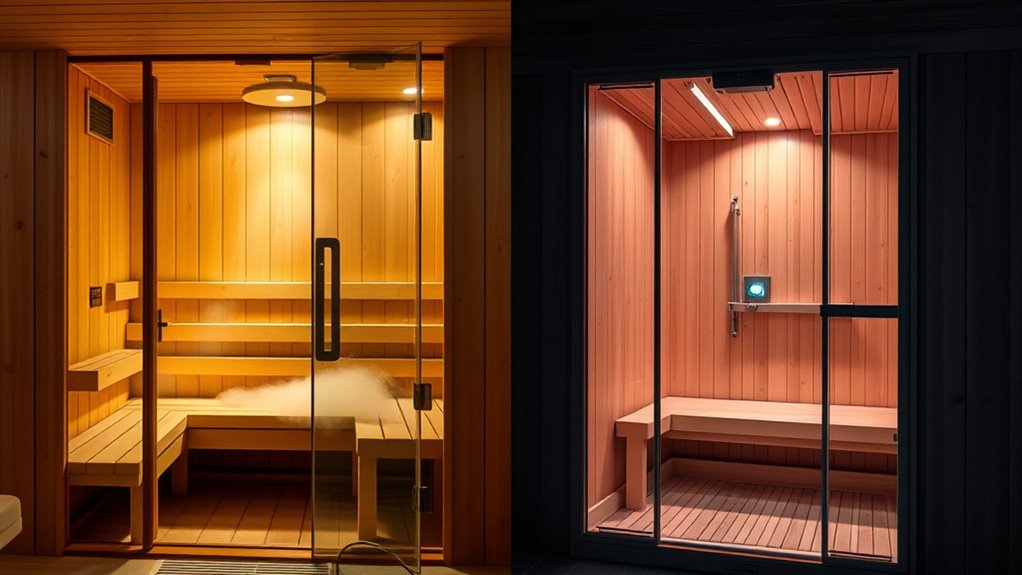
When choosing between infrared and traditional saunas, understanding their differences can help you make an informed decision. Both types of saunas offer relaxation and health benefits, but they operate differently, impacting factors like detox benefits and energy consumption. Infrared saunas use infrared heaters to emit radiant heat, which directly warms your body without substantially heating the surrounding air. Traditional saunas, on the other hand, heat the air to high temperatures—usually between 150°F and 195°F—using either wood-burning or electric heaters. This difference in heating methods influences how your body responds during each session, as well as their overall energy efficiency.
Choosing between infrared and traditional saunas depends on your health goals and comfort preferences.
In terms of detox benefits, infrared saunas tend to be more effective for some users because they promote deeper sweating at lower temperatures. The infrared heat penetrates your skin more deeply, encouraging your body to release toxins more efficiently. Many people find that they can stay in infrared saunas longer without feeling overwhelmed by the heat, which can enhance detoxification. Traditional saunas create a hotter environment that causes rapid sweating, but the higher temperature can also lead to quicker fatigue or dehydration. While both types support detoxification, infrared saunas are often preferred for their ability to induce a more prolonged and comfortable sweat at lower ambient temperatures.
Energy consumption is another essential factor to consider. Infrared saunas generally consume less power because they heat your body directly rather than heating the entire room. This targeted heating process means they reach the desired temperature faster and with less energy, making them more cost-effective and environmentally friendly over time. Traditional saunas require more energy because they need to heat a larger volume of air and the whole enclosure to high temperatures. This can lead to higher utility bills, especially if you use the sauna frequently. If energy efficiency and lower operating costs are priorities for you, infrared saunas offer a notable advantage.
Additionally, the heating experience itself varies considerably. Infrared saunas provide a gentle, soothing heat that many find more tolerable, especially for longer sessions. Traditional saunas deliver intense heat that can feel overwhelming initially but may be preferred by those seeking a more intense experience. Each type offers unique benefits, but understanding these differences in detox benefits and energy consumption can help you select the sauna that aligns best with your health goals, comfort level, and budget. Moreover, recent advancements in infrared technology have improved their safety and effectiveness, making them an increasingly popular choice. Ultimately, whether you choose infrared or traditional, both can contribute positively to your wellness routine when used appropriately.
infrared sauna for detoxification
As an affiliate, we earn on qualifying purchases.
As an affiliate, we earn on qualifying purchases.
Frequently Asked Questions
Which Sauna Type Offers Faster Heat-Up Times?
You’ll find infrared saunas heat up faster because they use infrared heaters that directly warm your body, resulting in quicker heat-up times. Unlike traditional saunas that rely on heating the air and then your body, infrared saunas offer precise temperature control, allowing you to reach your desired heat level swiftly. This makes infrared saunas ideal if you want a rapid, customizable experience without waiting long for the heat to develop.
Are Infrared Saunas More Energy-Efficient Than Traditional Saunas?
Imagine two saunas—one glowing warmly and slowly, the other warming quickly with less energy. Infrared saunas are more energy-efficient because they use less power to reach the same temperature. This means you get better energy savings, and their lower power consumption reduces electricity bills. So, when comparing the two, infrared saunas offer a smarter, eco-friendly option if you’re looking to save energy without sacrificing comfort.
How Do Maintenance Requirements Differ Between the Two?
You’ll find that maintenance needs differ mainly in cleaning frequency and ventilation needs. Infrared saunas require less frequent cleaning since they produce less sweat and odors, making cleanup easier. Traditional saunas, on the other hand, need more regular cleaning due to increased sweating and humidity, and they also demand better ventilation to prevent mold and mildew. Regularly wiping down surfaces and ensuring proper airflow keeps both types in top shape.
Can Infrared Saunas Provide the Same Health Benefits as Traditional Saunas?
Yes, infrared saunas can provide many of the same health benefits as traditional saunas through infrared therapy. You may experience improved circulation, relaxation, and detoxification, similar to traditional benefits. While the heat penetrates differently—infrared heats your body directly—you still get benefits like muscle relief and stress reduction. Many users find infrared saunas a convenient, effective alternative that delivers comparable health advantages without the intense heat of traditional options.
Are There Specific Health Conditions That Favor One Type Over the Other?
If you have chronic pain, infrared saunas might be better since they penetrate deeper and offer relief without high heat. However, if you have heart conditions, traditional saunas could be more suitable because they allow you to control exposure and temperature more easily. Always consult your healthcare provider before choosing, as individual health factors greatly influence which sauna type benefits you most.
As an affiliate, we earn on qualifying purchases.
Conclusion
Choosing between infrared and traditional saunas is like picking the perfect dance partner—you’ll want one that moves with your rhythm. Infrared saunas offer a gentle, penetrating heat that soothes like a warm embrace, while traditional saunas bring a bold, steamy burst of energy. Consider your preferences and health needs, and you’ll find your ideal match. Whichever you choose, both invite you into a relaxing, rejuvenating experience that’s as invigorating as a breath of fresh air after a storm.
As an affiliate, we earn on qualifying purchases.
As an affiliate, we earn on qualifying purchases.
Fall Picks
fall essentials
As an affiliate, we earn on qualifying purchases.