
TL;DR
A Fit&Well report describes a floor-to-stand fitness test that checks whether someone can sit on the floor and rise without using their hands. Research has linked lower scores on the related sitting-rising test with higher mortality, but that association does not show that difficulty rising causes a health problem or predicts an individual’s outcome.
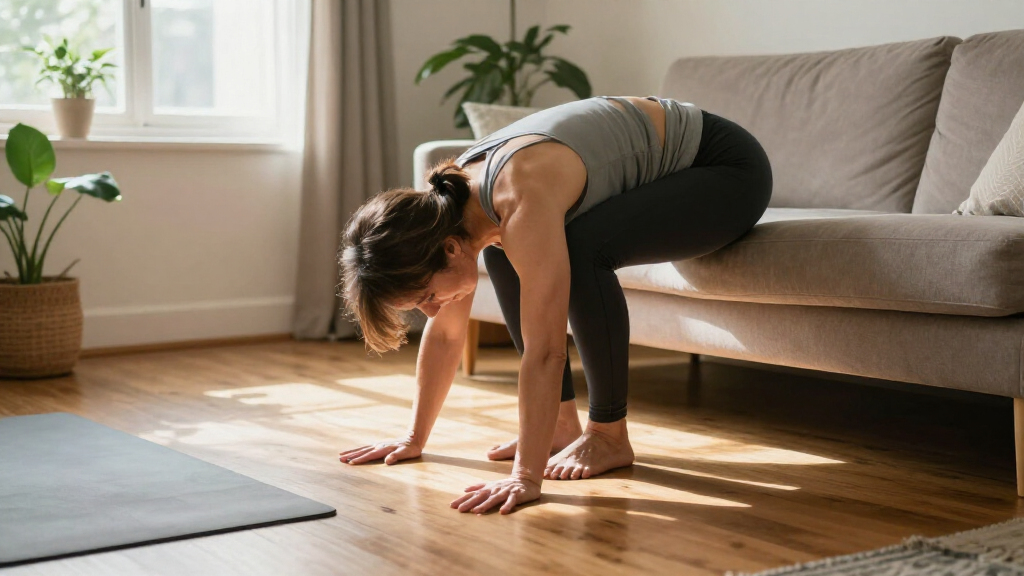
A floor-to-stand test asks whether a person can sit on the floor and get back up without using their hands, and a Fit&Well report says difficulty with the movement may point to limitations in mobility or strength. The report connects the test to research finding an association between lower scores on a related assessment and higher mortality rates, but the result is not a diagnosis or a prediction of what will happen to any one person.

Get wellness gear delivered free with Prime
- Fast, free delivery on millions of items
- Prime Video, Amazon Music and more included
- Member-only deals all year
The test was one of five suggested by Yancy Culp, a coach and Spartan DEKA co-creator, to help people check whether their bodies are managing basic movements. The other tasks were balancing on one leg while doing something, holding a plank for 30 seconds, completing two reverse lunges and walking briskly for 20 minutes. These are informal fitness checks, not a medical screening protocol.
Fit&Well’s reporter said they could not complete the floor-to-stand task without using their hands. The movement resembles the sitting-rising test, developed by Brazilian researchers in the 1990s to assess muscular strength and flexibility. A 2014 study published in the European Journal of Preventive Cardiology reported an association between lower scores on that test and higher mortality rates. The supplied report does not give the study’s sample size, follow-up period or effect estimates.
In an email to Fit&Well, Culp recommended a daily mobility drill he calls “knee rolls.” Starting seated with both knees bent and lowered to one side, the person lifts and moves the knees to the other side while keeping the feet in contact with the floor. He suggested repeating the movement for 20 repetitions, leaning forward at the end of each roll, and using the hands for support if needed. The report offers this as coaching advice, not as a proven treatment or a guarantee that someone will pass the test.
What the Floor Test Can Signal
Getting up from the floor involves more than one ability. It can require hip and leg mobility, strength, balance and coordination, so difficulty may be a prompt to notice how everyday movements are going. The test may be useful as a simple self-check, but a single attempt cannot identify which ability is limited or explain why.
The reported research association is relevant because it links performance on a physical-function test with a broad health outcome. It does not establish that a low score causes mortality, nor does it show that someone who needs their hands to stand has a specific illness or a shortened life expectancy. Readers should not treat the headline’s “bad news” framing as a personal prognosis. A change in ability, pain, falls or trouble with ordinary tasks may be a reason to discuss mobility with a health professional.
Products Worth Considering

Hyperice Hypervolt Go 3 Percussion Massage Gun with Carry Case

Garmin Forerunner 165 GPS Running Smartwatch, 43 mm, Black

Philips Sonicare 7300 Rechargeable Electric Toothbrush with 3 Brush Heads, Black
As an affiliate, we earn on qualifying purchases.
The Test Behind the Headline
The sitting-rising test was developed in Brazil in the 1990s as a way to assess muscular strength and flexibility. In the version described in the Fit&Well report, a person lowers to the floor and rises again while using as little support as possible; the report focuses on whether the movement can be done without hands. That framing is simpler than a full assessment, which can score different forms of support and balance.
Culp’s five checks are presented as ways to “check in with your body and understand whether it’s still doing the basics well,” according to the report. They cover different capacities, from balance to endurance, and are not interchangeable. The source does not say that Culp’s list has been clinically validated or that passing all five indicates a person is healthy.
““Improving hip and overall mobility is very important for this one.””
— Yancy Culp, in an email to Fit&Well
Limits of the Available Evidence
The supplied report provides only a brief description of the 2014 study. It does not include the study’s participants, scoring method, follow-up period, statistical results or adjustments for other health factors. Those details matter when interpreting how strong the association was and whether it applies to people with different ages or health conditions.
It is also unclear whether the reporter’s difficulty reflected limited mobility, strength, balance, technique or another factor. The article does not establish that knee rolls improve a person’s test score or reduce health risks. A self-administered movement test cannot determine the cause of difficulty, and readers should stop if the movement causes pain or feels unsafe.
How to Approach the Movement
Culp’s suggested next step is to practise knee rolls, aiming for 20 repetitions daily while keeping the feet on the floor and leaning forward at the end of each movement. He says hands can be used as stabilisers when needed. Readers should treat this as general coaching guidance, adapt the movement to their abilities and avoid forcing a range of motion.
The report does not provide a clinical follow-up or announce further results. Anyone with persistent difficulty getting up, new weakness, pain, dizziness or a history of falls can ask a clinician or qualified exercise professional for an assessment and suitable exercises. Whether the movement becomes easier over time depends on the individual; the article gives no timeline or guaranteed outcome.
Key Questions
What does the floor-to-stand test involve?
It asks a person to sit on the floor and stand back up, ideally without using their hands. The Fit&Well report describes it as a variation of the sitting-rising test, which assesses movement abilities such as strength and flexibility.
Does failing the test mean I have a health problem?
No. A difficult attempt is not a diagnosis. It may reflect mobility, strength, balance, coordination, pain or other factors, and the test alone cannot identify the cause.
What did the 2014 study find?
As summarized in the report, the study found an association between lower sitting-rising test scores and higher mortality rates. An association does not establish that a low score causes death or predict an individual’s outcome.
What are knee rolls?
They are a seated mobility drill suggested by coach Yancy Culp. With the feet on the floor, the person moves bent knees from one side to the other; Culp recommended 20 repetitions and said hands may be used for support.
When should I seek advice before practising?
If you have pain, balance concerns, a history of falls or a condition that affects movement, ask a health professional about safe options before trying the exercise. Stop if the movement causes pain or feels unsafe.
Source: rss