
TL;DR

Get wellness gear delivered free with Prime
- Fast, free delivery on millions of items
- Prime Video, Amazon Music and more included
- Member-only deals all year
Fit&Well published a yoga therapist’s seven-part chair-based movement routine for older adults, including people with mobility limitations or chronic conditions. The routine uses breathing, arm movements, twists, side bends and seated folds; it is presented as gentle movement guidance, not as a treatment or a substitute for individualized medical advice.
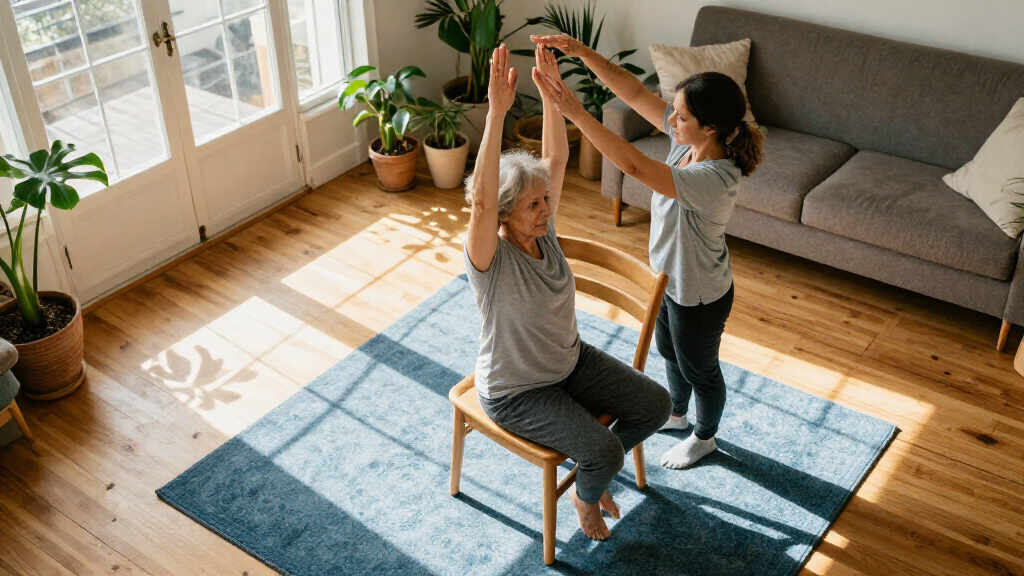
Fit&Well has published a seven-part chair-based movement routine recommended by a yoga therapist who works with older adults, including people with Parkinson’s, other movement disorders and chronic health conditions. The sequence is designed to be done seated and offers an accessible option for people who cannot comfortably exercise on the floor or simply prefer a chair.
The therapist describes using chair-based yoga with people who have limited mobility as well as those who feel more comfortable moving from a seated position. The exercises are intended to involve gentle stretching and joint movement, coordinated with breathing. The therapist says participants can feel calmer and more uplifted after the sessions, but the report does not provide clinical evidence or measured outcomes for those effects.
The proposed routine begins with a minute of settling into a stable seated position, feet flat and hands resting on the lap. It then moves through arm arcs into prayer, seated twists, single- and double-arm raises, side bends, cat-cow movements and forward folds. Suggested repetitions vary by exercise, generally from three to five times, with twists and side bends repeated on each side.
Fit&Well’s instructions call for a sturdy chair and enough surrounding space to raise the arms. They also offer easier options: a participant can hold the chair for support during a side bend or keep hands on the knees during a forward fold. The therapist advises people to stay within their own range and capacity rather than trying to achieve a particular shape.
A Seated Option for Gentle Movement
The routine speaks to older adults who may find floor-based yoga inaccessible, uncomfortable or difficult to enter and leave. Its seated format provides a way to practice coordinated movement without getting down on the floor, while the suggested modifications make clear that range and support can vary from person to person.
That accessibility does not establish that the routine is safe or suitable for every individual. The report offers general instructions, not an assessment of readers’ health or mobility. People with pain, balance concerns, recent injuries or medical conditions may need individualized advice from a health professional before beginning, and should stop if a movement causes pain, dizziness or unusual discomfort.
Products Worth Considering

Oral-B iO5 Rechargeable Electric Toothbrush with 5 Cleaning Modes

Blueair Blue Pure 511i Max Smart Air Purifier

Garmin Forerunner 55 GPS Running Smartwatch, Black
As an affiliate, we earn on qualifying purchases.
How the Seven Moves Are Structured
The sequence starts with posture and natural breathing rather than a strenuous movement. Participants sit toward the back of the chair, with their feet on the floor, and take a moment to notice their bodies. The remaining exercises coordinate movement with inhalation and exhalation: arms rise as the participant breathes in, while several lowering, turning or folding movements occur on an exhale.
The middle of the sequence alternates upper-body movements with gentle spinal mobility. Twists are performed to each side from a seated position, while cat-cow shifts between lifting the chest and rounding the back. The final forward fold can be shortened or supported by placing the hands on the knees. No exact duration for the full routine is given; only the opening settling exercise has a stated time of one minute.
“I encourage everyone to move within the range and capacity of their body—there’s no particular shape or position to achieve.”
— The yoga therapist, in the Fit&Well report
Evidence and Individual Suitability
The supplied report does not identify clinical trials, quantify health effects or establish that the routine improves particular conditions. The therapist’s comments about participants feeling calmer, rested or uplifted are personal observations reported in the article, not measured results. The source also does not specify a full-session duration, how often readers should repeat the routine, or how to adapt every movement for different diagnoses and levels of mobility.
It is also unclear whether a clinician reviewed the sequence for safety across the range of conditions mentioned. The advice to move within personal limits and use chair support is not a substitute for individualized guidance. Readers who are unsure whether an exercise is appropriate can seek advice from a doctor or qualified movement professional familiar with their circumstances.
Choose Support Before Starting
The source presents the routine as a set of exercises readers can try, but it does not announce a formal program, schedule or follow-up study. Anyone choosing to try it can begin with the supported seated position, use only comfortable ranges of motion and leave out movements that cause symptoms. A stable chair should not slide or tip, and the surrounding space should allow arm movements without striking nearby objects.
For people with chronic conditions, movement disorders, recent injuries or significant mobility or balance concerns, the practical next step is to ask a health professional whether the sequence fits their needs and what modifications may be appropriate. The report gives no further update or evidence release to anticipate.
Key Questions
What exercises are included in the chair routine?
The seven movements are settling and breathing, arm arcs into prayer, seated twists, arm raises, side bends, cat-cow and forward folds. Most are suggested for three to five repetitions, while twists and side bends are repeated on both sides.
Who is the routine intended for?
The therapist describes chair-based yoga for older adults and for people who have difficulty with floor-based movement or prefer a chair. The report mentions working with people with Parkinson’s, other movement disorders and chronic health conditions, but it does not say that every exercise is suitable for everyone with those conditions.
What equipment is needed?
The report recommends a sturdy chair and enough space to raise the arms. It suggests holding the chair for extra support during side bends or keeping hands on the knees during a forward fold.
Does the report prove the exercises improve health?
No. It reports the therapist’s approach and observations about how participants may feel, but provides no clinical study or measured outcomes demonstrating that the routine treats a condition or produces a specific health benefit.
Should someone with a health condition check before trying it?
People with health conditions, pain, balance difficulties or recent injuries should seek individualized professional guidance if they are unsure whether the movements are appropriate. The therapist advises staying within a comfortable range rather than forcing a position.
Source: fitandwell.com