
To use scalp tools without irritating your roots, choose gentle tools with soft bristles or smooth edges designed for scalp use, and always inspect them for damage. Use light, consistent circular motions and avoid lingering on sensitive areas. Apply scalp oils or serums to reduce friction and make sure your scalp isn’t red or sore before massaging. Keep tools clean and replace damaged ones promptly. Following these tips can help protect your roots and promote healthier hair growth—stay with us for more expert advice.

Get wellness gear delivered free with Prime
- Fast, free delivery on millions of items
- Prime Video, Amazon Music and more included
- Member-only deals all year
Key Takeaways
- Use gentle, smooth-edged tools designed for scalp use to prevent irritation.
- Apply light, consistent pressure and avoid pressing too hard on sensitive areas.
- Clean tools thoroughly before each use to maintain scalp hygiene and prevent infection.
- Incorporate scalp oils or serums to reduce friction and soothe the scalp during massage.
- Monitor your scalp’s response and stop if you notice redness, soreness, or discomfort.

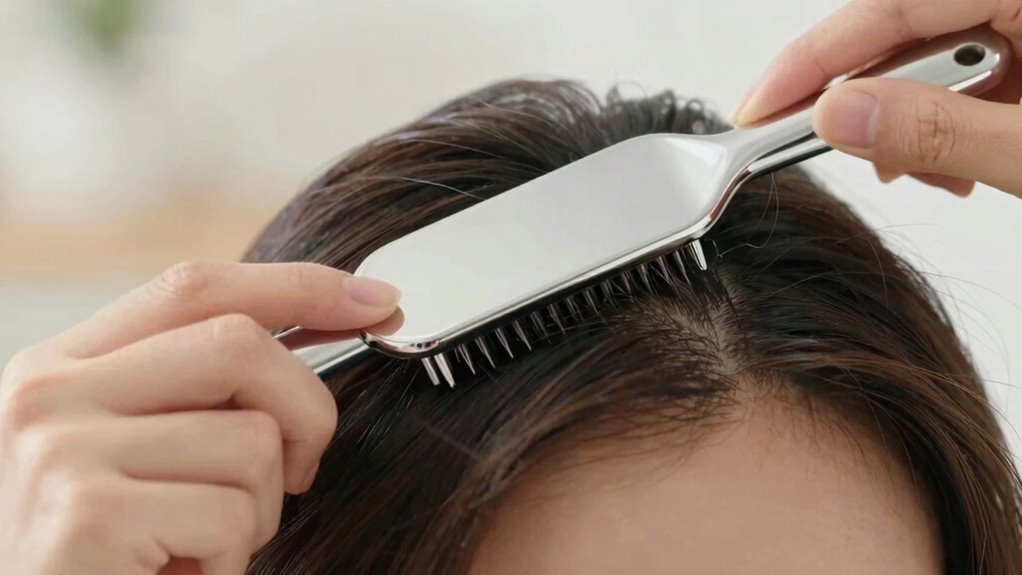
Using scalp tools can be a great way to promote healthy hair and stimulate your scalp, but if you’re not careful, they can also cause irritation and damage to your roots. To get the benefits without the drawbacks, it’s essential to approach scalp massage with care. Start by selecting a gentle tool designed for scalp use—something with soft bristles or smooth edges. Applying too much pressure can irritate your scalp or pull on your hair, so use light, circular motions. This stimulates blood flow and encourages hair growth without risking damage. Remember, the goal is to invigorate your scalp, not to scrub or scrape harshly, which can lead to inflammation or hair breakage.
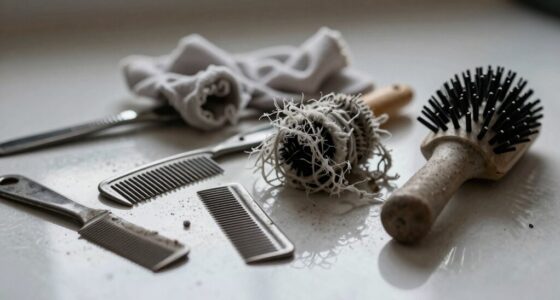
Tool hygiene is another critical factor in avoiding irritation. Before each use, wash your scalp tools thoroughly with warm water and a mild soap or disinfectant. This prevents the buildup of bacteria, oil, or dead skin that can cause infections or clogged follicles. After cleaning, ensure your tools are completely dry before using them again. Using dirty tools can introduce bacteria and irritants to your scalp, undoing any benefits of the massage and potentially worsening scalp conditions. Regularly inspect your tools for signs of wear or damage—splintered or rough edges can scratch or irritate your skin. Incorporating hygienic practices into your routine can significantly reduce the risk of scalp irritation. Additionally, understanding the importance of scalp health helps in choosing the right tools and techniques for optimal results.
When performing a scalp massage, start with clean, dry hair, or slightly damp hair if you prefer. Use gentle, consistent pressure, moving in small circles across your entire scalp. Don’t linger too long on sensitive areas or areas with existing irritation or redness. If you notice any discomfort or discomfort, ease up immediately. You can also incorporate some scalp oils or serums to reduce friction and nourish your scalp during massage, but make sure your tools are clean afterward to prevent buildup. Incorporating knowledge about biodiversity and sustainable practices can also help you choose eco-friendly tools and products that are gentle on your scalp and the environment.
Lastly, be mindful of your scalp’s response. If you notice increased redness, soreness, or shedding, take a break from scalp tools and consult a dermatologist. Consistent, gentle use paired with proper tool hygiene will help you enjoy the benefits of scalp massage without irritating your roots. It’s all about balance—gentle stimulation, cleanliness, and listening to your scalp’s signals. When you follow these practices, you’ll support healthier hair growth and maintain a happy, irritation-free scalp.
Products Worth Considering

Philips Sonicare 5950 Rechargeable Electric Toothbrush with 2 Brush Heads, Pink

Therabody Theragun Relief Massage Gun, 3-Speed, Black

Therabody Theragun Mini 3rd Gen Massage Gun
As an affiliate, we earn on qualifying purchases.
Frequently Asked Questions
Can Scalp Tools Cause Hair Thinning Over Time?
Yes, scalp tools can cause hair thinning over time if used improperly. Overuse or aggressive handling may lead to hair follicle damage and scalp irritation, weakening your roots. To prevent this, use gentle pressure, limit the frequency, and choose tools designed for your scalp type. Proper technique helps maintain healthy hair growth and avoids unnecessary stress on your roots, ensuring your scalp stays healthy and strong.
How Often Should I Use Scalp Tools?
You should use your scalp massager or exfoliating brush no more than twice a week. Overusing these tools can lead to irritation or hair thinning, so it’s essential to give your scalp time to recover. Pay attention to how your scalp responds—if you notice redness or discomfort, cut back. Proper, gentle use helps boost circulation and removes buildup without risking damage, keeping your roots healthy and strong.
Are Scalp Tools Suitable for All Hair Types?
Scalp tools aren’t suitable for all hair types. If you have fine or delicate hair, you might find them too harsh, especially depending on the tool materials like metal or plastic. For thick or curly hair, certain tools can help stimulate growth if used gently. Always consider your hair texture and choose tools designed for your needs. Test a small area first to avoid unnecessary irritation or damage.
What Ingredients Should I Avoid After Using Scalp Tools?
After using scalp tools, you should avoid ingredients like chemical irritants and fragrance additives—they’re like tiny enemies attacking your freshly stimulated scalp. These substances can cause redness, itching, and inflammation, undoing all your careful work. Stick to gentle, nourishing products that soothe and protect your scalp. Your hair deserves kindness, not harsh chemicals that threaten to turn your scalp into a battlefield. Keep it clean, simple, and irritation-free for healthy, happy hair.
Can Scalp Tools Help With Scalp Conditions Like Dandruff?
Yes, scalp tools can help with conditions like dandruff by improving scalp hygiene and promoting better product absorption. When used correctly, they loosen dead skin and excess oil, reducing flakiness and irritation. Regularly using scalp tools can stimulate blood flow, which enhances scalp health. Just make certain you’re gentle to avoid irritation and use soothing products afterward to maintain a balanced scalp environment.
Conclusion
Remember, treating your scalp gently is like tending to a delicate garden—every stroke and pressure should nurture, not harm. Picture your roots as fragile saplings reaching toward the sun, needing careful care to thrive. With mindful movements and gentle touches, you can keep your scalp healthy and irritation-free. Embrace the rhythm of your routine, and watch your roots flourish like a lush, vibrant landscape, full of life and energy.