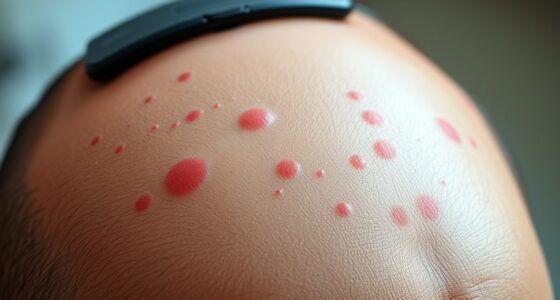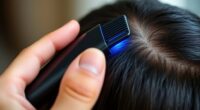
Low-level laser therapy (LLLT) is a safe, non-invasive treatment that uses low-intensity light at specific wavelengths to stimulate your hair follicles. The light penetrates your scalp, boosting cellular activity, increasing energy production, and improving blood flow. This process helps reverse follicle miniaturization and encourages healthier, thicker hair growth over time. If you want to understand how this innovative approach can work for you, there’s more to explore about its mechanisms and benefits.

Get wellness gear delivered free with Prime
- Fast, free delivery on millions of items
- Prime Video, Amazon Music and more included
- Member-only deals all year
Key Takeaways
- LLLT is a non-invasive treatment that stimulates hair follicles using low-intensity red or near-infrared light.
- It promotes hair growth by increasing cellular energy, blood circulation, and reversing follicle miniaturization.
- Proper device selection and adherence to treatment protocols are essential for effective results.
- Results develop gradually over time with consistent use, leading to fuller and healthier hair.
- LLLT offers a safe, painless alternative to surgical or topical treatments for alopecia.

Low-level laser therapy (LLLT) has gained popularity as a non-invasive treatment option for alopecia, offering a promising alternative to traditional methods. This approach uses specialized laser device technology that emits low-intensity light to stimulate hair follicles and promote hair growth. Unlike surgical procedures or topical medications, LLLT is painless, safe, and can be conveniently incorporated into your routine. Understanding how this technology works and the hair regrowth mechanisms involved can help you make an informed decision about whether it’s right for you.
Low-level laser therapy offers a safe, non-invasive way to stimulate hair growth and combat alopecia.
The core of LLLT’s effectiveness lies in its laser device technology, which involves low-power lasers or light-emitting diodes (LEDs). These devices are designed to deliver specific wavelengths of light—usually in the red or near-infrared spectrum—that penetrate the scalp without causing damage. The light energy is absorbed by cells within the hair follicles, leading to a series of biological responses. This targeted approach ensures that only the desired areas are affected, minimizing side effects and maximizing benefits.
As the light interacts with your scalp, a key hair regrowth mechanism is activated. The laser light stimulates cellular activity in the hair follicles, encouraging the production of ATP (adenosine triphosphate), the energy currency of cells. Increased ATP levels boost cellular metabolism, which can reverse miniaturization of hair follicles—a hallmark of androgenetic alopecia—and promote the growth of thicker, healthier strands. Additionally, LLLT enhances blood circulation in the scalp, delivering more oxygen and nutrients to hair follicles, which supports their growth and vitality.
You may notice that consistent use of LLLT leads to gradual improvements in hair density and quality. The process involves a series of biological responses, including reduced inflammation and increased expression of growth factors that are essential for hair regeneration. The cumulative effect of these mechanisms can make your hair look fuller and healthier over time.
It’s important to recognize that not all laser devices are created equal. The effectiveness of your treatment depends on the quality of the device, the specific wavelength used, and adherence to recommended treatment protocols. When choosing a laser device, look for clinically validated products that deliver the appropriate wavelength and power density for hair regrowth. Regular, ongoing sessions are essential, as the biological processes involved take time to produce visible results.
Low Level Laser Therapy for Hair Growth
As an affiliate, we earn on qualifying purchases.
As an affiliate, we earn on qualifying purchases.
Frequently Asked Questions
Are There Any Long-Term Risks Associated With Low-Level Laser Therapy?
There are minimal long-term risks associated with low-level laser therapy, and it’s generally considered safe. Potential side effects are rare but may include temporary scalp irritation or mild discomfort. Studies show good long-term safety, but ongoing research is essential to confirm this. If you follow recommended guidelines and consult with a healthcare professional, you can confidently use low-level laser therapy without worrying about significant long-term dangers.
How Quickly Can I Expect Visible Results From Treatment?
You can expect to see visible improvements within 12 to 26 weeks of consistent low-level laser therapy. Timing expectations vary depending on your hair loss severity and treatment adherence. Usually, you’ll notice increased hair density, thickness, and overall scalp health as early as three months. Keep up with your sessions, and stay patient—most people experience gradual, noticeable results with regular treatment over this period.
Is Laser Therapy Suitable for All Types of Alopecia?
Laser therapy isn’t suitable for all types of hair loss, as treatment compatibility depends on the specific cause. For example, androgenetic alopecia often responds well, but conditions like scarring alopecia may not benefit. You should consult a specialist to determine if laser therapy is appropriate for your hair loss type. They can assess your condition and recommend the most effective treatment options tailored to your needs.
Can I Combine Laser Therapy With Other Hair Loss Treatments?
Sure, you can combine laser therapy with other hair loss treatments—because who wouldn’t want a multi-front attack on thinning hair? Combining treatments like minoxidil, finasteride, or alternative therapies can boost results, but always consult your specialist first. Think of it as a strategic partnership—laser therapy working alongside other options to maximize your chances of regrowth. Just remember, more isn’t always better unless guided properly.
What Is the Recommended Frequency and Duration of Laser Sessions?
You should plan for laser sessions 2 to 3 times a week, with each session lasting about 15 to 20 minutes. Typically, the recommended treatment duration spans 8 to 16 weeks to see noticeable results. Consistency is key, so sticking to the suggested session frequency and duration helps maximize the therapy’s effectiveness. Always follow your provider’s specific instructions for ideal hair regrowth.
Laser Hair Growth Device for Alopecia
As an affiliate, we earn on qualifying purchases.
As an affiliate, we earn on qualifying purchases.
Conclusion
Think of low‑level laser therapy as planting a seed for hair regrowth. With patience and consistent care, it nurtures your scalp, encouraging new growth to emerge. Just like a seed needs time to sprout, your hair needs time to regain strength. Stay committed, and you’ll see your confidence bloom again. Remember, healing is a journey—trust the process, and your hair’s future can flourish brighter than you imagined.
Red Light Therapy Hair Regrowth Device
As an affiliate, we earn on qualifying purchases.
As an affiliate, we earn on qualifying purchases.
Near Infrared Laser Hair Treatment
As an affiliate, we earn on qualifying purchases.
As an affiliate, we earn on qualifying purchases.
Halloween Picks
halloween
As an affiliate, we earn on qualifying purchases.