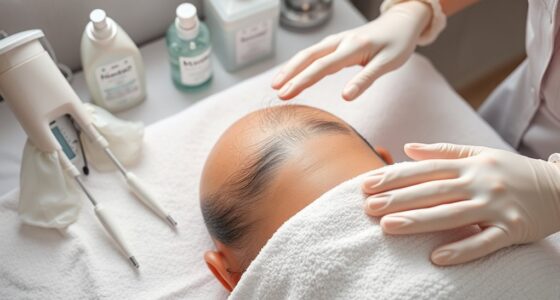
Understanding your hair growth cycle helps you time treatments effectively. Hair goes through three phases: anagen (growth), catagen (transitional), and telogen (resting). For best results, target hairs during the anagen phase, which occurs every 4 to 6 weeks. Proper timing reduces sessions, minimizes irritation, and boosts success. By syncing your treatment schedule with your hair’s cycle, you’ll achieve smoother skin faster—keep going to discover how to optimize your routine even further.
Key Takeaways
- Target hair during the anagen (growth) phase for maximum removal effectiveness.
- Schedule treatments every 4 to 6 weeks to align with hair cycle stages.
- Track individual hair growth patterns to optimize timing and reduce sessions.
- Consider hormonal fluctuations that may alter growth cycles and adjust treatment timing accordingly.
- Use skin sensitivity awareness to prevent irritation and tailor device settings for safe, effective treatments.
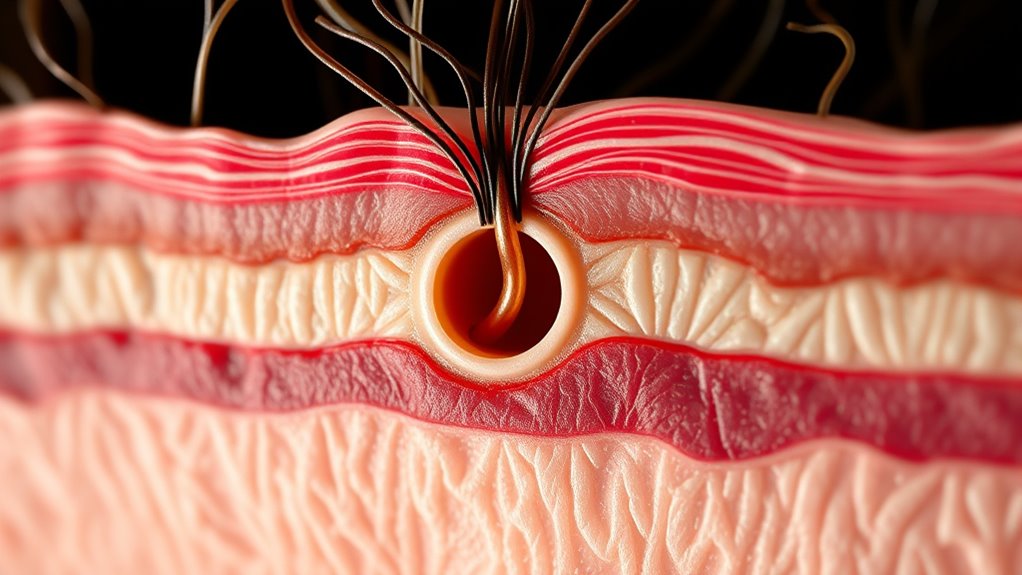
Understanding the hair growth cycle is essential for achieving peak results with hair removal devices. When you know how your hair grows and sheds, you can time your treatments more effectively, leading to smoother skin and fewer sessions overall. Hair doesn’t grow uniformly; instead, it progresses through different phases—anagen (growth), catagen (transitional), and telogen (resting). Your goal is to target hairs during the anagen phase when they are actively growing, as this is when hair removal devices like IPL or laser work best. If you treat hairs outside this phase, your results won’t be as effective, and you might need more sessions. Keeping track of your hair’s growth patterns helps you plan treatments at ideal intervals, usually every 4 to 6 weeks, depending on your hair type and body area. Understanding the hair growth cycle can also help you avoid unnecessary treatments and reduce skin irritation. Hormonal influences play a significant role in your hair growth cycle. Fluctuations in hormones, such as during pregnancy, menopause, or due to medications, can cause hairs to grow faster, thicker, or in new areas. These changes mean you might see inconsistent results or need to adjust your treatment schedule. For example, during hormonal shifts, you could experience increased hair growth or hair in areas where it was previously sparse. Recognizing these influences helps you stay flexible with your routine and understand that some variations are normal. It’s also a good idea to consult with a healthcare provider if you notice sudden changes, as they can advise on managing hormonal impacts and maintaining effective hair removal.
Another factor to take into account is skin sensitivity. Your skin’s reaction to hair removal devices can vary depending on your skin type and condition. Some areas or skin tones are more sensitive and prone to irritation, redness, or pigmentation changes after treatments. Knowing your skin’s sensitivity helps you choose the right device settings—such as lower energy levels or longer intervals between sessions—to minimize discomfort and adverse effects. Additionally, treating hairs during the correct phase reduces the need for excessive sessions, which can irritate sensitive skin further. Always perform a patch test before full treatment to assess how your skin responds and adjust accordingly. Using soothing products after treatments can also help calm the skin and reduce sensitivity.

Oreeth IPL Laser Hair Removal Device for Women & Men – Home 45°F Ice-Cooling Contact forPainless & Long-Lasting Results, 86% Hair Reduction in 3 Weeks, for Full Body & Bikini Line, Gold-White
- Painless IPL Technology: Cooling contact for comfortable sessions
- Fast Full-Body Treatment: 10-minute sessions for legs, arms, underarms
- Effective Hair Reduction: 86% hair reduction in 3 weeks
As an affiliate, we earn on qualifying purchases.
As an affiliate, we earn on qualifying purchases.
Frequently Asked Questions
How Does Hormonal Imbalance Affect My Hair Growth Cycle?
Hormonal fluctuations and thyroid disorders can disrupt your hair growth cycle, causing hair thinning or shedding. When hormones like estrogen, progesterone, or thyroid hormones become imbalanced, your hair may enter the shedding phase prematurely or stop growing altogether. You might notice increased hair loss or slower regrowth. Managing these imbalances with medical guidance can help restore your cycle and improve hair health.
Can External Factors Alter the Timing of Hair Growth Phases?
Absolutely, external factors can substantially sway your hair’s cycle. Environmental elements like pollution and harsh weather, coupled with lifestyle choices such as stress, diet, or hair care routines, can disrupt your hair’s natural phases. These influences may delay, accelerate, or even alter the timing of hair growth and shedding. Staying mindful of these factors helps maintain a healthier, more consistent hair growth cycle, promoting stronger, shinier strands.
Is There a Way to Accelerate Hair Growth During the Anagen Phase?
You can boost hair growth acceleration by maintaining a healthy diet rich in vitamins like biotin and keratin, which support the anagen phase enhancement. Regular scalp massages increase blood flow, stimulating hair follicles. Avoid stress, as it can hinder growth. Using topical treatments like minoxidil may also promote faster growth. Consistency is key; these methods help optimize your hair’s natural growth cycle, especially during the anagen phase.
Do Age and Genetics Influence the Hair Growth Cycle?
Sure, age and genetics don’t exactly have a say in your hair destiny, right? In reality, genetic factors and age-related changes do influence your hair growth cycle—some folks naturally shed more or enjoy longer anagen phases. So, while you might wish for a quick fix, these factors are largely beyond your control. Embrace your unique hair story; it’s written in your DNA and shaped by time.
How Do Different Skin Types Impact Device Effectiveness?
Your skin tone and hair texture substantially impact device effectiveness. If you have a fair skin tone, laser treatments usually work better because there’s more contrast between your skin and hair. Coarser hair responds more effectively than fine hair, regardless of skin type. Darker skin tones may require specialized devices to avoid skin damage, so choosing the right device tailored to your skin tone and hair texture ensures safer, more effective results.

Ulike Laser Hair Removal Device Air 10 Ipl Gift for Women and Men, Ice cool and Permanent hair Reduction for Nearly Painless, Dual Lights, Skin Sensor & USHR Mode Hair Removal in 10mins from Home
- Fast Visible Results: Hair reduction in 2 weeks
- Nearly Painless Treatment: Ice-cooling technology for comfort
- Full-Body Safe Use: Suitable for legs, arms, face
As an affiliate, we earn on qualifying purchases.
As an affiliate, we earn on qualifying purchases.
Conclusion
By understanding your hair growth cycle and timing your treatments right, you’re basically orchestrating a symphony where each note hits perfectly. Just as a conductor guides each instrument, syncing your device use with your hair’s phases guarantees the best results. Remember, patience and timing are your loyal allies on this journey. With the right rhythm, you’ll see smoother, healthier skin bloom, turning your hair removal routine into a well-choreographed dance rather than a wild storm.

REVIAN Red Cap Hair Growth Device LED Wireless FDA Cleared Red Light Therapy for Hair Regrowth, Hair Loss Treatment for Men + Women, Thinning, Regrowth & Alopecia with Smartphone App
- FDA Cleared: Safe for home use
- Dual Wavelength Technology: 119 medical-grade LEDs
- Quick Treatment Time: Just 10 minutes daily
As an affiliate, we earn on qualifying purchases.
As an affiliate, we earn on qualifying purchases.

SATIN SMOOTH Aloe Vera Gel Skin Soother for Post Wax After Care, 16 fl oz
- Product Type: Post-Wax Skin Relief Gel
- Main Benefit: Immediate cooling and moisturizing
- Skin Comfort: Reduces redness and irritation
As an affiliate, we earn on qualifying purchases.
As an affiliate, we earn on qualifying purchases.