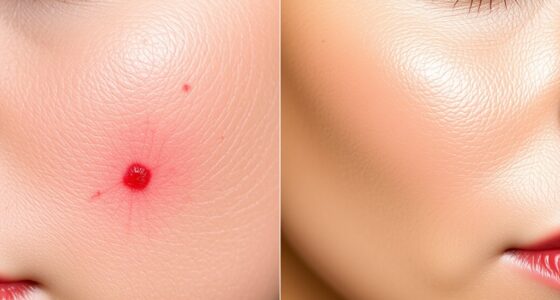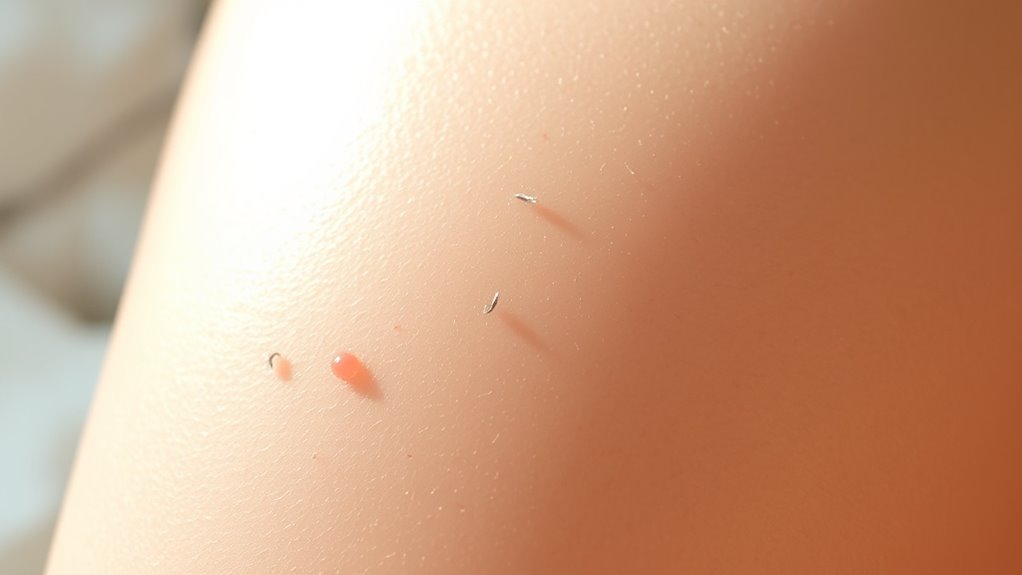

Laser hair removal can sometimes cause ingrown hairs if safety protocols aren’t followed or the treatment isn’t tailored properly to your skin and hair type. Factors like incorrect laser settings or inadequate aftercare may increase this risk. However, when performed by experienced professionals using suitable technology and personalized techniques, the chances of ingrowns are minimized. To learn more about how to reduce this risk and get the best results, continue exploring the essential safety tips and expert advice.
Key Takeaways
- Laser hair removal can reduce ingrown hairs when performed correctly by qualified professionals.
- Improper laser settings or inadequate skin assessment may increase the risk of ingrown hairs.
- Darker skin tones require specific laser technology to minimize irritation and ingrown hair development.
- Post-treatment care, including proper skin hydration and exfoliation, helps prevent ingrown hairs.
- Individual skin responses vary; following safety guidelines decreases the likelihood of ingrowns after laser treatment.

Laser hair removal is a popular method for reducing unwanted hair, but many people still struggle with ingrown hairs afterward. Understanding how laser treatments interact with your skin can help you minimize this issue. One important factor is laser safety, which guarantees the procedure is performed correctly to avoid damaging your skin. When done properly, laser hair removal is safe for most skin types, but it’s essential to choose a qualified professional who understands the nuances of different skin tones and hair colors. If laser safety guidelines aren’t followed, or if the wrong laser settings are used, your risk of developing ingrown hairs can increase.
Proper laser safety reduces ingrown hairs and skin damage.
You might wonder if your skin type affects the likelihood of ingrown hairs after laser treatments. The answer is yes. For example, individuals with darker skin tones have more melanin in their skin, which absorbs laser energy differently than lighter skin. This means that if the laser isn’t calibrated correctly for your skin type, it can cause uneven hair removal or skin irritation that promotes ingrown hairs. Conversely, people with lighter skin tones usually have fewer melanin-related concerns, but they still need appropriate laser safety measures to prevent adverse effects.
Another key factor is choosing the right laser technology for your skin type. Diode lasers, for instance, are often considered safe for darker skin because they target hair follicles more precisely without affecting surrounding skin. On the other hand, older or less sophisticated lasers may pose a higher risk of skin irritation or ingrown hairs if they’re not suited to your specific skin type. That’s why consulting with a knowledgeable practitioner who understands laser safety and how to tailor the treatment to your skin’s unique characteristics is essential. Proper settings, cooling techniques, and post-treatment care all contribute to reducing the chances of ingrown hairs.
During your consultation, be sure to discuss your skin type openly. An experienced specialist will assess your skin and hair color and recommend the most suitable laser device and settings. They should also explain how they prioritize laser safety to protect your skin and minimize side effects. Following their advice and adhering to pre- and post-treatment care instructions can further reduce the risk of ingrown hairs. Remember, even with the best laser safety protocols, some skin types may be more prone to ingrown hairs due to individual skin responses, so patience and proper aftercare are essential. Additionally, understanding the role of WWE Raw’s financial impact in the entertainment industry highlights the importance of expert guidance to ensure safe and effective treatment outcomes.

Razor Bump Stopper with Dark Spot Remover, Ingrown Hair Treatment for Bikini Area and Razor Bumps Treatment – Salicylic Acid After Shave Solution for Ingrown Hairs & Razor Burns
- Relieves Shaving Irritation: Calms razor burns and ingrown hairs
- Improves Skin Post-Shaving: Reduces redness and razor bumps
- Soothes Ingrown Hairs: Eliminates razor bumps and ingrowns
As an affiliate, we earn on qualifying purchases.
As an affiliate, we earn on qualifying purchases.
Frequently Asked Questions
Can Laser Hair Removal Worsen Existing Ingrown Hairs?
Laser hair removal can worsen existing ingrown hairs if your hormonal effects stimulate hair regeneration deeply beneath the skin. The treatment targets hair follicles, but if hormonal imbalances cause abnormal hair growth, it might lead to more ingrown hairs post-procedure. To minimize this, consult a specialist, manage hormonal effects, and follow proper post-treatment skincare. This approach helps reduce the risk of aggravating existing ingrown hairs during laser hair removal.
How Does Laser Treatment Differ for Sensitive Skin?
Picture laser skin gently caressing your sensitive areas, like a soft breeze on delicate petals. For sensitive skin, your treatment uses lower energy levels and specialized wavelengths to minimize irritation. Your technician might also cool your skin beforehand, reducing discomfort. This tailored approach guarantees effective hair removal while protecting your skin’s natural barrier, making the process safer and more comfortable for you, especially in those tender, sensitive areas.
Are There Specific Areas More Prone to Ingrown Hairs Post-Laser?
Certain areas are more prone to ingrown hairs after laser hair removal, especially where follicle blockage occurs or hair growth patterns are dense. Commonly, the bikini line, underarms, and legs can develop ingrown hairs due to these factors. You should follow proper aftercare, exfoliate regularly, and avoid tight clothing to minimize follicle blockage, which helps prevent ingrown hairs and promotes smooth skin after your treatment.
Does Skin Type Affect the Likelihood of Ingrown Hairs After Treatment?
Skin type can influence your chances of getting ingrown hairs after laser hair removal. People with darker skin pigmentation often have a higher risk because the laser targets melanin, which varies with skin tone. Additionally, high hair density can make ingrown hairs more likely if the hair isn’t properly exfoliated. To minimize this, follow your provider’s advice, keep skin moisturized, and avoid tight clothing post-treatment.
What Are the Signs of Infection From Ingrown Hairs After Laser?
If you notice redness, swelling, pus, or warmth around ingrown hairs after laser treatment, you may have an infection. Watch for symptoms like increased pain or fever. To treat this, keep the area clean, apply antibiotic ointment, and avoid picking at the skin. If symptoms worsen or persist, consult your healthcare provider promptly for proper treatment options to prevent complications.

Braun IPL, Silk·Expert Pro 5, IPL Hair Removal for Women and Men, Permanent Laser Hair Reduction At-Home, 2 Heads, Pouch, IPL5137
- At-Home IPL Hair Removal: Permanent hair reduction for women and men
- Cost-Effective Salon Results: Up to 95% hair reduction in 1 month
- Quick and Easy to Use: Full-body treatment in 10 minutes
As an affiliate, we earn on qualifying purchases.
As an affiliate, we earn on qualifying purchases.
Conclusion
So, does laser hair removal cause ingrown hairs? While it’s true that some people experience them, many find that their skin clears up over time. The key is proper aftercare and choosing a reputable technician. Don’t you want smooth, hair-free skin without the constant worry of ingrowns? With patience and care, laser treatments can be a safe, effective way to achieve that. Isn’t it worth trying to find out if it’s right for you?
laser hair removal skin cooling gel
As an affiliate, we earn on qualifying purchases.
As an affiliate, we earn on qualifying purchases.

INNZA IPL Hair Removal with Ice Cooling Care Function for Women,Long-Lasting Results,999,999 Flashes Painless Hair Removal, Hair Removal Device for Armpits Legs Arms Bikini Line
- Effective IPL Hair Removal: Targets hair roots for smoother skin
- High Energy and Deep Light: 5J/cm² energy, 600nm wavelength
- At-Home Use: 999,999 flashes for years of use
As an affiliate, we earn on qualifying purchases.
As an affiliate, we earn on qualifying purchases.