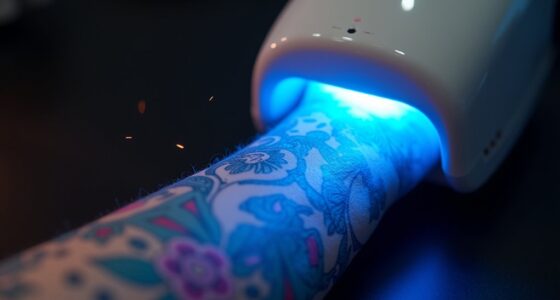

Home laser devices for tattoo removal can be risky if not used properly. They emit intense light that, when misused, might cause burns, skin damage, or pigmentation issues, especially on darker skin tones. Proper training, understanding device guidelines, and starting with low settings are essential to minimize risks. If you ignore safety precautions, your skin could suffer long-term damage. To learn more about keeping your skin safe, continue exploring reliable guidance and best practices.
Key Takeaways
- Home laser devices can pose risks like skin burns, hyperpigmentation, or scarring if misused or operated improperly.
- Proper training and adherence to manufacturer instructions are essential to ensure safety during home tattoo removal.
- Darker skin tones are more susceptible to pigmentation issues from laser treatments.
- Overexposure or increasing energy settings prematurely can cause permanent skin damage.
- Consulting professionals before use and understanding device guidelines help minimize health risks.
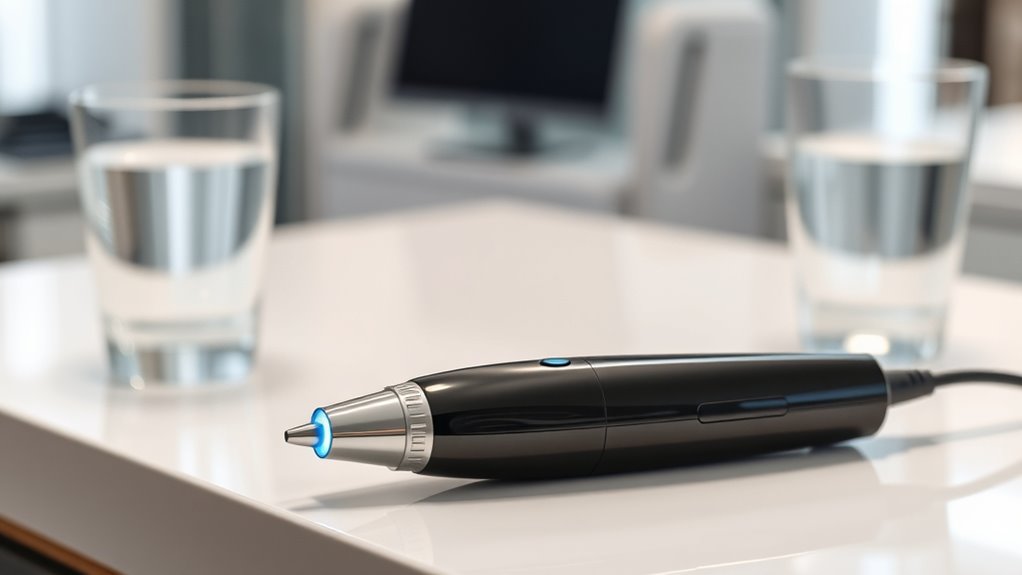
If you’re considering tattoo removal at home, advancements in laser technology have made it more accessible and convenient than ever before. But before you plunge into using a home laser device, it’s vital to understand the importance of laser safety. These devices emit intense pulses of light to break down tattoo ink beneath your skin, but if not used properly, they can cause more harm than good. Without proper training, you risk damaging your skin or causing unwanted side effects. Ensuring laser safety means following manufacturer instructions carefully, avoiding overuse, and understanding your skin’s response. Misuse can lead to burns, hyperpigmentation, or hypopigmentation, all of which can be permanent. The key is to recognize that these devices are powerful tools, but they require respect and caution.
Another significant concern is skin damage. While at-home laser devices are designed to be safer than professional equipment, they still carry the risk of adverse effects if misused. Overexposure or incorrect wavelength targeting can lead to burns or scarring. Your skin’s reaction to laser treatment varies based on factors like skin tone, tattoo ink color, and depth. For example, darker skin tones are more prone to pigmentation issues because the melanin in the skin can absorb laser energy, increasing the risk of skin damage. If you notice redness, swelling, or blistering after a session, it’s a clear sign that the laser may have been too intense or improperly used. Ignoring these signs can lead to long-term skin issues, including permanent discoloration or scarring.
It’s essential to educate yourself thoroughly before attempting any tattoo removal at home. Reading the user manual, understanding the device’s specifications, and starting with the lowest energy settings are critical steps. Never rush the process or increase the intensity prematurely, as doing so can jeopardize your skin’s health. Also, consider your skin type and tattoo characteristics—certain colors and depths respond differently to laser treatment. If you have doubts or if your tattoo is large or multicolored, consulting a professional might be a safer approach. Remember, even minor mistakes can lead to significant skin damage, which is often more difficult to treat than the tattoo itself. Additionally, understanding the risks associated with laser devices can help you make informed decisions and protect your skin health.
Frequently Asked Questions
Can Home Laser Devices Cause Permanent Skin Damage?
Yes, home laser devices can cause permanent skin damage if used improperly. In cosmetic dermatology, laser safety is vital, and untrained users risk burns, scars, or pigment changes. Always follow the device instructions carefully and consult a professional to guarantee safe use. Remember, professional treatments undergo rigorous safety standards, unlike many home devices. Prioritize your skin’s health by seeking expert guidance before attempting laser tattoo removal at home.
Are Home Laser Tattoo Removal Devices Fda-Approved?
You might wonder if home laser tattoo removal devices are FDA-approved, and the truth is, most aren’t. While these devices claim to offer clinical safety, they often lack proper device regulation, raising concerns about effectiveness and safety. Without FDA approval, you can’t be sure they’re tested for safety standards. Always check for certification, and consult professionals to avoid risking your skin’s health with unregulated devices.
How Many Treatments Are Typically Needed at Home?
You’ll typically need about 6 to 12 treatments at home for tattoo fading, depending on your tattoo’s size, ink colors, and skin type. Treatment frequency is usually every 4 to 8 weeks to allow your skin to heal. Consistent use is key, but remember, results vary. Follow your device’s instructions carefully and be patient, as multiple sessions are often necessary for noticeable fading.
What Are the Risks of Improper Device Usage?
If you misuse your device, you risk serious injuries like burns or scars, and device malfunction can make matters worse. You might not realize how easily improper handling leads to user injury, leaving you with painful side effects or uneven tattoo removal. Don’t underestimate the danger—failure to follow instructions carefully could turn a simple home treatment into a costly, painful mistake. Always prioritize safety and understand the risks involved.
Can Home Devices Remove All Tattoo Inks Effectively?
Home devices can’t reliably remove all tattoo inks, especially ink-specific colors or stubborn pigments. DIY alternatives often lack the power and precision of professional treatments, making complete removal difficult. You might see some fading, but expecting full removal is unrealistic. If you want effective ink-specific removal, consulting a professional is your best bet, as they use advanced laser technology designed for different ink types and skin tones.
Conclusion
While home laser devices might seem like a quick fix, they’re not a magic wand—misuse can cause serious burns or permanent scarring. Think of it as trying to tame a wild beast without proper training; the risks outweigh the convenience. Your skin deserves better than a DIY disaster. For safe, effective tattoo removal, always consult a professional. Don’t let a small mistake turn into a lifelong regret—trust the experts to handle it right.