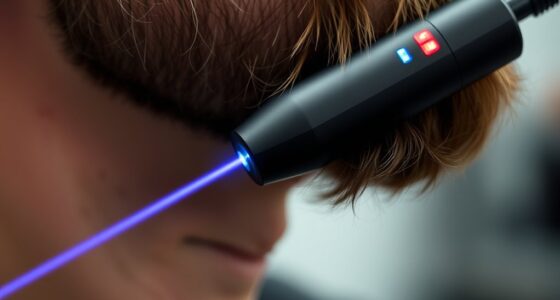
Understanding laser fluence and pulse duration helps you control how energy interacts with tissue, ensuring precise and safe results. Fluence measures energy delivered per area, affecting whether the laser ablates or stimulates gently. Pulse duration determines how long energy is applied, influencing heat spread and damage control. By adjusting these parameters, you can optimize performance for different procedures. Continuing to explore these concepts will give you deeper insights to improve your laser applications effectively.
Key Takeaways
- Laser fluence measures energy delivered per area, influencing whether effects like ablation or gentle heating occur.
- Pulse duration determines how quickly energy is delivered, affecting heat diffusion and tissue response.
- Shorter pulses enable precise, localized effects with minimal thermal damage, while longer pulses produce broader thermal effects.
- Proper balance of fluence and pulse duration optimizes treatment safety, efficacy, and minimizes collateral damage.
- Pulse shaping adjusts energy delivery over time, enhancing control and precision during laser procedures.

When working with lasers, understanding key parameters like fluence and pulse duration is fundamental for achieving desired results. These factors directly influence how much energy is delivered to a target and how that energy interacts with the material. Central to this is energy density, often referred to as laser fluence, which measures the amount of energy delivered per unit area. High energy density can produce powerful effects, such as ablation or melting, while lower levels might gently heat or stimulate tissue. Managing energy density carefully guarantees you avoid damaging surrounding areas or producing inconsistent results.
Understanding laser fluence is key to precise, safe energy delivery in laser treatments.
Pulse shaping plays a pivotal role in fine-tuning how laser energy is delivered over time. Instead of a simple, uniform pulse, pulse shaping allows you to modify the pulse’s temporal profile, creating specific energy delivery patterns. This technique helps optimize the interaction between the laser and the target, such as reducing thermal damage or increasing precision. By adjusting the shape of the pulse, you control how energy accumulates and dissipates, which directly impacts the effectiveness of procedures like cutting, coagulating, or treating tissues.
Pulse duration, the length of time each laser pulse lasts, greatly influences the process. Shorter pulses, in the nanosecond or picosecond range, tend to minimize heat diffusion, leading to cleaner, more precise results. Longer pulses, on the other hand, allow more heat to transfer into surrounding tissue, which can be beneficial in some applications but risky in others. When you adjust pulse duration, you essentially control the thermal confinement and stress distribution, impacting both safety and efficiency.
Understanding how these parameters interact is essential. For example, increasing energy density with a short pulse can produce a highly localized effect, ideal for delicate procedures. Conversely, longer pulses with moderate energy densities might be better suited for treatments that require broader thermal effects. Pulse shaping becomes especially useful here, as it enables you to fine-tune the temporal profile of the laser, ensuring the energy is delivered in the most effective way for your specific application.
Additionally, awareness of energy interaction is crucial, as it determines how the laser energy affects different materials or tissues, influencing both safety and efficacy.
In essence, mastering laser fluence, pulse duration, and pulse shaping gives you the tools to optimize your laser’s performance. You can tailor the energy delivery to match your goals, whether that’s precision cutting, tissue ablation, or gentle stimulation. When you understand these parameters and how they influence each other, you gain greater control over your procedures, leading to safer, more predictable, and more successful outcomes.

BOSCH GLM100-23 100 Ft Blaze Laser Distance Measure, Includes 2 AA Batteries, Distance Measuring Laser
- Long Range Accuracy: Measures up to 100 feet with precision
- User-Friendly Design: Two-button operation for easy use
- Class II Laser: 635 nm, <1 mW laser for safety
As an affiliate, we earn on qualifying purchases.
As an affiliate, we earn on qualifying purchases.
Frequently Asked Questions
How Does Laser Fluence Affect Tissue Penetration Depth?
You’ll find that increasing laser fluence generally enhances tissue penetration depth because higher fluence surpasses tissue’s threshold for effective interaction, allowing deeper tissue absorption. However, if fluence is too high, it risks damaging surrounding tissues. Ideal tissue interaction occurs when fluence stays within safe thresholds, promoting effective penetration without adverse effects. Balancing fluence levels ensures deeper tissue reach while respecting tissue safety limits.
Can Pulse Duration Influence Laser Safety Protocols?
Yes, pulse duration influences laser safety protocols. Shorter pulses can deliver high energy quickly, increasing risks like eye injury if safety measures aren’t strict. Conversely, longer pulses may require different precautions. You must follow eye safety guidelines and regulatory standards to prevent harm. By adjusting pulse duration, you control safety risks, ensuring protocols protect users and patients from potential laser hazards effectively.
What Is the Relationship Between Fluence and Laser Material Ablation?
You should know that higher laser fluence, or energy density, increases the likelihood of material ablation once it surpasses the ablation threshold. When fluence exceeds this threshold, it effectively removes material by breaking molecular bonds. To control the ablation process, you need to carefully adjust fluence levels, ensuring they stay just above the threshold for precise material removal without causing unnecessary damage.
How Do Environmental Conditions Impact Laser Pulse Effectiveness?
Ever wondered how environmental factors affect laser pulse effectiveness? Well, ambient temperature and humidity can considerably influence it. High temperatures may cause equipment to overheat, reducing precision, while humidity can cause beam scattering, decreasing energy delivery. These environmental conditions can lead to inconsistent results. So, you should always control ambient temperature and humidity levels to guarantee ideal laser performance and achieve consistent, effective ablation or treatment outcomes.
Are There Applications Where Ultra-Short Pulses Are Preferred?
You prefer ultra-short pulses when working with ultrafast processes or requiring precision ablation. These pulses, lasting in the picosecond or femtosecond range, minimize heat damage and improve accuracy, making them ideal for delicate applications like medical surgeries, microfabrication, and material analysis. Their ability to deliver energy precisely where needed helps you achieve cleaner cuts and detailed results, especially in sensitive or complex tasks.

Rechargeable Comfort Control Air Pulse Device for Personal Relaxation and Stress Relief YZ98829
- Rejuvenating pleasure device: Advanced personal relaxation tool
- Ergonomic design: Ensures comfort and relaxation
- Quiet operation: Provides a peaceful experience
As an affiliate, we earn on qualifying purchases.
As an affiliate, we earn on qualifying purchases.
Conclusion
Imagine wielding a paintbrush with just the right amount of paint and timing to create a masterpiece. That’s what understanding laser fluence and pulse duration feels like—balancing energy and time to achieve precise results. When you master these concepts, it’s like tuning an instrument perfectly, making every pulse count. With this knowledge, you can confidently harness laser technology, turning complex processes into artful precision, just like crafting a stunning painting with every deliberate stroke.
laser tissue interaction monitor
As an affiliate, we earn on qualifying purchases.
As an affiliate, we earn on qualifying purchases.

Nd YAG Picosecond Beauty Laser Machine, Q-Switched 110V, Pulse 8ns, Spot 1-5mm, ABS Handpiece, Cooling System, Pico Skin Care Device, Cosmetic Facial Care Equipment for Salon or Home Use
- Durable ABS Material: Wear-resistant and corrosion-resistant construction
- Safe and Gentle Laser: Precise energy for skin care and beauty
- High Performance Power: 310W with three wavelength probes
As an affiliate, we earn on qualifying purchases.
As an affiliate, we earn on qualifying purchases.