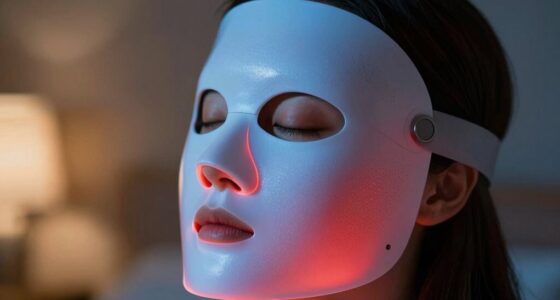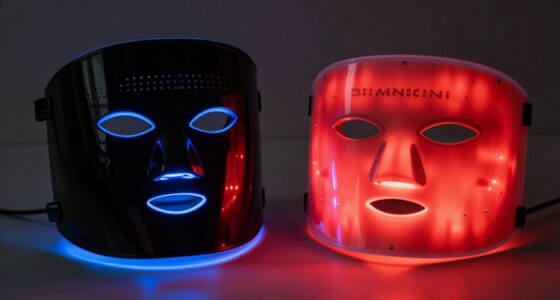

All those colors in a multi-wavelength LED mask really do matter because each hue targets different skin concerns. For example, blue light fights acne bacteria, red stimulates collagen, green calms irritation, and yellow boosts circulation. Using multiple colors allows you to address various issues simultaneously, enhancing overall skin health. To get the best results, understanding how each wavelength works is key — keep exploring to discover how you can customize your treatment.
Key Takeaways
- Different colors in LED masks target specific skin concerns by affecting different skin layers and cellular processes.
- Scientific research confirms that using multiple wavelengths enhances overall skin rejuvenation and healing outcomes.
- Each color offers unique benefits, such as red for collagen, blue for bacteria, and green for pigmentation, making multi-wavelength masks versatile.
- Combining colors allows for tailored treatments but requires proper selection and protocol for maximum efficacy.
- High-quality, multi-wavelength masks ensure safety, durability, and effective delivery of multiple light spectra.
How Do Different Light Wavelengths Interact With Skin Cells?
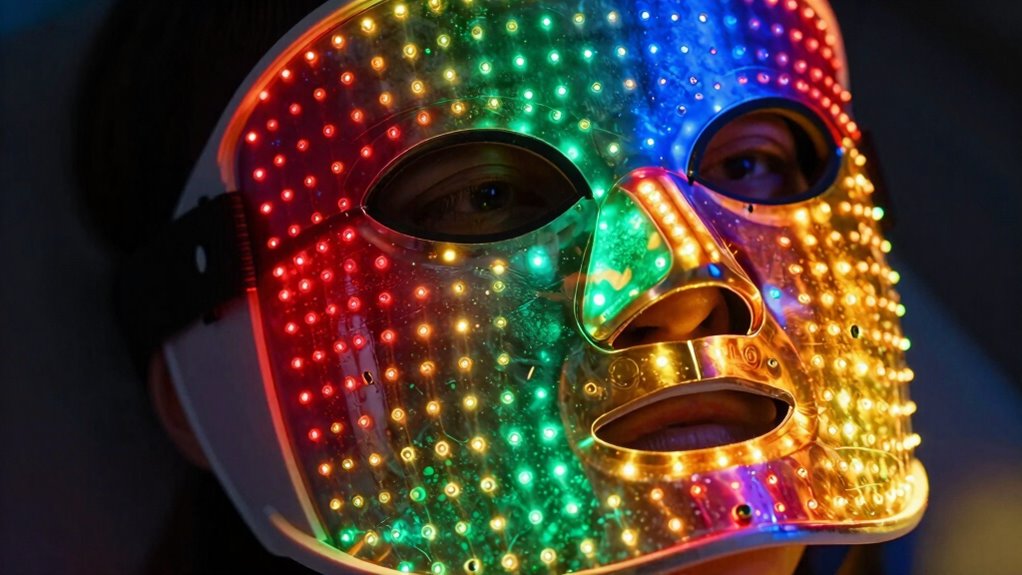
Different light wavelengths penetrate the skin to varying depths and trigger distinct biological responses. When light reaches your skin, it activates specific photoreceptors within the cells. For example, blue light primarily affects surface layers, influencing bacteria and oil production, while red and near-infrared light penetrate deeper, reaching the dermis. This skin penetration allows light to stimulate cellular processes, such as increasing collagen production and reducing inflammation. The activation of photoreceptors prompts your skin cells to respond, encouraging healing and renewal. Different wavelengths target different cell types, making LED therapy versatile. Understanding how each wavelength interacts with skin cells helps you choose the right treatment for your skin concerns, maximizing benefits while minimizing unnecessary exposure. Understanding light penetration depths is crucial for optimizing treatment outcomes and safety.
What Are the Skin Benefits of Red, Blue, Green, and Yellow Light?
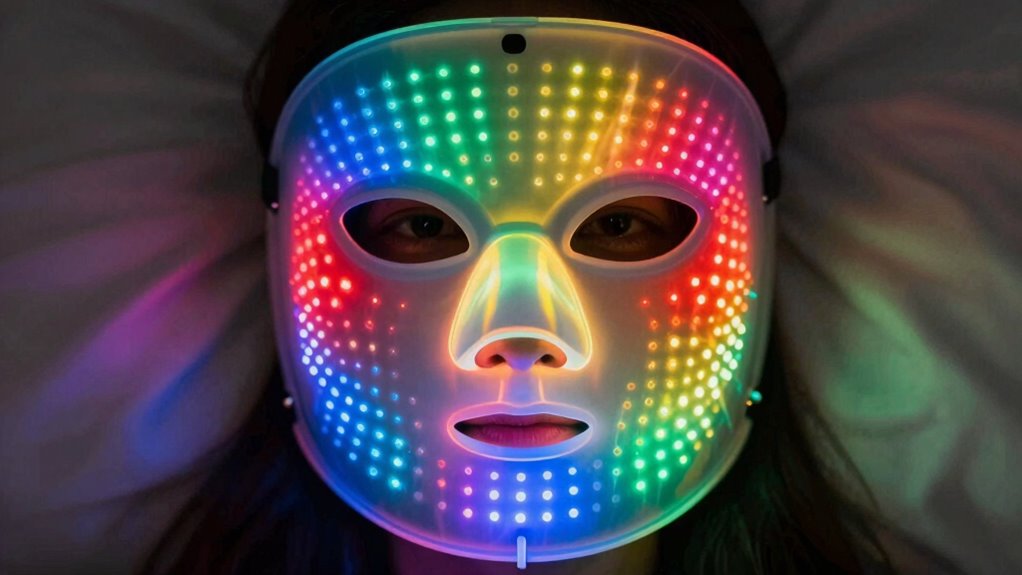
Red, blue, green, and yellow lights each target specific skin concerns by activating different cellular responses. This approach is a key part of color therapy, which uses LED technology to stimulate skin renewal, reduce inflammation, and improve overall tone. Red light promotes collagen production, helping to diminish fine lines and wrinkles. Blue light is effective against acne-causing bacteria, reducing breakouts and inflammation. Green light calms irritated skin and evens out pigmentation, giving a brighter appearance. Yellow light boosts circulation, reducing redness and promoting healing. Additionally, understanding the light wavelength spectrum helps optimize treatment effectiveness. Recognizing the light spectrum range allows for more precise customization of LED treatments. Knowing the specific wavelength ranges enables practitioners to tailor treatments more accurately to individual skin needs. By incorporating these colors into LED masks, you can customize treatments for your skin’s unique needs. This targeted approach makes LED technology an efficient, non-invasive option for enhancing skin health through specific cellular responses, including skin rejuvenation techniques. Furthermore, selecting the right LED light therapy settings can enhance overall treatment outcomes.
Does Scientific Research Support Multi-Color LED Masks?
Scientific research shows that multi-color LED masks can be effective for various skin concerns. Many studies support their use, indicating positive results for skin rejuvenation and healing. Overall, there’s a scientific consensus that these masks offer real benefits, but individual outcomes may vary. Additionally, understanding how growth mindsets influence self-care approaches can enhance overall wellness. Recognizing the importance of evidence-based practices can help consumers make informed decisions about LED therapy options. Moreover, ongoing scientific investigations continue to refine our understanding of how different wavelengths affect skin health, emphasizing the importance of proper wavelength selection for optimal results. Recent advancements also highlight the significance of personalized treatment plans to maximize individual benefits.
Evidence for Efficacy
Numerous studies have investigated whether multi-color LED masks can effectively improve skin health, providing varied wavelengths that target different skin concerns. Research shows that certain wavelengths help reduce skin pigmentation by inhibiting melanin production, leading to more even skin tone. Other studies demonstrate that specific light frequencies promote collagen stimulation, which can improve skin elasticity and reduce fine lines. Clinical trials often report positive results, with users experiencing clearer, smoother skin after consistent use. While some findings are promising, outcomes vary depending on wavelength combinations and treatment duration. Overall, scientific evidence supports the idea that multi-color LED masks can target multiple skin issues simultaneously, making them a versatile tool in skincare routines. scientific evidence further suggests that these masks may also influence skin inflammation and healing processes. However, more standardized research is needed to confirm ideal wavelengths and protocols.
Scientific Consensus Valid
Research consistently shows that multi-wavelength LED masks have scientific backing supporting their effectiveness in skincare. Studies indicate that different wavelengths target specific skin concerns, from wrinkles to acne, with measurable improvements. While some skeptics argue that the placebo effect influences results, rigorous research demonstrates genuine biological effects. User preferences also support multi-color options, as many users report satisfaction from customized treatments. Scientific consensus underscores the validity of these devices, emphasizing that their benefits go beyond placebo. Especially as light therapy technology has advanced to provide targeted treatments based on scientific principles, the importance of understanding the specific wavelengths used becomes clear. Recognizing the role of biological mechanisms helps explain how different light colors produce distinct skin responses. Additionally, the power of light penetration influences how effectively each wavelength can stimulate cellular activity, further supporting their targeted use. Moreover, ongoing research continues to refine our understanding of how light spectrum interacts with skin tissue, reinforcing the scientific basis for multi-wavelength approaches. This consensus reassures you that choosing a multi-wavelength LED mask is a scientifically supported decision, not just a trendy or placebo-driven choice.
Can You Get Similar Skin Results Using Fewer Light Colors?
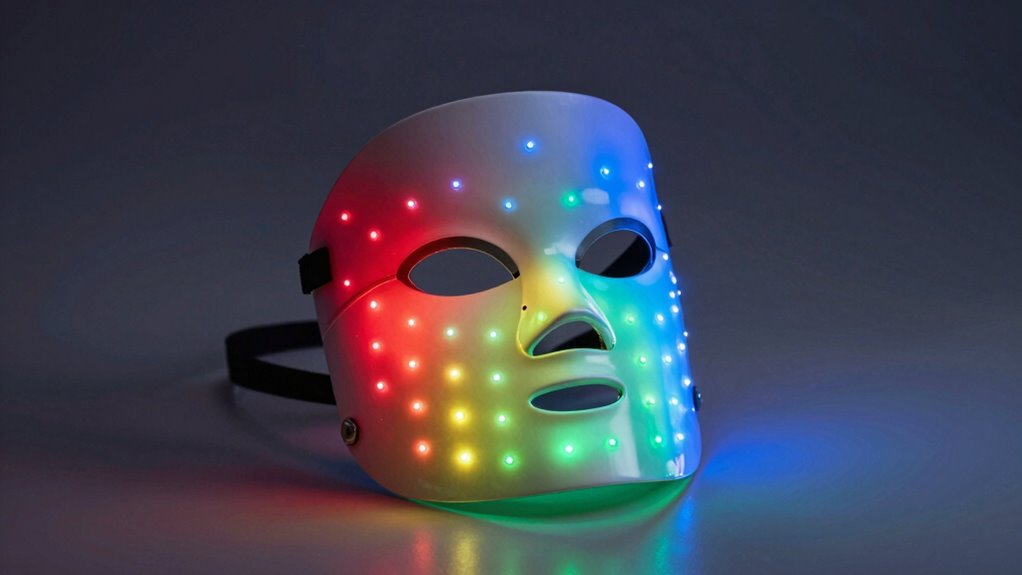
While multi-wavelength LED masks offer a range of benefits, you might wonder if using fewer light colors can deliver similar skin improvement results. The answer depends on your skin goals, as color therapy relies on specific wavelengths for targeted effects. Using fewer colors can still promote benefits like collagen production or reduced inflammation, but it may not be as exhaustive. Skin absorption varies with wavelength, so selecting a limited set of lights can focus on the most effective ones for your concerns. Additionally, understanding the specific wavelengths utilized can help optimize treatment efficacy. Some wavelengths are more suitable for certain skin conditions, so wavelength optimization plays a key role in effective therapy. Furthermore, some skin conditions respond best to multiple wavelengths working together, making combination therapy an important consideration. If simplicity appeals to you, a mask with fewer colors might suffice, but for maximum results, combining different wavelengths ensures a broader, more tailored approach. Recognizing the importance of targeted light therapy can help you choose the most effective treatment plan.
Moreover, considering how light absorption efficiency varies across wavelengths can influence your choice of light colors for better outcomes.
How Do You Choose the Best LED Mask for Your Skin Goals?
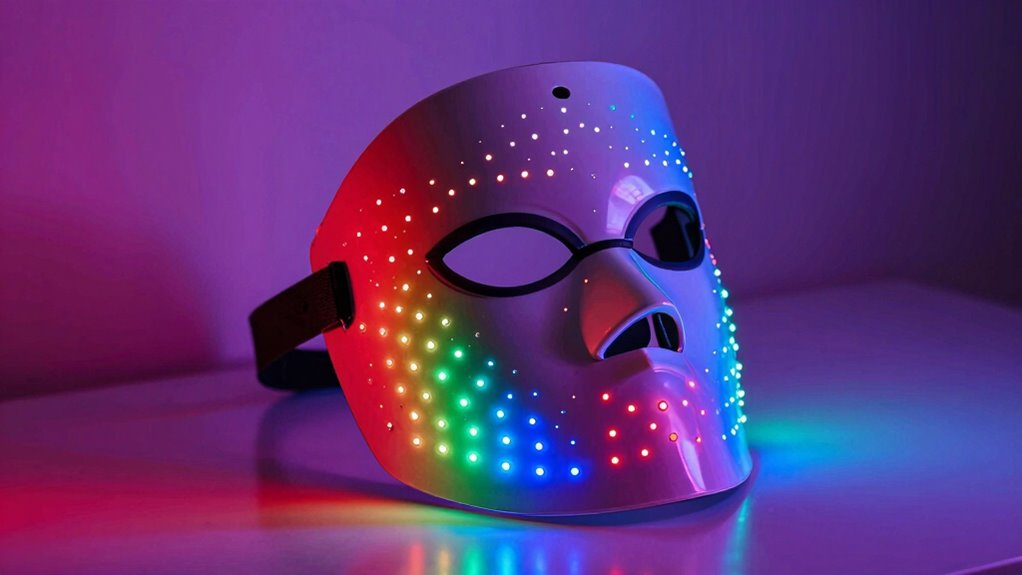
Choosing the right LED mask depends on your specific skin concerns and goals. First, consider LED light safety; verify the device has been tested and approved by relevant authorities to prevent skin damage. Next, assess mask material durability—look for sturdy, high-quality materials that won’t wear out after multiple uses, ensuring consistent light delivery and comfort. Think about your skin’s needs, whether it’s reducing redness, boosting collagen, or targeting acne, and select a mask with wavelengths suited to those goals. A durable mask with proper safety features helps maximize benefits while minimizing risks. Additionally, reviewing top rated vacuums of 2024 can provide insights into reliable and effective options for facial devices and skincare tools. Ultimately, investing in a well-made, safe LED mask aligned with your skin goals ensures effective treatments and long-term satisfaction.
Are Multi-Wavelength LED Masks Worth the Investment?
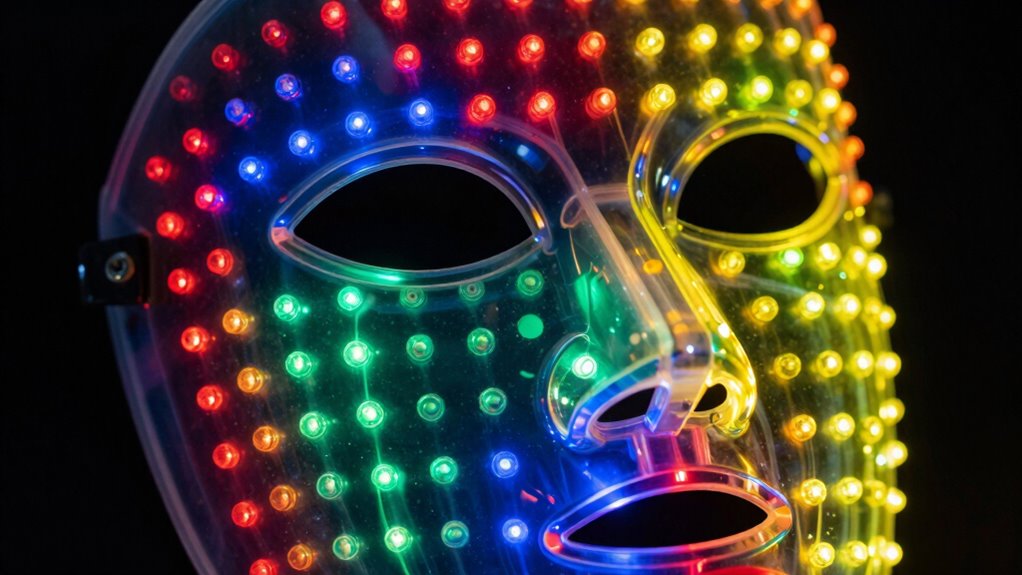
Multi-wavelength LED masks offer a versatile approach to skincare by targeting multiple concerns with different light spectra in a single device. But, are they worth the investment? You should consider device durability—some masks are built with sturdy materials that last through regular use, making them a smart long-term choice. However, these multi-spectrum masks often come with a higher price tag, so weigh the cost considerations carefully. While the upfront expense might seem steep, if the mask provides effective treatment for various skin issues, it could save you money on multiple devices or professional treatments. Ultimately, investing in a multi-wavelength LED mask makes sense if you want a extensive, durable solution that addresses different skin concerns efficiently.
Tips for Using Your LED Light Therapy Mask Effectively

To get the best results from your LED light therapy mask, it’s essential to follow proper usage guidelines consistently. Incorporate your mask into your skincare routines by using it at the recommended times and durations, typically 3-5 times a week. Before each session, cleanse your skin thoroughly to maximize absorption and prevent dirt buildup. Remember to perform device maintenance regularly by cleaning the mask with a gentle, non-abrasive cloth and following the manufacturer’s instructions. Avoid overusing the device, as more frequent use doesn’t mean better results and could cause irritation. Keep track of your progress and adjust your routines accordingly. Proper care and consistent use ensure your LED mask remains effective and safe, helping you achieve clearer, healthier skin over time.
Frequently Asked Questions
Are Multi-Wavelength LED Masks Safe for Sensitive Skin Types?
Multi-wavelength LED masks are generally safe for sensitive skin, but you should always check device safety and consult with a dermatologist first. If you have skin sensitivity, start with shorter sessions and lower intensities. Look for devices designed specifically for sensitive skin, and always do a patch test before full use. This cautious approach helps prevent irritation and makes sure your skin responds well to the treatment.
How Long Does It Typically Take to See Results From LED Therapy?
You typically start seeing visible improvements within 4 to 6 weeks of regular LED therapy sessions. Timing expectations vary depending on your skin type and concerns, but consistent treatments help you notice smoother, clearer skin over time. Keep in mind, patience is key—most people experience gradual results, and ongoing sessions maximize benefits. Stick with your routine, and you’ll likely enjoy the positive changes LED therapy can bring.
Can LED Masks Be Used Alongside Other Skincare Treatments?
Think of your skincare routine like a symphony; combining treatments can create harmony. You can absolutely use LED masks alongside other skincare treatments, but it’s best to consult with a dermatologist first. Combining therapies like serums, exfoliants, or microneedling can enhance results if done properly. Just guarantee your routine is balanced; overdoing it might cause irritation, so listen to your skin’s needs and adjust accordingly.
Are There Any Age Restrictions for Using Multi-Color LED Masks?
Yes, there are age restrictions for using multi-color LED masks, especially to guarantee child safety and appropriate teen skincare. You should avoid letting young children use them, as their skin is more sensitive. Teenagers can typically use these masks under adult supervision, but it’s best to consult a dermatologist first. Always follow manufacturer guidelines to prevent any skin irritation or adverse effects, prioritizing safety for all ages.
How Often Should I Replace or Upgrade My LED Mask?
Think of your LED mask like a trusted friend who needs care to stay effective. You should replace or upgrade it every 6 to 12 months, depending on device maintenance and usage. Regularly check for signs of wear, diminished light intensity, or malfunction. Upgrading guarantees you get the best results and safety. Don’t wait too long—keeping your device current keeps your skin glowing and healthy.
Conclusion
Think of a multi-wavelength LED mask as a garden with different flowers—each color brings its unique beauty. Just like tending to each blossom helps your garden thrive, using the right light wavelengths can nurture your skin’s health. But remember, not every flower needs to be in bloom at once. Choose wisely, care consistently, and watch your skin blossom into its best version—vibrant, balanced, and glowing.