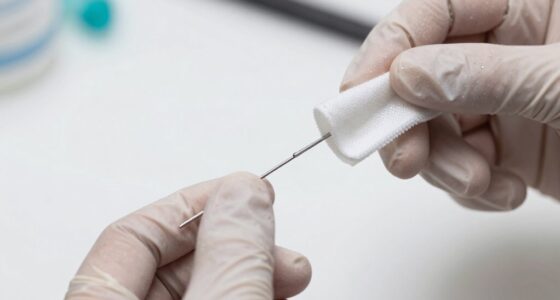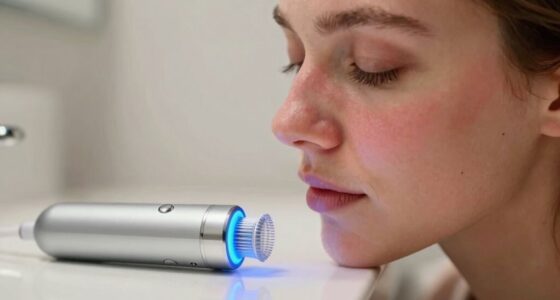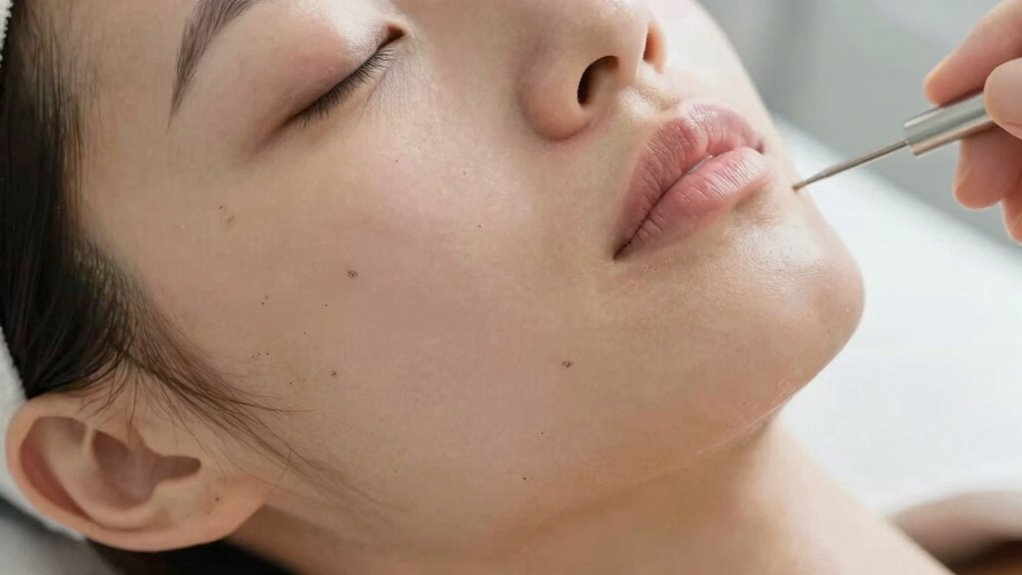

For home microneedling, it’s safest not to exceed a depth of 1.0 mm. Going deeper increases the risk of skin damage, bleeding, and infections, especially since you lack professional equipment and sterile conditions. Stick to shorter needles—around 0.25 to 0.5 mm—for common concerns like collagen stimulation or scars. If you’re curious about more tips on safe use and best practices, there’s helpful information worth exploring further.
Key Takeaways
- Home microneedling should typically use needles no longer than 0.5 mm to avoid damaging deeper skin layers.
- Avoid exceeding 1.0 mm needle length at home, as deeper penetration increases risk of injury and micro-tears.
- Going too deep can compromise the skin barrier, leading to infections, inflammation, and prolonged healing.
- Excessive pressure or multiple passes with longer needles heighten the risk of bleeding and tissue damage.
- Always start with the shortest needle length and consult professionals to determine safe depth for your skin.
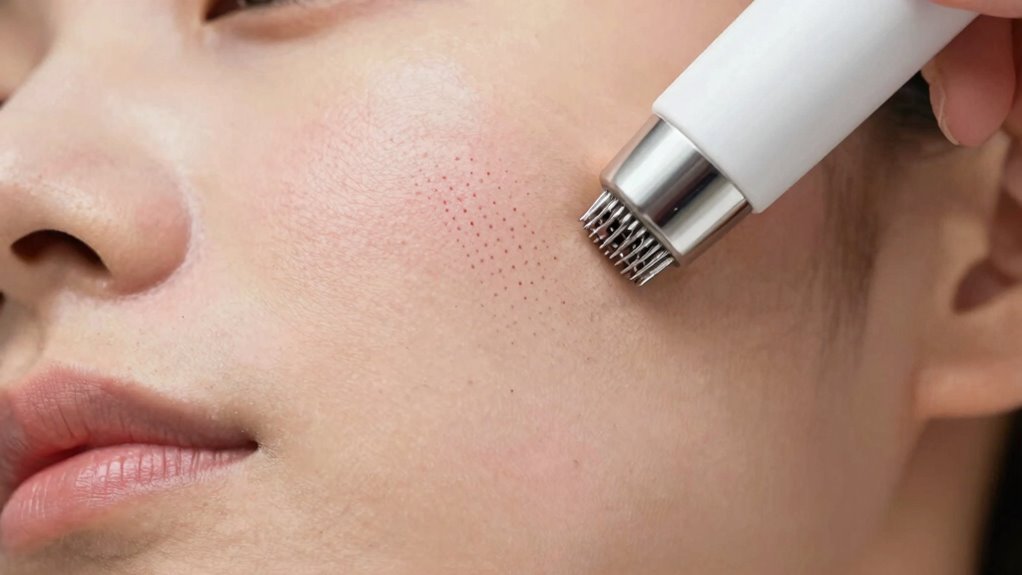
If you’re considering home microneedling, understanding how deep to penetrate your skin is vital for safety and effectiveness. While professional settings have trained practitioners who can control needle depth precisely, at home, you need to be extra cautious. The skin barrier integrity is delicate, and going too deep can cause damage, irritation, or even scarring. Knowing the right needle length and technique helps you get results without risking harm.
In professional environments, experts use specialized equipment and have extensive knowledge of skin anatomy. They adjust needle depth according to your skin type and targeted concerns. They also assess your skin’s condition to prevent over-penetration, which could compromise the skin barrier. When you’re at home, you’re responsible for managing these risks, so understanding safe needle lengths is key. Typically, for home use, needles are between 0.25 mm and 1.0 mm. Shorter needles, like 0.25 mm, mainly stimulate collagen and improve product absorption without disrupting the skin barrier notably. Longer needles, such as 0.5 mm, can target deeper scars or wrinkles but should only be used if you’re experienced and confident in your technique.
However, going beyond 1.0 mm at home isn’t advisable. The deeper the needles go, the higher the risk of damaging underlying tissues, causing bleeding, or creating micro-tears. These injuries can impair your skin’s natural barrier, leading to infections or prolonged healing times. If you’re tempted to go deeper, remember that professional settings have sterile conditions, which are hard to replicate at home. Maintaining skin barrier integrity is vital because once compromised, your skin becomes more vulnerable to environmental damage and slower to heal. Additionally, understanding skin anatomy helps you recognize the layers you need to avoid disrupting during microneedling. A thorough knowledge of safe technique can significantly reduce the risks associated with longer needle lengths and ensure you perform the procedure effectively. It’s also helpful to understand proper aftercare to support your skin’s healing process and minimize complications.
Always start with the shortest needle length and avoid excessive pressure or multiple passes over the same area. If you experience discomfort, redness, or persistent irritation, it’s a sign you’ve penetrated too deep or caused trauma. It’s better to err on the side of caution. Consulting a skincare professional before starting home microneedling can help you determine the safest needle depth for your skin type and goals. They can also guide you on proper technique to protect your skin barrier while achieving desired results. Being aware of potential risks can help you make informed decisions and avoid unnecessary damage.

Dr.pen M8S Microneedling Pen 0.25mm Needle Length For Home Use
- Skin Refinement: Exfoliates dead skin for smooth skin
- Home Use Only: Designed for personal beauty care
- Needle Length: 0.25mm for gentle treatment
As an affiliate, we earn on qualifying purchases.
As an affiliate, we earn on qualifying purchases.
Frequently Asked Questions
Can I Use Home Microneedling Devices on Sensitive Skin?
You can use home microneedling devices on sensitive skin, but you should be cautious about needle depth. Opt for devices with adjustable settings and choose a shallower needle depth to minimize irritation. Always start with the lowest setting, perform a patch test first, and avoid aggressive treatments. If your skin reacts poorly, consult a dermatologist before proceeding, as sensitive skin requires gentle care and proper technique.
How Often Should I Perform Home Microneedling Sessions?
You should perform home microneedling sessions about once every 4 to 6 weeks. This frequency allows your skin to undergo dermal regeneration and collagen stimulation without overdoing it. If you notice redness or irritation, extend the time between sessions. Consistent, moderate treatment encourages healthy skin renewal while reducing risks. Always listen to your skin’s response and consult a dermatologist if you’re unsure about your ideal schedule.
What Are the Signs of Over-Penetration or Damage?
You’ll notice signs of over-penetration or damage if you experience persistent redness, swelling, or bleeding beyond your typical healing time. If your skin feels unusually tender or develops bruising, it could indicate too much needle depth. Always consult a dermatologist before adjusting your needle depth, and stop use if you see signs of damage. Proper technique and professional guidance help prevent over-penetration and guarantee safe microneedling at home.
Is There a Risk of Infection With Home Microneedling?
Of course, there’s a risk of infection with home microneedling—because who doesn’t love playing doctor in their bathroom? But seriously, if you follow basic safety, use devices that meet quality standards, and guarantee proper cleaning and sterilization, you greatly reduce infection risks. Skip professional sterilization and device standards, and you’re inviting unwanted bacteria to party on your skin. Better safe than sorry, right?
Can Microneedling Help With Deep Scars or Wrinkles?
Microneedling can help improve deep scars or wrinkles, but you should seek a professional consultation first. They can assess your skin’s condition and recommend suitable treatments, as there are treatment limitations for at-home procedures. Deep scars or wrinkles may require more intensive, professional microneedling to see significant results. Trying to treat these issues at home could be ineffective or risky if you don’t understand the proper techniques and depths.

Microneedle Derma Roller 0.5mm for Hair Beard Face Skin Beard Roller Microneedling Roller for Men Women Home Use
- Safe 0.5mm Needle Size: Ideal for safe microneedling
- Multi-Use Design: Suitable for hair, beard, and face
- Gentle Skin Massage: Leaves skin feeling softly massaged
As an affiliate, we earn on qualifying purchases.
As an affiliate, we earn on qualifying purchases.
Conclusion
Remember, venturing too deep with home microneedling is like Icarus flying too close to the sun—bold but risky. If you push your skin beyond its limits, you could invite unnecessary damage or infection. Stick to the recommended depths, and think of it like a gentle brushstroke—careful, precise, and respectful of your skin’s natural boundaries. When in doubt, consult a professional; after all, even Da Vinci knew when to seek expert advice.

Dr pen A11 Microneedling Pen for Home Use
- Needle Length: 0.25mm for gentle use
- Skin Benefits: Enhances glow and serum absorption
- Hygiene & Portability: Single-use sealed tips with travel case
As an affiliate, we earn on qualifying purchases.
As an affiliate, we earn on qualifying purchases.
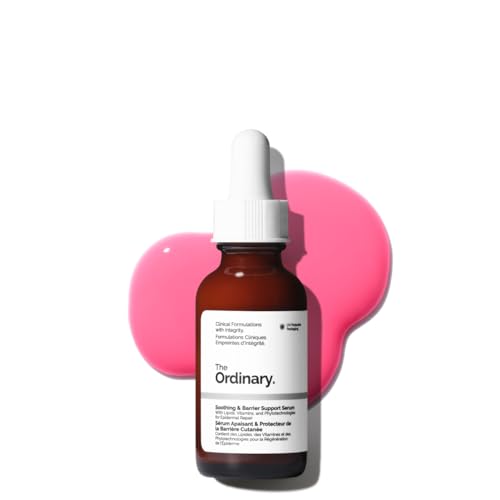
The Ordinary Soothing & Barrier Support Serum, Redness-Reducing & Hydrating Solution with Centella Asiatica for Skin Barrier Repair, 1 Fl Oz
- Skin Barrier Repair: Repairs and strengthens skin barrier in 2 hours
- Redness & Discomfort Reduction: Reduces redness and soothes irritation
- Instant Hydration Boost: Provides 86% hydration increase after one use
As an affiliate, we earn on qualifying purchases.
As an affiliate, we earn on qualifying purchases.