Good storage protects your expensive tools by preventing damage from environmental factors like humidity, temperature changes, and dirt, which cause rust and deterioration. Using proper containers, cabinets, and organization helps reduce wear and tear, while stable conditions minimize warping or brittleness. Regular maintenance is easier with good storage, extending their lifespan and maintaining performance. Keep your tools in ideal condition to save money and effort over time—continue to discover how to get the most out of your investment.
Key Takeaways
- Proper storage shields tools from environmental factors like moisture, dust, and chemicals that cause corrosion and wear.
- Organized storage prevents physical damage such as bending, scratching, and nicking, preserving tool integrity.
- Controlling temperature and humidity minimizes material stress, expansion, and rust formation.
- Regular maintenance is simplified with good storage, ensuring tools remain clean, lubricated, and functional.
- Extended tool lifespan reduces replacement costs and maintains optimal work efficiency over time.
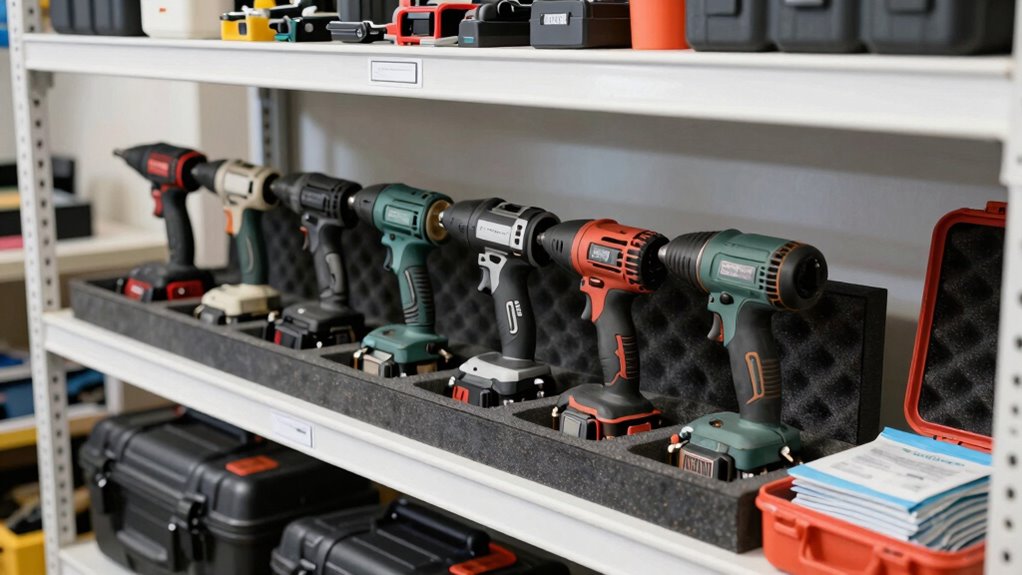
Proper storage is vital to keeping your expensive tools in top condition and ensuring they last for years. When you take the time to store your tools correctly, you’re not just protecting your investment—you’re also making your work more efficient. Tool maintenance begins with understanding how environmental conditions impact your tools. Humidity, temperature fluctuations, and exposure to dust or chemicals can cause corrosion, rust, and degradation over time. If tools aren’t stored in a controlled environment, these factors accelerate wear and diminish their lifespan.
Proper storage protects your tools, extends their lifespan, and keeps your work efficient and damage-free.
You should prioritize storing your tools in a dry, clean space. Moisture is one of the biggest enemies of metal tools, leading to rust that’s difficult to remove once it sets in. Using airtight containers or dehumidifiers can help maintain low humidity levels. Avoid leaving tools out in the open where they are vulnerable to dust, dirt, or accidental damage. When tools are kept in cabinets or tool chests, you create a barrier that shields them from environmental hazards, reducing the need for frequent maintenance and cleaning. Additionally, incorporating proper storage techniques can further enhance their protection.
Another aspect of good storage is organizing your tools properly. When tools are scattered or piled together, they’re more likely to get nicked, scratched, or bent. Use foam inserts, tool racks, or individual compartments to keep each tool secure. Organized storage not only prevents damage but also makes tool maintenance easier. You’ll know exactly where each item is, so you can quickly inspect, clean, or sharpen them when needed. This proactive approach guarantees your tools stay in prime condition and reduces the risk of costly repairs or replacements down the line.
Temperature control plays an important role as well. Extreme heat can cause materials to expand or warp, while cold can make metal brittle. Aim for a stable environment where temperature swings are minimized. If storing tools in a garage or shed, consider insulating the space or using climate-controlled storage units. Consistent environmental conditions help prevent the stress that leads to cracks, warping, or other forms of damage. Additionally, understanding the impact of environmental factors on biodiversity and conservation emphasizes the importance of maintaining balanced conditions to preserve tools and resources alike. Proper environmental management can also prevent the buildup of corrosion-causing agents like moisture and chemicals.
Finally, regular tool maintenance should go hand-in-hand with good storage. Even if your tools are stored properly, they still need periodic cleaning, lubrication, and inspection. Proper storage makes this routine easier and more effective. When you keep your tools clean and protected from harsh environmental conditions, you greatly extend their functional life. Remember, investing a little effort in storage and maintenance now saves you time, money, and frustration in the long run.
tool storage cabinet with humidity control
As an affiliate, we earn on qualifying purchases.
As an affiliate, we earn on qualifying purchases.
Frequently Asked Questions
How Often Should I Inspect My Stored Tools for Damage?
You should inspect your stored tools at least once a month. Check tool labels and storage containers for signs of damage, rust, or wear. Regular inspections help you catch issues early, preventing costly repairs or replacements. Make sure tools are clean and properly stored in their designated containers. This routine maintenance keeps your tools in top condition, extending their lifespan and ensuring they’re ready for use whenever you need them.
What Materials Are Best for Storing Sensitive Tools?
Think of your tools as delicate secrets that need a safe haven. Use materials like foam, silicone, or padded cases for storage, ensuring tool safety and preventing damage. Plastic bins with foam inserts or cushioned organizers keep tools snug and secure. Proper storage organization not only protects your tools from corrosion and impact but also makes your workspace more efficient, keeping your valuable equipment in top shape for years to come.
Can Improper Storage Cause Tools to Become Misaligned?
Yes, improper storage can cause tools to become misaligned. When you neglect proper tool organization and don’t use appropriate storage accessories, tools can shift or knock into each other, leading to misalignment. This not only affects their performance but also shortens their lifespan. Ensuring you have the right storage accessories and maintain organized storage helps keep tools in proper condition, preventing misalignment and preserving their accuracy and durability.
Do Climate-Controlled Storage Units Significantly Extend Tool Lifespan?
Yes, climate-controlled storage units considerably extend your tools’ lifespan by maintaining ideal conditions. You prevent rust, corrosion, and warping caused by humidity and temperature fluctuations, ensuring storage durability. By controlling humidity and temperature, your tools stay in better shape longer, reducing replacement costs. This consistent environment minimizes wear and tear, helping your expensive tools perform reliably over time and saving you money in the long run.
How Does Storage Location Impact Tool Rust and Corrosion?
You’ll notice that tools stored in high-humidity areas are 60% more prone to rust and corrosion. Storage location plays a key role—places with poor humidity control accelerate deterioration. Opt for secure storage locations that offer humidity control and storage security to safeguard your tools. Keeping them in a dry, protected environment prevents rust, extends their lifespan, and ensures they remain ready for use whenever you need them.
airtight tool storage containers
As an affiliate, we earn on qualifying purchases.
As an affiliate, we earn on qualifying purchases.
Conclusion
Think of your tools as precious treasures, each one a spark of potential waiting to be released. When you give them a safe, organized home, you’re shielding them from the harsh storms of rust and damage. Good storage acts like a gentle guardian, cradling your tools and whispering promises of long life and peak performance. Keep them well-kept, and they’ll serve you faithfully, like loyal allies ready to craft and create for years to come.
foam tool organizer inserts
As an affiliate, we earn on qualifying purchases.
As an affiliate, we earn on qualifying purchases.
climate-controlled tool storage unit
As an affiliate, we earn on qualifying purchases.
As an affiliate, we earn on qualifying purchases.