Without conductive gel, your device struggles to transfer electrical signals efficiently, making it feel weak or inconsistent. The gel fills gaps between electrodes and your skin, reducing resistance and noise. If the gel dries out or isn’t applied properly, signals weaken further, affecting performance. Using the right amount and application techniques can improve results. Keep exploring to learn how to optimize your device’s performance with proper gel use.
Key Takeaways
- Conductive gel improves electrical contact between skin and device, preventing signal loss and weak performance.
- Without gel, microscopic gaps increase impedance, reducing signal clarity and device accuracy.
- Proper gel application ensures consistent, low-resistance pathways for reliable device readings.
- Using inadequate or dried-out gel hampers conductivity, leading to weak or inconsistent signals.
- High-quality, compatible gel enhances device performance while preventing skin irritation and ensuring safety.
Why Does My Device Feel Weak Without Conductive Gel?

Without conductive gel, your device often feels weak because it can’t transfer electrical signals efficiently. The key issue is electrode contact; without gel, electrodes don’t sit snugly against your skin, reducing skin conductivity. When contact is poor, the electrical signals from your device struggle to pass through, resulting in weak or inconsistent readings. Conductive gel enhances skin conductivity by filling gaps between electrodes and skin, ensuring a better connection. This improved contact allows signals to flow smoothly and reliably, making your device perform as intended. Additionally, a proper connection prevents signal loss and reduces interference that can distort readings. Without it, interference and signal loss happen frequently. Proper electrode placement is also essential for optimal performance, as incorrect positioning can weaken signal quality. Using the right amount of conductive gel is crucial for maintaining consistent conductivity and preventing dry or ineffective contact. Applying the gel evenly and adequately ensures optimal electrical transmission, which is vital for accurate device readings. Proper application technique can also significantly impact device performance and accuracy. So, if your device feels weak or inconsistent, it’s likely because the electrode contact isn’t ideal, and skin conductivity isn’t supported, emphasizing the importance of using conductive gel for accurate results.
What Is Conductive Gel and How Does It Help Signal Transmission?

Conductive gel is a specialized substance designed to facilitate efficient electrical signal transfer between your skin and electrodes. It reduces signal impedance, ensuring clearer communication and accurate readings. Without it, electrode contact worsens, causing weak signals or noise. The gel fills microscopic gaps, creating a stable, low-resistance pathway. This improves the device’s ability to detect subtle signals. Here’s a quick overview:
| Benefit | How It Works | Result |
|---|---|---|
| Better Electrode Contact | Fills gaps between skin and electrode | Stronger signals |
| Reduced Signal Impedance | Lowers resistance for clearer signals | Accurate readings |
| Enhanced Comfort | Prevents skin irritation | Longer sessions |
| Consistent Signal | Maintains stable contact over time | Reliable performance |
| Optimal Signal Transfer | Improves overall device function | Accurate diagnostics |
Additionally, using conductive gel can enhance signal quality, helping your device perform at its best during sensitive measurements. The electrode-skin interface can be optimized further by selecting the appropriate type of gel, which can also prevent skin irritation, making prolonged use more comfortable and effective. Proper application and choosing the right gel type can further maximize signal stability and overall device accuracy.
How Can I Tell If I Need to Reapply More Conductive Gel?
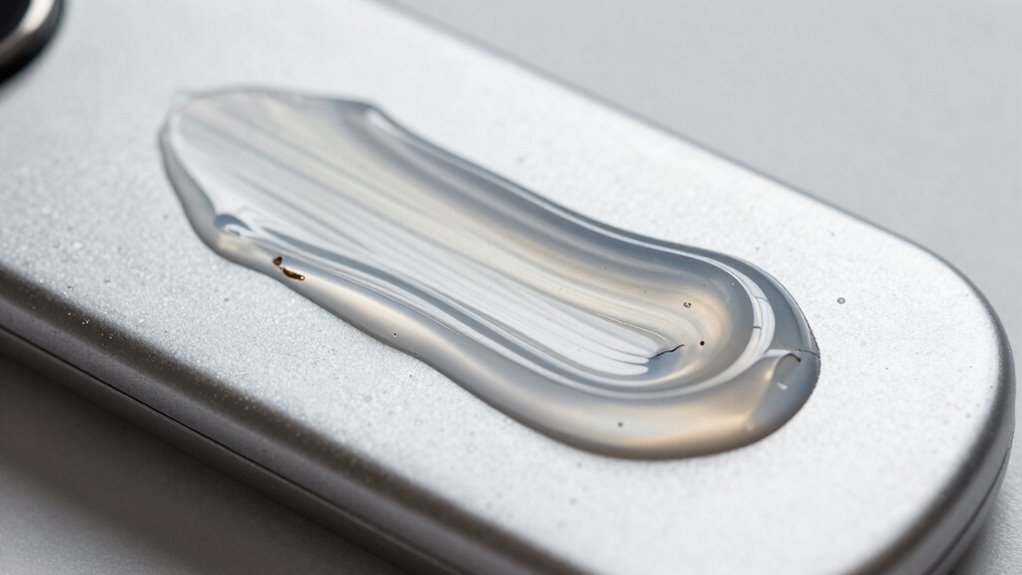
How can you tell if it’s time to reapply conductive gel? One of the main signs is a noticeable drop in signal quality. If your device’s readings become inconsistent or weaker than usual, it’s likely due to insufficient gel amount. You might also notice increased static or noise during use. Check the gel layer; if it feels dry, patchy, or has dried out completely, it’s time for a fresh application. When the gel isn’t adequately covering the contact area, the signal can weaken, making your device less effective. Regularly monitor how your device performs, and if you notice any decline, reapplying conductive gel will restore optimal contact and ensure strong, reliable signals. Additionally, understanding the importance of proper application can help prevent issues caused by inadequate gel coverage. Ensuring the correct amount of gel is used can also improve overall device performance and longevity. Recognizing these signs early helps maintain consistent device operation and extend the lifespan of your equipment, especially when considering proper maintenance practices.
How to Properly Apply Conductive Gel for Best Results
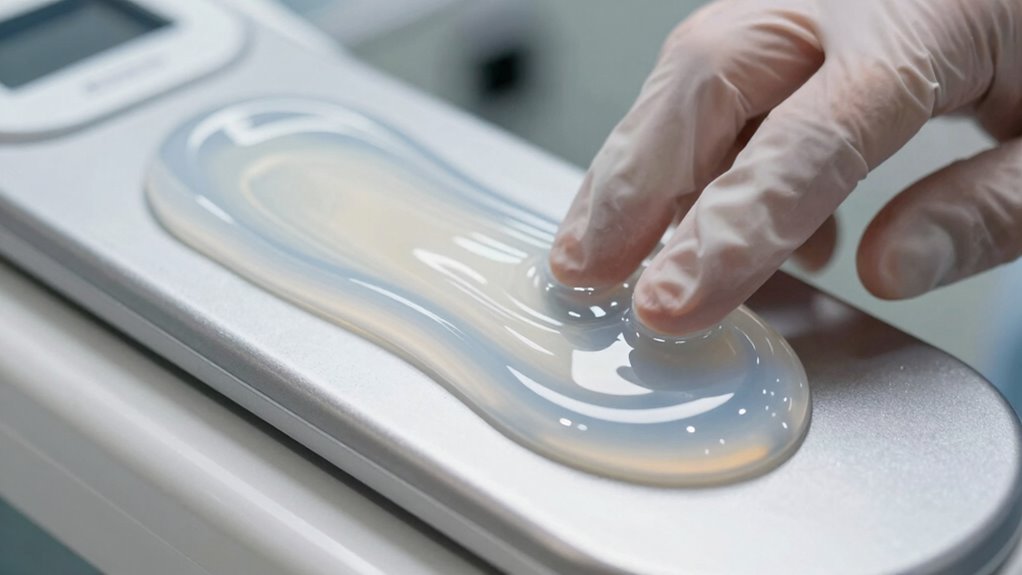
Applying conductive gel correctly guarantees your device performs at its best. To achieve ideal results, focus on a proper application technique and thorough gel distribution. Start by squeezing a generous amount onto the area. Use your fingers or a spatula to spread the gel evenly, ensuring no dry spots remain. The goal is to create a consistent, conductive layer that covers all contact points. Avoid pooling or uneven patches, which can reduce effectiveness. Remember, proper gel distribution enhances conductivity and user comfort. Additionally, maintaining a consistent application technique helps prevent uneven contact and improve overall device performance. Proper material quality of the gel also plays a significant role in ensuring optimal conductivity. Using high-quality conductive gels ensures better stability and reduces the risk of irritation during use. Maintaining a clean application surface can further enhance the effectiveness of the gel and ensure better contact. Below is a quick guide to help you visualize the process:
| Step | Action | Result |
|---|---|---|
| 1 | Squeeze gel | Adequate amount |
| 2 | Spread evenly | Consistent coverage |
| 3 | Check for dry spots | Complete contact |
| 4 | Reapply if needed | Ideal performance |
Consistent application technique ensures your device works smoothly every time. Proper application techniques are essential for maximizing the device’s effectiveness and comfort during use.
Common Conductive Gel Mistakes and How to Avoid Them
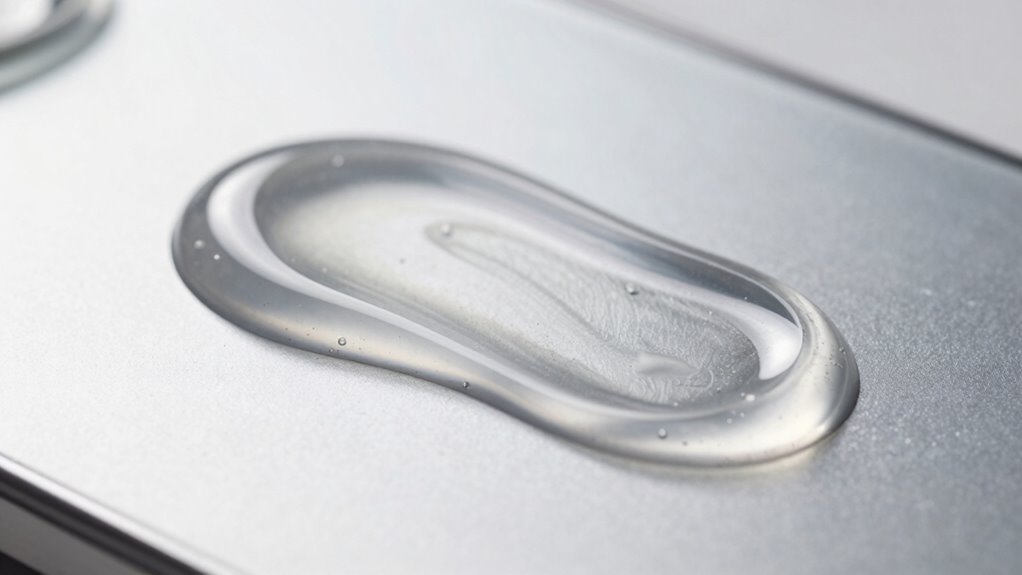
One common mistake is using too little gel, which can cause poor conductivity and weaken device performance. To avoid this, guarantee you apply enough conductive gel for a smooth, consistent layer. Poor conductive gel storage can also lead to drying out or contamination, so keep your gel in a cool, sealed container. Proper storage ensures the gel maintains its conductivity properties over time. Improper gel selection is another mistake; always choose a high-quality, compatible gel designed for your device to maximize conductivity. Using the wrong type or expired gel reduces effectiveness. Don’t skimp on proper gel storage or proper gel selection—these small steps make a big difference in achieving ideal results. Properly stored and selected gel helps maintain good conductivity, ensuring your device functions as intended and delivers the best experience. Additionally, understanding ethical considerations in consumer choices can help you make more informed decisions about product quality and safety, especially when selecting reliable survival gear essentials for emergencies. Recognizing the importance of product safety standards can further guide you toward safer and more effective conductive gels.
Frequently Asked Questions
Can I Use Any Type of Conductive Gel With My Device?
You shouldn’t use just any gel type with your device. Stick to gels specifically designed for your device to guarantee compatibility and ideal performance. Using incompatible gels can cause poor conductivity or damage. Always check your device’s instructions or manufacturer recommendations to find the right conductive gel. This way, you’ll maintain effective contact and get the best results without risking any harm to your device.
How Long Does Conductive Gel Typically Last Before Needing Reapplication?
Like a trusted friend, conductive gel’s lifespan varies, but you should expect reapplication every 20 to 30 minutes during use. Factors such as skin type, activity level, and gel quality influence how long the gel reapplication lasts. Keep an eye on the gel’s consistency and conductivity, and don’t hesitate to refresh it to guarantee ideal device performance. Proper gel lifespan maintenance keeps your experience smooth and effective.
Are There Health Risks Associated With Prolonged Use of Conductive Gel?
Prolonged use of conductive gel can pose health risks like skin irritation or allergic reactions, especially if you have sensitive skin or allergies. You might notice redness, itching, or discomfort after extended contact. To prevent these issues, clean the area thoroughly after use, avoid sharing gel with others, and discontinue use if you experience any adverse reactions. Always follow manufacturer guidelines for safe, long-term use.
Does Temperature Affect the Effectiveness of Conductive Gel?
Yes, temperature impacts gel conductivity. When it’s too cold, the gel becomes thicker, reducing its ability to transmit signals effectively. Conversely, heat can make it too runny, decreasing contact and conductivity. You should store your conductive gel at room temperature to maintain ideal performance. Proper temperature control ensures your device functions smoothly and delivers consistent results, preventing weak signals caused by temperature-related changes in gel conductivity.
Is Conductive Gel Compatible With All Electronic Devices?
No, conductive gel isn’t compatible with all electronic devices. You should check device compatibility before using gel, as some sensitive electronics could be damaged. If your device isn’t compatible, consider gel alternatives like conductive pads or specialized wipes, which are designed for safer use. Always follow manufacturer guidelines to prevent malfunctions and guarantee ideal performance when using conductive materials.
Conclusion
Without conductive gel, your device is like a car without fuel—struggling to perform at its best. By understanding how it works and applying it properly, you’ll guarantee clear signals and ideal results every time. Just remember, neglecting this simple step is like leaving your engine idle—wasting potential. Keep your gel fresh and your device connected, and you’ll release its full power, turning your experience from a weak whisper into a confident roar.