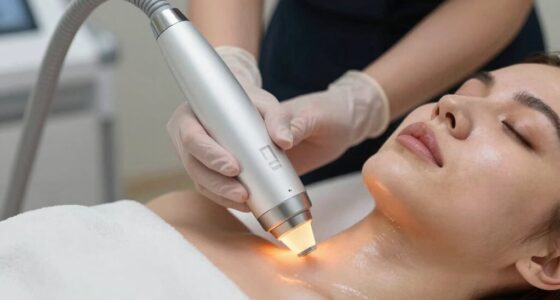

The best order is to use microcurrent after cleansing and applying lightweight serums but before heavier creams or active ingredients. This way, the treatment can boost absorption, improve skin tone, and enhance firmness. Applying serums first allows microcurrent to work more effectively, while waiting about 10 minutes before applying thicker products helps prevent irritation. To discover detailed tips on optimizing your routine, keep exploring how to get the most from your microcurrent sessions.
Key Takeaways
- Use microcurrent after cleansing and applying serums to enhance absorption and maximize results.
- Apply microcurrent before heavier creams to prevent barrier disruption and improve device efficacy.
- Wait at least 10 minutes post-treatment before applying active or nourishing skincare products.
- Proper sequencing—cleanse, microcurrent, then moisturize—supports skin firmness and radiance.
- Avoid applying active ingredients during microcurrent sessions to prevent irritation and ensure safety.
What Is Microcurrent Treatment and How Does It Work?

Microcurrent treatment is a non-invasive skincare technique that uses low-level electrical currents to stimulate your facial muscles and skin cells. During the procedure, electrode placement is essential; your practitioner places small, conductive probes on specific areas of your face to target muscles and tissues. The effectiveness of the treatment depends on your skin’s conductivity, which allows electrical currents to pass smoothly and uniformly. When electrodes are correctly positioned, the currents encourage collagen production, improve blood circulation, and tighten your skin. This process is painless and requires no downtime. As the electric impulses work beneath the surface, they help lift and tone your face naturally, making microcurrent a popular choice for a non-surgical anti-aging approach. Proper electrode placement is crucial for optimal results. Additionally, ensuring your skin is clean and properly prepped can enhance the treatment’s effectiveness and overall results. Proper skin preparation not only maximizes conductivity but also minimizes the risk of irritation, contributing to a more comfortable experience.
Should You Use Microcurrent Before or After Your Skincare Routine?
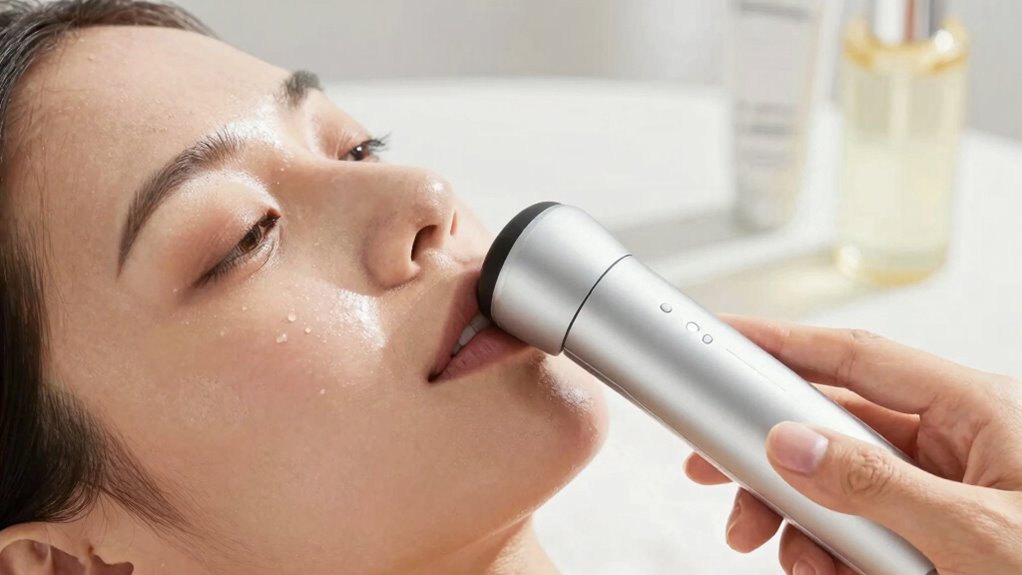
Deciding whether to use microcurrent before or after your skincare routine can influence absorption and skin protection. Applying it at the right time helps maximize ingredient uptake and keeps your skin barrier healthy. Knowing the best order ensures you get the most benefit from both your skincare products and microcurrent treatments. Using microcurrent at the optimal point in your routine can also help enhance skincare effectiveness and prevent unnecessary irritation. For those interested in a Free Floating approach to backyard design, incorporating elements like natural pools and eco-friendly features can create a relaxing environment that complements your skincare routine. Additionally, understanding the comedogenic ratings of your skincare products can prevent breakouts and maintain a clear complexion while using microcurrent devices. Incorporating proper eye safety tips when using microcurrent devices is essential to protect sensitive areas around the eyes from potential irritation. Properly cleaning your device after each use also ensures safety and longevity of your microcurrent device.
Maximize Absorption Efficiency
To maximize absorption efficiency, it’s important to contemplate when to use your microcurrent device in relation to your skincare routine. Proper timing can enhance product penetration and overall results. Consider these key points:
- Ensure your products are compatible with microcurrent sessions to prevent adverse reactions.
- Use your device on a clean, dry face to remove barriers to absorption.
- Adjust treatment frequency based on product types—more frequent sessions may boost absorption with lightweight formulas.
- Apply serums or moisturizers after microcurrent to lock in benefits, but avoid layering heavy creams beforehand that could hinder device effectiveness.
Protect Skin Barrier
Have you ever wondered whether to use microcurrent treatments before or after your skincare routine? To protect your skin barrier, it’s best to prioritize maintaining hydration balance and minimizing skin sensitivity. Applying microcurrent after your skincare allows active ingredients to penetrate more effectively without disrupting your skin’s natural defenses. If you use microcurrent first, your skin might become more sensitive, risking damage or irritation from subsequent products. Additionally, understanding indoor air quality can help you create a healthier environment that supports overall skin health. Conversely, prepping your skin with a gentle, hydrating serum before microcurrent can enhance efficacy while soothing and reinforcing your barrier. Always pay attention to your skin’s response, especially if it’s prone to sensitivity. Proper sequencing helps preserve your skin’s health, ensuring your microcurrent treatments deliver maximum benefits without compromising your barrier. Incorporating proper home skincare techniques can further support your skin’s resilience.
Key Factors That Determine the Best Timing for Microcurrent

Timing your microcurrent treatments effectively depends on several key factors that influence how your skin responds. First, consider product compatibility; some skincare products may cause irritation if used immediately before or after a session. Second, your session frequency matters—more frequent treatments can enhance results but may require adjustments based on skin sensitivity. Third, your skin’s current condition, such as redness or sensitivity, impacts ideal timing. Fourth, understanding your personal goals, like lifting or toning, helps determine when to schedule sessions for maximum benefit. Being mindful of these factors ensures your microcurrent routine aligns with your skin’s needs, reduces the risk of adverse reactions, and maximizes results. Adjusting timing based on these key elements makes your treatments more effective. Additionally, knowing the horsepower of electric dirt bikes can help you understand the power behind some of the equipment used in skin treatment devices.
How to Incorporate Microcurrent Into Your Skincare Routine for Best Results

Integrating microcurrent treatments into your daily skincare routine can substantially enhance your results when done correctly. To maximize benefits, focus on product synergy and proper skincare layering. Apply lightweight serums or hydrating toners first, then use microcurrent to boost absorption and stimulate muscles. Finish with thicker creams to seal in moisture. Timing matters: microcurrent works best after cleansing and before heavier products. Here’s a simple guide:
| Step | Action |
|---|---|
| 1 | Cleanse thoroughly |
| 2 | Apply lightweight serum or toner |
| 3 | Use microcurrent device, follow with moisturizer |
This sequence optimizes product synergy and ensures your skin responds well, improving tone, firmness, and radiance. Proper layering enhances microcurrent effects without disrupting your routine. Additionally, understanding the contrast ratio of your skincare products can help you select formulations that maximize visual and textural benefits.
Common Mistakes When Timing Microcurrent and How to Avoid Them

One common mistake is applying products at the wrong time, which can block or interfere with microcurrent effects. You might also accidentally overlap product application, reducing the treatment’s effectiveness. To get the best results, make sure to follow the proper timing sequence and avoid mixing products during your microcurrent session. Using the correct skincare products can further enhance the benefits of your microcurrent treatment. Additionally, understanding the role of folklore and its influence on perceptions can help you better interpret your experiences and avoid misconceptions about supernatural encounters. Recognizing the technological advancements in microcurrent devices can also ensure you are using the most effective and safe equipment for your skincare routine. Being aware of affiliate disclosures ensures transparency when purchasing recommended products to support your skincare journey. Staying informed about scientific research can help you make evidence-based choices and optimize your skincare outcomes.
Overlapping Product Application
When applying products during your microcurrent skincare routine, overlapping them at the wrong moments can hinder results and cause irritation. Proper product layering depends on correct application timing. To avoid mistakes, keep these tips in mind:
- Wait until the previous product is absorbed before applying the next.
- Apply serums or creams after microcurrent sessions to maximize absorption.
- Avoid layering multiple active ingredients simultaneously during microcurrent treatment.
- Follow a consistent order to prevent product interference with device efficacy.
- Be mindful of spiritual awakening signals that may guide your skincare routine adjustments for better harmony and results. Additionally, understanding the high-tech vaping innovations can lead to more mindful choices about product safety and ingredients, ultimately supporting healthier skin.
Improper Timing Sequence
Timing is everything when it comes to microcurrent skincare. An improper timing sequence can reduce effectiveness or cause skin irritation. If you don’t consider product compatibility, you might apply products that interfere with microcurrent, dampening results or damaging your skin. Also, neglecting the right session frequency can lead to over- or- under-treatment, preventing ideal progress. For example, using active serums immediately before microcurrent may cause adverse reactions if they’re not compatible, and skipping recommended rest periods can lead to skin sensitivity. To avoid these mistakes, follow a consistent schedule and choose products formulated for microcurrent treatments. Proper timing can maximize your results and maintain skin health. Additionally, understanding how different skincare ingredients interact with microcurrent devices can help prevent potential adverse effects and optimize treatment outcomes. Recognizing the importance of professional guidance can further enhance your skincare routine and ensure safe, effective use of microcurrent technology. Being aware of device settings and their impact on skin response can also help prevent damage and achieve better results.
Final Tips for Optimizing Microcurrent in Your Skincare Schedule
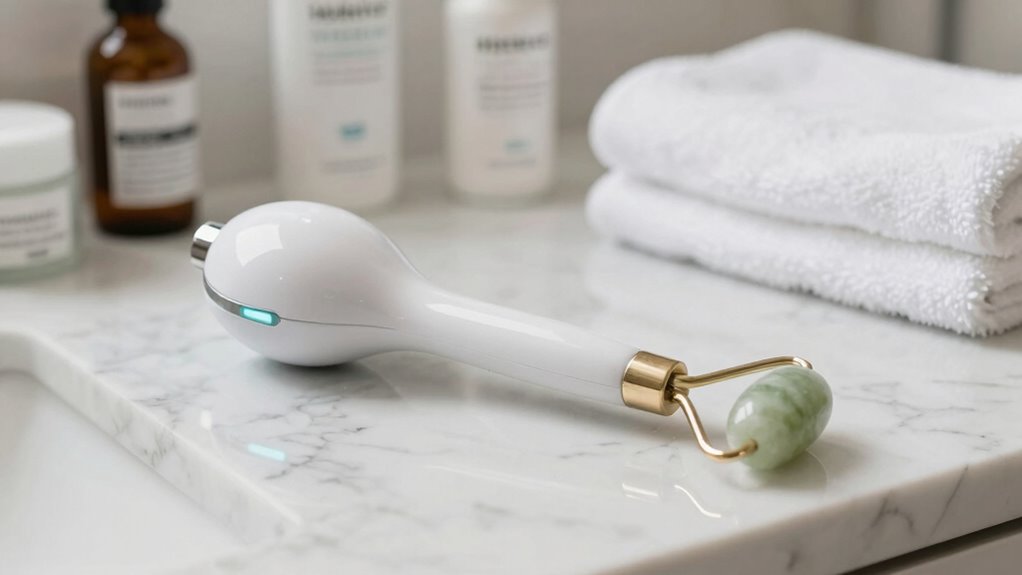
To get the most out of your microcurrent treatments, it’s essential to incorporate them thoughtfully into your skincare routine. Here are some final tips to optimize results:
- Consistency is key—use microcurrent regularly to improve skin elasticity and reduce age spots over time.
- Cleanse thoroughly before treatments to ensure maximum conductivity and effectiveness.
- Follow with nourishing products like serums or moisturizers, but wait at least 10 minutes after microcurrent to prevent interference.
- Adjust the timing based on your skin’s response—some may see better results when microcurrent is done before skincare, others after, depending on your goals.
Sticking to these tips helps you achieve firmer, more youthful skin.
Frequently Asked Questions
How Often Should I Schedule Microcurrent Treatments?
You should schedule microcurrent treatments about once a week initially, then adjust based on your skin’s response. Treatment frequency varies depending on your skin goals and condition. For ideal results, stick to consistent session scheduling, typically 4-6 sessions in the first month. Afterward, you can space out treatments to maintain the benefits. Always consult with your skincare professional to personalize your microcurrent treatment plan.
Can Microcurrent Be Used With Other Skincare Devices?
Think of your skincare routine as a symphony—microcurrent can harmonize with other devices if you prioritize device compatibility. You should use microcurrent before devices like LED masks or RF treatments to maximize treatment synergy. Always check each device’s instructions, and avoid combining treatments that could cause irritation. When done right, this approach amplifies your results, making your skincare routine more effective and enjoyable—like a well-orchestrated performance.
Are There Skin Types That Should Avoid Microcurrent?
If you have sensitive skin or certain contraindicated conditions like active infections or open wounds, microcurrent might not be suitable for you. You should avoid it if your skin reacts easily, or if you have implanted electronic devices. Always consult with a skincare professional beforehand to determine if microcurrent is safe for your specific skin type and conditions, ensuring you don’t experience unwanted irritation or adverse effects.
How Long Does a Typical Microcurrent Session Last?
A typical microcurrent session lasts about 20 to 30 minutes, like a quick refresh for your skin. Microcurrent technology is gentle and usually compatible with creams, but it’s best to apply serums beforehand for better absorption. During the session, the device stimulates your muscles, leaving your skin feeling firmer. Most treatments are quick, fitting easily into your routine, giving you noticeable results without taking up too much time.
What Are the Signs That Microcurrent Isn’t Suitable for My Skin?
If you notice increased skin sensitivity, redness, or tingling during or after microcurrent sessions, it might not be suitable for your skin. Also, watch for allergic reactions like swelling or rash. If these signs occur, stop treatments and consult a dermatologist. Microcurrent can be intense for sensitive skin, so it’s important to listen to your body and avoid it if you experience discomfort or adverse reactions.
Conclusion
Timing your microcurrent treatment correctly can make all the difference—skip it before skincare, and you risk reduced absorption; do it afterward, and you might miss out on enhanced results. It’s about finding the balance between preparation and recovery. When you get the order right, your skin benefits from both the treatment’s tightening effects and your skincare’s nourishing ingredients. So, choose wisely, and let microcurrent amplify your routine rather than hinder it.