Smart UV tools can revolutionize your sunscreen habits by providing real-time data on UV exposure, helping you apply sunscreen more accurately and consistently. They sync with your phone to give instant feedback and notifications about peak UV times, encouraging you to reapply or seek shade. This active management reduces overexposure risks and promotes healthier skin. If you keep exploring, you’ll discover more ways these tools can empower your sun safety routine.
Key Takeaways
- Provide real-time UV exposure data to inform timely and appropriate sunscreen reapplication.
- Offer personalized SPF recommendations based on skin type and UV levels, enhancing protection accuracy.
- Encourage consistent sunscreen use through instant feedback and reminders about peak UV times.
- Enable better planning of outdoor activities by understanding UV variability throughout the day.
- Promote active sun safety behaviors, reducing overexposure risks and improving long-term skin health.
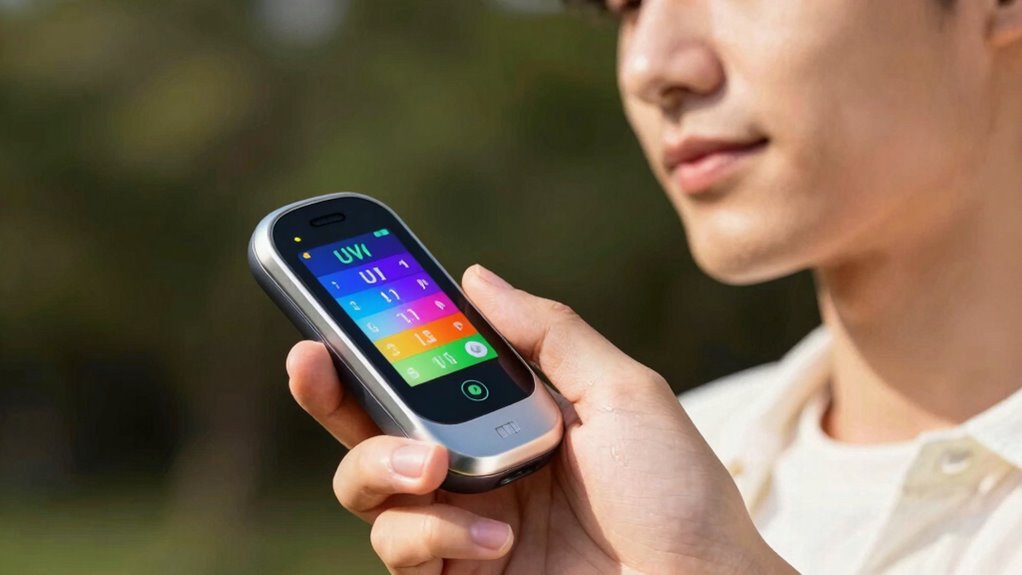
In today’s sunny climate, understanding how to protect your skin is more important than ever, especially with the rise of smart UV tools that make monitoring sun exposure easier. These devices are changing the way you think about UV exposure and skin protection, giving you real-time data that helps you make smarter choices about when and how long to stay in the sun. Instead of relying solely on traditional methods like sunscreen and vague weather forecasts, you can now get personalized, instant feedback on your current UV levels. This immediate insight encourages you to adjust your behavior on the spot, reducing your risk of overexposure and long-term skin damage.
Smart UV tools typically sync with your smartphone, providing a clear picture of the UV intensity in your environment. As you go about your day, you receive notifications that tell you when UV rays are at their peak or when it’s safe to be outside. This helps you plan your outdoor activities more effectively, whether you’re at the park, beach, or just running errands. By keeping a close eye on UV exposure, you’re more likely to apply sunscreen diligently and seek shade when needed, boosting your overall skin protection. It’s no longer a guessing game—you’re actively managing your sun safety based on real data, not assumptions or outdated advice.
What makes these tools particularly impactful is their ability to change your sunscreen habits. Rather than applying a set amount of sunscreen in the morning and hoping for the best, you can reapply precisely when your UV exposure reaches a certain threshold. Some smart UV devices even recommend the appropriate SPF level based on your skin type and current environment. This tailored approach means you’re less likely to miss spots or forget to reapply, which are common issues with traditional sunscreen routines. Over time, these habits become more consistent and mindful, significantly improving your skin protection. Informed sun safety is now more accessible than ever, helping you develop habits that last. Additionally, understanding UV variability can help you adapt your sun protection strategies to different seasons and weather conditions.
Furthermore, these devices can provide insights into how UV levels fluctuate throughout the day, enabling you to better anticipate periods of higher risk. Ultimately, smart UV tools empower you to take control of your sun safety. They bridge the gap between awareness and action, ensuring you’re not just aware of UV risks but actively managing them. With these devices, protecting your skin becomes less about guesswork and more about informed decisions. Additionally, accurate UV data can help you understand seasonal and daily variations in sun exposure, further improving your protective habits. This data-driven approach highlights the importance of UV monitoring in maintaining healthy skin. As you adopt these habits, you’ll find yourself spending less time unworried about UV overexposure and more confident that you’re doing everything possible to keep your skin healthy. This shift in approach can make a real difference, especially in a world where sunny days are more frequent and UV rays are more intense.
As an affiliate, we earn on qualifying purchases.
Frequently Asked Questions
How Accurate Are Smart UV Tools Compared to Traditional UV Index Forecasts?
Smart UV tools offer impressive UV accuracy, often comparable to traditional UV index forecasts, when their sensors are properly calibrated. You can trust these devices for real-time, personalized sun exposure data, but keep in mind that sensor calibration is essential. If the sensors aren’t regularly maintained, their accuracy might decline. Overall, with proper calibration, smart UV tools provide reliable, immediate insights, helping you make better decisions about sun protection.
Can Smart UV Tools Be Used Indoors or in Shaded Areas?
Think of smart UV tools as your personal sun shield, even indoors or in shaded areas. They can be used anywhere, measuring UV exposure in real-time, so you know when to seek cover. Indoor exposure might seem safe, but UV rays can bounce off surfaces, and shaded spots aren’t foolproof. With these tools, you stay aware, making smarter choices regardless of where you are, protecting your skin effortlessly.
Do Smart UV Tools Require Calibration for Different Skin Types?
Smart UV tools typically don’t require calibration procedures for different skin sensitivities. They measure UV exposure objectively, helping you understand your skin’s response without adjustments. However, understanding your skin sensitivity is essential for interpreting results accurately. While the device offers personalized insights, always consider your skin type and sensitivities when choosing sunscreen. Using these tools can lead to better sun protection habits tailored to your unique needs.
Are There Any Health Risks Associated With Using UV Sensors?
Using UV sensors generally poses minimal health risks, but excessive UV exposure can harm your skin and eyes. About 80% of skin aging results from UV rays, highlighting the importance of monitoring exposure. While UV sensors themselves don’t emit harmful radiation, overreliance on them might lead you to underestimate skin sensitivity. Always balance sensor readings with protective measures like sunscreen, clothing, and shade to safeguard your skin effectively.
How Often Should I Update or Replace the Smart UV Tool?
You should update or replace your smart UV tool based on sensor durability and user calibration. Typically, check the device every few months for accurate readings, especially if you notice inconsistent results. Regularly calibrate it as recommended by the manufacturer to guarantee precision. If the sensor shows signs of wear or damage, it’s time to replace the tool to maintain reliable UV exposure assessments, protecting your skin effectively.
As an affiliate, we earn on qualifying purchases.
Conclusion
Just like Icarus learned too late about the sun’s power, you don’t have to risk it. Smart UV tools act as your modern Daedalus, guiding you safely through the sun’s domain. With real-time insights, you can stay protected without overdoing it or missing spots. Embrace these tools, and turn your sunscreen routine into a wise, confident dance with the sun, ensuring you stay safe while enjoying every sun-kissed moment.
As an affiliate, we earn on qualifying purchases.
As an affiliate, we earn on qualifying purchases.