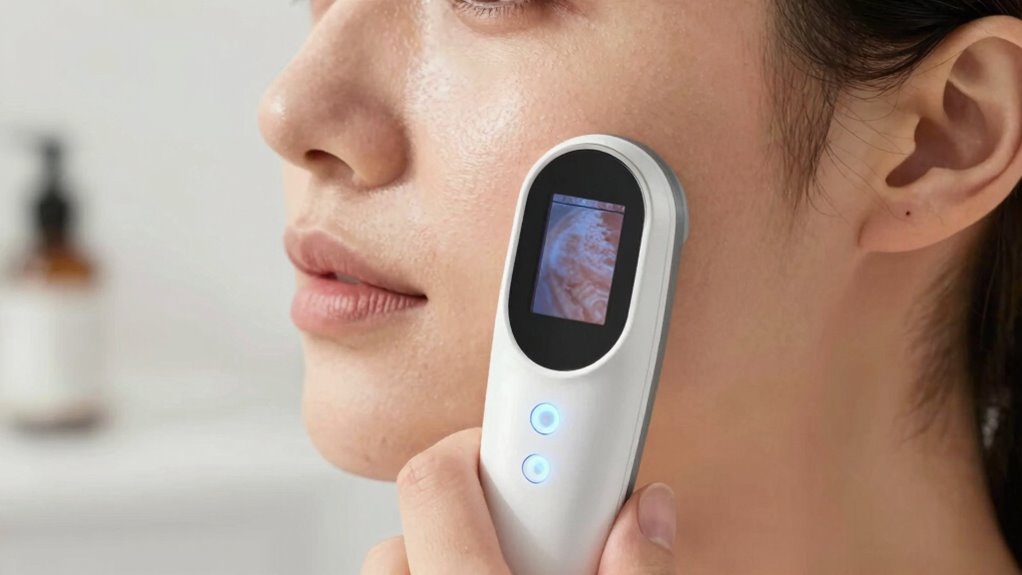

To use a skin scanner without obsession, focus on it as a helpful guide rather than perfection. Check your skin every few weeks and recognize that natural changes happen due to weather, stress, and sleep. Avoid daily monitoring to prevent unnecessary worry, and always interpret results with a balanced perspective. Remember, your goal is overall skin health, not flawless perfection. If you want to learn more about maintaining a healthy mindset, keep exploring ways to stay positive and informed.
Key Takeaways
- Check your skin every few weeks, not daily, to prevent unnecessary worry and over-focusing.
- Use the scanner as a helpful guide, not a tool for perfection or flaw fixation.
- Focus on overall skin health and positive habits rather than obsessing over minor changes.
- Remember environmental and internal factors influence results; interpret them with a balanced perspective.
- Maintain a positive mindset, and consult a dermatologist for concerns instead of jumping to conclusions.
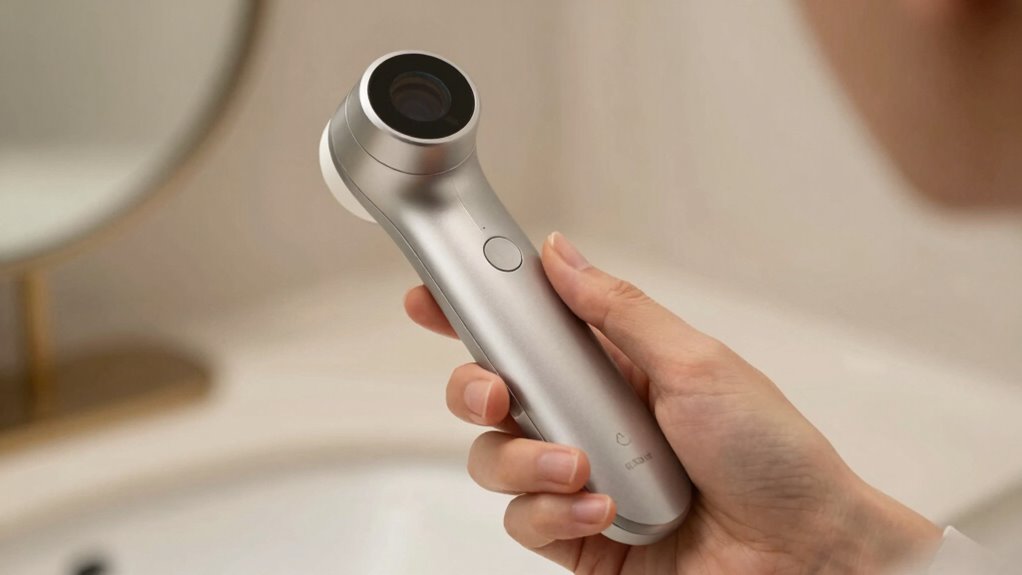
Using a skin scanner is a straightforward way to assess your skin’s health and identify potential issues early. It provides valuable insights into your skin’s condition, such as hydration levels, sun damage, and the presence of blemishes. When you start using a skin scanner, you might feel eager to analyze every detail, but it’s important to keep a balanced perspective. Remember, this tool is meant to guide you, not obsess over every tiny imperfection.
A skin scanner offers helpful insights but should be used as a guide, not for perfection obsession.
As you incorporate a skin scanner into your routine, focus on understanding your skin’s overall health rather than chasing perfection. Use the scan results to inform your skincare routines and make small adjustments, like adding more moisturizer or applying a sunscreen with higher SPF. Don’t become fixated on every flaw; instead, see the scanner as a way to track your progress and catch early signs of issues. It’s easy to get caught up in the details, but keeping a positive mindset is key. Use the results as motivation to improve your habits, not as a source of stress or self-criticism.
To prevent obsession, establish a regular but reasonable schedule for using your skin scanner. For example, check your skin once every few weeks, rather than daily. Over-monitoring can lead to unnecessary worry, especially if you notice minor or temporary changes. Remember, skin fluctuates naturally due to factors like weather, stress, and sleep. Be patient and gentle with yourself. If your skin scanner indicates a concern, consult a dermatologist rather than jumping to conclusions. Professional advice can help you interpret the results accurately and avoid unnecessary anxiety. Biodiversity and environmental factors can also influence your skin’s health, so understanding these broader influences can help you maintain perspective. Additionally, recognizing how environmental influences impact your skin can help you better interpret your scanner results and avoid unnecessary concern. It’s also helpful to be aware that skin health is affected by many external and internal factors, emphasizing the importance of a holistic view. Incorporating knowledge from scientific research about skin health can deepen your understanding and help you interpret your results more effectively.
Furthermore, understanding the role of personal habits such as sleep, hydration, and stress management can significantly impact your skin’s condition and how you interpret scanner results. Alongside using the scanner, maintaining good diet tips can significantly improve your skin’s health. Eating a balanced diet rich in antioxidants, vitamins, and healthy fats supports your skin from within. Incorporate plenty of fruits, vegetables, nuts, and omega-3 fatty acids into your meals. These dietary choices complement your skincare routines, creating a holistic approach to skin health. Remember, consistent routines matter more than quick fixes. Stick to gentle cleansing, regular moisturizing, and sun protection, and use the scanner as a supplementary tool for tracking your skin’s response over time.
Ultimately, the goal is to use your skin scanner as a helpful guide, not an obsession. Keep your focus on overall health and well-being, and don’t let the technology make you overly anxious about your appearance. When used thoughtfully, it can be an empowering addition to your skincare journey—helping you make informed choices without becoming consumed by every detail.
As an affiliate, we earn on qualifying purchases.
Frequently Asked Questions
Can Skin Scanners Diagnose Skin Cancer Accurately?
Skin scanners can aid in early detection of skin cancer, but they’re not 100% accurate. They help identify suspicious moles or spots, yet false positives are common, leading to unnecessary worry or procedures. You should still see a dermatologist for a professional diagnosis if your scanner flags something unusual. Using the scanner as a supplementary tool is helpful, but it shouldn’t replace regular skin checks or expert medical advice.
Are Skin Scanners Safe for All Skin Types?
Imagine a gentle breeze across your skin—that’s how skin scanners feel for most, but skin sensitivity varies. These devices are generally safe, yet their accuracy depends on proper device calibration. If you have sensitive skin or unique concerns, check if the scanner is compatible with your skin type. Always follow manufacturer guidelines and consult a dermatologist to guarantee safe, effective use tailored to your skin’s needs.
How Often Should I Use a Skin Scanner?
You should use a skin scanner once a month to monitor skin aging and sun damage without overdoing it. This frequency helps you spot changes early without becoming obsessed. Regular check-ins can alert you to signs of sun damage or aging, allowing you to adjust your skincare routine. Remember, moderation is key—overuse can lead to unnecessary worry, so stick to a consistent schedule that keeps you informed but not overwhelmed.
Do Skin Scanners Replace Dermatologist Visits?
Skin scanners don’t replace dermatologist visits, especially for concerns like cosmetic enhancements or skin aging. They can be helpful tools for tracking changes and identifying potential issues early, but a professional dermatologist provides personalized advice, diagnosis, and treatment plans. Relying solely on a skin scanner might cause you to overlook underlying problems or delay necessary medical attention, so always consult a dermatologist for complete skin health management.
Can Skin Scanners Detect Underlying Skin Conditions?
Imagine your skin as a layered map, and a skin scanner as a magnifying glass revealing hidden details. While skin scanners can detect some underlying skin issues like pigmentation or rough patches, their limitations mean they might miss deeper concerns. You shouldn’t rely solely on them, as they can’t replace professional diagnosis. Always consult a dermatologist for an all-encompassing assessment of underlying skin conditions that might be invisible to the scanner.
As an affiliate, we earn on qualifying purchases.
Conclusion
Remember, a skin scanner is a helpful tool, but it shouldn’t be your whole world. Keep using it to stay informed about your skin’s health, yet don’t let it turn into an obsession. Trust your intuition and regular check-ups with a dermatologist. After all, a little knowledge is a good thing, but too much can sometimes be a double-edged sword. Stay balanced and keep your skin care simple—don’t let the scanner steal your peace of mind.
As an affiliate, we earn on qualifying purchases.
As an affiliate, we earn on qualifying purchases.