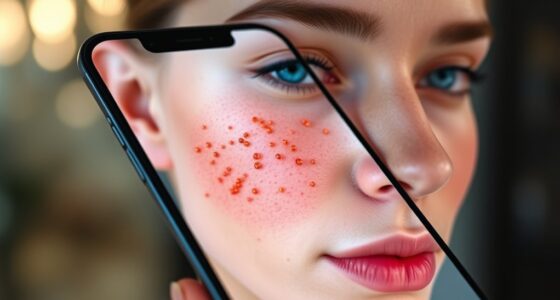
Facial recognition skin analyzers combine advanced imaging and AI to examine your skin in detail, identifying features like wrinkles, spots, and hydration levels. They provide personalized skincare insights based on highly detailed facial images, helping you understand your skin’s condition. The accuracy of these tools depends on how well their algorithms interpret visual data, which can vary. If you want to discover how these devices work and what to contemplate, keep exploring further.
Key Takeaways
- Facial recognition skin analyzers use AI and imaging technology to assess skin features like wrinkles, spots, and hydration.
- Accurate algorithms are essential for reliable skin condition analysis and personalized skincare recommendations.
- Privacy concerns arise from capturing detailed biometric facial images, especially with cloud-based data processing.
- Users should review privacy policies and control data sharing, storage, and deletion options for better data security.
- Diverse and inclusive training data improve device accuracy across different skin tones, ages, and conditions.
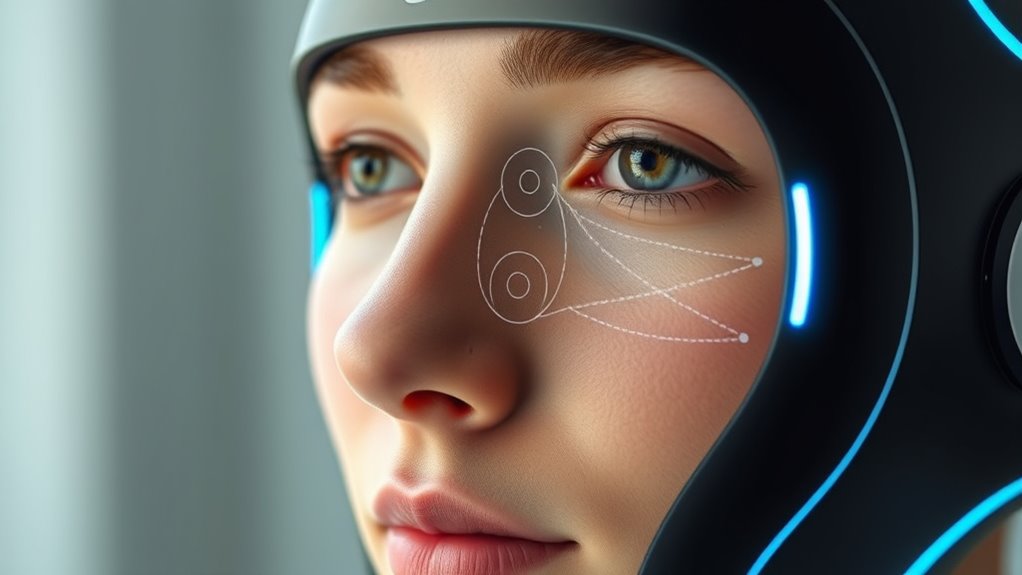
Facial recognition skin analyzers are transforming how you assess and care for your skin by combining advanced imaging technology with artificial intelligence. These devices capture detailed images of your face, analyzing skin features such as wrinkles, spots, pores, and hydration levels. The core of their effectiveness lies in their algorithm accuracy, which determines how precisely they interpret visual data to provide personalized skincare insights. When the algorithms are finely tuned, they can distinguish between subtle differences in skin conditions, helping you identify issues early and choose targeted treatments. However, the reliability of these analyzers heavily depends on the quality and robustness of their algorithms. If the algorithms lack accuracy, you might receive misleading results, leading to ineffective skincare routines or unnecessary product recommendations. Hence, it’s essential to weigh the technology’s track record and validation studies before trusting these devices.
While these analyzers offer impressive capabilities, they also raise privacy concerns. Since they capture highly detailed images of your face, there’s a risk that sensitive biometric data could be stored, shared, or misused without your consent. Many manufacturers collect and process this data to improve their algorithms, but not all users are comfortable with their personal information being stored on servers or potentially exposed to breaches. It’s wise to review the privacy policies of these devices, understanding how your data is handled, whether it’s anonymized, and if you have control over its storage or deletion. Some devices operate locally on your smartphone, minimizing data sharing, while others rely on cloud-based processing, increasing privacy risks. Being informed about these aspects helps you make better decisions about incorporating facial recognition skin analyzers into your skincare routine.
Additionally, the integration of AI and facial recognition technology means that these devices are continually learning and improving. Over time, their accuracy can enhance, providing more reliable assessments tailored to your unique skin profile. Still, the quality of these improvements depends on the diversity of the training data used to develop the algorithms. If the training datasets lack representation across different skin tones, ages, or conditions, the accuracy can be biased or limited for certain users. This highlights the importance of choosing devices from reputable brands that prioritize inclusivity and rigorous testing. Dog names can be a fun way to personalize your devices or routines, making the experience more engaging and tailored to your preferences.
Frequently Asked Questions
How Accurate Are Facial Recognition Skin Analyzers Across Different Skin Tones?
Facial recognition skin analyzers can vary in accuracy across different skin tones due to algorithm biases. You might notice better skin tone accuracy with lighter skin tones, but darker skin tones sometimes experience less precise results. Developers are working to reduce these biases, yet it’s important to stay aware of potential inaccuracies. To get the most reliable assessments, consider tools specifically designed to address diverse skin tones and review their validation studies.
Can Facial Recognition Skin Analyzers Detect Underlying Skin Conditions?
Facial recognition skin analyzers can detect some skin conditions, but their accuracy varies. They primarily focus on surface-level analysis and may miss deeper issues like acne scars or underlying inflammation. Device limitations mean they aren’t fully reliable for all-encompassing skin condition detection. You should use them as a guide, but consult a dermatologist for a thorough diagnosis, especially if you suspect serious or hidden skin problems.
What Are the Privacy Concerns Associated With Using These Devices?
When using facial recognition skin analyzers, you’re concerned about data security and informed consent. These devices collect sensitive biometric data, which could be vulnerable to breaches if not properly protected. You should make certain clear communication about how your data will be used and stored, and that you give informed consent. Without proper safeguards, your privacy could be compromised, leading to potential misuse or unauthorized access to your personal information.
How Often Should One Use a Facial Recognition Skin Analyzer?
You should use a facial recognition skin analyzer once a week to maintain accurate readings and guarantee your device remains properly calibrated. Regular use allows you to track changes and adjust your skincare routine accordingly. Always prioritize user comfort by following device instructions carefully and avoiding overuse, which can cause skin irritation. Proper calibration and mindful usage help you get the most reliable results while keeping your skin healthy and comfortable.
Are There Any Health Risks From Prolonged Exposure to These Devices?
Are you worried about health risks from prolonged use of facial recognition skin analyzers? Generally, these devices are safe if used properly, especially with regular device calibration to ensure accurate readings. However, extended exposure to intense light or repeated use might cause skin irritation or eye strain. To prioritize user safety, follow manufacturer guidelines, limit usage time, and avoid direct eye contact. Isn’t your health worth a little extra caution?
Conclusion
Think of facial recognition skin analyzers as your personal lighthouse, guiding you through the foggy seas of skincare. They illuminate hidden issues and chart a clear course toward healthier skin. With each scan, you’re steering your ship away from trouble and toward radiant horizons. Embrace this technology as your trusted navigator, helping you avoid the rocky shores of guesswork and sail confidently toward glowing, revitalized skin. Your journey to better skin just got a whole lot clearer.