UV-sensing wearables give you real-time, personalized UV level updates, so you can instantly see how much sun exposure you’re getting. They help you make quick decisions to stay protected, tracking UV intensity throughout the day based on your location and weather conditions. These devices are user-friendly, integrate with apps, and promote healthier sun habits by reminding you when to reapply sunscreen or seek shade. Keep exploring to discover how this technology can enhance your sun safety routines.
Key Takeaways
- Provide real-time UV index readings to help users make immediate sun protection decisions.
- Continuously monitor UV exposure using advanced sensors for accurate, personalized data.
- Seamlessly integrate with apps to track and analyze UV exposure history over time.
- Promote improved sun safety habits through timely alerts and recommendations.
- Incorporate innovative technologies like automation to enhance UV measurement accuracy and user confidence.
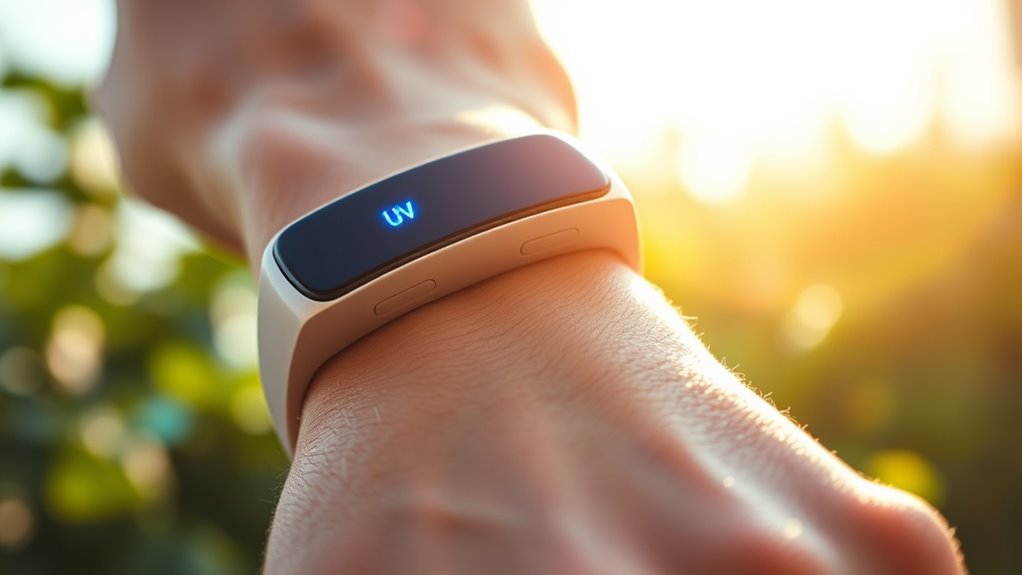
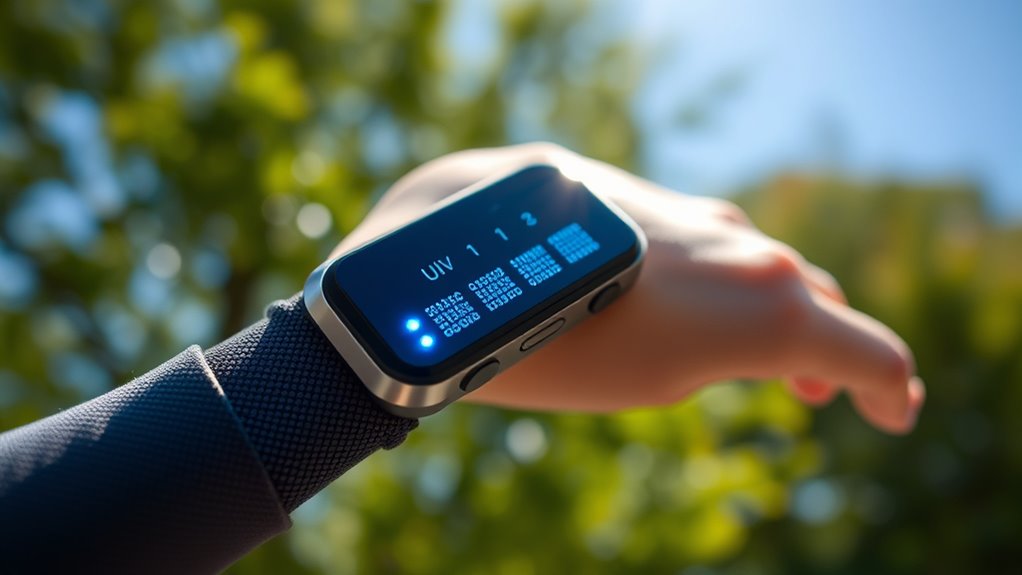
UV-sensing wearables are revolutionizing how you protect your skin from harmful ultraviolet rays. These devices give you real-time information about the UV index, helping you make smarter decisions about sun exposure. Instead of guessing or relying solely on weather forecasts, you can now have a personalized, immediate readout of UV levels directly from your wearable. This instant feedback allows you to adjust your activities, seek shade, or apply sunscreen before your skin starts to suffer damage. When you stay informed about the UV index, you’re actively reducing your risk of sunburn, premature aging, and skin cancer. These wearables empower you to practice better skin protection habits, especially during peak sunlight hours when UV rays are most intense.
The beauty of UV-sensing wearables lies in their ability to provide continuous, accurate measurements of UV radiation. As you go about your day, the device tracks UV exposure based on your location, time, and the current weather conditions. This means you don’t have to constantly check the weather app or remember to reapply sunscreen at regular intervals. Instead, you get timely alerts and updates directly on your wrist or device, which encourages proactive skin protection. Whether you’re at the beach, hiking, or just out for a walk, these wearables keep you aware of your environment’s UV levels, so you can avoid overexposure and minimize skin damage.
Furthermore, many UV-sensing wearables are designed to be user-friendly and integrate seamlessly into your daily routine. They often come with companion apps that store your UV exposure history, giving you insights into your habits over time. This data helps you understand when and how you’re most vulnerable to UV rays, so you can tailor your sun protection strategies accordingly. By monitoring your UV exposure, you develop a more mindful approach to sun safety, making it easier to stick with protective measures like wearing protective clothing, seeking shade, or applying sunscreen. Over time, this awareness can substantially decrease your risk of long-term skin issues.
Additionally, advancements in robotics and automation are aiding the development of more sophisticated wearable devices, including UV sensors, which can enhance their accuracy and functionality. In essence, these wearables serve as your personal UV safety assistant, constantly informing you about UV index levels and prompting you to take protective actions when necessary. They turn what used to be guesswork into a data-driven process, giving you confidence in your sun safety practices. With UV-sensing wearables, you’re not just passively exposed to the sun; you’re actively managing your skin protection to enjoy the outdoors safely and responsibly.
Frequently Asked Questions
How Accurate Are Current Uv-Sensing Wearable Devices?
Current UV-sensing wearable devices are generally quite accurate, especially when they undergo proper sensor calibration. They provide reliable data accuracy for daily sun exposure monitoring, but factors like device placement and skin type can affect readings. While not perfect, these wearables give you a good estimate of UV levels, helping you make safer sun exposure choices. Regular calibration and proper use guarantee you get the most accurate, helpful data.
Can UV Wearables Detect Other Environmental Hazards?
Sure, your UV wearable might think it’s a superhero, but it can’t detect all environmental hazards. These sensors focus mainly on UV exposure, so they’re limited in environmental hazard detection. Don’t expect them to warn you about pollution, toxins, or sudden weather changes. Their sensor limitations mean you need dedicated devices or alerts for all-encompassing safety. So, while handy, they’re far from being environmental hazard detectors.
What Is the Battery Life of Typical Uv-Sensing Wearables?
You’ll find that the battery longevity of typical UV-sensing wearables varies, usually lasting from a few days to a week on a single charge. This depends on power consumption, which is generally low thanks to efficient sensors and optimized circuits. To maximize battery life, consider reducing unnecessary features or turning off the device when not in use. Regular charging guarantees your wearable stays ready for safe sun exposure monitoring.
Are UV Sensors Affected by Water or Sweat?
UV sensors in wearables are designed with water resistance, so water exposure doesn’t harm them. Sweat can influence sensor accuracy temporarily, but most devices are built to handle this. You should still wipe sweat off regularly and avoid submerging your device for extended periods. Proper water resistance ratings and good maintenance help guarantee your UV sensor functions correctly, even during intense activity or in humid conditions.
How Do UV Wearables Integrate With Smartphones or Other Devices?
You might think UV wearables operate independently, but they actually integrate seamlessly with your smartphone through Bluetooth or Wi-Fi, enhancing device compatibility. This connection allows real-time data syncing, personalized alerts, and easy app access, making sun safety smarter. By investigating how these integrations work, you’ll understand that the wearable acts as a complementary tool, empowering you to monitor UV exposure conveniently and stay protected without disrupting your daily routine.
Conclusion
By wearing UV-sensing wearables, you gain control over your sun exposure, turning the risk of damage into an opportunity for awareness. These devices blend technology with health, reminding you that protection and enjoyment can coexist. While the sun’s warmth beckons, your wearable acts as a vigilant guardian, balancing pleasure with caution. In a world where risks often hide behind beauty, these wearables let you embrace the sun confidently, without sacrificing safety.