Virtual dermatology consultations offer you quick and convenient access to skin care from home, saving time and travel, especially if you live in rural areas or have a busy schedule. They are secure if platforms use encryption and comply with privacy laws, but you should still review privacy policies. Keep in mind, reliable internet and tech skills impact your experience. If you’re curious about how to make the most of virtual visits, there’s more to explore.
Key Takeaways
- Offers convenient, remote access to dermatologists, saving travel time and accommodating busy or rural residents.
- Ensures privacy through encryption and compliance with data security laws, though users should review privacy policies.
- Requires reliable internet and compatible devices; poor connectivity can impact consultation quality.
- Suitable for tech-savvy users; individuals with limited tech skills may prefer in-person visits for simplicity.
- Facilitates quick, flexible appointments but may be limited for complex cases needing physical examination.
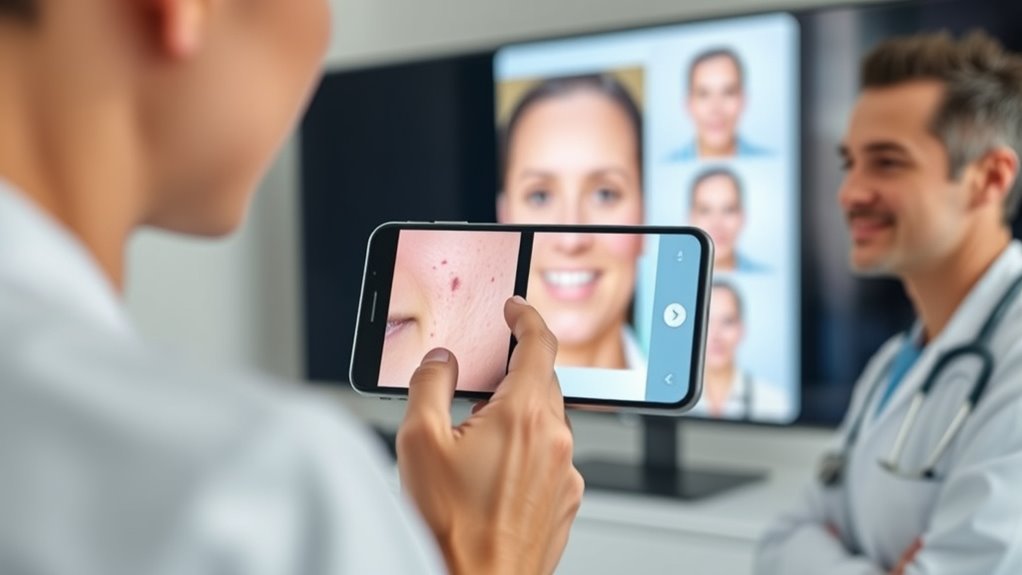
Virtual dermatology consultations are transforming how you access skin care. Instead of heading to a clinic, you can now connect with dermatologists from the comfort of your home, saving time and offering convenience. This shift is especially beneficial if you live in rural areas or have a busy schedule that makes in-person visits challenging. However, as you embrace this new way of receiving care, it’s important to consider factors like patient privacy and technology accessibility. These elements play a vital role in determining how effective and secure your virtual consultations will be.
Patient privacy is a significant concern in virtual dermatology. When you share sensitive images or personal health information online, you want to be sure that your data remains confidential. Reputable telemedicine platforms use encryption and secure servers to protect your information from unauthorized access. Still, you should always verify that your provider complies with privacy laws like HIPAA. Being proactive by reading privacy policies and understanding how your data is stored and used helps you make informed decisions. If privacy issues concern you, discuss them upfront with your dermatologist, and choose platforms that prioritize data security. Additionally, some platforms employ secure data storage practices to ensure your information remains protected.
Technology accessibility is another key factor to take into account. Virtual dermatology relies heavily on your internet connection and the device you use, such as a smartphone, tablet, or computer. If you lack reliable internet or have outdated devices, participating in a virtual consultation can become frustrating or even impossible. Fortunately, many telehealth services are designed to be user-friendly, but you still need to ensure your equipment and internet meet the requirements. Some providers offer technical support or tutorials to help you navigate the platform smoothly. Additionally, if you struggle with technology, you might find in-person visits more straightforward. But for tech-savvy users, the convenience and flexibility of virtual consultations often outweigh these hurdles.
Frequently Asked Questions
How Secure Is My Personal Health Information During Virtual Consultations?
Your personal health information is generally secure during virtual consultations thanks to data encryption, which protects your data during transmission. However, you should also review the provider’s privacy policies to understand how your information is stored and used. While technology offers strong security measures, always stay cautious by ensuring the platform complies with healthcare privacy standards like HIPAA, giving you peace of mind during your virtual dermatologist visit.
Can Virtual Dermatology Replace In-Person Skin Examinations Completely?
Virtual dermatology can’t fully replace in-person skin examinations because remote diagnosis has limitations. You might get helpful insights for minor issues, but for complex or suspicious skin conditions, a face-to-face necessity remains essential. In-person visits allow your dermatologist to closely examine your skin, perform biopsies if needed, and guarantee accurate diagnosis and treatment. So, while virtual consults are convenient, they complement rather than substitute thorough in-person skin assessments.
Are Virtual Dermatology Services Covered by Insurance Plans?
Insurance coverage for virtual dermatology services varies depending on your plan and provider. You should check your insurance company’s billing policies to see if teledermatology is covered, as some plans include it fully or partially, while others may not. Contact your insurer directly before your appointment to clarify coverage details, so you’re not surprised by out-of-pocket costs. Always verify coverage to avoid billing issues later.
What Types of Skin Conditions Are Suitable for Virtual Consultations?
You can’t judge a book by its cover, and the same goes for skin conditions. For mild rashes, acne treatment, and other minor issues, virtual consultations work well. You can easily discuss symptoms with your dermatologist, share photos, and get advice without leaving home. Keep in mind, more complex or urgent conditions may require an in-person visit. Virtual care is a convenient option for routine skin concerns.
How Do Virtual Dermatology Appointments Compare in Cost to In-Person Visits?
Virtual dermatology appointments typically cost less than in-person visits due to pricing disparities, making them more cost-effective. You save on travel, parking, and time off work, which adds to their affordability. While in-person visits might include additional procedures or tests, virtual consultations primarily focus on diagnosis and advice, often resulting in lower overall costs. This makes virtual appointments a budget-friendly option for many seeking dermatological care.
Conclusion
While virtual dermatology consultations offer convenience and access, they also have limitations. You can enjoy quick advice from the comfort of your home, but remember, a picture isn’t always worth a thousand words. Trust your instincts and seek in-person care when needed. As the saying goes, “A picture is worth a thousand words,” so balance the benefits with the importance of proper diagnosis. Ultimately, your health is worth the effort.