Among these red light therapy panels, I would put the BestQool Pro200 first for its combination of panel scale and four wavelengths; the BestQool BQ60 is a simpler, smaller-panel alternative, while the Hooga HG300 pairs a panel with an adjustable stand. The main choice is between a larger panel for broader body coverage, a compact setup for targeted sessions, and a mat or lamp that may fit your space or routine better. Wavelength count and wattage alone do not show how much of your body the device can treat at once or how easy it will be to position. I compare those practical differences, controls, and form factors below, so continue reading for the full breakdown and a pick matched to your needs.

Get wellness gear delivered free with Prime
- Fast, free delivery on millions of items
- Prime Video, Amazon Music and more included
- Member-only deals all year
Key Takeaways
- The BestQool Pro200 leads for larger-panel buyers: its 200 LEDs and four wavelengths give it a different scale and feature set from the compact BQ60.
- The BQ60 is the straightforward compact-panel choice: its listed 660nm red and 850nm near-infrared wavelengths keep the setup simpler than multi-wavelength panels.
- Panel, lamp, and mat formats solve different space problems: lamps can target a smaller area, while mats offer a surface-based setup rather than a standing panel.
- More listed wavelengths do not automatically mean a better fit: choose based on coverage, positioning, and the routine you can maintain, not the wavelength count alone.
- Stands and controls affect day-to-day usability: options such as the Hooga HG300 with an adjustable stand or models with timers and remotes may be easier to position and operate.
| T70 Red Light Therapy Panel for Face and Body, 5 Wavelengths, 70 LEDs, with Timer and Remote |  | Best for Flexible Positioning | Model: T70 | LEDs: 70 | Power: 350W | VIEW LATEST PRICE | See Our Full Breakdown |
| Megelin Red Light Therapy Mat |  | Best for Full-Body, Lie-Down Sessions | Dimensions: 71 × 31 inches | Session duration: 20 minutes | Light types: Red and near-infrared | VIEW LATEST PRICE | See Our Full Breakdown |
| BestQool BQ60 Red Light Therapy Panel, 105W, 660nm Red and 850nm Near-Infrared Light |  | Best for Beginners | Model: BQ60 | Power: 105W | Wavelengths: 660nm red; 850nm near-infrared | VIEW LATEST PRICE | See Our Full Breakdown |
| BestQool Pro300 Red Light Therapy Panel, 4 Wavelengths |  | Best for Expandable Setups | Model: Pro300 | Wavelengths: 630nm, 660nm, 850nm, 940nm | LED count: 300 | VIEW LATEST PRICE | See Our Full Breakdown |
| Red Light Therapy Device – 6 Wavelengths, 350W, 70 LEDs, Touch Control & HD Display, Black |  | Best for Wavelength Variety | Power: 350W | LED count: 70 | Wavelengths: 600nm, 630nm, 660nm, 810nm, 830nm, 850nm | VIEW LATEST PRICE | See Our Full Breakdown |
| Comfytemp 26W Red Light Therapy Lamp with 145 LEDs |  | Best for Stable, Adjustable Targeting | LED count: 145 dual-chip LEDs | Wavelengths: 660nm red and 850nm near-infrared | Power: 26W | VIEW LATEST PRICE | See Our Full Breakdown |
| Viconor Red and Near-Infrared Light Therapy Lamp with Stand |  | Best for Flexible Placement | LED count: 120 | Wavelengths: 660nm red and 850nm near-infrared | Stand adjustment: Up to 180° | VIEW LATEST PRICE | See Our Full Breakdown |
| BestQool Pro200 Red Light Therapy Panel, 330W, 200 LEDs, 4 Wavelengths |  | Best for Expandable Full-Body Coverage | Model: Pro200 | Power: 330W | LED count: 200 | VIEW LATEST PRICE | See Our Full Breakdown |
| BestQool Red Light Therapy Panel, 4 Wavelengths for Body and Face, 160W |  | Best Mid-Size Modular Panel | Model: Pro100 | Dimensions: 19.7 × 8.4 × 2.6 inches | Weight: 6.61 pounds | VIEW LATEST PRICE | See Our Full Breakdown |
| Hooga HG300 Red and Near-Infrared Light Therapy Panel with Adjustable Stand |  | Best for Beginners and Targeted Use | Model: HG300 | Wavelengths: 660nm red and 850nm near-infrared | LED count: 60 | VIEW LATEST PRICE | See Our Full Breakdown |
| Viconor Red Light Therapy Lamp with Stand – 660nm Red & 850nm Infrared LED Panel |  | Best for Flexible Home Positioning | Brand: Viconor | LED count: 120 | Wavelengths: 660nm red and 850nm near-infrared | VIEW LATEST PRICE | See Our Full Breakdown |
| 24 x 12-Inch Red Light Therapy Mat, 660nm and 850nm |  | Best for Flexible, Wraparound Targeting | Dimensions: 24 x 12 inches | LEDs: 242 three-chip LEDs | Wavelengths: 660nm red and 850nm near-infrared | VIEW LATEST PRICE | See Our Full Breakdown |
| INIA GLOW HEXA 72 Red Light Therapy Panel |  | Best for Wavelength and Preset Variety | LEDs: 72 LEDs (144 chips) | Wavelengths: 470, 630, 660, 830, 850, 940, and 1064nm | Irradiance: >130 mW/cm² at 6 inches | VIEW LATEST PRICE | See Our Full Breakdown |
| Red Light Therapy Panel with 5 Wavelengths and 40 Dual-Chip LEDs |  | Best for Focused, Timed Sessions | Output power: 60W continuous | LEDs: 40 dual-chip LEDs | Wavelengths: 630, 660, 810, 830, and 850nm | VIEW LATEST PRICE | See Our Full Breakdown |
| red light therapy panel | Wavelengths | Power | LED count |
|---|---|---|---|
| T70 Red Light Therapy Panel fo | 600nm, 660nm, 810nm, 850nm, 940nm | 350W | — |
| Megelin Red Light Therapy Mat | — | — | — |
| BestQool BQ60 Red Light Therap | 660nm red; 850nm near-infrared | 105W | — |
| BestQool Pro300 Red Light Ther | 630nm, 660nm, 850nm, 940nm | — | 300 |
| Red Light Therapy Device | 600nm, 630nm, 660nm, 810nm, 830nm, 850nm | 350W | 70 |
| Comfytemp 26W Red Light Therap | 660nm red and 850nm near-infrared | 26W | 145 dual-chip LEDs |
| Viconor Red and Near-Infrared | 660nm red and 850nm near-infrared | — | 120 |
| BestQool Pro200 Red Light Ther | 4 | 330W | 200 |
| BestQool Red Light Therapy Pan | 4 | 160W | — |
| Hooga HG300 Red and Near-Infra | 660nm red and 850nm near-infrared | 300W | 60 |
| Viconor Red Light Therapy Lamp | 660nm red and 850nm near-infrared | — | 120 |
| 24 x 12-Inch Red Light Therapy | 660nm red and 850nm near-infrared | — | — |
| INIA GLOW HEXA 72 Red Light Th | 470, 630, 660, 830, 850, 940, and 1064nm | — | — |
| Red Light Therapy Panel with 5 | 630, 660, 810, 830, and 850nm | — | — |
More Details on Our Top Picks
T70 Red Light Therapy Panel for Face and Body, 5 Wavelengths, 70 LEDs, with Timer and Remote
The T70 is a strong fit for buyers who want a panel they can reposition rather than a mat they lie on. Its five wavelengths span red and near-infrared options, while the adjustable stand, timer, and remote make it easier to set up a repeatable session at home. Compared with the BestQool BQ60, it offers more listed wavelengths and accessories, but the BQ60 provides clearly specified red-only, near-infrared-only, and combined modes. The T70’s stated irradiance also changes with distance—205 mW/cm² at two inches versus 140 mW/cm² at six—so positioning affects the listed output. It comes with eye protection and a hanging kit, though buyers should plan around a panel rather than expect the broad, lie-down coverage of the Megelin mat.
Pros:- Five listed wavelengths cover red and near-infrared light options.
- Adjustable stand supports changing the panel’s position for different treatment areas.
- Remote control and built-in timer simplify session adjustments.
- Includes eye protection and a hanging kit.
Cons:- Listed irradiance varies substantially with distance from the panel.
- Panel format requires positioning for different body areas rather than covering the body like a mat.
Best for: Home users who want a repositionable panel with multiple wavelengths, remote operation, and both stand and hanging options.
Not ideal for: Buyers seeking a large surface for hands-free, full-body sessions, or those who want one irradiance figure that applies across working distances.
- Model:T70
- LEDs:70
- Power:350W
- Wavelengths:600nm, 660nm, 810nm, 850nm, 940nm
- Irradiance at 2 inches:205 mW/cm²
- Irradiance at 6 inches:140 mW/cm²
- Controls and positioning:Built-in timer, remote control, adjustable stand
- Included accessories:Eye protection, hanging kit, manual
Our verdict“Choose the T70 if you want a versatile, accessory-rich panel for targeted sessions and can manage its distance-dependent output.”
Megelin Red Light Therapy Mat
The Megelin takes a different approach from the lineup’s upright panels: its 71 × 31-inch mat is designed to let users lie down for a session rather than reposition a light source over each area. That makes it the clearest choice here for buyers prioritizing broad body coverage and a familiar at-home routine. A remote and 20-minute session format support regular use, while the T70 and BestQool BQ60 offer more panel-style placement for targeted areas. The tradeoff is less technical detail in the supplied specs: the mat’s specific wavelengths and irradiance are not listed, making direct output comparisons difficult. The product description also recommends consistent use over four weeks, so it is a poor match for anyone expecting an immediate or occasional-use solution.
Pros:- Large 71 × 31-inch surface accommodates full-body positioning.
- Red and near-infrared light types are included.
- Remote control allows mode and timer adjustments.
- A 20-minute session is a defined routine length.
Cons:- Specific wavelengths and irradiance are not provided in the supplied product data.
- The mat takes more space to use and store than compact panels such as the BestQool BQ60.
- The description calls for consistent use over at least four weeks.
Best for: People who want to lie down during sessions and prefer a large mat surface for broad body coverage at home.
Not ideal for: Buyers who need published wavelength and irradiance figures for comparison, or who want a compact panel they can aim at a specific area.
- Dimensions:71 × 31 inches
- Session duration:20 minutes
- Light types:Red and near-infrared
- Controls:Remote control
- Timer:Adjustable via remote
- Modes:Adjustable modes
Our verdict“Pick the Megelin if broad, lie-down coverage matters more to you than panel portability or detailed output specifications.”
BestQool BQ60 Red Light Therapy Panel, 105W, 660nm Red and 850nm Near-Infrared Light
The BQ60 keeps its setup comparatively straightforward: it uses two specified wavelengths and lets users select red, near-infrared, or both together. That clear control scheme makes it easier to choose than the T70, which lists five wavelengths but does not specify separate light modes in the supplied data. At 105W, the BQ60 is also a smaller-scale option than the 300-LED BestQool Pro300, suiting targeted home sessions rather than modular expansion or broader panel coverage. Its adjustable stand and hanging kit offer two placement routes, and the touchscreen keeps changes close at hand. The tradeoff is that it needs a suitable surface or mounting spot, and no dimensions are given, so buyers cannot judge its footprint from the listed specs.
Pros:- Separate red, near-infrared, and combined light modes provide straightforward control.
- 660nm red and 850nm near-infrared wavelengths are specified.
- Adjustable stand and hanging kit support tabletop or wall-mounted placement.
- Touchscreen controls and a cooling system are included.
Cons:- Requires an appropriate surface or mounting location.
- Panel dimensions are not provided in the supplied product data.
- Its two wavelengths offer fewer options than the T70 or BestQool Pro300.
Best for: First-time panel buyers who want simple red, near-infrared, or combined settings and flexible tabletop or wall placement.
Not ideal for: People seeking a large treatment area, a panel with several wavelength choices, or exact dimensions before planning a setup.
- Model:BQ60
- Power:105W
- Wavelengths:660nm red; 850nm near-infrared
- Irradiance:95.6 mW/cm² at 3 inches
- Light modes:Red, near-infrared, or both
- Controls:Touchscreen
- Mounting:Adjustable U-shaped stand and hanging kit
- Cooling:Cooling system
Our verdict“The BQ60 suits newcomers who want clearly defined light modes in a flexible, targeted panel rather than a larger multi-wavelength setup.”
BestQool Pro300 Red Light Therapy Panel, 4 Wavelengths
The Pro300 stands apart through its modular design: buyers can connect panels, making it more adaptable to a growing setup than the single-unit BQ60. Its 300 LEDs and four wavelengths also give it a broader stated configuration than the BQ60’s two-wavelength arrangement. A 30-degree beam angle and built-in fan are part of the design, while the manufacturer lists irradiance above 106 mW/cm² at three inches. That figure is useful as a reference, but it is measured close to the panel, so it should not be treated as the output at every treatment distance. The mobile stand is a separate accessory, too. Compared with the T70, this is the stronger choice for a linkable panel system, but less ready-to-position if you need a stand included.
Pros:- Modular connectors allow panels to be linked.
- Four listed wavelengths span red and infrared options.
- 300 LEDs and a 30-degree beam angle suit a larger panel format.
- Built-in cooling fan helps manage heat.
Cons:- Compatible mobile stand is described as a separate accessory.
- The irradiance specification is measured only at three inches in the supplied data.
- A modular setup may be more than needed for buyers seeking a simple, compact panel like the BQ60.
Best for: Buyers planning a panel setup that may grow over time and who value linking units more than an included mobile stand.
Not ideal for: People wanting an all-in-one panel with a supplied floor stand, or those who need irradiance figures at several distances.
- Model:Pro300
- Wavelengths:630nm, 660nm, 850nm, 940nm
- LED count:300
- Beam angle:30 degrees
- Irradiance:Over 106 mW/cm² at 3 inches
- Cooling:Built-in cooling fan
- Design:Modular; panels can be connected
- Mobile stand:Compatible stand available separately
Our verdict“Choose the Pro300 if you want a multi-panel setup that can expand and are comfortable sourcing a stand separately.”
Red Light Therapy Device – 6 Wavelengths, 350W, 70 LEDs, Touch Control & HD Display, Black
This 70-LED panel offers the broadest wavelength list in this group, with six choices from 600nm to 850nm and touch controls for selecting settings and adjusting the timer. That makes it a more specification-focused alternative to the T70, which lists five wavelengths and includes an adjustable stand and hanging kit. The device’s 30-degree beam is described as focused, a design that may suit targeted use but can mean moving the panel to cover multiple areas. Although the description claims strong irradiance and low heat, no measured irradiance figure is supplied, limiting direct comparison with the Pro300 or BQ60. Buyers should also distinguish the stated 350W power rating from a measured treatment output; the provided product data does not offer that measurement.
Pros:- Six listed wavelengths provide more options than the five-wavelength T70.
- Touch controls and an HD display support on-device adjustments.
- 70 LEDs are specified in a 350W-rated unit.
- A 30-degree beam is designed for focused light delivery.
Cons:- No measured irradiance figure is provided for comparison with the BQ60 or Pro300.
- The focused 30-degree beam may require repositioning to cover multiple body areas.
- The supplied data does not list a stand, hanging kit, or other positioning accessories.
Best for: Users who want six selectable wavelength options and an on-device display for adjusting treatment settings.
Not ideal for: Buyers who need published irradiance measurements, broad coverage from one position, or included mounting and positioning accessories.
- Power:350W
- LED count:70
- Wavelengths:600nm, 630nm, 660nm, 810nm, 830nm, 850nm
- Beam angle:30 degrees
- Control interface:Touch buttons with HD display
- Heat emission:Described as low
- Color:Black
Our verdict“Choose this panel if wavelength selection and a built-in display matter most, but look elsewhere if you need quantified irradiance or wider coverage.”
Comfytemp 26W Red Light Therapy Lamp with 145 LEDs
The Comfytemp suits buyers who want a wider tabletop-style treatment area without stepping up to a tall panel. Its 16 × 11-inch curved face and 145 dual-chip LEDs combine 660nm red with 850nm near-infrared light, while the 360° positioning makes it easier to aim at different body areas. Compared with the smaller Hooga HG300, it offers a larger panel and more LEDs, but the Hooga provides a timer and separate wavelength controls that this product’s description does not specify. The Comfytemp’s 4.9 lb reinforced base is meant to keep the lamp steady as it is repositioned; that stability comes with a footprint that needs space for both use and storage. Choose it for adjustable coverage, not for compact storage or detailed session controls.
Pros:- 145 dual-chip LEDs combine 660nm red and 850nm near-infrared light.
- 16 × 11-inch panel offers a larger treatment face than compact options such as the Hooga HG300.
- 360° positioning helps aim the curved panel at different body areas.
- Reinforced metal base with a 4.9 lb counterweight is designed for stability.
Cons:- The panel and weighted base need dedicated room for use and storage.
- The provided product details do not specify a timer or adjustable light settings.
Best for: Home users who want a broad, repositionable panel for targeting different body areas and have a dedicated surface for it.
Not ideal for: Buyers with limited storage or anyone who wants a documented timer and adjustable wavelength settings.
- LED count:145 dual-chip LEDs
- Wavelengths:660nm red and 850nm near-infrared
- Power:26W
- Panel size:16 × 11 inches
- Adjustment:360° flexible positioning
- Base counterweight:4.9 lb
- Design:Curved panel with reinforced metal base
Our verdict“Choose the Comfytemp if adjustable aiming and a broad tabletop panel matter more than compact storage or documented session controls.”
Viconor Red and Near-Infrared Light Therapy Lamp with Stand
The Viconor is a practical pick for buyers who want more than one way to position a red-light lamp. Its included stand and hook, paired with up to 180° of adjustment, give it placement options the Comfytemp’s listed tabletop design does not describe. The curved 120-LED panel combines 660nm red and 850nm near-infrared light, making it a targeted-use alternative to the larger, expandable BestQool Pro200. That simpler format is easier to place around a home, but it does not offer the Pro200’s four wavelengths, three modes, or modular expansion. The 1.8 m power cord gives some reach, though outlet location still affects where it can go. Product guidance recommends daily sessions of 15–30 minutes, so buyers seeking brief sessions or clearly documented controls should compare the available details before choosing.
Pros:- Combines 660nm red and 850nm near-infrared light.
- Curved panel is designed to focus light toward the target area.
- Includes both a stand and a hook for different placement options.
- Stand adjusts up to 180° for changes in positioning.
Cons:- The 850nm near-infrared light is invisible, so it cannot be visually confirmed during use.
- The product description recommends daily sessions of 15–30 minutes, which may not suit buyers seeking shorter routines.
- The provided details do not specify irradiance or a timer.
Best for: Home users who want a curved red and near-infrared lamp they can position on its stand or hang near a targeted treatment area.
Not ideal for: Buyers seeking a high-output full-body panel, multiple wavelengths, or a documented timer and light-mode controls.
- LED count:120
- Wavelengths:660nm red and 850nm near-infrared
- Stand adjustment:Up to 180°
- Power cord:1.8 m
- Included accessories:Stand and hook
- Design:Curved panel
Our verdict“Pick the Viconor for adaptable stand-or-hook placement around targeted areas, but choose a larger panel if broad coverage or expanded settings are your priority.”
BestQool Pro200 Red Light Therapy Panel, 330W, 200 LEDs, 4 Wavelengths
The Pro200 is the lineup’s clearest choice for buyers who want a substantial panel that can grow into a larger setup. Its 200 LEDs, four wavelengths, and three modes offer more light options than the two-wavelength Comfytemp or Viconor lamps, while the vertical format is intended for both targeted and broader body coverage. The stated irradiance—over 111 mW/cm² at 3 inches—gives buyers a specific close-range output figure to compare, though it does not by itself determine a suitable session routine. Free-standing or wall-mounted placement helps adapt the panel to a room, and the modular design supports adding panels later. The tradeoff is size: unlike the compact Hooga HG300, this model calls for dedicated placement. A mobile stand is mentioned as an accessory, but inclusion is not specified.
Pros:- 200-LED vertical panel is designed for targeted or full-body use.
- Four wavelengths and three modes provide more options than the two-wavelength lamps in this lineup.
- Free-standing or wall-mounted placement suits different room setups.
- Modular system can be expanded by connecting additional panels.
Cons:- Large-panel placement may require dedicated floor or wall space.
- The mobile stand is described as an accessory, but the provided details do not confirm that it is included.
- Its higher feature count may be unnecessary for buyers who only need a compact targeted-use lamp.
Best for: Buyers planning a dedicated home setup who want a vertical panel for targeted use now and the option to connect additional panels later.
Not ideal for: People with little floor or wall space, or buyers who need confirmation that a mobile stand is included.
- Model:Pro200
- Power:330W
- LED count:200
- Wavelengths:4
- Modes:3
- Irradiance:Over 111 mW/cm² at 3 inches
- EMF:Zero EMF at 6 inches
- Mounting options:Free-standing or wall-mounted
- Expansion:Modular system supports connecting multiple devices
Our verdict“Choose the Pro200 if you want a configurable vertical panel and room to expand, rather than a small, simple lamp.”
BestQool Red Light Therapy Panel, 4 Wavelengths for Body and Face, 160W
The BestQool Pro100 occupies a useful middle ground: it is a more substantial panel than the tabletop Hooga HG300, yet smaller and lighter than the Pro200. Its 19.7 × 8.4-inch body weighs 6.61 pounds and provides four wavelengths, with a stated irradiance of 109 mW/cm² at 3 inches. The 60° beam angle is intended to spread light across a broader area, while modular linking lets buyers build toward larger coverage with compatible BestQool plates. Compared with the Pro200, this model is easier to place in a home but lacks the listed three modes and 200-LED array. It is not especially portable at over six pounds, and adding panels depends on compatible connectors. The low-heat description may appeal for regular sessions, but the provided data does not specify exact LED count or detailed controls.
Pros:- Four wavelengths offer more variety than the two-wavelength Hooga HG300.
- Stated irradiance is 109 mW/cm² at 3 inches.
- 60° beam angle is designed to provide broad illumination.
- Compatible modular design allows linking panels for expanded coverage.
Cons:- At 6.61 pounds, it is less convenient to move than a lightweight compact lamp.
- The panel may still be bulky for homes with limited storage space.
- Expansion requires compatible BestQool plates rather than a universal connection.
Best for: Home users who want a four-wavelength panel with a smaller footprint than the Pro200 and may expand coverage with compatible BestQool units.
Not ideal for: Buyers who need a highly portable device, a very small storage footprint, or a modular setup that works with other brands.
- Model:Pro100
- Dimensions:19.7 × 8.4 × 2.6 inches
- Weight:6.61 pounds
- Power:160W
- Wavelengths:4
- Irradiance:109 mW/cm² at 3 inches
- Beam angle:60 degrees
Our verdict“Choose the Pro100 for a mid-size, four-wavelength panel with a compatible expansion path, but skip it if portability or cross-brand modularity matters most.”
Hooga HG300 Red and Near-Infrared Light Therapy Panel with Adjustable Stand
The HG300 makes a strong case for buyers starting with a compact panel and a straightforward setup. Its independent red and near-infrared controls let users select 660nm red, 850nm near-infrared, or both, while the built-in timer handles session timing. That makes its controls more explicit than the Comfytemp’s listed feature set, though the Comfytemp offers a much larger 16 × 11-inch panel and more LEDs for broader coverage. The Hooga’s adjustable tabletop stand, protective eyewear, and active cooling make it a more ready-to-place package for targeted areas. Its 60 LEDs and compact dimensions are also its main limit: it is not the right format for buyers seeking a large body panel. It needs a corded outlet, and the stated irradiance is measured at six inches, so compare figures only at matching distances.
Pros:- Independent controls allow red light, near-infrared light, or both.
- Built-in timer and adjustable tabletop stand simplify targeted use.
- Protective eyewear is included.
- Active cooling and a stated LED lifespan of over 50,000 hours are specified.
Cons:- Compact panel is suited to targeted areas rather than broad body coverage.
- Requires a corded power connection.
- Its irradiance figure is specified at 6 inches, unlike several lineup figures measured at 3 inches.
Best for: First-time panel buyers who want a compact tabletop unit with separate wavelength controls, a timer, and included eyewear.
Not ideal for: People who want broad body coverage from one panel, cordless use, or a larger multi-wavelength setup like the BestQool Pro200.
- Model:HG300
- Wavelengths:660nm red and 850nm near-infrared
- LED count:60
- Irradiance:Over 73 mW/cm² at 6 inches
- Beam angle:60 degrees
- Dimensions:12.6 × 4.92 × 2.44 inches
- Power:300W
- Features:Built-in timer, independent red and near-infrared controls, and active cooling
- Included components:Light panel, adjustable tabletop stand, protective eyewear, power cord, and user manual
Our verdict“Choose the HG300 for a compact, controlled entry point for targeted use, not as a substitute for a larger full-body panel.”
Viconor Red Light Therapy Lamp with Stand – 660nm Red & 850nm Infrared LED Panel
The Viconor pairs 660nm red and 850nm near-infrared light in a curved 120-LED panel, with a stand and hook that make it easier to aim at the face or a selected body area. Its 180-degree angle and height adjustment give it more positioning flexibility than a fixed-format mat such as the 24 x 12-Inch Red Light Therapy Mat, though the Viconor still treats a limited area at a time rather than providing broad panel coverage. The included 3m power cord can help place it near a chair or bedside, but this is still a plug-in routine that calls for 15–30 minutes of daily use. Choose it for adaptable lamp-style sessions; skip it if you want a wraparound treatment surface or a large, hands-free coverage area.
Pros:- Combines 660nm red and 850nm near-infrared wavelengths.
- Stand and hook support multiple placement options.
- 180-degree angle and height adjustment make it easier to direct the panel.
- Lightweight design and 3m power cord suit different home setups.
Cons:- Treats a limited area at a time, so larger areas may require repositioning.
- Daily sessions are recommended for 15–30 minutes.
- The near-infrared component is invisible, so it cannot be judged by visible brightness.
Best for: Home users who want to aim red and near-infrared light at different face or body areas using an adjustable stand or hook.
Not ideal for: Buyers seeking a flexible wraparound mat or broad full-body coverage in one session; this lamp is positioned for targeted use.
- Brand:Viconor
- LED count:120
- Wavelengths:660nm red and 850nm near-infrared
- Adjustability:180-degree angle and height adjustment
- Included accessories:Stand, hook, and 3m power cord
- Recommended usage:15–30 minutes daily
Our verdict“Pick the Viconor if you want an adjustable lamp for targeted home sessions, not a mat or broad-coverage panel.”
24 x 12-Inch Red Light Therapy Mat, 660nm and 850nm
This mat is the most adaptable choice here for treating a selected body area while seated or lying down: its 24 x 12-inch flexible surface can lie flat or wrap around an area, unlike the stand-mounted Viconor lamp. The 242 three-chip LEDs combine 660nm red and 850nm near-infrared light, while five light levels, two pulse modes, and a 10–90-minute timer let users adjust the session controls. A cordless controller and phone pocket add convenience, and the waterproof surface is designed to wipe clean. The tradeoff is its footprint: it covers a smaller area at once than a panel, so broad treatment means repositioning. It also relies on a 12V, 2A adapter for powered use, making it less self-contained than its flexible shape may suggest.
Pros:- Flexible surface can be laid flat or wrapped around a body area.
- Combines 660nm red and 850nm near-infrared LEDs.
- Five light levels, two pulse modes, and a 10–90-minute timer offer control.
- Waterproof surface is designed to wipe clean.
Cons:- The 24 x 12-inch treatment area may require repositioning for larger areas.
- Powered use requires the included 12V, 2A adapter.
- The mat format is less suited to users who prefer a freestanding panel.
Best for: People who want to lay or strap a treatment surface around one smaller body area and adjust intensity, pulse mode, and session length.
Not ideal for: Buyers who want broad, fixed-panel coverage or a truly cordless power setup; the mat is 24 x 12 inches and requires a 12V adapter.
- Dimensions:24 x 12 inches
- LEDs:242 three-chip LEDs
- Wavelengths:660nm red and 850nm near-infrared
- Light levels:5
- Pulse modes:10Hz and 40Hz
- Timer:10–90 minutes
- Material:Soft neoprene with frosted TPU surface
- Power adapter:12V, 2A
- Included:Mat, cordless controller, 12V adapter, and manual
Our verdict“Choose this mat for adjustable, close-contact treatment of smaller areas; choose a lamp or panel for easier aiming or wider coverage.”
INIA GLOW HEXA 72 Red Light Therapy Panel
The INIA GLOW HEXA 72 stands apart from simpler two-wavelength options such as the Viconor by offering seven wavelengths from 470nm to 1064nm, five guided presets, and five intensity levels. That range and the LCD make it a better fit for buyers who want selectable modes rather than a straightforward red-and-near-infrared setup. Its compact 12.31 x 8.05-inch body, integrated stand, and door-hanging options also make placement less demanding than a large panel. The tradeoff is coverage: despite the stated high irradiance at six inches, its small footprint means users may need to reposition it for larger body areas. The manufacturer recommends careful attention to exposure time at close range, and the 5–30-minute timer does not replace following the supplied guidance.
Pros:- Seven wavelengths span visible, red, and near-infrared bands.
- Five guided presets and five intensity levels provide multiple operating choices.
- LCD and timer make the controls easier to follow.
- Compact 3.98-pound design includes stand and door-hanging placement options.
Cons:- Small panel dimensions can require repositioning to cover larger areas.
- High stated irradiance at six inches calls for careful attention to exposure guidance.
- The broad selection of wavelengths and presets may be more control than a beginner wants.
Best for: Users who want a compact panel with multiple wavelength options, guided presets, and adjustable intensity for face and targeted body sessions.
Not ideal for: People who want wide full-body coverage without repositioning, or buyers who prefer a simple two-wavelength device with fewer settings.
- LEDs:72 LEDs (144 chips)
- Wavelengths:470, 630, 660, 830, 850, 940, and 1064nm
- Irradiance:>130 mW/cm² at 6 inches
- Dimensions:12.31 x 8.05 x 3.22 inches
- Weight:3.98 lbs
- Presets:5: Full, Renew, Clear, Recover, and Rest
- Intensity levels:5
- Timer:5–30 minutes
- Display:LCD
Our verdict“Choose the INIA if wavelength choice and guided settings matter more than treating a large area in one position.”
Red Light Therapy Panel with 5 Wavelengths and 40 Dual-Chip LEDs
This 60W panel favors focused sessions over broad coverage. Its 30-degree beam angle directs light toward a specific area, while three modes let users select red light, near-infrared, or both across five wavelengths. Compared with the larger-format approach of a flexible mat like the 24 x 12-Inch Red Light Therapy Mat, this panel is a more rigid, aimed setup; the mat can wrap around an area, while this unit is better suited to positioning in front of one. A 1–30-minute timer with automatic shutoff, cooling fan, metal housing, and included protective eyewear round out the package. The narrow beam is also its main limitation: it is less convenient for wide treatment areas, and its 30-minute session ceiling may not suit anyone seeking longer timed sessions.
Pros:- Five wavelengths cover red and near-infrared bands.
- Separate red, near-infrared, and combined operating modes.
- Timer runs from 1 to 30 minutes and shuts off automatically.
- Metal housing, integrated cooling fan, and included protective eyewear.
Cons:- 30-degree beam angle concentrates light on a smaller area rather than providing broad coverage.
- Maximum timed session is 30 minutes.
- 40 dual-chip LEDs and a 60W output make it a more focused option than larger-area panels.
Best for: Buyers who want a compact, aimed panel with selectable red, near-infrared, or combined modes and an automatic shutoff timer.
Not ideal for: People seeking broad coverage in one position or a flexible surface that can wrap around the body.
- Output power:60W continuous
- LEDs:40 dual-chip LEDs
- Wavelengths:630, 660, 810, 830, and 850nm
- Modes:Red, near-infrared, and combo
- Beam angle:30 degrees
- Timer:1–30 minutes with automatic shutoff
- Cooling:Integrated cooling fan
- Housing:Metal
- Included accessories:Protective eyewear
Our verdict“Pick this panel for timed, targeted sessions with selectable modes, but choose a mat or larger panel for wider coverage.”
How We Picked
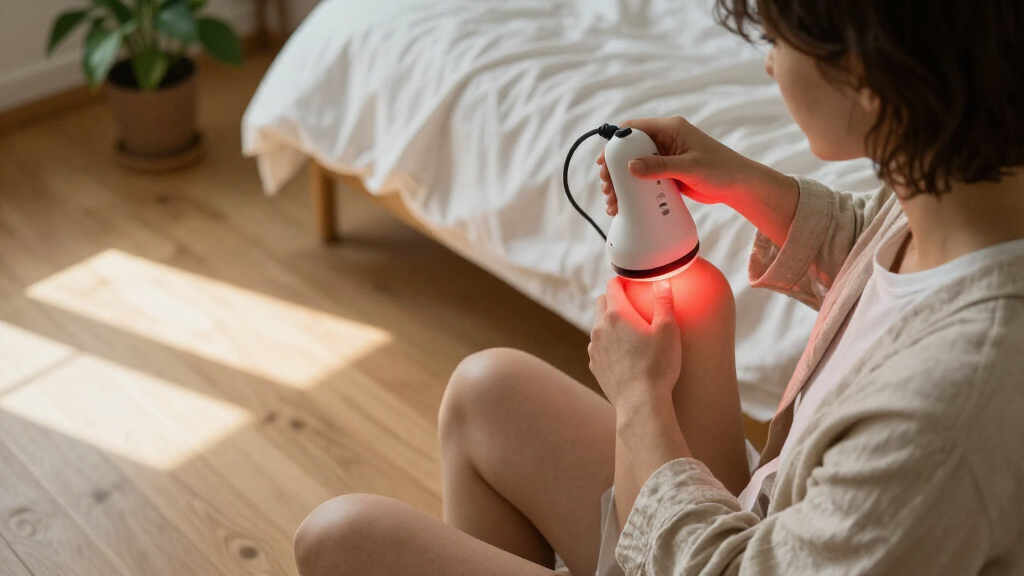
I compared these 14 options by the details provided for each: device format, listed wavelengths, LED count or stated wattage, coverage clues, controls, and included positioning features. Those details matter because a large panel, a desk-sized device, a lamp, and a mat serve different routines even when they share red and near-infrared light. I gave weight to practical differences a buyer can verify, such as an adjustable stand, timer, remote, or touch display, rather than treating a larger number of wavelengths or watts as proof of better results.
The ranking favors devices that appear to balance useful coverage with manageable operation, then separates compact, beginner-friendly, and format-specific choices for readers with different needs. The BestQool Pro200 ranks ahead of smaller panels for people seeking a larger setup, while the BQ60 suits those who prefer a simpler two-wavelength panel. Lamps and mats rank for their distinct positioning and space advantages, not as direct substitutes for full-size panels. Product details here do not establish treatment outcomes, irradiance, or clinical effectiveness, so I avoid claims that cannot be supported by the listed specifications.
Factors to Consider When Choosing Red Light Therapy Panels
Before choosing a device, I would match its physical setup to where and how you plan to use it. A panel that looks versatile on paper can be awkward if you lack a stable place to mount or position it, while a smaller device may make a more repeatable routine. These broader factors help separate useful specifications from details that may not affect your decision.
Choose Coverage Around the Area You Plan to Position
Start by deciding whether you expect to position a device for one small area at a time or want a larger panel that can cover more of your body from one setup. A high LED count does not tell you the panel’s dimensions or how much area it covers at your intended distance. Ask the seller for dimensions and positioning guidance if those details are missing. Buyers often choose by wattage alone, then discover the device still needs frequent repositioning. A compact panel can be a sensible fit for targeted use, while a larger panel takes more room and may simplify sessions that involve broader areas. Match the device to the space you can actually use consistently.
Treat Wavelength Lists as Specifications, Not a Scorecard
Several products here list 660nm red and 850nm near-infrared light, while others advertise four, five, or six wavelengths. More wavelengths may sound like more capability, but a count alone does not explain each wavelength’s purpose, output, or how the device should be used. Look for clear manufacturer information about wavelength values and recommended use instead of assuming a longer list means stronger results. A simpler two-wavelength device may be easier to compare and operate. If a product omits details about output or distance, ask for them rather than using wavelength count as a substitute. This is especially useful when comparing panels with very different LED counts or wattage claims.
Check Output and Measurement Details Before Comparing Wattage
Wattage is not a direct measure of the light that reaches your skin, and product listings may use different ways of describing power. Look for irradiance figures, the distance at which they were measured, and whether the figures refer to a particular part of the panel. Without a shared measurement method, comparing a 350W label with a 105W label can give a misleading impression. If the manufacturer does not provide comparable output information, treat wattage as one clue rather than a performance ranking. Also check whether usage guidance specifies a distance and session duration. Clear instructions make it easier to compare products responsibly and follow the maker’s directions.
Pick a Format You Can Position Safely and Repeatably
Panels, lamps, and mats are not interchangeable just because they offer red and near-infrared LEDs. A panel needs a stable placement or mount, a lamp may be easier to aim at a limited area, and a mat offers a surface-based arrangement that takes different storage and setup space. Check whether a stand is included or adjustable, and whether the device can be positioned at the distance its instructions call for. A stand can reduce setup friction, but it also occupies floor or table space. Mats may suit buyers who prefer a laid-out format, though they do not provide the same upright panel arrangement. Measure your available area before choosing the form factor.
Prioritize Controls That Fit Your Routine
Timers, remotes, and display controls can make operation simpler, but they do not replace clear instructions or suitable positioning. Consider whether you will use the device in a fixed location or move it between rooms; portability and easy setup may matter more than an elaborate display. A timer can help keep sessions consistent with the manufacturer’s directions, while a remote can make controls easier to reach after positioning. Before buying, check what the controls actually do and whether they preserve settings between sessions. Also review cleaning, storage, and warranty information, since those details can shape how manageable the device is over time. Choose convenience features that solve a real problem in your setup.
Spend More for a Real Fit, Not a Bigger Number
A larger panel or additional wavelengths may be useful if they match your coverage needs, but neither feature guarantees a better experience. Consider paying more only when the product offers a concrete advantage you will use, such as a size that reduces repositioning or a stand that fits your space. If your planned use is targeted and occasional, a compact lamp or panel may be a more practical choice than a broad setup. Compare included accessories, dimensions, instructions, and support alongside headline specifications. A common mistake is buying extra capacity before deciding where the device will live. A clear routine and workable placement matter more than an impressive-sounding spec sheet.
Frequently Asked Questions
Should I choose a panel, lamp, or mat?
Choose based on how you want to position the device and the area you plan to address, rather than assuming one format is universally better. Panels suit buyers who want an upright, directed setup; lamps can be easier to aim at a smaller area; mats provide a laid-out surface format. Check dimensions, mounting or stand details, and the manufacturer’s use instructions before deciding. Also account for where the device will be stored between sessions. If you have limited room, a format that is easy to set up and put away may matter more than a larger feature list.
Does a panel with more wavelengths necessarily work better?
No wavelength count by itself establishes how well a device will suit you or what results to expect. The products here range from listings with two specified wavelengths to panels advertising four, five, or six, but those counts do not provide a direct performance comparison. Check which wavelengths are listed, what output information the maker provides, and how the device is intended to be positioned. If you are comparing two models, look for details measured on the same basis rather than relying on a longer list. A simpler panel can be a reasonable choice when its specifications and setup fit your needs.
How should I compare wattage figures across panels?
Do not treat the wattage printed in a product name as a direct measure of light delivered to the body. Listings may describe electrical power differently, and the number does not show output at a particular distance or across the treatment area. Look for irradiance data with a stated measurement distance and method, then compare products using consistent figures. If a listing leaves those details unclear, ask the manufacturer or avoid making a performance judgment from wattage alone. Dimensions and positioning instructions can be just as useful for deciding whether a panel fits your intended setup.
Is a stand worth prioritizing when I buy a panel?
A stand can make a panel easier to position, especially if you do not have a stable surface or mounting point. It is most useful when its height and angle match the device’s recommended distance and the areas you plan to address. Check whether the stand is included, adjustable, and suitable for the panel’s size; product names alone may not answer those questions. A stand also takes up room and may add setup or storage needs. If you already have a safe, stable way to position the panel, that feature may matter less than coverage or clear operating instructions.
What should I check if a listing does not explain output or treatment distance?
Ask the manufacturer for output measurements, the distance used for those measurements, recommended positioning, and session guidance. Without that information, you cannot make a sound comparison from LED count, wattage, or wavelength count alone. Review the product manual and any safety guidance before use, including directions for eye protection if applicable. If the maker does not provide clear answers, weigh that lack of information against products with more transparent specifications. Avoid inventing your own distance or session schedule based on another model’s instructions.
Conclusion
For the broadest panel-style setup in this lineup, I would start with the BestQool Pro200, my best overall pick, while recognizing that its larger scale may be more than a targeted-use buyer needs. The BestQool BQ60 is my best value-style choice for someone seeking a simpler panel with specified 660nm and 850nm wavelengths; here, value means a focused feature set, not a price claim. For a premium-leaning setup, consider the Red Light Therapy Device with six wavelengths and a display if those added controls and listed wavelengths suit your preferences, while checking its output and positioning details. Beginners may find the Hooga HG300 with adjustable stand easier to place, though a straightforward lamp can be a better fit for very targeted use. For specific needs, choose a mat if you want a surface-based format, or a Viconor lamp if a stand-supported, directed setup suits your space. I would make the final choice by matching coverage, placement, and clear operating guidance to the routine you can maintain.