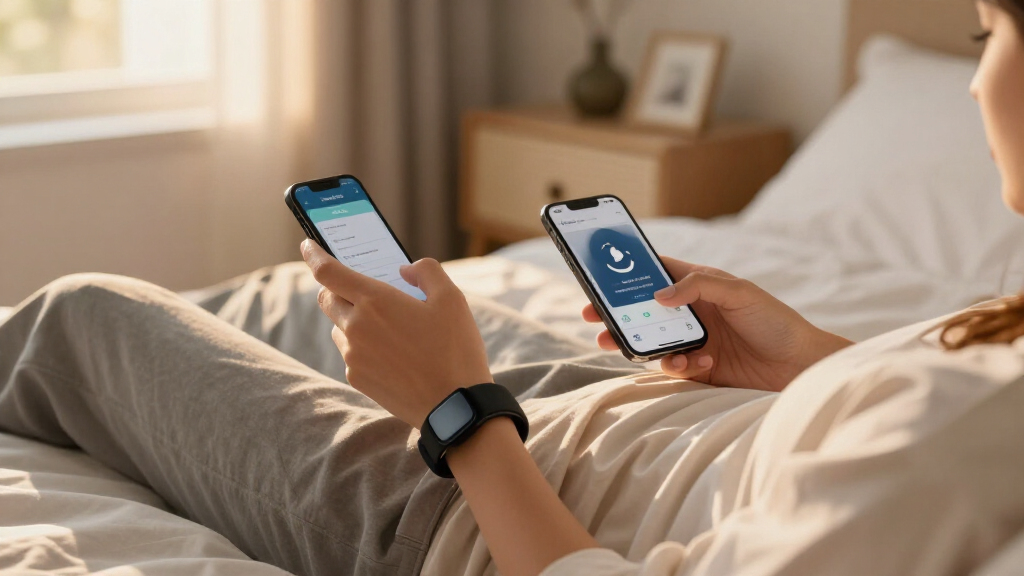

The best smart sleep trackers turn overnight sensor data into patterns that can help buyers improve their routines. I rank the Google Fitbit Inspire 3 as the best overall pick because it balances sleep guidance, daytime fitness tracking, comfort, and an established app. The Garmin Index Sleep Monitor is my premium choice for buyers who want a dedicated, screen-free sleep wearable, while the Xiaomi Mi Smart Band 10 offers stronger battery value. The main tradeoffs are wristband versus ring comfort, useful interpretation versus raw data, subscription costs, and how often the device needs charging. Continue reading for the full ranking logic, buying factors, and recommendations by buyer type.

Get wellness gear delivered free with Prime
- Fast, free delivery on millions of items
- Prime Video, Amazon Music and more included
- Member-only deals all year
Key Takeaways
- The Google Fitbit Inspire 3 takes the top position because its mature app and balanced sleep-and-fitness experience make its data easier to act on than the readings from many generic trackers.
- The Garmin Index Sleep Monitor is the stronger sleep-first premium option, but its specialized design offers less everyday versatility than Fitbit or Xiaomi wristbands.
- The Xiaomi Mi Smart Band 10 delivers the best value combination of a large AMOLED display and claimed 21-day battery life, though buyers seeking deeper sleep interpretation may prefer Fitbit or Garmin.
- Subscription-free rings are the most discreet choices in this lineup, yet sizing, app quality, and limited brand support create more uncertainty than with established wrist-based products.
- Several low-cost watches advertise blood pressure and blood oxygen alongside sleep tracking, but a longer feature list does not automatically mean more reliable or useful overnight guidance.
| Smart Ring Health Tracker |  | Best for Discreet Sleep Tracking | Form factor: Smart ring | Sizing: Size chart required before purchase | Battery life: 2–3 days | VIEW LATEST PRICE | See Our Full Breakdown |
| Smart Bracelet Health and Fitness Tracker |  | Best Battery Life | Color: Black | Form factor: Screen-free bracelet | Battery life: Up to 47 days | VIEW LATEST PRICE | See Our Full Breakdown |
| Xiaomi Mi Smart Band 10 (2025) Global Version |  | Best with a Display | Display: 1.72-inch AMOLED touchscreen | Display brightness: 1,500 nits | Battery life: Up to 21 days | VIEW LATEST PRICE | See Our Full Breakdown |
| Garmin Index Sleep Monitor |  | Best Overall | Wear position: Upper arm | Physical size: 17.8 × 2.5 × 0.02 inches | Battery life: Up to 7 nights | VIEW LATEST PRICE | See Our Full Breakdown |
| Zeacool Fitness Tracker |  | Best All-in-One Smartwatch | Display: 1.10-inch AMOLED HD touchscreen | Battery life: 10–14 days | Water resistance: 5 ATM | VIEW LATEST PRICE | See Our Full Breakdown |
| BIEMHA Smart Ring Health Tracker |  | Best No-Subscription Ring | Sleep Tracking: Yes | Heart Rate Monitoring: Yes | Blood Pressure Monitoring: Yes | VIEW LATEST PRICE | See Our Full Breakdown |
| Garmin Index Sleep Monitor | | Best Dedicated Sleep Tracker | Battery Life: Up to 7 nights | Sensors: Optical and Pulse Ox | Tracked Sleep Metrics: Sleep score, stages, HRV, and duration | VIEW LATEST PRICE | See Our Full Breakdown |
| Fitness Tracker with 1.1-Inch AMOLED Screen |  | Best Screen-First Pick | Display: 1.1-inch AMOLED touch screen | Battery Life: Up to 7 days | Charging: Magnetic fast charging; 1–2 hours | VIEW LATEST PRICE | See Our Full Breakdown |
| Google Fitbit Inspire 3 |  | Best for Beginners | Sleep Tracking: Sleep analysis and overnight wellness tracking | Heart Rate Monitoring: 24/7 | Additional Health Features: Stress management, SpO2, and menstrual health | VIEW LATEST PRICE | See Our Full Breakdown |
| MorePro Fitness Tracker |  | Best for Sports Variety | Sleep Tracking: Deep, light, and wake-up periods | Heart Rate Monitoring: 24/7 | Blood Pressure Monitoring: Yes | VIEW LATEST PRICE | See Our Full Breakdown |
| Fitness Tracker Watch with Heart Rate, Activity & Sleep Monitoring, Pedometer, Waterproof |  | Best Budget Sleep-Tracking Watch | Sleep Monitoring: Yes | Heart Rate Monitoring: Yes | Sports Modes: 9 | VIEW LATEST PRICE | See Our Full Breakdown |
| Smart Bracelet for Men and Women with Heart Rate Monitor, Sleep Tracking, 120+ Sport Modes, Built-in GPS, Waterproof, 30-Day Battery, Includes 2 Bands |  | Best Battery Life for Active Sleepers | Sleep Tracking: Yes | Heart Rate Monitoring: 24/7 | Sport Modes: 120+ | VIEW LATEST PRICE | See Our Full Breakdown |
| Smart Health Ring with Stress and Sleep Monitoring, Waterproof Fitness Tracker for iOS and Android, No Subscription Fee (Rose Gold, 10) |  | Best Screen-Free Tracker for Swimmers | Sleep Monitoring: Sleep duration and quality | Measured Metrics: Stress, heart rate, calories, and steps | Battery Life: 2–3 days | VIEW LATEST PRICE | See Our Full Breakdown |
| Smart Watch Fitness Tracker with Heart Rate, Blood Oxygen, Blood Pressure, Sleep Monitoring, 120 Sports Modes, IP68 Waterproof for Android and iPhone |  | Best On-Wrist Health Dashboard | Display: 1.58-inch high-resolution touchscreen | Sleep Monitoring: Sleep stages | Health Monitoring: Heart rate, blood oxygen, and blood pressure | VIEW LATEST PRICE | See Our Full Breakdown |
| smart sleep tracker | Battery life | Compatibility | Display |
|---|---|---|---|
| Smart Ring Health Tracker | 2–3 days | iOS and Android | — |
| Smart Bracelet Health and Fitn | Up to 47 days | — | — |
| Xiaomi Mi Smart Band 10 | Up to 21 days | — | 1.72-inch AMOLED touchscreen |
| Garmin Index Sleep Monitor | Up to 7 nights | — | — |
| Zeacool Fitness Tracker | 10–14 days | iPhone and Android | 1.10-inch AMOLED HD touchscreen |
| BIEMHA Smart Ring Health Track | 2–3 days; up to 5 days with charging case | iOS and Android smartphones | None |
| Garmin Index Sleep Monitor | Up to 7 nights | — | — |
| Fitness Tracker with 1.1-Inch | Up to 7 days | Android 5.0+ and iOS 9.0+ | 1.1-inch AMOLED touch screen |
| Google Fitbit Inspire 3 | — | — | — |
| MorePro Fitness Tracker | Up to 7 days | Android 7.0+ and iOS 13.0+ | — |
| Fitness Tracker Watch with Hea | 5–7 days | iOS 8.0+ and Android 4.0+ | Touchscreen |
| Smart Bracelet for Men and Wom | Up to 30 days | iOS and Android | — |
| Smart Health Ring with Stress | 2–3 days | — | None |
| Smart Watch Fitness Tracker wi | — | Android and iPhone | 1.58-inch high-resolution touchscreen |
More Details on Our Top Picks
Smart Ring Health Tracker
I rank the Smart Ring Health Tracker as the best discreet option because it gathers sleep and activity data without putting a screen on the wrist. Its 80-meter waterproof rating also makes it better suited to regular swimming than the IP68 Smart Bracelet. The ring provides full feature access without recurring fees, while its charging case can extend use to five days. Sleep insights appear more basic than those from the Garmin Index Sleep Monitor, which tracks stages, HRV, breathing variations, and skin temperature. Heart-rate readings every 30 minutes also provide less continuous detail than some fitness bands. I place it below Garmin for sleep analysis, but its small, screen-free design and subscription-free access make it the stronger choice for buyers who dislike sleeping in a watch.
Pros:- Compact ring format is less intrusive in bed than a smartwatch
- Full feature access requires no subscription
- 80-meter waterproof rating supports swimming and continuous wear
- Charging case extends total use to as much as five days
Cons:- Sleep analysis is basic compared with Garmin’s broader metrics
- Heart rate is measured only every 30 minutes
- Correct sizing is required for comfort and reliable sensor contact
Best for: Light sleepers and swimmers who want unobtrusive overnight tracking without a screen or recurring fee
Not ideal for: Data-focused buyers who want advanced sleep interpretation, continuous heart-rate sampling, or on-device results
- Form factor:Smart ring
- Sizing:Size chart required before purchase
- Battery life:2–3 days
- Charging case endurance:Up to 5 days
- Waterproof rating:80 meters
- Compatibility:iOS and Android
- Sensor generation:Advanced 4.0 sensors
- Heart-rate interval:Every 30 minutes
- Subscription:Not required
Our verdict“I recommend this ring to screen-averse sleepers who favor comfort and fee-free tracking over advanced analysis.”
Smart Bracelet Health and Fitness Tracker
The Smart Bracelet Health and Fitness Tracker earns my battery-life pick because its claimed 47-day endurance far exceeds the Xiaomi Mi Smart Band 10 at 21 days and the Garmin Index Sleep Monitor at seven nights. That gap matters for sleep tracking: fewer charging interruptions mean fewer missing nights and more useful trend data. It also records HRV, blood oxygen, stress, and heart rate, giving it a broader wellness picture than the Smart Ring Health Tracker. The tradeoff is its screen-free design. Results, trends, and most controls depend on a connected phone, whereas Xiaomi offers a bright touchscreen for immediate checks. Its IP68 rating supports daily wear, though it lacks the ring’s stated 80-meter protection. I rank it highly for low-maintenance overnight monitoring, but below Garmin for specialized sleep interpretation.
Pros:- Up to 47 days of battery life reduces gaps in sleep records
- Tracks HRV, blood oxygen, heart rate, sleep, and stress
- Screen-free format minimizes nighttime light and distraction
- No subscription is required
Cons:- A smartphone is required to view detailed data
- No display for immediate status checks or on-device interaction
- IP68 protection is less clearly swim-focused than rated depth protection
Best for: Habit-focused sleepers who want weeks of continuous tracking and are comfortable reviewing all meaningful data on a phone
Not ideal for: Buyers who want bedtime controls, live metrics, or sleep results visible directly on the tracker
- Color:Black
- Form factor:Screen-free bracelet
- Battery life:Up to 47 days
- Waterproof rating:IP68
- Sleep metrics:Sleep, HRV, heart rate, blood oxygen, and stress
- Sports support:More than 100 modes
- Alerts:Call and message notifications
- Wellness feature:Guided breathing
- Subscription:Not required
Our verdict“I would choose this bracelet for uninterrupted trend tracking when battery life matters more than an on-device screen.”
Xiaomi Mi Smart Band 10 (2025) Global Version
I give the Xiaomi Mi Smart Band 10 the display-focused role because its 1.72-inch AMOLED touchscreen makes nightly scores and daytime activity easier to check without opening a phone. At 1,500 nits, it is more readable outdoors than the screen-free Smart Bracelet, while its 21-day battery still lasts far longer than the Garmin Index Sleep Monitor. Advanced sleep tracking and swimming direction monitoring broaden its usefulness beyond bedtime, and the smooth display makes it friendlier for first-time tracker owners. The software arrangement weakens the package: Google Fit and imperial measurements may require third-party connections, creating more setup friction than Garmin Connect’s direct ecosystem. A bright wrist screen may also appeal less to distraction-averse sleepers. I rank it above general-purpose watches for display quality and endurance, but below Garmin for sleep-specific depth.
Pros:- Large 1.72-inch AMOLED display makes sleep summaries easy to read
- 1,500-nit brightness improves outdoor visibility
- Up to 21 days of battery life limits tracking gaps
- Sleep, multi-sport, and swimming-direction tracking support broad daily use
Cons:- Some measurements and Google Fit use may require third-party connections
- App support is narrower outside the Xiaomi ecosystem
- Bright touchscreen is less discreet at night than a ring or screen-free band
Best for: First-time tracker buyers who want readable sleep summaries, touch controls, and long battery life in one slim band
Not ideal for: Buyers who rely on seamless non-Xiaomi app integration or want a screen-free device for bedtime
- Display:1.72-inch AMOLED touchscreen
- Display brightness:1,500 nits
- Battery life:Up to 21 days
- Connectivity:Bluetooth 5.4
- Sleep tracking:Advanced sleep monitoring
- Sports tracking:Multi-sport tracking
- Swimming feature:Direction monitoring
- Primary app:Xiaomi Fit
- Google Fit support:Via third-party connection
Our verdict“I recommend Xiaomi’s band to buyers who want visible sleep feedback and long endurance without moving to a full smartwatch.”
Garmin Index Sleep Monitor
The Garmin Index Sleep Monitor takes my top position because it is the most sleep-centered device here, tracking sleep score, stages, duration, and HRV from a breathable upper-arm band. Breathing variations, skin temperature, women’s health insights, and a smart wake alarm offer more actionable context than the basic sleep records supplied by the Smart Ring Health Tracker or Zeacool Fitness Tracker. Garmin Connect also provides a more cohesive home for trends than Xiaomi’s third-party-dependent integrations. Its narrow focus creates real compromises: there is no display, battery life stops at seven nights, and some breathing data depends on Pulse Ox availability by country. It is not intended for diagnosis, either. Even so, I rank it first because specialized overnight analysis matters more in this roundup than sports modes, smartwatch extras, or maximum battery duration.
Pros:- Tracks sleep score, stages, duration, and HRV
- Upper-arm placement avoids wearing a watch or ring in bed
- Adds breathing variations, skin temperature, and smart wake functionality
- Syncs directly with Garmin Connect
Cons:- Seven-night battery life trails the Xiaomi and screen-free Smart Bracelet
- Breathing variations require Pulse Ox and may be unavailable in some countries
- Health and women’s tracking features are not intended for diagnosis
Best for: Sleep-focused Garmin users who want detailed overnight trends without wearing a watch to bed
Not ideal for: Buyers seeking medical diagnosis, multi-sport tracking, an on-device display, or several weeks between charges
- Wear position:Upper arm
- Physical size:17.8 × 2.5 × 0.02 inches
- Battery life:Up to 7 nights
- Core sleep metrics:Sleep score, stages, duration, and HRV
- Respiratory feature:Breathing variations with Pulse Ox
- Temperature tracking:Skin temperature
- Alarm:Smart wake alarm
- Women’s health:Cycle and health insights
- Companion app:Garmin Connect
Our verdict“I rank Garmin first for buyers who want the richest sleep-focused data and accept weekly charging plus a screen-free design.”
Zeacool Fitness Tracker
I assign the Zeacool Fitness Tracker the all-in-one role because it combines sleep monitoring with a 1.10-inch AMOLED screen, 25 sports modes, weather, reminders, and remote photography. It gives buyers more wrist-based utility than the Garmin Index Sleep Monitor, while its 10-to-14-day battery outlasts Garmin’s seven nights. Compared with the Xiaomi Mi Smart Band 10, however, Zeacool has a smaller display, fewer stated battery days, and no listed built-in GPS. Heart-rate, blood-oxygen, and blood-pressure readings add breadth, but the supplied data does not describe the richer sleep stages, HRV analysis, or breathing insights offered by Garmin. The many menus may also feel excessive for someone who only wants bedtime trends. I place it behind the sleep specialists, yet its 5 ATM water resistance makes it a flexible choice for buyers wanting one device around the clock.
Pros:- Combines sleep monitoring with several health and convenience functions
- 10-to-14-day battery supports consistent overnight wear
- 5 ATM water resistance is suitable for swimming
- AMOLED touchscreen and 25 sports modes add everyday versatility
Cons:- Sleep analytics appear less detailed than Garmin’s
- No built-in GPS is listed
- Feature-heavy interface and companion app may present a learning curve
Best for: Active buyers who want basic sleep tracking, health readings, notifications, and sports tools on one waterproof wrist device
Not ideal for: Sleep-analysis enthusiasts who want detailed stages and HRV trends, or runners who require confirmed built-in GPS
- Display:1.10-inch AMOLED HD touchscreen
- Battery life:10–14 days
- Water resistance:5 ATM
- Sports modes:25
- Compatibility:iPhone and Android
- Health readings:Heart rate, blood oxygen, and blood pressure
- Sleep feature:Sleep-quality monitoring
- Convenience functions:Weather, reminders, and remote photography
- GPS:Built-in GPS not specified
Our verdict“I would pick Zeacool for broad smartwatch utility, but dedicated sleep-data buyers should choose Garmin instead.”
BIEMHA Smart Ring Health Tracker
I rank the BIEMHA Smart Ring as the strongest no-subscription choice here because it tracks sleep, heart rate, and daily activity without placing reports behind a recurring fee. Its 80-meter water resistance also makes it better suited to swimmers than the screen-based Fitbit Inspire 3. Compared with the Garmin Index Sleep Monitor, this ring is smaller and works without a companion Garmin watch, but Garmin supplies richer sleep data such as stages, HRV, and breathing variations. The BIEMHA’s display-free design may feel less distracting overnight, though every result must be checked on a phone. Battery life is another compromise: the ring lasts two to three days by itself, while the case extends total use to five days. I see it as a discreet, basic sleep-trend tracker, not an advanced recovery tool.
Pros:- No subscription is required for full feature access
- Tracks sleep, heart rate, and daily activity in a discreet form
- Water-resistant to 80 meters for swimming and frequent water exposure
- Charging case extends total use to as much as five days
Cons:- Two-to-three-day standalone battery life trails the seven-night Garmin Index Sleep Monitor
- No display for instant readings or status checks
- Correct sizing is required, and the available sleep metrics are relatively basic
Best for: Subscription-averse swimmers and light sleepers who want a discreet ring for basic overnight and daily health trends
Not ideal for: Buyers seeking HRV, advanced sleep-stage analysis, or on-device readings without opening a smartphone app
- Sleep Tracking:Yes
- Heart Rate Monitoring:Yes
- Blood Pressure Monitoring:Yes
- Battery Life:2–3 days; up to 5 days with charging case
- Water Resistance:80 meters
- Display:None
- Compatibility:iOS and Android smartphones
- Material:Silicone
Our verdict“I recommend this ring to buyers who value discreet, subscription-free tracking more than advanced sleep interpretation.”
Garmin Index Sleep Monitor
I place the Garmin Index Sleep Monitor highest for buyers whose main goal is sleep analysis rather than daytime smartwatch features. Its upper-arm format records sleep stages, HRV, Pulse Ox, and breathing variations, giving it a more sleep-focused data set than the BIEMHA Smart Ring or the 1.1-inch AMOLED Fitness Tracker. The gentle vibration alarm also adds a practical bedtime benefit without lighting a screen or sounding a phone. At 14.2 grams, the breathable nylon band is built for overnight wear, and the seven-night battery reduces gaps caused by charging. The catch is ecosystem dependence: Garmin Connect handles the insights, while some functionality needs a compatible Garmin smartwatch. Pulse Ox availability also varies by country. I favor it for deeper sleep and recovery trends, but not for anyone wanting a stand-alone activity display.
Pros:- Tracks sleep score, stages, HRV, duration, and breathing variations
- Lightweight upper-arm design avoids wearing a watch on the wrist
- Battery lasts up to seven nights
- Gentle vibration alarm supports quieter wake-ups
Cons:- A compatible Garmin smartwatch is required for full functionality
- Pulse Ox is unavailable in some countries
- Measurements are wellness estimates rather than medical data
Best for: Garmin users who want detailed overnight recovery data without wearing a watch to bed
Not ideal for: Buyers outside the Garmin ecosystem or anyone wanting a screen and full daytime fitness tracking from one device
- Battery Life:Up to 7 nights
- Sensors:Optical and Pulse Ox
- Tracked Sleep Metrics:Sleep score, stages, HRV, and duration
- Compatible Devices:Smartphones, tablets, and personal computers
- Weight:14.2 g
- Dimensions:0.3 x 1.6 x 1.5 inches
- Band Material:Nylon
- Size:Small–Medium
Our verdict“I recommend this dedicated band to Garmin users who put detailed sleep and recovery patterns ahead of screen-based features.”
Fitness Tracker with 1.1-Inch AMOLED Screen
I chose this 1.1-inch AMOLED Fitness Tracker for buyers who want sleep monitoring and readable wrist-based feedback in the same device. Unlike the display-free BIEMHA Smart Ring and Garmin Index Sleep Monitor, its AMOLED touch screen provides direct access to activity information, notifications, and customizable faces. It also monitors sleep quality alongside heart rate, blood pressure, blood oxygen, and calories, giving general wellness shoppers a broader dashboard than a dedicated sleep band. Yet its sleep analysis appears less detailed than Garmin’s stages, HRV, and breathing data, so I would not choose it for recovery-focused tracking. The seven-day battery is practical, while 25 sports modes add useful daytime range. Its biggest compromise is phone dependence: Bluetooth and the companion app are needed for several features. I view it as a balanced everyday wearable with sleep tracking included.
Pros:- Bright 1.1-inch AMOLED touch screen displays information directly
- Monitors sleep quality, heart rate, blood pressure, and blood oxygen
- Supports 25 sports modes for varied daily activity
- Runs for up to seven days and recharges in one to two hours
Cons:- Sleep metrics are less detailed than those from the Garmin Index Sleep Monitor
- Notifications and several functions rely on Bluetooth and the companion app
- Blood pressure and blood oxygen readings are not substitutes for medical equipment
Best for: Visual learners who want overnight trends, health readings, workouts, and notifications on one bright wrist display
Not ideal for: Recovery-focused buyers who want advanced sleep stages and HRV analysis rather than a broad fitness dashboard
- Display:1.1-inch AMOLED touch screen
- Battery Life:Up to 7 days
- Charging:Magnetic fast charging; 1–2 hours
- Health Monitoring:Heart rate, blood pressure, blood oxygen, and sleep quality
- Sports Modes:25
- Water Resistance:Waterproof
- Compatibility:Android 5.0+ and iOS 9.0+
- Connectivity:Bluetooth
Our verdict“I recommend this model to buyers who want an accessible screen and broad fitness features alongside basic sleep monitoring.”
Google Fitbit Inspire 3
I rank the Google Fitbit Inspire 3 as the easiest starting point for buyers who want sleep data placed within a broader wellness routine. It connects sleep analysis with 24/7 heart rate, stress management, SpO2, and activity tracking, while the included small and large bands make fit selection simpler than sizing the BIEMHA Smart Ring. Compared with the Garmin Index Sleep Monitor, the Inspire 3 is a more versatile daytime tracker, but Garmin is better suited to buyers seeking HRV, breathing variations, and a dedicated upper-arm design. Fitbit’s main drawback is the Premium subscription model: the included membership lasts three months, after which some enhanced insights require payment. Regional feature limits and phone setup add more friction. Even so, I think its approachable mix of sleep and wellness tools gives newcomers a clearer entry point than less familiar generic trackers.
Pros:- Combines sleep analysis with stress, activity, heart-rate, and SpO2 tracking
- Includes both small and large bands for easier fit selection
- Works with compatible iOS and Android smartphones
- Three-month Google Health Premium membership is included
Cons:- Some enhanced insights require a paid Premium membership after the trial
- Certain features may not be available in every region
- Requires a compatible smartphone and app setup
Best for: First-time tracker buyers who want guided sleep, stress, activity, and heart-rate insights in one familiar app
Not ideal for: Subscription-averse shoppers or buyers who want the Garmin monitor’s deeper sleep-focused metrics
- Sleep Tracking:Sleep analysis and overnight wellness tracking
- Heart Rate Monitoring:24/7
- Additional Health Features:Stress management, SpO2, and menstrual health
- iOS Compatibility:iOS 16.4 or later
- Android Compatibility:Android 11.0 or later
- Included Bands:Small and large
- Included Membership:3 months of Google Health Premium
Our verdict“I recommend the Inspire 3 to newcomers who want approachable sleep guidance and broad wellness tracking and accept possible subscription costs.”
MorePro Fitness Tracker
I selected the MorePro Fitness Tracker for active buyers who want to connect nighttime patterns with a wide range of workouts. Its 120-plus sport modes far exceed the 25 modes offered by the 1.1-inch AMOLED Fitness Tracker, while deep, light, and wake-up tracking provides more defined sleep categories than a simple sleep-quality score. It also combines 24/7 heart rate with blood pressure, blood oxygen, menstrual-cycle tools, and reminders. That breadth makes it flexible, though the Garmin Index Sleep Monitor remains the better sleep specialist because it adds HRV, breathing variations, and a dedicated sleep score. MorePro’s IP68 rating and seven-day battery suit regular training, but app synchronization is required for parts of the experience. Its health readings are not diagnostic, and it supports smartphones rather than PCs or tablets. I see it as a fitness-led sleep tracker rather than a recovery-first device.
Pros:- Offers more than 120 sport modes
- Breaks sleep into deep, light, and wake-up periods
- Tracks heart rate continuously alongside blood pressure and blood oxygen
- IP68 protection and up to seven days of battery life support regular training
Cons:- Health measurements are not intended for diagnosis or treatment
- Some functions require companion-app synchronization and setup
- Supports smartphones but not personal computers or tablets
Best for: Multi-sport exercisers who want to compare basic sleep stages with heart-rate and activity trends across many workout types
Not ideal for: Buyers seeking medical-grade readings, computer access, or Garmin-level sleep and recovery analysis
- Sleep Tracking:Deep, light, and wake-up periods
- Heart Rate Monitoring:24/7
- Blood Pressure Monitoring:Yes
- Blood Oxygen Monitoring:Yes
- Sports Modes:120+
- Water Resistance:IP68
- Battery Life:Up to 7 days
- Compatibility:Android 7.0+ and iOS 13.0+
Our verdict“I recommend MorePro to active buyers who value workout variety and basic sleep stages more than specialist recovery metrics.”
Fitness Tracker Watch with Heart Rate, Activity & Sleep Monitoring, Pedometer, Waterproof
I place the Fitness Tracker Watch in the budget-basics slot because it covers heart rate, sleep quality, steps, and nine sports without piling on specialist features. Its 5–7-day battery supports several nights of tracking between charges, making sleep records less prone to gaps. Compared with the Smart Health Ring, this watch adds a touchscreen, notifications, alarms, and activity feedback directly on the wrist, but the ring is less intrusive in bed. The plastic or resin construction also feels more functional than premium. I would choose this model for straightforward nightly trends and daytime motivation, not advanced sleep coaching. Its phone-dependent notifications cannot handle replies or calls, and device compatibility may vary despite the broad stated operating-system support.
Pros:- Tracks sleep quality and heart rate alongside daily activity
- Five-to-seven-day battery supports multi-night tracking
- IP68 rating and stated 50-meter water resistance suit everyday wear
- Nine sports modes add useful exercise context
Cons:- Sleep analysis is more basic than dedicated ring or sleep-monitor options
- Cannot place calls, send messages, or reply without a phone
- Compatibility may vary across individual iOS and Android devices
Best for: Budget-focused buyers who want basic sleep, heart-rate, and step trends displayed directly on the wrist
Not ideal for: Light sleepers who dislike wearing a touchscreen watch in bed or buyers seeking advanced sleep coaching and standalone communication
- Sleep Monitoring:Yes
- Heart Rate Monitoring:Yes
- Sports Modes:9
- Battery Life:5–7 days
- Charging Time:2 hours
- Water Resistance:IP68; stated depth up to 50 meters
- Display:Touchscreen
- Compatibility:iOS 8.0+ and Android 4.0+
Our verdict“My budget pick suits buyers who want accessible sleep trends and everyday fitness tracking without paying for a specialized wearable.”
Smart Bracelet for Men and Women with Heart Rate Monitor, Sleep Tracking, 120+ Sport Modes, Built-in GPS, Waterproof, 30-Day Battery, Includes 2 Bands
I rank the Smart Bracelet highest for buyers who hate frequent charging. Its claimed 30-day battery easily exceeds the Xiaomi Mi Smart Band 10’s stated 21 days, reducing the chance that charging interrupts a week of sleep records. Built-in GPS and more than 120 sport modes also connect nighttime recovery with outdoor training more clearly than the basic Fitness Tracker Watch. That breadth makes this a strong hybrid tracker, though much of the detailed analysis remains inside the companion app. I also find the IP68 rating less persuasive than it first appears because the product is specifically described as unsuitable for swimming or diving. The included bands add flexibility, but buyers focused only on sleep may find the GPS-heavy feature set more elaborate than they need.
Pros:- Claimed 30-day battery minimizes interruptions to sleep records
- Built-in GPS records outdoor activity without relying on phone location
- More than 120 sports modes provide broad training context
- Two interchangeable bands support different wear preferences
Cons:- Not recommended for swimming or diving despite the IP68 rating
- Detailed health and sleep metrics require the smartphone app
- Full functionality remains dependent on a compatible phone
Best for: Runners, walkers, and frequent travelers who want continuous sleep tracking with very infrequent charging
Not ideal for: Swimmers and phone-free users, since aquatic use is restricted and detailed metrics depend on the companion app
- Sleep Tracking:Yes
- Heart Rate Monitoring:24/7
- Sport Modes:120+
- Built-in GPS:Yes
- Battery Life:Up to 30 days
- Waterproof Rating:IP68
- Included Bands:2 interchangeable bands
- Compatibility:iOS and Android
Our verdict“My endurance-focused choice is best for active buyers who prioritize uninterrupted sleep records and built-in GPS over aquatic tracking.”
Smart Health Ring with Stress and Sleep Monitoring, Waterproof Fitness Tracker for iOS and Android, No Subscription Fee (Rose Gold, 10)
I favor the Smart Health Ring for sleepers who want less bulk and no glowing screen on the wrist. It combines sleep duration, stress, heart rate, steps, and calories while removing the recurring fee attached to some ring ecosystems. Its 80-meter water resistance also makes it more appealing for swimmers than the Smart Bracelet, which carries an IP68 rating yet is not recommended for swimming. The compromise is endurance: two to three days per charge trails the five-day Smart Ring Health Tracker, although the case extends total use to roughly ten days. I would also treat size 10 fit as a deciding factor because a loose or tight ring can disrupt comfort and sensor contact overnight. With no onboard display, detailed readings must be checked on a phone.
Pros:- Compact, display-free form is less distracting at bedtime
- Tracks sleep duration, stress, heart rate, steps, and calories
- Stated 80-meter water resistance supports swimming and daily wear
- No subscription fee is required for full feature access
Cons:- Two-to-three-day ring battery is shorter than several competing wearables
- Fixed size 10 may not fit many buyers comfortably
- No screen means detailed data must be viewed on a smartphone
Best for: Swimmers and screen-averse sleepers who want ring-based sleep and stress tracking without a subscription
Not ideal for: Buyers who cannot comfortably wear size 10 or who want five-plus days from the ring itself between charges
- Sleep Monitoring:Sleep duration and quality
- Measured Metrics:Stress, heart rate, calories, and steps
- Battery Life:2–3 days
- Charging Case Endurance:Up to 10 days total
- Water Resistance:Up to 80 meters
- Display:None
- Ring Size:10
- Sensor:Advanced 4.0 sensors
Our verdict“My screen-free pick fits swimmers and subscription-averse buyers who accept shorter battery life and a size-specific design.”
Smart Watch Fitness Tracker with Heart Rate, Blood Oxygen, Blood Pressure, Sleep Monitoring, 120 Sports Modes, IP68 Waterproof for Android and iPhone
I choose the Smart Watch Fitness Tracker for buyers who want sleep stages and daytime health readings visible on a large wrist display. The 1.58-inch touchscreen offers a clearer at-a-glance dashboard than the screenless Smart Health Ring, while heart rate, blood oxygen, blood pressure, and more than 120 exercise modes create a wider wellness snapshot. Those extra readings should be treated as personal trends rather than medical results. Compared with the Smart Bracelet, this watch provides richer on-device viewing but loses built-in GPS, so outdoor routes require a connected phone. The largest buying risk is the unstated battery life; without a published estimate, I cannot judge how reliably it will capture consecutive nights. App permissions and setup add friction, making this feature-rich model less friendly than the basic Fitness Tracker Watch.
Pros:- Large 1.58-inch touchscreen makes nightly and daily data easy to review
- Tracks sleep stages, heart rate, blood oxygen, and blood pressure
- More than 120 exercise modes support varied routines
- Includes notifications, music control, and remote camera functions
Cons:- No built-in GPS, so route tracking requires a connected phone
- Battery-life duration is not specified
- Health readings are not a substitute for validated medical measurements
Best for: Data-focused buyers who want sleep stages and several wellness trends displayed on a large touchscreen
Not ideal for: Phone-free runners and buyers who need predictable multi-night battery endurance before purchasing
- Display:1.58-inch high-resolution touchscreen
- Sleep Monitoring:Sleep stages
- Health Monitoring:Heart rate, blood oxygen, and blood pressure
- Exercise Modes:120+
- Waterproof Rating:IP68
- Built-in GPS:No
- Connectivity:Bluetooth
- Compatibility:Android and iPhone
Our verdict“My dashboard pick suits buyers who value broad on-watch data more than built-in GPS or clearly documented battery endurance.”

How We Picked
I gave the most weight to sleep-focused usefulness: overnight comfort, consistency of wear, clarity of trends, and whether the companion app helps turn readings into practical guidance. I then compared battery demands, screen distraction, device format, platform compatibility, waterproofing, and recurring fees. Products from established ecosystems ranked higher when their software, support, and data presentation offered a clearer buyer benefit than an inexpensive device with a longer sensor list.
My order also reflects role fit rather than feature count. Fitbit leads as the most balanced choice, Garmin earns the sleep-first premium position, and Xiaomi rises on battery value. Rings receive credit for discreet wear and subscription-free ownership, while generic watches and bracelets rank lower when their broad health claims are paired with limited detail about validation or long-term app support. When two listings describe the same Garmin Index Sleep Monitor, I treat them as duplicate purchase routes rather than two meaningfully different products.
Factors to Consider When Choosing Smart Sleep Trackers
I would choose a smart sleep tracker by starting with the behavior that might stop me from wearing it every night. Comfort, charging, app quality, and recurring costs usually shape long-term value more than the number of advertised measurements. The sections below explain how those tradeoffs affect different buyers.
Choose a Form You Can Wear All Night
A tracker cannot build useful trends if it spends half the week on a nightstand. Rings feel less like watches and leave the wrist free, but an incorrect size can pinch when fingers swell overnight. Slim bands such as the Fitbit Inspire 3 or Xiaomi Mi Smart Band 10 suit buyers who want one device for sleep and daytime activity, though some sleepers dislike a wrist strap under bedding. A screen-free monitor such as Garmin’s dedicated model reduces light and notifications near bedtime. Larger smartwatches offer more daytime controls, yet their weight and bright displays can work against overnight comfort. I would prioritize the format most likely to support consistent nightly wear, even if another option promises more measurements.
Judge the App, Not Only the Sensors
Heart rate and motion sensors are only the starting point; the app decides whether those readings become useful. A good platform shows multiweek patterns, explains changes in timing or restlessness, and makes irregular nights easy to compare. Generic trackers may display many individual values without connecting them to habits, which can leave buyers with data but little direction. Established systems from Fitbit and Garmin usually make more sense for people who want clear trend interpretation, while Xiaomi may suit buyers satisfied with broader summaries. Check whether data can be exported or shared before committing to a platform. I would also inspect recent app feedback because software support can matter more than an extra sensor printed on the box.
Match Battery Life to Your Charging Habits
Long battery life is especially valuable in sleep tracking because charging at bedtime creates missing nights. Xiaomi’s claimed 21-day runtime and the featured bracelet’s claimed 30-day battery reduce that risk, while several rings advertise about five days. Real runtime can fall when continuous monitoring, bright screens, frequent synchronization, or GPS is active. Instead of chasing the largest claim, I would ask whether the device offers a predictable charging window during a shower, breakfast, or desk session. Fast, convenient charging may beat a longer battery paired with an awkward proprietary cradle. Buyers comparing trends should protect data continuity, since repeated gaps weaken the value of weekly averages and bedtime patterns.
Separate Wellness Estimates From Medical Measurements
Many inexpensive trackers in this lineup advertise blood pressure, blood oxygen, stress, and sleep stages in one package. That breadth can sound appealing, but more claimed metrics do not prove greater accuracy or stronger sleep guidance. Consumer wearables are better used for observing personal patterns than diagnosing a disorder or replacing clinical equipment. I would treat sudden or persistent changes as a reason to speak with a qualified clinician, especially when symptoms such as loud snoring, gasping, or heavy daytime sleepiness are present. Buyers focused on sleep should favor credible trend presentation over dramatic single-night readings. A device that clearly communicates uncertainty is often more useful than one presenting every estimate as precise.
Calculate the Full Cost of Ownership
The purchase price does not always include every insight shown in marketing materials. Fitbit buyers should check which sleep features come with the device and which depend on a paid membership, while the listed rings emphasize subscription-free use. No-fee ownership can save money over several years, but it is less attractive if the app stops receiving updates or the hardware lacks dependable support. Replacement bands, ring-sizing kits, charging accessories, and phone compatibility can also change the final cost. Paying more makes sense when it buys better software, comfort, and support, not merely a longer list of wellness claims. I would compare the expected two-year cost alongside the likelihood that the tracker will still be worn and supported at that point.
Frequently Asked Questions
Is a smart ring or wristband better for sleep tracking?
A smart ring makes the most sense for buyers who dislike sleeping in a watch and want a discreet, screen-free device. A wristband is usually better for anyone who also wants daytime activity feedback, on-device controls, and easier size adjustment. Rings depend heavily on a close fit, and finger swelling can affect comfort overnight. Bands can feel warmer or catch on bedding, especially when the case is bulky. I would choose based on nightly wearability before comparing extra features.
Do I need a subscription to get useful sleep insights?
No, several products here provide sleep records without a recurring payment, including the listed subscription-free rings and many generic bands. The tradeoff is that no-fee apps may offer simpler interpretation, shorter support lifespans, or fewer coaching tools. Fitbit can place some advanced insights behind a membership, so buyers should compare the included tier with the features they actually want. A subscription is easier to justify when ongoing guidance and polished trends will change behavior. For basic bedtime, duration, and overnight pattern tracking, a fee-free device may be enough.
Can these trackers detect sleep apnea?
These wearables may flag patterns such as oxygen variation, disrupted sleep, or unusual overnight heart-rate changes, but they cannot confirm sleep apnea on their own. Even a device that reports blood oxygen may lack the clinical validation and context needed for diagnosis. I would use the results as conversation-starting trend data, not as a medical verdict. Repeated gasping, loud snoring, morning headaches, or daytime sleepiness deserve professional evaluation regardless of the app’s score. A clinical sleep study remains the appropriate route for diagnosing sleep apnea.
How much battery life is enough for reliable sleep trends?
About five to seven days can work well if the tracker charges quickly and fits naturally into a daytime routine. Buyers who often forget charging may benefit more from Xiaomi’s claimed 21-day battery or the listed bracelet’s claimed 30-day runtime. The goal is not simply the largest number; it is avoiding missing nights during the weeks being compared. Continuous monitoring and screen settings may shorten advertised runtime. I would favor a device that can gather several uninterrupted nights and recharge without occupying the usual sleep window.
Should I trust sleep stages and blood pressure readings from a budget tracker?
I would treat sleep stages as estimates and focus more on repeated changes in duration, timing, and restlessness. Blood pressure claims deserve even more caution because wrist and ring wearables may not match a validated cuff. Budget devices can still help reveal personal routines and broad patterns, but isolated numbers should not guide medication or medical decisions. Comparing readings with familiar habits is more useful than treating every fluctuation as a warning. Buyers who need health-grade measurements should prioritize documented validation and consult a clinician about suitable equipment.
Conclusion
For most buyers, I recommend the Google Fitbit Inspire 3 as the best overall because it combines approachable sleep guidance with useful daytime tracking. The Xiaomi Mi Smart Band 10 is the best value for buyers who prioritize long battery life and a generous display, while the Garmin Index Sleep Monitor is the best premium sleep-first pick for screen-free overnight wear. Beginners should start with Fitbit’s familiar interface rather than a generic tracker packed with loosely explained measurements. Buyers who dislike wristwear should choose one of the subscription-free smart rings, provided they verify sizing and app compatibility, while frequent travelers should favor the 30-day smart bracelet or Xiaomi for fewer charging stops. I would skip the budget watches with extensive health claims unless low price and basic trend logging matter more than polished interpretation, support, or measurement confidence.