The best red light therapy devices balance treatment area, ease of use, and the form factor that fits your routine. I’d put the Hooga HG300 first for a versatile panel format, while the INTEO wireless mask suits face-focused sessions and the Comfytemp belt targets hands-free use on a smaller body area. The main tradeoff is coverage: panels can serve more than one body area, while masks, belts, and mats are designed around particular placements. Output details, setup, and portability also vary, so a larger device is not automatically the better choice. Read on for the full breakdown and a guide to choosing the right style for your space and goals.

Get wellness gear delivered free with Prime
- Fast, free delivery on millions of items
- Prime Video, Amazon Music and more included
- Member-only deals all year
Key Takeaways
- Panels offer the broadest use across this lineup: the Hooga HG300, HG200, and PRO300 and BestQool models suit buyers who want to position a device for different body areas.
- Form factor matters as much as LED count: the INTEO mask is designed for face and neck use, while the handheld Lifepro torch and lamps are easier to direct at specific areas.
- Wavelength overlap is common: many listed devices combine 660 nm red light with 850 nm near-infrared light, so compare coverage, controls, and setup rather than treating those wavelengths as a unique advantage.
- Wearable devices trade versatility for placement: the Comfytemp belt, Bonodave pad, and full-body TPU mat are made for contact or close placement, but they take up space and are less adaptable than a panel.
- The most feature-rich option is not automatically the best fit: the BestQool Pro100 lists four wavelengths, while simpler two-wavelength panels may be easier to compare and sufficient for buyers who prioritize straightforward operation.
| Viconor Red Light Therapy Lamp with Stand, 660 nm Red and 850 nm Infrared LEDs |  | Best for Flexible Home Positioning | LED count: 120 | Wavelengths: 660 nm red and 850 nm near-infrared | LED configuration: 1 red LED and 2 infrared LEDs per light | VIEW LATEST PRICE | See Our Full Breakdown |
| Lifepro LumiCure Handheld Red Light Therapy Torch |  | Best for Portable, Targeted Sessions | Form factor: Handheld | Light type: Red and near-infrared | Wavelength count: 3 | VIEW LATEST PRICE | See Our Full Breakdown |
| Viconor Red Light Therapy Lamp for Face and Body |  | Best for Longer-Reach Home Placement | Brand: Viconor | LED count: 120 | Wavelengths: 660 nm red and 850 nm infrared | VIEW LATEST PRICE | See Our Full Breakdown |
| Hooga HG300 Red Light Therapy Panel with 660nm Red and 850nm Near-Infrared Light |  | Best for Controlled, Targeted Sessions | Wavelengths: 660 nm red and 850 nm near-infrared | LED count: 60 | Irradiance: Over 73 mW/cm² at 6 inches | VIEW LATEST PRICE | See Our Full Breakdown |
| INTEO Red Light Therapy Lamp for Face and Body |  | Best for Customizable Positioning | Model: LP-099A | Wavelengths: 660 nm red and 850 nm infrared | Panel dimensions: 13 × 7.5 inches | VIEW LATEST PRICE | See Our Full Breakdown |
| INTEO Wireless LED Red Light Therapy Mask for Face and Neck |  | Best for Face-and-Neck Coverage | LED beads: 680 | Coverage: Face, neck, and chest | Light modes: 4 | VIEW LATEST PRICE | See Our Full Breakdown |
| Comfytemp Red Light Belt with 126 LEDs, 660 nm and 850 nm, 22 W, Corded |  | Best for Adjustable Belt Sessions | LEDs: 126 lamp beads, each with 2 chips | Wavelengths: 660 nm and 850 nm | Power: 22 W | VIEW LATEST PRICE | See Our Full Breakdown |
| BestQool BQ60 Red Light Therapy Panel, 660 nm Red and 850 nm Near-Infrared, 105 W |  | Best Adjustable-Mount Panel | Power: 105 W | Wavelengths: 660 nm red and 850 nm near-infrared | Irradiance: 95.6 mW/cm² at 3 inches | VIEW LATEST PRICE | See Our Full Breakdown |
| Hooga HG200 Red and Near-Infrared Light Therapy Panel |  | Best Compact Tabletop Panel | Wavelengths: 660 nm red and 850 nm near-infrared | LEDs: 40 | Power: 48 W | VIEW LATEST PRICE | See Our Full Breakdown |
| Bonodave Corded Red Light Therapy Pad with Adjustable Strap |  | Best Lightweight Strap-On Pad | Light wavelengths: 660 nm red and 850 nm near-infrared | Light beads: 105 beads; 315 chips total | Pulse mode: 10 Hz | VIEW LATEST PRICE | See Our Full Breakdown |
| BestQool Pro100 Red Light Therapy Panel, 4 Wavelengths, 160W |  | Best for Expandable Panel Coverage | Wavelengths: 4 | Power: 160W | Lighting modes: 3 | VIEW LATEST PRICE | See Our Full Breakdown |
| 72″ x 33″ Medical-Grade TPU Full Body Red Light Therapy Mat for Pain |  | Best for Full-Body Mat Coverage | Dimensions: 72 × 33 inches | LED count: 1,400 | Wavelengths: 660 nm red and 850 nm near-infrared | VIEW LATEST PRICE | See Our Full Breakdown |
| Hooga PRO300 Red and Near-Infrared Light Therapy Panel |  | Best for Independent Light Controls | Wavelengths: 660 nm red and 850 nm near-infrared | LED count: Conflicting listing: 60 dual-chip LEDs and 900 LEDs | Power: 300 watts | VIEW LATEST PRICE | See Our Full Breakdown |
| Viconor Red Light Therapy Panel, 660nm and 850nm, 60 Dual-Chip LEDs |  | Best for Tabletop or Wall-Mounted Use | Wavelengths: 660 nm and 850 nm | LEDs: 60 dual-chip LEDs (120 chips) | Power: 300W | VIEW LATEST PRICE | See Our Full Breakdown |
| Comfytemp Red Light Therapy Mat, 33 x 17 in, 660 nm and 850 nm |  | Best Compact Mat for Sitting or Lying Down | Dimensions: 33 × 17 inches | LED count: 480 | Wavelengths: 660 nm and 850 nm | VIEW LATEST PRICE | See Our Full Breakdown |
| red light therapy device | Wavelengths | Power |
|---|---|---|
| Viconor Red Light Therapy Lamp | 660 nm red and 850 nm near-infrared | — |
| Lifepro LumiCure Handheld Red | — | — |
| Viconor Red Light Therapy Lamp | 660 nm red and 850 nm infrared | — |
| Hooga HG300 Red Light Therapy | 660 nm red and 850 nm near-infrared | — |
| INTEO Red Light Therapy Lamp f | 660 nm red and 850 nm infrared | — |
| INTEO Wireless LED Red Light T | 630 nm red, 460 nm blue, 605 nm amber, and 850 nm near-infrared | — |
| Comfytemp Red Light Belt with | 660 nm and 850 nm | 22 W |
| BestQool BQ60 Red Light Therap | 660 nm red and 850 nm near-infrared | 105 W |
| Hooga HG200 Red and Near-Infra | 660 nm red and 850 nm near-infrared | 48 W |
| Bonodave Corded Red Light Ther | — | Corded; USB connection with adapter |
| BestQool Pro100 Red Light Ther | 4 | 160W |
| 72" x 33" Medical-Grade TPU Fu | 660 nm red and 850 nm near-infrared | — |
| Hooga PRO300 Red and Near-Infr | 660 nm red and 850 nm near-infrared | 300 watts |
| Viconor Red Light Therapy Pane | 660 nm and 850 nm | 300W |
| Comfytemp Red Light Therapy Ma | 660 nm and 850 nm | Adapter-powered |
More Details on Our Top Picks
Viconor Red Light Therapy Lamp with Stand, 660 nm Red and 850 nm Infrared LEDs
The Viconor’s curved 120-LED panel and stand give it a useful middle ground between a handheld tool and a larger panel. Its 660 nm red and 850 nm near-infrared light are specified, and the stand adjusts up to 180° so you can aim it at different areas without holding it in place. A hook and 1.8 m cord add options for home setup, though the cord is shorter than the 3 m one supplied with the Viconor Face and Body Lamp. Compared with the Hooga HG300, this model offers less detail about output, timer controls, and cooling, so it is a simpler choice rather than a spec-rich panel. The maker’s suggested 15–30-minute sessions are not independent evidence of benefit, and invisible near-infrared light can make operation less apparent.
Pros:- Combines specified 660 nm red and 850 nm near-infrared wavelengths.
- Curved panel has 120 LEDs.
- Stand adjusts up to 180° for different aiming positions.
- Includes both a stand and hook for alternative setup options.
Cons:- The 1.8 m cord is shorter than the 3 m cord on the Viconor Face and Body Lamp.
- No irradiance, timer, or cooling details are provided.
- Near-infrared light is invisible, and the supplied information does not independently establish claimed benefits.
Best for: Home users who want a stand-supported, adjustable lamp for targeting different body areas without holding a device.
Not ideal for: Buyers who need detailed output measurements, built-in session controls, or independent evidence for specific treatment claims.
- LED count:120
- Wavelengths:660 nm red and 850 nm near-infrared
- LED configuration:1 red LED and 2 infrared LEDs per light
- Panel design:Curved
- Stand adjustment:Up to 180°
- Power cord:1.8 m
- Included accessories:Stand and hook
- Suggested use time:15–30 minutes daily
Our verdict“Choose this Viconor if adjustable stand positioning matters more than detailed output data or built-in session controls.”
Lifepro LumiCure Handheld Red Light Therapy Torch
The Lifepro LumiCure is the most portable option in this group: its handheld torch format, wrist strap, and zippered case suit someone who wants to carry a device between rooms or pack it away after a targeted session. It specifies three red and near-infrared wavelengths, while the Viconor lamps name their 660 nm and 850 nm wavelengths more clearly. That makes the LumiCure harder to compare on wavelength specifics, even if three wavelengths sound appealing. A button-operated design keeps the controls simple, but the supplied information does not give dimensions, weight, or battery details, so I can’t tell how comfortable or convenient it will be for extended handheld use. Unlike the Hooga HG300, it has no listed stand, timer, or irradiance figure; it is better suited to mobility than structured, hands-free positioning.
Pros:- Handheld form is suited to targeting a small area.
- Includes a wrist strap and zippered carrying case.
- Offers three red and near-infrared wavelengths.
- Button operation keeps controls straightforward.
Cons:- The individual wavelengths are not specified.
- No dimensions, weight, or battery details are provided.
- No stand, timer, or irradiance information is listed.
Best for: People who want a compact device for brief, targeted sessions and value a carrying case and wrist strap.
Not ideal for: Buyers who need documented wavelength values, hands-free positioning, or clear battery and output specifications.
- Form factor:Handheld
- Light type:Red and near-infrared
- Wavelength count:3
- Controls:Button-operated
- Included accessories:Wrist strap and zippered carrying case
- Individual wavelength values:Not specified
Our verdict“Pick the LumiCure for portability and targeted use, but choose a Viconor lamp or Hooga HG300 if named wavelengths or hands-free setup matter more.”
Viconor Red Light Therapy Lamp for Face and Body
This Viconor lamp is a practical pick for people who need room to place or hang a panel: its 3 m power cord reaches farther than the 1.8 m cord on the other Viconor lamp in this batch. The 120-LED curved panel combines specified 660 nm red and 850 nm infrared light, and its stand adjusts through 180° for changing the direction of the beam. The included hook adds another mounting option. Compared with the Hooga HG300, this model gives less information about irradiance, timer functions, cooling, and independent wavelength controls, so it is not the stronger choice for buyers who want a more fully documented panel. The description also supplies no independent support for therapy claims. Its appeal is straightforward: flexible placement and a longer cord, not a proven or feature-dense treatment setup.
Pros:- Combines 660 nm red light and 850 nm infrared light.
- 120 LEDs sit in a curved panel.
- The 3 m cord offers more reach than the other Viconor lamp in this batch.
- Includes a hook and stand, with up to 180° angle adjustment.
Cons:- No irradiance or built-in timer details are provided.
- Independent wavelength controls and cooling are not listed.
- The supplied information does not independently support claimed therapy benefits.
Best for: Home users who need a longer cord and the choice to place the lamp on a stand or hang it.
Not ideal for: Buyers who prioritize listed irradiance, built-in timing, active cooling, or extensive performance information.
- Brand:Viconor
- LED count:120
- Wavelengths:660 nm red and 850 nm infrared
- Panel design:Curved
- Adjustable angle:Up to 180°
- Power cord:3 m
- Included accessories:Hook and stand
Our verdict“Choose this Viconor over its shorter-cord counterpart when reach and hanging flexibility matter more than detailed output or session controls.”
Hooga HG300 Red Light Therapy Panel with 660nm Red and 850nm Near-Infrared Light
The Hooga HG300 is the most specification-rich targeted panel in this set. It combines 660 nm red and 850 nm near-infrared light with independent controls, letting you select either band rather than using a single combined setting. A built-in timer, active cooling, and adjustable tabletop stand make repeat sessions easier to manage than with either Viconor lamp, whose supplied details omit those controls. Hooga also lists irradiance of over 73 mW/cm² at 6 inches, plus protective eyewear. The tradeoff is coverage: its 12.6-inch panel is intended for smaller, targeted areas, not broad body exposure. The listed 300-watt figure may also prompt questions about power use, while the listed product weight of 0.107 ounces appears unreliable. I’d favor it for control and documentation, not for large-area coverage.
Pros:- Independent red and near-infrared controls offer more session flexibility than the Viconor lamps.
- Lists irradiance of over 73 mW/cm² at 6 inches.
- Built-in timer, active cooling, and adjustable tabletop stand support managed sessions.
- Includes protective eyewear and lists a three-year warranty.
Cons:- Compact dimensions suit targeted areas rather than broad coverage.
- The listed weight of 0.107 ounces may be inaccurate.
- The listed 300-watt figure may be a concern for buyers monitoring power use.
Best for: Buyers who want a compact tabletop panel with separate red and near-infrared controls, a timer, and listed irradiance.
Not ideal for: People seeking broad body coverage or relying on the supplied weight listing to judge portability.
- Wavelengths:660 nm red and 850 nm near-infrared
- LED count:60
- Irradiance:Over 73 mW/cm² at 6 inches
- Dimensions:12.6 × 4.92 × 2.44 inches
- Wattage:300 watts
- Controls and features:Independent red and near-infrared controls, built-in timer, and active cooling
- Included accessories:Adjustable tabletop stand, protective eyewear, power cord, and user manual
- Warranty:3 years
Our verdict“Choose the HG300 if you want documented output and adjustable controls for targeted sessions, not a panel for covering large areas.”
INTEO Red Light Therapy Lamp for Face and Body
The INTEO is the most adjustable setup here: its detachable panel can be used with an elastic strap or placed on a stand, whose head flips 180° and rotates 360°. That versatility sets it apart from the Viconor lamps, which offer adjustable stands but fewer listed session controls. INTEO also provides five brightness levels, three modes, and a 10–90-minute timer, giving users more ways to tailor operation. The panel measures 13 × 7.5 inches, but the complete setup weighs 7 pounds and can occupy meaningful floor or storage space. Compared with the tabletop Hooga HG300, it offers a taller stand and flexible mounting rather than listed irradiance, active cooling, and separate wavelength controls. Its one-year warranty is also shorter than Hooga’s listed three years, and wellness claims are not independently supported in the supplied information.
Pros:- Detachable panel can be used with an elastic strap or adjustable stand.
- Five brightness levels and three light modes allow more control than the Viconor lamps.
- Timer offers settings from 10 to 90 minutes.
- Rotatable lamp head supports varied aiming angles.
Cons:- The 7-pound setup and stand may take up substantial space.
- No irradiance figure is provided.
- The one-year warranty is shorter than the Hooga HG300’s listed three years, and claimed benefits lack independent support in the product information.
Best for: Home users who want one device for stand-based positioning and strap-assisted use, with adjustable brightness and session timing.
Not ideal for: People with limited storage or floor space, or buyers who prioritize listed irradiance and a longer warranty.
- Model:LP-099A
- Wavelengths:660 nm red and 850 nm infrared
- Panel dimensions:13 × 7.5 inches
- Brightness levels:5
- Light modes:Constant, 10 Hz pulse, and 40 Hz pulse
- Timer:10–90 minutes
- Maximum height:46.5 inches
- Weight:7 pounds
- Warranty:1 year
Our verdict“Choose the INTEO if adaptable mounting and session controls matter most, and skip it if you need a compact setup or documented irradiance.”
INTEO Wireless LED Red Light Therapy Mask for Face and Neck
The INTEO mask is the most skincare-focused option in this group: its flexible silicone format covers the face, neck, and chest, while four modes include red, blue, amber, and near-infrared light. That wider light selection sets it apart from the Hooga HG200, which offers red and near-infrared modes in a compact tabletop panel rather than a wearable mask. The rechargeable remote and multiple timer choices make it easier to schedule a session without staying connected to a cord. The tradeoff is routine and evidence: the listed runtime supports about 120 minutes of use per week, and the product description provides no independent support for its skincare claims. I’d choose it for wearable, multi-mode coverage, not as a proven treatment or a substitute for a general-purpose panel.
Pros:- Covers the face, neck, and chest in one wearable design
- Four modes include red, blue, amber, and near-infrared light
- Cordless operation through a rechargeable remote
- Timer choices from 10 to 30 minutes and automatic shutoff
Cons:- Regular use calls for multiple sessions each week
- Product information does not provide independent evidence for its skincare claims
- Wearable face-and-chest coverage is less flexible for other body areas than a panel or belt
Best for: At-home skincare users who want wearable light coverage across the face, neck, and chest and value several light modes.
Not ideal for: Buyers seeking an independently substantiated skincare treatment or a device for broad body-area sessions.
- LED beads:680
- Coverage:Face, neck, and chest
- Light modes:4
- Wavelengths:630 nm red, 460 nm blue, 605 nm amber, and 850 nm near-infrared
- Material:Soft silicone
- Battery and charging:2000 mAh rechargeable remote; USB Type-C
- Timer:10, 15, 20, 25, or 30 minutes
- Stated runtime:120 minutes per week on one charge
Our verdict“Choose the INTEO if wearable, multi-mode face, neck, and chest coverage matters more to you than broad body use or independent evidence for skincare claims.”
Comfytemp Red Light Belt with 126 LEDs, 660 nm and 850 nm, 22 W, Corded
The Comfytemp belt suits buyers who want to position red and near-infrared light around a particular area without holding a device in place. It combines 660 nm and 850 nm light with four modes and three intensity levels, giving more control than the simpler strap-based Bonodave pad. Its 22 × 8-inch coverage area is useful for a targeted session, but it is not a full-body solution; the belt’s stated 50 × 8-inch size should not be confused with the illuminated area. Unlike a cordless wearable, this model must stay connected to a wall outlet, which limits where it can be used and how freely the wearer can move. The 20-minute auto-off timer adds a clear session endpoint, but buyers who need a portable setup or broader coverage should look at a panel or mat instead.
Pros:- Combines 660 nm red and 850 nm near-infrared light
- Four modes and three intensity levels offer session adjustments
- Belt format can be positioned around a targeted area
- 20-minute automatic shutoff sets a session limit
Cons:- Corded operation requires access to a wall outlet
- Illuminated coverage is limited to 22 × 8 inches
- A belt is less suited than a panel or mat to larger areas
Best for: People who want a belt-style device with selectable intensity and modes for targeted sessions near a wall outlet.
Not ideal for: Buyers who need cordless use, a large treatment area, or a device they can move around with freely.
- LEDs:126 lamp beads, each with 2 chips
- Wavelengths:660 nm and 850 nm
- Power:22 W
- Modes:4
- Intensity levels:3
- Belt size:50 × 8 inches
- Coverage area:22 × 8 inches
- Power source and timer:Wall outlet; 20-minute auto-off
Our verdict“Pick the Comfytemp belt for adjustable, targeted sessions beside an outlet, but skip it if you need cordless movement or broad coverage.”
BestQool BQ60 Red Light Therapy Panel, 660 nm Red and 850 nm Near-Infrared, 105 W
The BestQool BQ60 is a flexible home panel for buyers who want to choose between red light, near-infrared, or both, then set the device on a stand or hang it on a wall. That mounting choice gives it a more adaptable setup than the Hooga HG200, which is designed as a compact tabletop panel. The BQ60 also lists 95.6 mW/cm² at 3 inches, giving buyers a specific irradiance figure to compare, though the description does not state its dimensions or coverage area. Its touchscreen and cooling system add convenience for repeat sessions, while its 105 W rating makes it a more substantial setup than the HG200’s 48 W tabletop format. The main tradeoff is placement: buyers need room for a stand or a suitable wall location, and cannot judge the panel’s coverage from the provided product details.
Pros:- Separate red, infrared, and combined modes
- Adjustable stand and wall-hanging kit provide two placement options
- Touchscreen controls and a listed cooling system
- Provides an irradiance figure at a specified distance
Cons:- Requires a dedicated stand or wall location
- Product details do not state dimensions or coverage area
- Less portable for targeted sessions than compact tabletop devices such as the Hooga HG200
Best for: Home users who want a red-and-near-infrared panel with both tabletop positioning and wall-mount options.
Not ideal for: People with limited setup space or buyers who need clearly stated dimensions and coverage before choosing a panel.
- Power:105 W
- Wavelengths:660 nm red and 850 nm near-infrared
- Irradiance:95.6 mW/cm² at 3 inches
- Modes:Red light, infrared, and combined
- Stand:Adjustable U-shaped stand
- Mounting:Wall-hanging kit included
- Controls:Touchscreen
- Additional features:Flicker-free LEDs and cooling system
Our verdict“Choose the BQ60 if you want a mountable home panel with selectable light modes, and pass if unstated coverage makes it hard to plan your setup.”
Hooga HG200 Red and Near-Infrared Light Therapy Panel
The Hooga HG200 is the compact panel pick for a desk, table, or other small indoor setup. At 9.8 × 6.3 inches, it takes up less room than the stand-or-wall-mount BestQool BQ60, though that compact size also limits how much area it can cover at once. Its selectable red, near-infrared, and combined modes let buyers tailor the light setting without relying on a single preset. A built-in timer and cooling fan are practical for regular indoor sessions, and the listed irradiance is measured at six inches. In exchange for its small footprint, this corded device needs a fixed tabletop position, eye protection, and supervision while running; it is also not water resistant. I’d favor it for targeted use in a small space, not for hands-free coverage of larger body areas.
Pros:- Compact tabletop size fits smaller home setups
- Selectable red, near-infrared, and combined modes
- Built-in timer, adjustable stand, and cooling fan
- Lists irradiance at a stated distance and includes a three-year manufacturer warranty
Cons:- Small dimensions limit coverage compared with the BestQool BQ60 panel format
- Corded and intended for indoor use only; it is not water resistant
- Requires eye protection and should not be left running unattended
Best for: Indoor users with a small table or desk who want a compact panel for targeted red and near-infrared sessions.
Not ideal for: Buyers who need broad-area coverage, a water-resistant device, or a panel they can leave running unattended.
- Wavelengths:660 nm red and 850 nm near-infrared
- LEDs:40
- Power:48 W
- Irradiance:Over 90 mW/cm² at 6 inches
- Dimensions:9.8 × 6.3 × 1.2 inches
- Mounting:Table mount with adjustable stand
- Power source:Corded electric
- Features and warranty:Built-in timer, cooling fan, mode selection, and 3-year manufacturer warranty
Our verdict“The HG200 fits buyers who want a small, adjustable tabletop panel for supervised indoor sessions, but it is not the pick for large-area coverage.”
Bonodave Corded Red Light Therapy Pad with Adjustable Strap
The Bonodave pad is a lightweight, strap-on option for buyers who want to place a red-and-near-infrared device on different body areas. Its 16.1 × 7.9-inch pad and adjustable elastic strap make positioning more flexible than the fixed stand of the Hooga HG200, while the HG200 is the better fit for someone who prefers a tabletop panel. The Bonodave’s 30-minute automatic shutoff offers a longer timed session than the Comfytemp belt, whose timer stops at 20 minutes. Its 105 three-in-one beads combine 660 nm and 850 nm light, but the pad still treats a limited area at a time. It is also corded, so the strap does not make it fully portable. I’d pick it for lightweight, targeted placement, not for whole-body coverage or untethered use.
Pros:- Adjustable elastic strap supports placement on different body areas
- Combines 660 nm red and 850 nm near-infrared light
- 30-minute automatic shutoff
- Lightweight pad includes a USB controller and adapter
Cons:- Must remain connected to power while in use
- Pad size limits the area covered during each session
- Strap-on placement is less hands-free in practice than the format may suggest
Best for: People who want a lightweight pad with an adjustable strap for placing over different body areas during sessions at home or in an office.
Not ideal for: Buyers who need a large treatment area, cordless use, or a device that covers several body regions at once.
- Light wavelengths:660 nm red and 850 nm near-infrared
- Light beads:105 beads; 315 chips total
- Pulse mode:10 Hz
- Pad dimensions:16.1 × 7.9 inches
- Strap dimensions:35.2 × 4 inches
- Timer:30-minute automatic shutoff
- Power:Corded; USB connection with adapter
- Weight:0.44 lb
Our verdict“Choose the Bonodave for lightweight, targeted strap-on sessions with a longer timer than the Comfytemp belt, but not for cordless or broad-area use.”
BestQool Pro100 Red Light Therapy Panel, 4 Wavelengths, 160W
The BestQool Pro100 is a flexible choice for buyers who want a panel they can build on: compatible BestQool PRO panels can connect to create a wider treatment area. Its three lighting modes let you choose red, near-infrared, or a combined session, while the 60-degree beam is suited to directing light toward a target. Compared with the Hooga PRO300, this panel is lighter and offers a clear expansion path, but it has lower listed power and its coverage remains limited unless you add compatible panels. The stated irradiance is measured at just three inches, so it may not describe output at a more comfortable working distance. Its low heat release is a plus for close positioning, though this is still a corded-style panel rather than a soft, body-spanning mat.
Pros:- Three modes provide red, near-infrared, or combined lighting
- Compatible PRO panels can connect to widen the treatment area
- Low heat release supports close positioning
- At 6.61 pounds, it is more manageable to move than the Hooga PRO300
Cons:- Coverage is limited unless compatible panels are added
- The 109 mW/cm² irradiance figure is specified at only three inches
- The provided specifications do not identify the four wavelength values
Best for: People who want a compact panel now and may later expand their treatment area with compatible BestQool PRO panels
Not ideal for: Buyers who need broad, full-body coverage from one device or do not want to depend on compatible add-on panels
- Wavelengths:4
- Power:160W
- Lighting modes:3
- Dimensions:19.7 × 8.4 × 2.6 inches
- Weight:6.61 pounds
- Irradiance:109 mW/cm² at 3 inches
- Beam angle:60 degrees
- Compatibility:Connects with compatible BestQool PRO series panels
Our verdict“Choose the BestQool Pro100 if you want a relatively manageable panel with a compatible expansion path, not a ready-made full-body solution.”
72″ x 33″ Medical-Grade TPU Full Body Red Light Therapy Mat for Pain
This mat is the coverage-first pick in this group: its 72 × 33-inch surface can lie beneath much of the body, unlike the more localized Comfytemp Red Light Therapy Mat. The 1,400 LEDs combine 660 nm red and 850 nm near-infrared, and the soft, sweat-resistant TPU surface is easier to wipe down than a fabric-covered pad. Three modes, five intensity levels, and an automatic timer give users more session controls than Comfytemp’s four modes and three levels. That breadth comes with a practical cost: the mat needs a power outlet and a sizable place to spread it out or store it. Its format also suits users willing to lie on a fixed surface better than anyone seeking a portable panel they can reposition quickly.
Pros:- Large 72 × 33-inch surface covers more area than the Comfytemp mat
- Combines 660 nm red and 850 nm near-infrared wavelengths
- Five intensity levels and three modes allow session adjustments
- Sweat-resistant TPU surface and automatic 10–90 minute timer support regular home use
Cons:- Large footprint can be difficult to store or use in a small space
- Requires a power outlet, limiting portability
- A mat format requires lying on or positioning the device rather than directing a panel at a chosen area
Best for: Home users who want broad coverage for the back, shoulders, hips, and legs while lying down
Not ideal for: People in small homes, frequent travelers, or buyers who need a compact device that can be used without a nearby outlet
- Dimensions:72 × 33 inches
- LED count:1,400
- Wavelengths:660 nm red and 850 nm near-infrared
- Surface material:Medical-grade TPU; soft, skin-friendly, and sweat-resistant
- Modes:Constant, 10 Hz pulse, and 40 Hz pulse
- Intensity levels:5 (P1–P5)
- Timer:Automatic shutoff from 10 to 90 minutes
- Support:365-day product support and 3-year free parts replacement
Our verdict“Pick this mat for broad, stationary home sessions; choose the smaller Comfytemp mat if storage and repositioning matter more.”
Hooga PRO300 Red and Near-Infrared Light Therapy Panel
The Hooga PRO300 suits buyers who want to control red and near-infrared light separately rather than rely on a single combined setting. Its 660 nm and 850 nm wavelengths, built-in timer, flicker-free design, and internal cooling fans make it a feature-rich panel compared with the simpler BestQool Pro100. A table stand and hanging kit also offer more placement choices than a mat, though the listed 61.2-inch length and 4.3 kg weight make this a less convenient device to move or store. There is an important specification caveat: the product description gives both 60 and 900 as the LED count, so that detail is unclear. The three-year warranty is a useful stated support term, but buyers should weigh it against the panel’s size and ambiguous listing.
Pros:- Independent controls let users select red and near-infrared light separately
- Built-in timer, flicker-free design, and internal cooling fans
- Includes a table stand, hanging kit, and power cord
- Three-year manufacturer warranty
Cons:- Listing conflicts on LED count, stating both 60 and 900
- At 4.3 kg and 61.2 inches long, it may be cumbersome to move or store
- Corded electric operation limits placement to locations near power
Best for: Panel users who want separate red and near-infrared controls, a timer, and both tabletop and hanging placement options
Not ideal for: Buyers who need a lightweight, compact panel or prefer product listings with consistent LED specifications
- Wavelengths:660 nm red and 850 nm near-infrared
- LED count:Conflicting listing: 60 dual-chip LEDs and 900 LEDs
- Power:300 watts
- Power source:Corded electric
- Mounting type:Table mount; hanging kit included
- Beam angle:60 degrees
- Weight:4.3 kg
- Dimensions:61.2 × 15.7 × 3.1 inches
- Warranty:3 years
Our verdict“Choose the Hooga PRO300 if separate wavelength controls and flexible mounting matter more than compact size or fully consistent specifications.”
Viconor Red Light Therapy Panel, 660nm and 850nm, 60 Dual-Chip LEDs
The Viconor panel’s strongest distinction is its placement flexibility: the included hanging kit supports wall mounting, while the panel can also be used on a table. It pairs 660 nm red and 850 nm near-infrared light with a 5–30-minute timer and cooling fan. Those basics overlap with the Hooga PRO300, but the Viconor listing gives an irradiance figure at six inches and includes eye protection; it does not provide panel dimensions or describe independent controls for each light type. The stated 140 mW/cm² irradiance offers a reference point, but it is only one measurement and does not establish broader performance. With fewer documented usability details than Hooga, this pick makes more sense for buyers who value mounting accessories and a defined timer over extensive controls.
Pros:- Includes a hanging kit for wall mounting or tabletop placement
- Offers 660 nm red and 850 nm near-infrared wavelengths
- Adjustable 5–30-minute timer
- Eye protection and built-in cooling fan are included
Cons:- Panel dimensions are not provided, making fit and storage harder to judge
- The description does not substantiate its health or performance claims
- No independent red and near-infrared controls are listed, unlike the Hooga PRO300
Best for: Home users who want a panel they can hang or place on a table and value included eye protection
Not ideal for: Buyers who need known panel dimensions, independently controlled wavelengths, or more detailed performance information
- Wavelengths:660 nm and 850 nm
- LEDs:60 dual-chip LEDs (120 chips)
- Power:300W
- Irradiance:140 mW/cm² at 6 inches
- Timer:5–30 minutes
- Cooling:Built-in fan
- Mounting:Tabletop or wall-mounted with included hanging kit
- Included accessories:Hanging kit, eye protection, and user manual
Our verdict“Choose the Viconor if you want a mountable panel with a timer and included eye protection, and can accept limited size and control information.”
Comfytemp Red Light Therapy Mat, 33 x 17 in, 660 nm and 850 nm
The Comfytemp mat offers a middle ground between a small targeted pad and the much larger 72 × 33-inch full-body mat. At 33 × 17 inches, it provides room for a broader target area while remaining easier to place on a chair or bed; 480 LEDs deliver both 660 nm red and 850 nm near-infrared light. Four modes and three intensity levels provide simple session adjustments, and button operation keeps the controls straightforward. Compared with the larger TPU mat, Comfytemp is less suited to covering several body areas at once and its listing gives no material or timer details. It also needs an adapter, so this is a stationary home option rather than a cordless recovery device. Buyers wanting clearly specified modes and levels should still note that their exact settings are not described.
Pros:- 33 × 17-inch surface provides broader coverage than a small targeted pad
- 480 LEDs combine 660 nm red and 850 nm near-infrared wavelengths
- Four light modes and three adjustable intensity levels
- Simple button controls
Cons:- Adapter-powered operation limits use away from an outlet
- Smaller coverage area than the 72 × 33-inch full-body mat
- The listing does not specify timer settings or surface material
Best for: People seeking a mid-size mat for seated or lying-down use on one broad area without storing a full-body mat
Not ideal for: Buyers who want full-body coverage, cordless use, a stated timer, or detailed information about the mat’s surface
- Dimensions:33 × 17 inches
- LED count:480
- Wavelengths:660 nm and 850 nm
- Light modes:4
- Intensity levels:3
- Power:Adapter-powered
Our verdict“Choose Comfytemp for a straightforward, mid-size mat for one broad area; opt for the larger full-body mat if you need wider coverage.”
How We Picked
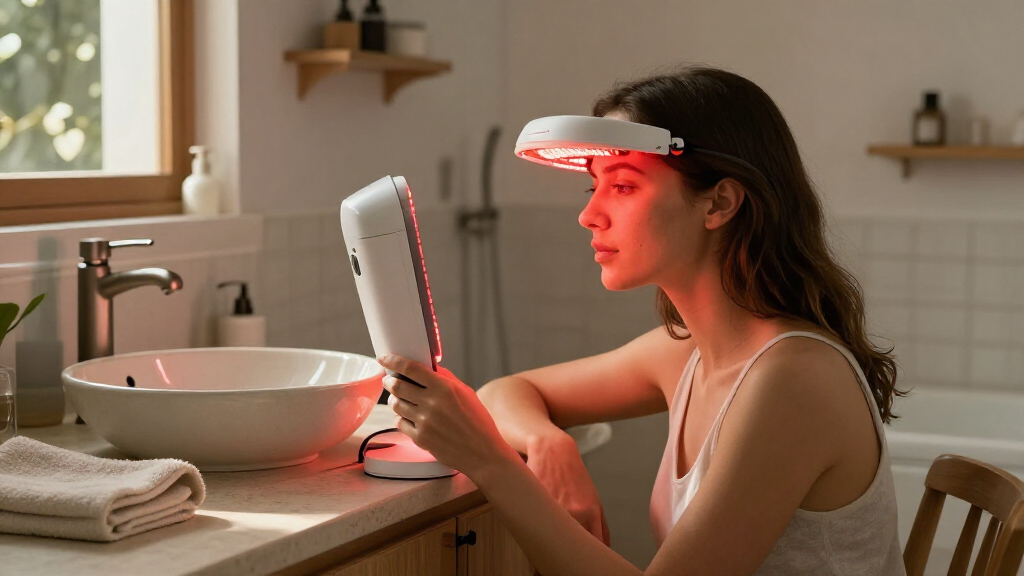
I compared the 15 devices by how they fit a real home routine: their form factor, stated wavelengths and output information, coverage, power and portability, and the amount of setup or positioning they call for. A panel can be moved or aimed at different areas, while a mask, belt, or pad has a more focused use. I also looked at whether the listed specifications help a shopper compare devices clearly; details such as LED count and wattage are useful, but they do not by themselves establish treatment performance.
The ranking reflects versatility and practical fit first, then the clarity of the product’s stated specifications and its likely usefulness for a particular buyer. That puts adaptable panels near the top, while wearable and handheld picks earn their place for convenience or targeted placement rather than broad coverage. I distinguish among products with similar wavelengths by their size, format, and stated features, and I avoid treating marketing labels as proof of clinical results. A device may rank lower overall yet still be the stronger match for a face-only routine, a compact space, or hands-free placement.
Factors to Consider When Choosing Best Red Light Therapy Devices
Before choosing, I’d start with the way you expect to use a device, not with the longest feature list. These questions can help you separate a versatile panel from a wearable or targeted option.
Choose the Format Around Your Routine
A panel makes sense if you want to reposition a device across different areas and have a stable place to set it up. A mask, belt, or pad narrows that flexibility but can simplify placement for a regular, focused routine. Handheld devices are easy to direct, though holding one in place can make sessions less convenient. Think about what you will actually do repeatedly, rather than assuming the format with the widest coverage is always preferable. If you share a device with others or want to use it on several areas, flexibility may matter more than a fitted design. If your goal is limited to one area, a dedicated format may be easier to manage.
Compare Coverage and Positioning
Coverage determines how much repositioning a session may involve. A compact panel can be easier to place in a small room, but a larger area may take more deliberate positioning to address. Wearable pads and mats cover their intended placement, yet the outline and size can limit where they fit comfortably. Check the product dimensions and how it is meant to sit relative to the body before buying. Do not infer full-body coverage from a product name; verify the actual dimensions and expected placement. A smaller device can be the more practical choice if it fits your intended area and available space.
Read Wavelength and Output Claims Carefully
Many devices in this roundup list 660 nm red light and 850 nm near-infrared light, so those numbers alone do not distinguish every option. Look for clearly stated output details and follow the manufacturer’s instructions for distance and session length. Wattage and LED counts describe aspects of a product, but neither should be treated as a direct measure of results or as a substitute for irradiance information. If a listing gives limited technical details, avoid filling in the gaps with assumptions based on another model from the same brand. More wavelengths can broaden the advertised range, but added specifications are only useful if the device explains them clearly. Compare the full set of information, not one headline number.
Account for Space, Storage, and Power
A stand-equipped lamp or panel needs somewhere to sit and enough clearance for its intended positioning. A handheld torch takes less room, while a wearable mask or belt needs storage that protects its shape and controls. Mats can be convenient for lying or sitting in one place, but their footprint may be awkward in a small home. Check whether the device is corded or wireless and consider how that affects where you can use it. Corded models avoid reliance on a wearable battery but keep you near an outlet. The best fit is the one you can set up without turning every session into a furniture rearrangement.
Pay for Features You Will Use
More LEDs, additional wavelengths, and larger formats can sound compelling, but they may add size or complexity without addressing your main need. A four-wavelength panel is easier to justify for someone who wants to compare a broader set of stated options than for a buyer seeking simple, focused use. Conversely, paying for a large panel may not make sense if you only want a device for one small area. Compare the included controls, adjustment options, dimensions, and product documentation before focusing on headline specifications. A well-matched basic device can be more useful than a feature-rich one that is difficult to position or store. I’d prioritize clear instructions and a workable routine over features that have no role in your plan.
Frequently Asked Questions
Should I choose a panel or a wearable device?
I’d choose a panel if you want to direct the device at different areas or value repositioning over a fitted design. A wearable mask, belt, or pad can make placement more straightforward for its intended area, but it is less adaptable if your needs change. Also compare setup: a panel needs a suitable position and clearance, while a wearable may need to be adjusted and stored carefully. Consider how much time you are willing to spend positioning the device each session. The best format is the one that fits the area and routine you intend to maintain.
Do 660 nm and 850 nm specifications make two devices equivalent?
No. Those wavelengths appear across many products in this roundup, but they do not tell you everything about a device’s coverage, output, build, or controls. Check what technical information the manufacturer provides, including any output measurements and the instructions for distance and session length. LED count and wattage can help describe a product but are not direct proof that two models perform alike. Compare dimensions and positioning as well, since those details affect how you can use the device. If key specifications are missing, treat that as uncertainty rather than assuming the device matches a better-documented model.
Is a full-body mat a better choice than a panel for broad coverage?
Not by default. A full-body mat offers a large, fixed surface designed for close placement, but its dimensions require room to store and use it. A panel may cover less at once, yet it can be aimed or repositioned for different areas and may fit more easily into a shared space. Think about whether you prefer lying or sitting on a surface or positioning a device in front of you. Check the actual dimensions rather than relying on the phrase “full body.” Broad coverage is useful only if the format suits your space and routine.
Are more wavelengths or higher wattage always worth choosing?
No. A model listing four wavelengths or a higher wattage may offer more stated features, but those numbers do not establish that it is the right pick for your use. First check whether the device provides clear output details and practical instructions. Then weigh those specifications against size, setup, coverage, and how you intend to position it. A simpler two-wavelength panel may be easier to use and compare if you do not need the added features. I’d pay more attention to documentation and fit than to a single impressive number.
What should I check before using a device near my face or eyes?
Read the device’s instructions for face placement, recommended distance, session duration, and any eye-protection guidance. Do not assume a face-specific mask removes the need to follow precautions, or that a general panel is suitable for use near the eyes. Check whether the manufacturer gives clear directions for your intended placement and follow them rather than borrowing instructions from another model. If you have an eye condition, take light-sensitive medication, or are unsure whether light exposure is appropriate for you, ask a qualified health professional before use. Stop and seek advice if you experience discomfort.
Conclusion
For a flexible starting point, I’d choose the Hooga HG300 as best overall, with the HG200 as a simpler panel alternative and the PRO300 for shoppers who prioritize a larger panel format. The BestQool BQ60 is my best value-style pick for buyers drawn to a compact panel with stated red and near-infrared wavelengths, while the Pro100 is the best premium-style option for those who specifically want its four-wavelength configuration. Beginners who want a focused, face-oriented format may prefer the INTEO wireless mask over a panel that needs more positioning. For targeted body placement, compare the Comfytemp belt and Bonodave pad; for a large mat format, consider the full-body TPU model only if you have the room. Match the device to your intended area and routine before prioritizing extra features.
Halloween Picks
halloween
As an affiliate, we earn on qualifying purchases.