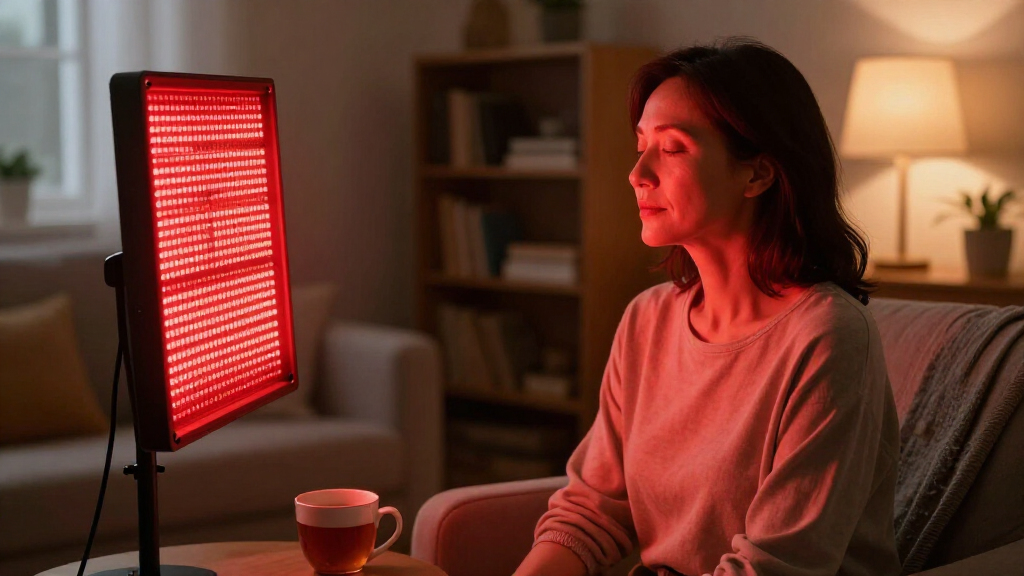

Red light therapy panels have become one of the most popular at-home wellness investments, but choosing between them comes down to a few key tradeoffs: irradiance versus coverage area, wavelength variety versus simplicity, and whether a stand or mounting hardware is included. For most buyers, the Hooga PRO300 is the best overall pick thanks to its dual-chip 660nm/850nm output, built-in timer, and included tabletop stand — a complete package at a mid-range size. If you want maximum versatility, the INIA 2-in-1 panel and belt converts between full-body and targeted treatment, while the BestQool 470W stands out for buyers who want four wavelengths and serious power. Budget shoppers and beginners can get real results from smaller 45W–105W panels, as long as they accept longer session times and smaller treatment areas. Keep reading for the full breakdown of all 15 panels.

Get wellness gear delivered free with Prime
- Fast, free delivery on millions of items
- Prime Video, Amazon Music and more included
- Member-only deals all year
Key Takeaways
- Dual-chip LED design was the single biggest differentiator in this lineup — panels like the Hooga PRO300 and Lifepro Bioheal deliver both 660nm and 850nm from every diode, meaning you never have to choose between skin-surface and deeper tissue benefits.
- Included accessories varied more than performance: three of the fifteen panels shipped with adjustable stands, while others arrived with only a hanging kit — a hidden cost if you don’t have a door frame or wall mount in mind.
- The BestQool panels showed the widest power spread in the roundup (105W to 470W), and the smaller 105W and 160W models made less sense than competitors unless multi-wavelength output is your top priority.
- Only two panels broke from the standard 660nm/850nm formula: the Morfone adds 940nm and the INIA adds 1064nm — compelling for experienced users, but overkill for first-time buyers.
- Panel size correlated more with treatment time than results; a compact 45W panel can match a 300W panel’s outcomes on a small area like the face, it just can’t cover a back or both legs in one session.


| red light therapy panel | Wavelengths | LED Count |
|---|---|---|
| Hooga PRO300 Red Light Therapy | 660nm red, 850nm near-infrared | 60 dual-chip LEDs |
| Red Light Therapy Panel | 660nm and 850nm | 120 |
| Hooga HG300 Red Light Therapy | 660nm red, 850nm near-infrared | 60 |
| Morfone Red Light Therapy Pane | 660nm, 850nm, 940nm | — |
| BestQool Pro300 Red Light Ther | 630nm, 660nm, 850nm, 940nm | 300 |
| Viconor Red Light Therapy for | 660nm red, 850nm infrared | 120 LEDs |
| Lifepro Bioheal Red Light Ther | — | — |
| BestQool Red Light Therapy Pan | 4 (red and near-infrared range) | — |
| Red Light Therapy for Body and | 660nm and 850nm | 180 LEDs |
| LED Red Light Therapy Device | 660nm deep red, 850nm near-infrared | — |
| Red Light Therapy Panel with A | 660nm red, 850nm near-infrared | 234 |
| Hooga Red Light Therapy Panel | — | — |
| BestQool Red Light Therapy Pan | 660nm red, 850nm infrared | — |
| Red Light Therapy for Face and | — | 120 |
| INIA Red Light Therapy Panel & | — | — |
More Details on Our Top Picks
Hooga PRO300 Red Light Therapy Panel
This option stands out for balancing coverage, build quality, and expandability in one package. The 60 dual-chip LEDs deliver both 660nm red and 850nm near-infrared light, which means surface-level skin benefits and deeper tissue recovery from a single session. Compared with the Hooga HG300, the PRO300’s ability to daisy-chain additional panels makes it the smarter long-term buy for anyone who suspects their setup will grow. The included tabletop stand and digital timer remove the two most common friction points with budget panels: awkward positioning and guessing at session length. That said, a 3-year warranty helps justify the cost, but casual users who only want occasional facial treatments will pay for capacity they never use, and the panel needs real floor or table space to shine.
Pros:- Dual wavelengths cover both skin-level and deep-tissue therapy in one session
- Modular design lets you connect additional panels for larger setups
- Digital timer and included stand eliminate setup guesswork
- 3-year warranty signals confidence in long-term durability
Cons:- Overkill in price and size for casual or single-area use
- Requires dedicated space for proper positioning and full-body coverage
Best for: Home users building a long-term red light routine who want full-body coverage today and the option to expand later
Not ideal for: Casual users targeting only the face — the size and price outpace what small-area treatments require
- LED Count:60 dual-chip LEDs
- Wavelengths:660nm red, 850nm near-infrared
- Timer:Digital timer
- Stand:Tabletop stand included
- Expandability:Connects to additional panels
- Warranty:3 years
Our verdict“The most complete package for serious home users who want coverage now and expansion options later.”
Red Light Therapy Panel, 300W Dual Chip LED with Hanging Kit & Handle
Where the Hooga PRO300 asks a premium for its brand pedigree and stand, this 300W panel delivers more raw output for the money — 120 dual-chip LEDs and a claimed irradiance of 140mW/cm² at 6 inches. That extra power translates directly into shorter sessions or deeper tissue reach, which matters for post-workout recovery users. The hanging kit and built-in handle give it flexible placement, though unlike the Hooga HG300 there’s no included floor or tabletop stand, so you’re mounting or propping it yourself. The cooling fan keeps sessions safe at high output, but it does add noise and draws meaningful power. This pick makes the most sense for buyers who prioritize intensity and don’t mind a more hands-on setup.
Pros:- 120 dual-chip LEDs with high irradiance for efficient, shorter sessions
- 300W output suits deep-tissue and muscle recovery applications
- Hanging kit and handle allow wall, door, or handheld positioning
- Built-in timer and cooling fan for safe unattended-style sessions
Cons:- No stand included — positioning requires DIY mounting solutions
- Cooling fan adds noise and higher power draw than smaller panels
Best for: Recovery-focused users who want high irradiance and short session times without paying brand-name prices
Not ideal for: Renters or anyone unwilling to drill mounts — with no stand included, placement depends entirely on your setup skills
- Wavelengths:660nm and 850nm
- Power:300W
- Irradiance:140mW/cm² at 6 inches
- LED Count:120
- Timer Range:5-30 minutes
- Cooling:Built-in cooling fan
Our verdict“The output-per-dollar choice for users who value intensity over plug-and-play convenience.”
Hooga HG300 Red Light Therapy Panel
This model is better suited to first-time buyers than anything else in this lineup because it arrives as a complete kit: adjustable stand, protective eyewear, power cord, and manual, all backed by a 3-year warranty. Compared with the Hooga PRO300, the HG300 trades coverage for approachability — 60 LEDs at 73mW/cm² is plenty for treating a shoulder, a knee, or your face, but it won’t blanket your torso in one pass. The adjustable stand makes positioning intuitive, which removes the main frustration beginners report with mount-only panels like the 300W hanging-kit model. The tradeoff is honest: if you stick with red light therapy for six months, you’ll likely outgrow it. As an entry point, though, the low commitment and complete accessory bundle are hard to beat.
Pros:- Complete starter kit includes stand, eyewear, and everything needed day one
- Compact footprint fits easily on a desk or bedside table
- Independent wavelength controls allow customized sessions
- 50,000+ hour LED lifespan with metal construction and active cooling
Cons:- Lower irradiance and smaller size limit it to targeted, not full-body, use
- Requires dedicated tabletop or desk space for positioning
Best for: Red light newcomers who want a complete, low-risk starter kit for targeted areas before committing to a bigger panel
Not ideal for: Full-body treatment seekers — the compact footprint means multiple repositioning sessions to cover large areas
- Wavelengths:660nm red, 850nm near-infrared
- LED Count:60
- Irradiance:73mW/cm² at 6 inches
- LED Lifespan:50,000+ hours
- Power:5W per LED
- Construction:Metal with active cooling
- Included Accessories:Adjustable stand, protective eyewear, power cord, user manual
- Warranty:3 years
Our verdict“The safest first purchase in the roundup — complete, forgiving, and sized for targeted use.”
Morfone Red Light Therapy Panel, Tri-Wavelength
The tri-wavelength design is what separates this panel from the dual-wavelength field. Adding 940nm near-infrared to the standard 660/850nm pair gives deeper-penetration options that most competitors, including the Hooga HG300 and the 300W hanging-kit panel, simply don’t offer. Five modes — including a pulse setting — let you tailor sessions rather than accepting a one-size treatment, and the 14.2 x 6.3 inch surface with 180° rotation and height adjustment handles both face and larger body areas. The catch is the 1-year warranty, which is notably shorter than Hooga’s 3-year coverage and worth weighing if durability is a priority. It’s also limited to 110V outlets, so international buyers need a converter. This pick makes the most sense for users who want wavelength flexibility without jumping to the BestQool’s professional-grade complexity.
Pros:- Three wavelengths including 940nm for deeper penetration options
- Five treatment modes, including pulse mode, for session customization
- Large 14.2 x 6.3 inch surface handles both facial and body treatments
- 180° rotation and height adjustment simplify positioning without extra hardware
Cons:- Only a 1-year warranty versus 3 years on Hooga models
- 110V only — requires a converter in many regions
Best for: Users who want to experiment with different wavelengths and pulse modes for skin versus muscle recovery
Not ideal for: Buyers prioritizing long-term warranty protection or those outside 110V regions without a converter
- Wavelengths:660nm, 850nm, 940nm
- Panel Size:14.2 x 6.3 inches
- LED Beads:120
- Modes:5, including pulse mode
- Adjustments:180° rotation, height adjustable
- Power Support:110V outlets
- Included Accessories:Protective sunglasses
- Warranty:1 year
Our verdict“The flexibility pick for tinkerers who want more than the standard two wavelengths without a pro-level setup.”
BestQool Pro300 Red Light Therapy Panel, 4 Wavelengths, 470W
This is the heavyweight of the batch, and everything about it is scaled accordingly: 300 LEDs, 470W of power, four wavelengths (630nm, 660nm, 850nm, 940nm), and irradiance above 106mW/cm² even at 3 inches. Compared with the Morfone tri-wavelength panel, the BestQool adds a 630nm option and roughly triples the LED count, which means genuinely covering the whole body rather than working area by area. The modular design also invites expansion, similar to the Hooga PRO300’s daisy-chain approach but at a much higher ceiling. The tradeoffs are equally scaled — this is a large panel that demands dedicated space, and first-time users will face a steeper setup curve than the beginner-friendly Hooga HG300. This pick makes the most sense for committed enthusiasts or professionals who treat potency and coverage as non-negotiable.
Pros:- Four wavelengths offer the widest treatment versatility in this batch
- 300 LEDs and 470W deliver true full-body coverage in one session
- Modular design supports expansion into multi-panel setups
- High irradiance exceeding 106mW/cm² at 3 inches for efficient treatment
Cons:- Large footprint requires substantial dedicated wall or floor space
- Setup complexity can overwhelm first-time red light users
Best for: Dedicated enthusiasts and professional users who need full-body, multi-wavelength treatment in a single session
Not ideal for: Beginners and casual users — the size, setup complexity, and power are more than occasional use justifies
- Wavelengths:630nm, 660nm, 850nm, 940nm
- Power:470W
- LED Count:300
- Beam Angle:30 degrees
- Irradiance:Exceeds 106mW/cm² at 3 inches
- Design:Modular, expandable with active cooling
Our verdict“The maximum-capability pick for users who’ve outgrown starter panels and want professional-grade output at home.”
Viconor Red Light Therapy for Face and Body, Infrared Light Therapy Lamp with Stand 660nm & 850nm
Most panels in this category are flat rectangles, but the Viconor’s curved design wraps light around knees, shoulders, and elbows in a way flat boards like the Hooga PRO300 simply can’t match. That curvature is the entire reason this option earns a spot: it sacrifices some raw coverage area to concentrate therapy on contoured body parts, which matters more for muscle and joint relief than for facial work. The adjustable stand with 180° angling gives you hands-free positioning, though the 1.8-meter cord can limit placement in larger rooms. Compared with the Lifepro Bioheal, this one skips the programmable timer, which means you’ll be managing session length yourself — a real annoyance given the 15–30 minute daily commitment these devices demand. Buyers wanting broad full-body coverage should look elsewhere.
Pros:- Curved design contours around joints and muscles for targeted therapy
- Dual 660nm and 850nm wavelengths cover both skin and deeper tissue
- Adjustable stand and 180° angling for hands-free use
- Includes stand, hook, and power cord for flexible positioning
Cons:- Requires a 15–30 minute daily time commitment with no built-in timer
- Curved format is less effective for broad or spot-specific therapy
- Short 1.8m cord limits where you can set it up
Best for: People managing joint pain or muscle soreness who want a contour-hugging panel for targeted areas
Not ideal for: Buyers seeking full-body coverage or set-and-forget timers — the flat 180-LED panel later in this list handles both better
- LED Count:120 LEDs
- Wavelengths:660nm red, 850nm infrared
- Design:Curved panel for contoured body targeting
- Adjustable Angles:180°
- Power Cord Length:1.8 meters
- Included Accessories:Stand, hook, power cord
- Recommended Session:15–30 minutes daily
- Target Areas:Face, muscles, joints
Our verdict“This is the pick for pain-focused users who value contour-hugging design over coverage area or smart features.”
Lifepro Bioheal Red Light Therapy Panel 90 & 120 Dual Chip LED
The Lifepro Bioheal earns its value case through deliberate session management: a 1–30 minute adjustable timer and multiple light modes let you build a repeatable routine, something the Viconor and the 45W budget panel both lack. Its dual-chip LEDs at 660nm and 850nm deliver the standard wavelength pairing, and the claimed 203 mW/cm² irradiance at 3 inches is strong for this price tier — stronger than the BestQool 160W’s 109 mW/cm² at the same distance. The lightweight body can hang on a door or lie flat, making it the most placement-flexible option here. The tradeoff is coverage: this is a compact panel, so treating your whole back means repositioning multiple times, and the 30-minute daily cap per area forces patience if you’re chasing full-body benefits.
Pros:- Adjustable 1–30 minute timer supports consistent, repeatable routines
- High irradiance of 203 mW/cm² at 3 inches for the price class
- Lightweight design hangs or lies flat almost anywhere
- Multiple light modes for customizing sessions
Cons:- Capped at 30 minutes per area per day, slowing full-body treatment
- Requires careful positioning to get the advertised irradiance benefits
- Small panel size means multi-position sessions for large muscle groups
Best for: Routine-builders who want timer-controlled daily sessions without paying for large-panel coverage
Not ideal for: Full-body therapy seekers — the compact footprint means lots of repositioning per session
- LED Type:Dual chip LED (660nm red, 850nm near infrared)
- Configurations:90 and 120 LED versions
- Irradiance:203 mW/cm² at 3 inches
- Timer:1–30 minutes adjustable
- Design:Lightweight, adjustable, hangs or lies flat
- Light Modes:Multiple customizable modes
- Target Areas:Face and body
Our verdict“The smart buy for disciplined daily users who prioritize controls and irradiance over raw coverage.”
BestQool Red Light Therapy Panel, 4 Wavelengths, 160W
What separates the BestQool 160W from every other panel in this batch is modularity: you can chain multiple units together to build a full-body wall of light over time, spreading the cost across purchases instead of paying upfront for a large panel like the 180-LED stand-mounted model. Its four wavelengths also go beyond the standard 660nm/850nm pairing found in the Viconor and Lifepro, adding flexibility for users who want more than the basics. The 60-degree beam angle and 109 mW/cm² irradiance at 3 inches are respectable but not class-leading — the Lifepro nearly doubles that figure. My main hesitation is the control experience: there’s no documented timer, so session management falls on you, and at 19.7 inches tall and 6.6 pounds, this is a panel that needs dedicated wall or stand space rather than casual countertop use.
Pros:- Modular design lets you connect multiple panels for full-body coverage
- Four wavelengths offer more versatility than standard dual-wave panels
- Low heat release and smart control system suit comfortable daily sessions
- 160W power output with 60° beam angle for solid coverage
Cons:- At 19.7 inches tall and 6.6 pounds, it requires dedicated setup space
- No documented adjustable timer, so session tracking is manual
- Irradiance trails competitors like the Lifepro Bioheal at the same distance
Best for: Buyers who want to start with one panel and expand into a modular full-body array over time
Not ideal for: Small-apartment users or anyone wanting built-in timers and preset programs in a single device
- Wavelengths:4 (red and near-infrared range)
- Power:160W
- Dimensions:19.7 × 8.4 × 2.6 inches
- Weight:6.61 pounds
- Irradiance:109 mW/cm² at 3 inches
- Beam Angle:60 degrees
- Design:Modular, connects to additional panels
Our verdict“The right foundation for a grow-over-time light wall, provided you have the space and don’t need onboard timers.”
Red Light Therapy for Body and Face with Adjustable Stand, 660nm & 850nm Infrared LEDs
If you want one purchase that covers everything, this 180-LED panel on a rotating floor stand is the closest thing in this batch to a home therapy station. The 360° rotation and 45–60 inch height adjustment let you treat face, torso, or legs without repositioning yourself, where flat wall panels like the BestQool 160W force you to work around a fixed mounting. Five timer presets (20–60 minutes) and multiple brightness levels give it more session flexibility than anything else here, and the bundled remote, safety glasses, and stand mean no extra purchases. The honest tradeoffs: assembly is required, the footprint is genuinely bulky, and it costs more than simpler devices like the 45W panel. For buyers with a dedicated corner of a bedroom or home gym, that trade is worth it; for tight spaces it isn’t.
Pros:- Large 11 × 14.5 inch panel with 180 LEDs for wide coverage
- 360° rotation and 45–60 inch height adjustment target any body zone
- Five timer presets and multiple brightness levels for personalized sessions
- Complete bundle includes remote, safety glasses, and stand
Cons:- Requires assembly and proper setup before first use
- Bulky footprint unsuitable for small rooms
- Higher cost than smaller or simpler devices in this category
Best for: Buyers with spare floor space who want a complete face-and-body station with zero extra purchases
Not ideal for: Small-space dwellers or budget-limited buyers — it’s bulky, requires assembly, and costs more than basic panels
- LED Count:180 LEDs
- Panel Size:11 × 14.5 inches
- Wavelengths:660nm and 850nm
- Adjustable Height:45–60 inches
- Rotation:360°
- Timer Options:20/30/40/50/60 minutes
- Brightness Levels:Multiple
- Included Accessories:Remote control, safety glasses, stand
Our verdict“The best single-purchase full-body solution here, if you have the floor space and budget to match.”
LED Red Light Therapy Device – 45W Panel with 660nm Deep Red and 850nm Near-Infrared Light
At 45W, this panel is the lowest-commitment way to try red light therapy without gambling on a larger investment like the 180-LED stand station. It hangs or stands independently, so it works at a desk or bedside with zero setup drama — no assembly, no stand to store, unlike the full-body station earlier in this list. The 660nm/850nm pairing covers the two wavelengths with the most research behind them, which is genuinely all a beginner needs. Where it falls short is coverage and intensity: a 45W panel treats a face or a single joint reasonably well, but session-by-session it can’t compete with the Lifepro’s higher irradiance or the BestQool’s modular expansion path. If you’re unsure whether red light therapy will stick as a habit, this is a sensible test drive; committed users will outgrow it within months.
Pros:- Lowest-barrier entry point for trying red light therapy
- Hangs or stands independently for desk or bedside use
- Covers the two most-researched wavelengths (660nm and 850nm)
- No assembly required — usable out of the box
Cons:- Limited coverage area restricts use to face or single joints
- Lower power than most panels in this roundup means slower perceived results
- Fewer features — no documented timer or brightness controls
Best for: Curious first-timers who want to test the habit cheaply on face or a single problem area
Not ideal for: Serious or full-body users — the small 45W panel lacks the coverage and intensity to sustain long-term therapy
- Wattage:45W
- Wavelengths:660nm deep red, 850nm near-infrared
- Applications:Skin rejuvenation, pain relief, muscle and joint therapy
- Setup Options:Hanging or standalone
- Use Case:Home use — desk, bedside, or seated sessions
- Assembly:None required
Our verdict“A sensible, low-risk test drive for skeptics, but one most committed users will outgrow quickly.”
Red Light Therapy Panel with Adjustable Stand, 660/850nm Near Infrared & Red Light, 234 LEDs for Face and Body
With 234 LEDs and a 14-inch panel, this option hits a sweet spot between the compact Hooga HG200 and the heavyweight BestQool 105W: it’s large enough for facial and torso work in one session, yet still light enough to reposition around the house. The 180° adjustable stand means you’re not forced into awkward floor setups, and multiple timer settings let you run a session without babysitting the device.
The tradeoff is power density — at 46.8W spread across a wide panel, it doesn’t deliver the same intensity at distance that smaller, hotter panels do. Anyone chasing deep-tissue or joint relief will want to sit close and stay patient, because results build gradually rather than dramatically. Compared with the Hooga, though, it covers far more surface area per session.
Pros:- 234-LED array covers face and larger body areas in one session
- 180° adjustable stand plus timer settings for hands-free routines
- Balanced 660/850nm wavelength pairing for skin and recovery work
- Home-use design saves money over repeated salon visits
Cons:- Modest 46.8W output means less intensity at treatment distance
- Panel is still too small for true full-body coverage in one pass
Best for: Home users who want facial and medium-body coverage in one affordable, repositionable panel
Not ideal for: Buyers with chronic joint or deep-muscle pain who need the higher irradiance of a dedicated high-wattage panel
- Wavelengths:660nm red, 850nm near-infrared
- LED Count:234
- Power:46.8W
- Dimensions:14.17 x 10.47 x 1.25 inches
- Stand:180° adjustable
- Timer:Multiple timer settings
- Use Case:Face and body home therapy
Our verdict“This panel makes the most sense for general wellness users who want broader coverage than a compact unit without paying for a professional-grade powerhouse.”
Hooga Red Light Therapy Panel Device – 660nm Red & 850nm Near Infrared Light Therapy, LED Light Therapy Lamp for Face & Body, 40 LEDs, Timer, Adjustable Stand
The Hooga HG200 earns its spot by being the easiest entry point in this lineup. Its small 9.5 x 6-inch footprint and included stand make it a genuine desk or nightstand device, and the built-in timer with cooling fan gives it the polish of Hooga’s larger PRO300 without the footprint. Crucially, its irradiance above 90mW/cm² at 6 inches means this little panel punches hard for its size — sessions stay short because the light is dense.
But small cuts both ways. Unlike the 234-LED panel elsewhere in this guide, coverage is limited to a face, a knee, or a shoulder at a time, and you must sit within inches of the surface for best results. That close proximity, plus the intensity, can feel harsh on sensitive skin. It’s a targeted tool, not a full-body solution.
Pros:- Over 90mW/cm² irradiance at 6 inches delivers efficient, shorter sessions
- Genuinely compact with tabletop stand and built-in timer
- Cooling fan keeps long sessions comfortable
- Trusted brand ecosystem that scales up to larger Hooga models
Cons:- Treatment area is limited to one small zone at a time
- Requires sitting within roughly 6 inches for rated intensity
- Brightness can be uncomfortable for sensitive skin and eyes
Best for: Beginners and targeted-treatment users who want face or single-joint therapy on a desk or bedside table
Not ideal for: Anyone hoping to treat large areas like the back or legs — the 40-LED footprint demands many separate sessions
Our verdict“Best Compact Starter Panel — Over 90mW/cm² irradiance at 6 inches delivers efficient, shorter sessions”
BestQool Red Light Therapy Panel, 660nm Red & 850nm Infrared Light, 105W
This is the panel for buyers who care about raw output per dollar. At 105W with 95.6 mW/cm² measured at 3 inches, it out-muscles the Hooga HG200 on intensity while costing less than many big-brand mid-size units. The touchscreen controls feel a step above the button-based interfaces common at this tier, and the included wall-mount kit alongside the U-shaped stand gives you real installation flexibility — hang it, prop it, or angle it on a table.
The catch mirrors most high-irradiance panels: that rated intensity only exists at close range, so full-body benefit means sitting very near the surface, which gets tedious. Compared with BestQool’s own 4-wavelength 470W model, this one also lacks the extra wavelengths some users want for deeper work. Still, for a straightforward, high-power dual-wavelength setup, it’s the strongest value here.
Pros:- 105W output with 95.6 mW/cm² irradiance at 3 inches for efficient sessions
- Touchscreen controls are easier to use than typical button panels
- Both adjustable U-stand and wall-mount kit included
- Dual 660/850nm wavelengths support skin, recovery, and relaxation routines
Cons:- Rated irradiance demands sitting within about 3 inches of the panel
- Long-term durability documentation is thin compared with established brands
Best for: Value-focused buyers who want high irradiance and mounting flexibility without paying for extra wavelengths
Not ideal for: Users who want broader coverage or additional wavelengths — BestQool’s larger multi-wavelength models fill that role better
- Wattage:105W
- Wavelengths:660nm red, 850nm infrared
- Irradiance:95.6 mW/cm² at 3 inches
- Controls:Touchscreen
- Stand:Adjustable U-shaped stand
- Mounting:Wall-mounting kit included
- Use Cases:Relaxation, sleep support, energy
Our verdict“This model is best suited to buyers who prioritize intensity and mounting options per dollar over coverage area or wavelength variety.”
Red Light Therapy for Face and Body with Stand – Infrared and Red Light Device 660nm & 850nm
What separates this 120-LED unit from the flat panels filling this category is its curved design, which wraps light around the face instead of hitting it flat. For anyone whose primary goal is skin firmness and elasticity, that curvature means more even coverage of cheeks and jawline in a single 15–30 minute session — something a flat board like the BestQool 105W can’t match without constant repositioning. The 3-meter power cord and 180° angle adjustment add welcome placement freedom.
The tradeoff is time commitment and ambiguity. The manufacturer doesn’t clearly state treatment dimensions, so it’s hard to plan coverage before buying, and the daily session requirement demands discipline. It’s also positioned above basic panels on price, so bargain hunters will find flatter, cheaper alternatives elsewhere in this guide.
Pros:- Curved panel shape focuses light evenly across the full face
- 120 LEDs with 660/850nm pairing for firmness and elasticity support
- 3-meter power cord allows flexible room placement
- 180° adjustable angles and portable design
Cons:- Daily 15–30 minute sessions required for visible results
- No clearly stated coverage area makes pre-purchase planning difficult
- Priced above basic flat panels with similar LED counts
Best for: Skincare-focused buyers, especially those prioritizing facial treatments over athletic recovery
Not ideal for: Deal-hunters and anyone unwilling to commit to daily 15–30 minute sessions — results simply won’t come otherwise
- LED Count:120
- Red Light Wavelength:660nm
- Infrared Wavelength:850nm
- Design:Curved panel with adjustable stand
- Adjustable Angles:180°
- Power Cord Length:3 meters
- Session Length:15–30 minutes daily
Our verdict“This option stands out for skincare-first buyers who value facial-focused design and can commit to a consistent daily routine.”
INIA Red Light Therapy Panel & Belt 2-in-1, 1064nm + 850nm Dual NIR
The INIA 2-in-1 plays a different game than everything else here. Its 1064nm wavelength reaches deeper tissue than the 660/850nm-only panels like the BestQool 105W, and its wearable belt means you can treat a sore lower back while walking around instead of sitting pinned to a stand. Add 360 LEDs and pulse modes at 10Hz and 40Hz, and it becomes the most versatile system in this roundup for mixed skin and muscle goals.
All that capability comes at a premium price, and some of it is arguably overkill for casual users — someone wanting occasional facial glow sessions would be equally served by the cheaper Hooga HG200. Like every red light device here, results also demand weeks of consistent use, so it rewards committed users rather than dabblers.
Pros:- 1064nm wavelength reaches deeper tissue than standard 660/850nm panels
- 2-in-1 panel and wearable belt enable mobile, targeted therapy
- 360-LED array covers large body areas efficiently
- Steady and pulse modes (10Hz, 40Hz) allow customized protocols
Cons:- Premium price point well above single-function panels
- Visible results still require weeks of consistent use
- Four wavelengths and multiple modes add a learning curve for beginners
Best for: Serious wellness users and athletes who want both deep-tissue therapy and hands-free, targeted belt treatments
Not ideal for: Casual or first-time users — the price and feature depth exceed what occasional facial sessions require
Our verdict“This system is best suited to committed users who want a full-body and wearable deep-tissue solution in one purchase, provided they’ll actually use all of it.”

How We Picked
My ranking logic starts with therapeutic output: wavelength accuracy at the proven 660nm red and 850nm near-infrared bands, total power draw, and whether the panel uses dual-chip LEDs that emit both wavelengths from each diode. A panel can look impressive in photos but underdeliver if its irradiance is low or its diodes are single-wavelength, so I weighted this above almost everything else. The second tier of criteria was real-world usability: timer functions, included stands or hanging kits, panel size relative to intended treatment area, and whether the device works positioned on a table or requires wall mounting.
From there, I scored each panel on versatility and value. Panels that treat both face and body, offer switchable wavelength modes, or include adjustable hardware earned higher placements than equally powerful panels with rigid setups. Finally, I matched every panel to a buyer type rather than ranking purely on specs — a 45W panel isn’t “worse” than a 470W one, it’s built for a different person. That’s why the list spans compact beginner options, mid-size all-rounders, and high-output multi-wavelength machines instead of simply ordering by wattage.
Factors to Consider When Choosing Red Light Therapy Panels
Before settling on a specific panel, it helps to understand what actually drives results and what marketing language tends to obscure. These are the factors that separated the top performers in this roundup — and the mistakes buyers make most often.Wavelengths: The 660nm/850nm Baseline
Nearly every credible panel on the market centers on two wavelengths: 660nm red light, which is absorbed by skin cells and supports surface-level benefits like collagen production, and 850nm near-infrared, which penetrates deeper into muscle and joint tissue. This pairing isn’t a coincidence — it’s the combination with the most supporting research, which is why twelve of the fifteen panels here use it. Additional wavelengths like 940nm or 1064nm can add value for experienced users targeting deeper tissue, but they’re refinements, not replacements. The common mistake is assuming more wavelengths always means better; a well-built two-wavelength panel with high irradiance will outperform a four-wavelength panel with weak diodes. If a listing doesn’t clearly state exact nanometer values, treat that as a warning sign rather than a detail.
Irradiance and Power: Why Wattage Is Only Half the Story
Wattage tells you how much power the panel draws, but irradiance — the light intensity delivered at treatment distance — determines how effective each session is and how long you need to sit in front of the device. Two 300W panels can feel completely different if one concentrates output at 6 inches and the other spreads it thin across a wide area. As a rule of thumb, higher irradiance means shorter sessions at greater distances, which matters if you’re treating a large area like your back or legs. Buyers frequently overbuy wattage for small targets like the face, where a 45W panel at close range does the job. Ask yourself what you’re actually treating before assuming the biggest number wins — underpowered for full-body use is a real problem, but overpowered for facial use is wasted money.
Panel Size and Coverage Area
Coverage area dictates your session logistics: a small panel means repositioning multiple times to treat a large area, while a large panel demands dedicated wall space and a clear treatment zone. Compact panels in the 40–60 LED range work well on a desk or nightstand for facial treatments, targeted joint work, or spot-treating a shoulder. Mid-size panels around 60 LEDs with dual chips hit a practical middle ground for torso and leg coverage. One mistake I saw repeated across this category: buyers underestimate how far they’ll need to sit from a panel for full-torso coverage, which reduces effective intensity. Measure your intended treatment distance and area before choosing — the panel should be at least as large as the body region you’ll treat most often.
Mounting, Stands, and Session Comfort
The least-discussed factor in this category is how you’ll physically use the panel every day. Some models include adjustable floor stands, others ship with door-hanging kits and handles, and a few arrive with nothing but a power cord. A hanging kit is fine if you have a suitable door, but it locks you into standing sessions at fixed heights. An adjustable stand costs real money when bought separately, so a panel that includes one often wins on total cost even if its sticker appeal is lower. Also check for a built-in timer — without one, you’re watching a clock, and inconsistent session length is one of the most common reasons people don’t see results. Comfort during use is what turns a purchase into a habit.
Dual-Chip Versus Single-Wavelength Diodes
LED architecture explains most of the performance differences between similarly sized panels. Dual-chip LEDs emit both 660nm and 850nm from every diode, giving you uniform blended coverage across the whole panel. Panels that split diodes between wavelengths — half red, half near-infrared — require you to accept fixed proportions or toggle modes, which reduces flexibility. This is one area where checking the spec sheet genuinely pays off, because listings often bury the diode type under wattage claims. For most buyers, dual-chip construction is worth prioritizing, and it’s a major reason the Hooga PRO300 and Lifepro Bioheal placed near the top of this comparison. If a panel doesn’t specify, assume the less favorable configuration.
Matching the Panel to Your Actual Goals
The biggest waste in this category is buying for goals you don’t have. If your target is facial skin treatment, a compact panel at close range is the right tool, and spending on a 470W machine is paying for coverage you’ll never use. If your target is muscle recovery or joint pain across large areas, small panels will frustrate you with their tiny coverage zone and long repositioning sessions. Hybrid devices like panel-and-belt combinations make sense for people who alternate between targeted joint work and broader treatment, but they add complexity and a second device to store. Write down your primary use case before comparing specs — it will eliminate half the field immediately and save you from the most common buying error: choosing on wattage alone.
Frequently Asked Questions
Do I need a 300W panel, or is a smaller 45W–105W panel enough?
It depends entirely on your treatment area. A compact 45W panel delivers concentrated light that works well for facial treatments or a single achy knee at close range, and it can produce comparable results to a larger panel on that small area — it just can’t cover a back, both legs, or a torso in one session. If you plan full-body or large-area treatment even a few times a week, the smaller panels force you to reposition repeatedly, which most people find tedious enough to abandon the routine. Mid-size 300W-class panels hit the practical sweet spot for most home users. My suggestion: buy for the largest area you’ll treat regularly, not the smallest.
Are extra wavelengths like 940nm or 1064nm worth paying more for?
For most buyers, no — the research base sits firmly behind the 660nm and 850nm combination, and that pairing addresses both surface-level skin goals and deeper muscle and joint tissue. Wavelengths like 940nm (on the Morfone) and 1064nm (on the INIA) reach somewhat deeper tissue, which may appeal to athletes or people with chronic deep-muscle issues, but the incremental benefit is unproven for general wellness use. The real question is whether the multi-wavelength model maintains strong irradiance at the core wavelengths, because some spread their power thin across four bands. If a four-wavelength panel costs the same as a well-built dual-wavelength one and matches its 660/850 output, the extra bands are a reasonable bonus. If it costs notably more, most buyers are better served putting that budget toward a larger or more powerful standard panel.
How close should I sit to a red light therapy panel, and for how long?
Most panel makers recommend treating at roughly 6 to 18 inches, with session times of 10 to 20 minutes per area — closer for smaller panels, farther for high-output models. The tradeoff is straightforward: at close range you get higher intensity over a smaller spot, while distance spreads the light across a bigger area at reduced intensity. This is another reason the built-in timer matters so much in this lineup; consistent 10–15 minute sessions beat occasional marathon exposures, and the research-supported protocol involves frequency rather than duration. Protect your eyes with the included goggles or by not looking directly at the diodes, especially with near-infrared light, which is invisible but still intense. Start at the shorter end and see how your skin responds before extending sessions.
Is a panel with an included stand worth choosing over a cheaper hanging-kit model?
In most cases, yes, because a stand changes how often you’ll actually use the device. Hanging kits require a suitable door at the right height and generally mean standing sessions, which limits when and how conveniently you can treat — especially for facial use or seated relaxation. An adjustable floor stand lets you position the panel at any height and angle, treat while seated, and move the device between rooms. When bought separately, quality stands often cost a meaningful fraction of the panel itself, which quietly erases the savings on a hang-only model. That said, if you already have a dedicated wall or door setup and plan full-body standing sessions, a hanging kit is perfectly serviceable and the cheaper route makes sense.
Can one panel really handle both face and body treatment?
Yes, but with a sizing caveat. Any panel producing both 660nm and 850nm light works for facial skin goals and deeper body tissue alike, since the wavelengths do the work regardless of the target — what changes is coverage area and session positioning. A mid-size panel treats the face comfortably at close range and covers a torso or legs when you step back, which is why 60-LED dual-chip models dominate this roundup as all-rounders. Small panels technically work for body use, but you’ll reposition constantly for large areas. If facial work is your primary goal, also consider that a huge panel is awkward to position at desk height, so mid-size strikes the best balance for mixed use.
Conclusion
After comparing all fifteen panels, the right choice comes down to what you’re treating and how you’ll use the device. For best overall, the Hooga PRO300 wins on completeness: dual-chip 660nm/850nm output, a built-in timer, and an included tabletop stand that makes daily use frictionless. For best value, the generic 300W dual-chip panel with hanging kit and handle delivers near-identical core performance to brand-name rivals without the premium. The BestQool 470W takes best premium honors with four wavelengths and enough power for serious full-body coverage — worth it for dedicated users, overkill for casual ones.
Best for beginners goes to the Hooga 40-LED panel, whose small footprint, timer, and included stand make it the least intimidating entry point for facial or spot treatment. For specific needs: the INIA 2-in-1 panel and belt is unbeatable if you alternate between full-panel sessions and targeted joint or lower-back treatment, while the Morfone tri-wavelength suits experienced users chasing deeper penetration. If you’re still undecided, start with your treatment area, then your budget — every other decision in this category flows from those two answers.