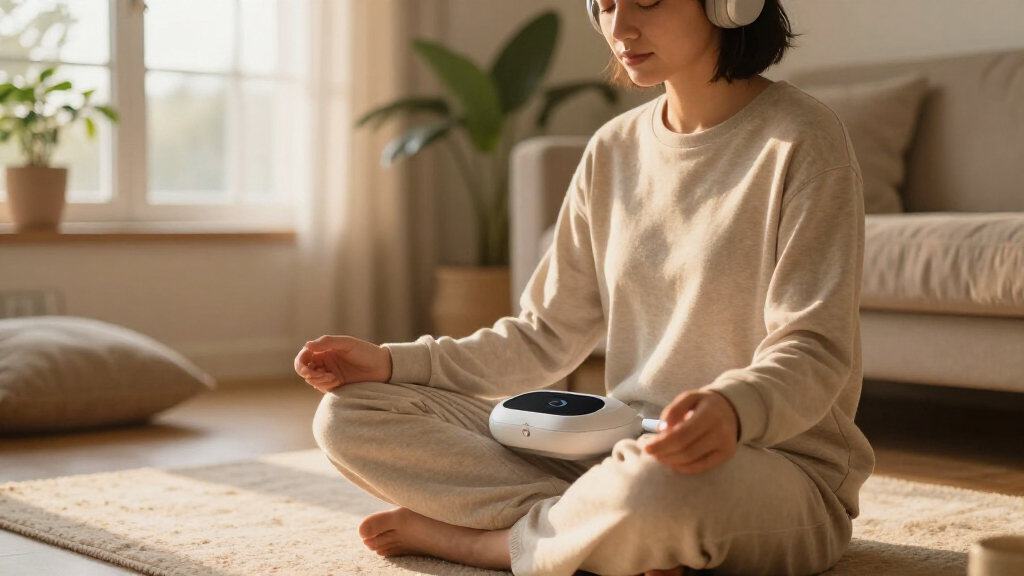

Smart meditation devices promise something a traditional cushion can’t: real feedback on whether your practice is actually working. But the category has split into two very different camps, and knowing which camp you belong to matters more than any single feature list. On one side are brain-sensing headbands like the Muse S Athena, which read EEG signals to score your mental state — a data-rich but subscription-heavy approach. On the other side are biofeedback companions like the Reflect Orb and the Moksha O₁, which translate breathing and stress signals into light, sound, and games — gentler, more affordable, and far less clinical.

Get wellness gear delivered free with Prime
- Fast, free delivery on millions of items
- Prime Video, Amazon Music and more included
- Member-only deals all year
In this comparison, my top pick overall is the Muse S Athena 3rd Gen because its dual EEG and fNIRS sensing is the closest thing to a lab-grade meditation coach you can wear at home. For buyers who want meaningful feedback without a subscription treadmill, the Reflect Orb takes the value slot thanks to a full year of premium content included and two-week battery life. And for anyone who finds meditation boring, the gamified Moksha O₁ turns breathwork into something you’ll actually want to return to — as long as you carry an iPhone. The main tradeoff running through every pick here is depth of data versus ease of use, and the second is upfront price versus ongoing subscription costs. I’ll help you sort out which side of each tradeoff you land on.
Key Takeaways
- The Muse S Athena 3rd Gen offers the deepest insight with dual EEG + fNIRS brain sensing, but its best features sit behind a paid subscription
- The Reflect Orb delivers the strongest value: a year of premium guided content included and up to two weeks of battery per charge
- Gamified options like the Moksha O₁ work best for people who struggle to stick with meditation — but both Moksha models are iOS-only
- Brain-sensing headbands measure what’s happening in your head; biofeedback orbs measure what’s happening in your body — they answer different questions
- Budget for subscriptions, not just hardware: three of the five picks here have recurring costs that can exceed the device price within two years
| Muse S Athena 3rd Gen Brain Sensing Sleep Tracking Headband – Dark Grey |  | Best Overall | Technology: EEG + fNIRS dual sensing | Sensor Type: SmartSense EEG sensors | Features: Sleep tracking, focus training, mental fitness scoring, meditation guidance | VIEW LATEST PRICE | See Our Full Breakdown |
| Reflect Orb Smart Biofeedback Device for Stress Relief, Mindfulness & Anxiety |  | Best Value | Feedback Type: Light-based biofeedback from physiological signals | Battery Life: Up to 2 weeks per charge | App Compatibility: iPhone and Android | VIEW LATEST PRICE | See Our Full Breakdown |
| EEG Neurofeedback Headband for Meditation & Brainwave Monitoring |  | Best Budget Brain Trainer | Sensor Type: EEG sensors | Sensor Material: Hydrogel | Connectivity: Bluetooth | VIEW LATEST PRICE | See Our Full Breakdown |
| Moksha O₁ Gamified Stress & Anxiety Relief Smart Meditation Device (with Rechargeable Case) |  | Best for Beginners Who Get Bored | Compatibility: iOS only | Feedback Type: Real-time breathing biofeedback | Features: Biofeedback, breath games, guided meditation, soundscapes | VIEW LATEST PRICE | See Our Full Breakdown |
| Moksha O₁ Gamified Stress & Anxiety Relief Smart Meditation Device (Standard Kit) |  | Best Compact Pick | Connectivity: iOS app | Feedback Type: Interactive biofeedback via breath sensing | Features: Interactive breath games, guided meditation, biofeedback, soothing soundscapes | VIEW LATEST PRICE | See Our Full Breakdown |
| smart meditation device | Features | Connectivity | Best Use | Feedback Type |
|---|---|---|---|---|
| Muse S Athena 3rd Gen Brain Se | Sleep tracking, focus training, mental fitness scoring, meditation guidance | Bluetooth | Meditation, focus, sleep | — |
| Reflect Orb Smart Biofeedback | — | — | — | Light-based biofeedback from physiological signals |
| EEG Neurofeedback Headband for | — | Bluetooth | — | — |
| Moksha O₁ Gamified Stress & An | Biofeedback, breath games, guided meditation, soundscapes | — | Stress relief, relaxation, sleep | Real-time breathing biofeedback |
| Moksha O₁ Gamified Stress & An | Interactive breath games, guided meditation, biofeedback, soothing soundscapes | iOS app | Stress relief, relaxation, sleep | Interactive biofeedback via breath sensing |
More Details on Our Top Picks
Muse S Athena 3rd Gen Brain Sensing Sleep Tracking Headband – Dark Grey
The Muse S Athena earns the top spot because it does something none of the other devices in this lineup can: it reads both electrical brain activity (EEG) and blood oxygenation in the prefrontal cortex (fNIRS) at once. In practice, that means it doesn’t just guess whether you’re calm — it measures the two physiological signals most tied to focus and relaxation, then converts them into real-time audio feedback during sessions and scores afterward. Compared with the generic EEG headband further down this list, the Athena’s dual-sensor approach produces noticeably richer session data, and its app ecosystem — guided meditations, focus training, sleep tracking, and an optional AI coach — is far more mature.
That said, this is the most demanding pick here. The subscription requirement for premium features is the real tradeoff: the hardware is expensive up front, and the AI coaching and full meditation library keep costing you money afterward. Where the Reflect Orb includes a year of premium content free, the Athena nudges you toward paying indefinitely. It also demands full Bluetooth-and-app engagement, so it’s a poor match for anyone who wants a screen-free wind-down ritual. But for a buyer whose primary goal is actually understanding their mental state rather than just relaxing, no other device here comes close on measurement depth, and that’s why it leads despite the cost.
Pros:- Dual EEG + fNIRS sensing gives the most detailed meditation feedback in this lineup
- Comfortable, adjustable fabric headband suitable for sleep and daytime sessions
- Doubles as a sleep tracker and mental fitness coach, not just a meditation aid
- Mature app with guided meditations, focus training, and optional AI coaching
Cons:- Best features locked behind an ongoing subscription
- Premium price makes it overkill for casual or curious beginners
- Fully dependent on Bluetooth and the companion app to function
Best for: Serious practitioners and biohackers who want measurable, brain-level proof their meditation is improving
Not ideal for: Casual users or budget-conscious buyers unwilling to pay a recurring subscription on top of premium hardware
- Technology:EEG + fNIRS dual sensing
- Sensor Type:SmartSense EEG sensors
- Features:Sleep tracking, focus training, mental fitness scoring, meditation guidance
- Connectivity:Bluetooth
- Subscription:Optional AI Coach and meditation library via subscription
- Color:Dark Grey
- Best Use:Meditation, focus, sleep
Our verdict“If you want the deepest, most science-backed meditation feedback available in 2026 and accept the subscription cost, the Athena is the device to beat.”
Reflect Orb Smart Biofeedback Device for Stress Relief, Mindfulness & Anxiety
Where the Athena asks for a premium price and a subscription, the Reflect Orb takes the opposite approach: a palm-sized sphere that reads your body’s stress signals and responds with calming light patterns, nudging you toward slower breathing and a settled nervous system without asking you to interpret a single brainwave chart. Its strongest selling point in this comparison is the bundled one-year premium app membership, which undercuts every other pick on long-run cost — the Moksha devices and the Athena both push you toward ongoing payments much sooner. Battery life is another quiet advantage: up to two weeks per charge, which means the Orb survives being tossed in a bag and forgotten, unlike daily-charge gadgets that die right when you need them.
The tradeoff is depth. The Orb measures physiological arousal — the body’s stress response — rather than brain activity, so you learn that you’re calming down but not the finer details of your mental state the way the Athena reports them. Its light-based feedback is also more understated than Moksha’s gamified approach; people who need stimulation to stay engaged may find it too subtle, while people who find games gimmicky will prefer exactly this restraint. For most buyers, that balance of included content, battery life, and gentler price makes it the smartest starting point in the category.
Pros:- Real-time biofeedback through soothing light response keeps sessions guided but screen-light
- One full year of premium app content included — best value over time in this lineup
- Up to two weeks of battery life per charge
- Works with both iPhone and Android, unlike the iOS-only Moksha devices
Cons:- Light-only feedback may feel too subtle for users who want stronger guidance
- Premium content requires a paid membership after the first year
- Requires initial smartphone app setup
Best for: Stress-focused meditators who want real biofeedback and long-term value without subscription fatigue
Not ideal for: Data-driven users who want brainwave-level metrics or gamified engagement to stay motivated
- Feedback Type:Light-based biofeedback from physiological signals
- Battery Life:Up to 2 weeks per charge
- App Compatibility:iPhone and Android
- Membership:1-year premium app access included
- Guided Content:Guided breathing and meditation sessions
- Portability:Palm-sized orb, travel friendly
Our verdict“The Reflect Orb is the most sensible buy for most people: genuine biofeedback, a year of content included, and none of the subscription pressure of pricier rivals.”
EEG Neurofeedback Headband for Meditation & Brainwave Monitoring
This unbranded-style EEG neurofeedback headband occupies a smart middle position: it delivers the same core technology as the Muse Athena — real-time brainwave monitoring — at a much lower price, and it strips away the subscription layer entirely. Its hydrogel sensors deserve a mention because they matter practically: hydrogel conducts signals more reliably than dry fabric electrodes, which means fewer dropped readings and more consistent session data, something budget EEG devices often fumble. It also supports progress tracking and data export, which the Moksha devices don’t offer at all — if you like seeing a month-over-month graph of your practice, this is the affordable way to get it.
The compromises are predictably on the software side. The guided meditations and neurofeedback exercises are functional but lack the polish and library depth of Muse’s app, there’s no sleep tracking, no AI coaching, and the manufacturer doesn’t specify battery life, which is the kind of omission that signals a less mature product. Compared with the Reflect Orb, you get deeper data but a less relaxing experience — you’ll be looking at an app, not breathing toward a glowing orb. This pick makes the most sense for someone who wants to try brain-sensing meditation without the Athena’s price tag, accepting a rougher app in exchange.
Pros:- Real-time EEG brainwave monitoring at a fraction of the Muse Athena’s price
- Hydrogel sensors provide stable, reliable signal transmission
- Progress tracking with data export for monitoring improvement over time
- No subscription required for core functionality
Cons:- App and guided content lack the polish and depth of the Muse ecosystem
- Battery life is not specified by the manufacturer
- Focused narrowly on meditation and focus training — no sleep features
Best for: Curious first-timers who want to experiment with EEG-based meditation feedback on a budget
Not ideal for: Buyers who want a polished app experience, sleep tracking, or clearly documented battery specs
- Sensor Type:EEG sensors
- Sensor Material:Hydrogel
- Connectivity:Bluetooth
- Suitable For:Meditation, focus, relaxation, sleep preparation
- Device Compatibility:Smartphone app
- Data:Progress tracking with export
- Battery Life:Not specified
Our verdict“A pragmatic entry point into brain-sensing meditation that trades app refinement for affordability and subscription freedom.”
Moksha O₁ Gamified Stress & Anxiety Relief Smart Meditation Device (with Rechargeable Case)
Let’s be honest about why most meditation habits fail: sitting still feels tedious. The Moksha O₁ attacks that problem directly by turning breathwork into interactive games with real-time biofeedback — you steer, score, and progress through exercises rather than counting breaths in silence. Compared with the Reflect Orb, which offers a similarly gentle hardware philosophy, the Moksha leans far harder into engagement: soundscapes, breath games, and structured guided meditations make it the strongest pick here for people who have bounced off traditional meditation apps. It arrives as a complete kit with a rechargeable case, which adds genuine grab-and-go portability — you can keep a session going from a desk, a commute, or a bedside table without hunting for a cable.
The limitation that will eliminate some buyers immediately: it’s iOS only. Android users should move straight to the Reflect Orb, which covers both platforms. The Moksha also depends on its mobile app for full functionality, so it’s not a standalone escape from screens — ironic for a relaxation device, though the app is well designed around short sessions rather than doomscroll bait. Within the Moksha family, this listing is the one to choose if you want the full bundle with the rechargeable case, making it the better gift or travel pick.
Pros:- Gamified breathwork makes daily practice genuinely engaging rather than a chore
- Real-time biofeedback links your breathing to on-screen results instantly
- Portable design with a rechargeable case for sessions anywhere
- Guided meditations and calming soundscapes support both stress relief and sleep
Cons:- iOS only — Android phones are not supported
- Requires the mobile app for full functionality
- Lighter on data and analytics than the EEG headbands in this lineup
Best for: Beginners and easily-bored meditators who need gamification to build a daily relaxation habit
Not ideal for: Android users and anyone wanting a screen-independent meditation tool
- Compatibility:iOS only
- Feedback Type:Real-time breathing biofeedback
- Features:Biofeedback, breath games, guided meditation, soundscapes
- Includes:Rechargeable case, smart device, mobile app
- Best Use:Stress relief, relaxation, sleep
- Portability:Pocket-sized with charging case
Our verdict“The most fun path into meditation in this guide, bundled with a charging case — provided you’re firmly in the Apple ecosystem.”
Moksha O₁ Gamified Stress & Anxiety Relief Smart Meditation Device (Standard Kit)
This second Moksha O₁ listing delivers the same gamified breathwork and biofeedback experience as the bundle above — the same interactive exercises, guided meditations, and soundscapes — but as the standard kit, positioned for buyers who don’t need the rechargeable case and want the lowest entry price into the Moksha system. In a lineup where the differences between devices are usually technological, this distinction is purely practical: same brain behind the experience, lighter package, smaller outlay. If you plan to keep the device on a nightstand or desk and charge it there anyway, paying extra for a travel case makes little sense, and this version rewards that restraint.
Everything I said about the bundle applies here too, so the honest framing is a head-to-head: choose the standard kit if price is the deciding factor and you meditate in one or two predictable spots; choose the case version if the device needs to live in a bag. Against the Reflect Orb, this kit shares the weakness of iOS exclusivity and app dependence, and it measures breathing rather than broader physiological stress signals, so its feedback window is narrower. Still, for an iPhone owner who wants the most pocketable, budget-friendly gamified meditation tool in this guide, it earns its slot cleanly.
Pros:- Lowest-cost way into the Moksha gamified breathwork system
- Same interactive biofeedback games and guided content as the bundle version
- Genuinely pocketable — the most compact device in this lineup
- Simple setup with the companion iOS app
Cons:- iOS only, excluding Android users entirely
- No rechargeable case included, unlike the bundle version
- Requires smartphone and app for full functionality
Best for: iPhone users who want the most affordable, pocketable entry into gamified meditation
Not ideal for: Anyone on Android, or buyers who’d benefit from the charging case and should get the bundle instead
- Connectivity:iOS app
- Feedback Type:Interactive biofeedback via breath sensing
- Features:Interactive breath games, guided meditation, biofeedback, soothing soundscapes
- Includes:Rechargeable case, smart device, mobile app
- Best Use:Stress relief, relaxation, sleep
- Compatibility:iOS only
Our verdict“The cheapest and smallest route to gamified meditation here — pick it over the bundle only if you’ll charge at home anyway.”

How We Picked
I judged every device in this lineup against the same question: how well does it close the feedback loop in meditation? Meditation’s oldest problem is that you rarely know whether you’re improving, so a “smart” device earns its label only if it tells you something you couldn’t feel on your own. That gave me three main criteria. First, quality of feedback — whether a device reads brainwave activity, physiological signals like heart rhythm and sweat response, or breathing patterns, and how clearly that data is translated into something actionable. Second, total cost of ownership — a cheap device with an expensive subscription can cost more over two years than a premium one with everything included, so I weighed what’s bundled versus what’s paywalled. Third, usability and habit-friendliness — a meditation device that’s fussy to set up or uncomfortable to wear works against the very habit it’s meant to build, so portability, battery life, and app design all counted.
I also penalized hidden limitations: platform lock-in, unspecified battery life, and hardware that becomes a paperweight without a phone connection. Because this category spans two fundamentally different technologies, I deliberately picked devices across both, so this guide can serve someone who wants clinical-grade brain data and someone who just wants a calmer evening, without pretending those buyers are the same person.
| smart meditation device | Features | Connectivity | Best Use | Feedback Type |
|---|---|---|---|---|
| Muse S Athena 3rd Gen Brain Se | Sleep tracking, focus training, mental fitness scoring, meditation guidance | Bluetooth | Meditation, focus, sleep | — |
| Reflect Orb Smart Biofeedback | — | — | — | Light-based biofeedback from physiological signals |
| EEG Neurofeedback Headband for | — | Bluetooth | — | — |
| Moksha O₁ Gamified Stress & An | Biofeedback, breath games, guided meditation, soundscapes | — | Stress relief, relaxation, sleep | Real-time breathing biofeedback |
| Moksha O₁ Gamified Stress & An | Interactive breath games, guided meditation, biofeedback, soothing soundscapes | iOS app | Stress relief, relaxation, sleep | Interactive biofeedback via breath sensing |
Factors to Consider When Choosing Smart Meditation Devices
Before choosing a smart meditation device, it helps to understand what the technology can and cannot do, and where the real costs hide. These are the factors I’d weigh before clicking buy.Brain Sensing vs. Biofeedback: Which Feedback Do You Need?
EEG headbands like the Muse S Athena and the budget neurofeedback headband measure electrical activity in your brain, telling you whether you’re in a focused, calm, or distracted state during meditation. That’s powerful for people who treat meditation as a trainable skill. Biofeedback devices like the Reflect Orb and the Moksha O₁ instead measure bodily signals — breathing patterns and stress responses — and reflect them back as light or games. They answer a simpler question: is my body settling down? If you’re motivated by data and progress charts, lean EEG. If you’re motivated by feeling less stressed tonight, lean biofeedback.
Total Cost of Ownership
The sticker price is only part of the equation. The Athena’s premium coaching and meditation library sit behind a subscription, and the Reflect Orb’s included membership converts to paid after year one. Multiply any subscription by 24 months and add it to the hardware price before comparing devices — a mid-priced device with recurring fees can easily outcost a premium one. The budget EEG headband is the only pick here with no subscription layer at all, which is part of its appeal.
Ecosystem and Compatibility
Both Moksha devices are iOS only, which instantly disqualifies Android users — for them, the Reflect Orb is the obvious pick. All five devices require a smartphone app for setup and full functionality, so if your goal is to escape screens entirely, none of these will fully deliver that; the Reflect Orb comes closest with its screen-light, light-based sessions.
Portability and Battery Life
If you’ll meditate on the go, battery life matters more than you’d expect — a dead device is a broken habit. The Reflect Orb’s two-week battery leads the field. The Moksha bundle’s charging case solves the problem elegantly for travelers, while the budget EEG headband’s unspecified battery life is a gamble for frequent users.
Sleep vs. Focus Goals
Only the Muse S Athena genuinely covers sleep, with dedicated sleep tracking and deep-sleep features alongside meditation. The other devices support better sleep indirectly, by relaxing you before bed. If sleep improvement is your primary goal rather than a side benefit, that difference alone justifies the Athena’s price.
Frequently Asked Questions
Do smart meditation devices actually work, or are they just gadgets?
The underlying science is real: both EEG neurofeedback and physiological biofeedback have long research histories in clinical settings, and consumer devices translate those principles into home use. The honest answer is that they don’t meditate for you — they give you feedback that makes an invisible skill visible, which tends to improve consistency and technique. Studies on consumer neurofeedback devices show users report better focus and calm, though results vary by person and by how regularly you practice. Think of them as a coach rather than a cure: the device can tell you when your mind has wandered, but building the habit is still your job. Buyers who engage with the data and sessions several times a week see the most benefit; those who use the device occasionally get proportionally little from it.
Should I buy an EEG headband or a biofeedback orb?
It comes down to what motivates you. EEG headbands like the Muse S Athena measure brain activity directly, which appeals to people who want detailed metrics, progress charts, and a training-style approach — it feels closer to a gym for your mind. Biofeedback devices like the Reflect Orb and Moksha O₁ measure the body’s stress response instead, which is simpler, usually cheaper, and often more relaxing to use because you’re not studying scores after each session. If you’re analytical and goal-driven, go EEG. If you mainly want to decompress in the evening and would find brainwave data stressful rather than helpful, an orb will serve you better. Beginners often stick with biofeedback devices longer because they’re less demanding.
Are the subscriptions worth paying for?
It depends on how much you use the device beyond its core function. On the Muse S Athena, the subscription unlocks the AI coach and full meditation library — valuable if those guided sessions replace a separate meditation app subscription you might otherwise buy, since the device’s feedback and the content are designed to work together. If you only want raw session feedback, you can skip most of it. The Reflect Orb’s bundled year gives you a genuine free trial period to decide, which I consider the fairest model in this lineup. My practical advice: tally the annual subscription cost, compare it against a standalone meditation app at roughly $70 a year, and pay only if the device-integrated content adds enough value to justify the difference.
Can these devices help with anxiety or sleep problems?
They can help with mild, everyday stress and with winding down before bed — that’s what the biofeedback devices in particular are designed for, and paced breathing with real-time feedback is a well-supported relaxation technique. The Moksha devices and Reflect Orb both include sleep-oriented soundscapes and evening sessions, and the Athena adds actual sleep tracking so you can see whether your practice correlates with better rest. However, none of these are medical devices, and they are not treatments for diagnosed anxiety disorders or insomnia. If anxiety or sleep problems are significantly affecting your life, these devices can complement — but never replace — guidance from a healthcare professional. Approach them as wellness tools, not therapy.
Which device is best for a complete beginner?
For most beginners I’d point to the Reflect Orb: it requires no interpretation of data, works on both iPhone and Android, includes a full year of guided content, and its gentle light feedback makes sessions feel restful rather than like homework. If your main obstacle is boredom rather than confusion, the Moksha O₁ is the better beginner choice, because its games give you a reason to come back tomorrow — just confirm you’re on iPhone first. I’d steer true beginners away from starting with the Muse S Athena, not because it’s bad but because its depth is wasted until you know you’ll keep the habit, and its subscription makes an abandoned hobby expensive.
Conclusion
Matching the right device to the right buyer is what this whole comparison comes down to. Data-driven practitioners and biohackers should go straight to the Muse S Athena 3rd Gen — its dual EEG and fNIRS sensing is unmatched here, and the subscription is a fair price if you’ll actually use the coaching. Value-focused buyers and most beginners get the best deal with the Reflect Orb: a year of content included, two weeks of battery, cross-platform support, and no pressure to keep paying. Curious experimenters who want brain sensing on a budget should choose the EEG neurofeedback headband, accepting a rougher app in exchange for subscription-free hydrogel-sensor feedback.
iPhone owners who find meditation tedious are the natural audience for the Moksha O₁ — grab the bundle with the rechargeable case if you travel or meditate in different spots, or the standard kit if you want the cheapest, most pocketable entry. Android users should skip Moksha entirely. Whatever you choose, remember the pattern across this whole category: the best smart meditation device is the one whose feedback style — brains, bodies, or games — you’ll actually show up for. Buy for the habit you have, not the one you wish you had.