This checklist is for people choosing at-home wellness monitoring tech and looking for equipment that fits their routines. The listed products cover blood pressure, body composition, glucose, oxygen, and ECG monitoring, with a thermometer section for general selection advice.

Get wellness gear delivered free with Prime
- Fast, free delivery on millions of items
- Prime Video, Amazon Music and more included
- Member-only deals all year
Each section focuses on one monitoring slot: why it can matter in a home setup, what to check before buying, and who may find the pick a practical fit. Product names identify the picks; confirm their current specifications and supported features before purchase.
Use the look-for points to compare options against your needs, especially fit, compatibility, and ease of use. Home devices can support tracking, but readings and device features should be interpreted according to the manufacturer’s instructions and guidance from a qualified health professional.
Smart blood pressure monitor
A home blood pressure monitor can make routine readings easier to collect in a familiar setting. The Garmin Index BPM Smart Blood Pressure Monitor is the pick for this slot. Before choosing it, consider who will take readings, how often the device will be used, and whether the setup suits the people who need it. A monitor that is difficult to position or operate may end up unused, so prioritize a clear process and a comfortable fit.Check the cuff’s stated size range against the intended user’s arm measurement, and follow the maker’s instructions for placement and posture. A common mistake is choosing based on the device name alone without confirming cuff fit, supported users, or how readings are stored and reviewed. If more than one person will use it, look for a straightforward way to keep records associated with the right person. Confirm any app or phone requirements and whether your device is supported before relying on connected features. Compare the product’s included accessories and care instructions with your intended routine. If a clinician has recommended a particular measurement process or device feature, use that as a deciding requirement and bring questions about readings to them.
What to look for:
- Cuff size range that matches the user’s arm measurement
- Clear placement and measurement instructions
- Supported users and reading history options
- Phone and app compatibility, if using connected features
- Included accessories and care instructions
Garmin Index BPM Smart Blood Pressure Monitor

This FDA-cleared, clinically validated upper-arm monitor measures blood pressure and heart rate, with readings shown on its integrated display. It can optionally sync readings to the Garmin Connect app over Wi-Fi, where users can view trends and create reports to share with a health care provider.
Pros:
- Integrated display shows readings on the device
- Optional Wi-Fi syncing provides access to readings, history, and trends
- Supports reports that can be exported as PDFs to share with a health care provider
- Adjustable cuff fits a wide range of arm sizes
Cons:
- Garmin Connect syncing requires Wi-Fi and a compatible smartphone
- Availability varies by region
Best for: People seeking a home blood pressure monitor with a named product to compare
Not ideal for: Shoppers who have not confirmed cuff sizing or phone compatibility
Bottom line: Check cuff fit and setup requirements before choosing the Garmin Index BPM.
Digital body composition scale
A body composition scale is a home tracking tool, so the useful choice is one that fits the household’s habits and expectations. The RENPHO MorphoScan Nova Smart Body Composition Scale with TFT Handle Di is the listed pick. Before buying, confirm the complete product name and current specifications, since the supplied name ends mid-word. Check which measurements the scale provides and how those values are presented; do not assume that a feature is included because it appears in a product category or title.Think through the intended users, the floor surface where the scale will sit, and whether its setup and display are comfortable to use. A common mistake is focusing only on the number of reported measurements rather than checking how the scale handles profiles, connectivity, and repeat use. Review the manufacturer’s instructions for supported users and any limitations relevant to your household. If an app is part of your plan, confirm phone compatibility and whether multiple people can keep their records distinct. Check the scale’s stated weight capacity, footprint, and care requirements against your space and needs. Treat body composition readings as device estimates, and ask a qualified professional how to interpret them if they inform a health decision.
What to look for:
- Complete product name and confirmed specifications
- Stated weight capacity and supported users
- Display and setup that suit the household
- App and phone compatibility, if needed
- Clear instructions for interpreting measurements
RENPHO MorphoScan Nova Smart Body Composition Scale with TFT Handle Display

This rechargeable smart scale uses eight electrodes and dual-frequency segmental bioelectrical impedance analysis to measure weight and track more than 50 body metrics. Its 4.3-inch handle display shows results without a phone, while the RENPHO Health app supports progress tracking and syncing with Apple Health, Google Fit, and MyFitnessPal.
Pros:
- Displays measurements and trends on the handle without needing a phone after each scan.
- Tracks more than 50 metrics with segmental muscle and fat analysis.
- Rechargeable via USB-C, with battery life stated to last up to 150 days.
- Supports app syncing and unlimited user profiles.
Cons:
- Requires Bluetooth pairing with the RENPHO Health app before the first measurement.
- Body composition measurements use bioelectrical impedance analysis.
Best for: Shoppers comparing connected body composition tracking at home
Not ideal for: Anyone who needs confirmed specifications before considering a product
Bottom line: Verify the full model name, measurements, and supported users before choosing this scale.
Continuous glucose monitor
A continuous glucose monitor is a more specialized item in a wellness checklist, and the right choice depends on the user’s care plan and the product’s stated compatibility. The supplied pick is 2 Plus CGM Sensor – Continuous Glucose Monitoring, No Finger Pricks, 1; its name appears truncated, so confirm the exact model before purchase. Check the manufacturer’s intended users, sensor instructions, and any required reader, phone, or app. Do not assume a sensor is suitable for you based on the category name alone.A common buying mistake is treating a product description as a substitute for checking how the system is worn, set up, and supported. Review the stated wear and replacement instructions, the phone and operating system requirements, and how readings are accessed. Confirm that the full system—including any separately needed components—matches the user’s needs. If the device is being considered for medical monitoring, discuss selection and interpretation with a qualified health professional, especially when treatment decisions may depend on readings. Follow the maker’s directions for sensor use and troubleshooting. A clear plan for managing alerts, reviewing data, and getting support can make the difference between a compatible product and a frustrating purchase.
What to look for:
- Exact product and sensor model identification
- Intended user guidance and use instructions
- Required reader, phone, or app components
- Phone and operating system compatibility
- Professional guidance for use and interpretation
2 Plus CGM Sensor – Continuous Glucose Monitoring, No Finger Pricks, 15-Day Use

This CGM sensor provides continuous glucose monitoring without finger pricks, lasting up to 15 days per sensor. It offers a convenient alternative for managing blood sugar levels.
Pros:
- No finger pricks required
- Long-lasting sensor life of 15 days
- Convenient continuous monitoring
Cons:
- Limited information on compatibility and accuracy
- Only one sensor included
Best for: People comparing a CGM as part of an established care discussion
Not ideal for: Shoppers who cannot confirm the exact model or required components
Bottom line: Identify the complete 2 Plus system and check suitability with a qualified professional.
Smart thermometer
A smart thermometer can be a convenient addition to a home wellness kit, but this checklist has no specific product pick for the slot. Start by deciding who will use it and which measurement method best fits the household. Read the manufacturer’s age guidance, placement instructions, and stated measurement range. Ease of cleaning and a clear display may matter as much as connected features when someone needs to take a reading quickly.Common mistakes include buying without checking the intended measurement site, assuming every model works the same way, or overlooking how the device is cleaned and stored. If you want app-based records, confirm phone compatibility, account requirements, and whether the device can be used without a connection. Check what the package includes and whether the thermometer requires replaceable covers or other supplies. Consider whether the display and controls are manageable for the intended user, and whether the instructions explain repeat measurements and error messages. Follow the product directions when taking and interpreting readings. If symptoms or a reading raise concern, seek advice from a qualified health professional rather than relying on a device feature alone.
What to look for:
- Measurement method and intended user guidance
- Clear placement and repeat-measurement instructions
- Cleaning and storage requirements
- Phone compatibility and offline use options
- Readable display and easy-to-use controls
Pulse oximeter
A fingertip pulse oximeter can offer a compact way to view readings at home, and the listed option is the Fingertip Pulse Oximeter with Bluetooth App Blood Oxygen Tracking. Before choosing it, check the full specifications and the intended use. The product name signals Bluetooth app tracking, but confirm supported phones, the app’s requirements, and how readings are saved or shared. Consider whether the display and controls are easy for the person who will use the device.A common mistake is assuming that every fingertip device fits every user or that a displayed reading is self-explanatory. Review the manufacturer’s fit and use instructions, including any stated limitations, and check how the device should be cared for. If connectivity is important, confirm whether the app is available for your phone and whether an account or internet connection is required. Check what is included and how the device is powered. Ask a qualified health professional how to interpret readings in your circumstances, and follow their advice if readings conflict with how someone feels. Home monitoring can help organize information, but it does not replace professional assessment when concerns arise.
What to look for:
- Fit guidance and intended user information
- Clear instructions for taking and interpreting readings
- Bluetooth and phone compatibility
- App access and data history details
- Power requirements and care instructions
Fingertip Pulse Oximeter with Bluetooth App Blood Oxygen Tracking
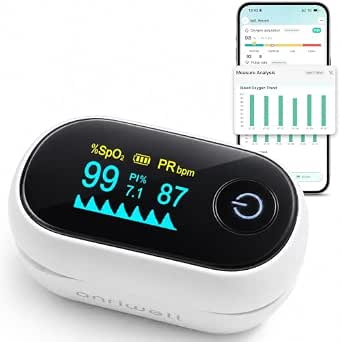
The Anriwell Fingertip Pulse Oximeter syncs SpO₂, pulse rate and perfusion index data to a free Bluetooth app, allowing long‑term trend tracking and multi‑user health records. It provides FDA 510(k) cleared accuracy of ±2% SpO₂ and ±2 bpm with an 8‑second measurement time on a large HD LCD display.
Pros:
- Bluetooth app syncs SpO₂, pulse rate and PI data for easy trend tracking.
- FDA 510(k) cleared with ±2% SpO₂ accuracy and fast 8‑second readings.
- Large HD LCD display with backlight provides clear readings in any lighting.
- Lightweight (38 g) and portable design suitable for travel, sports and aviation.
Cons:
- Intended for wellness monitoring only; not a substitute for medical diagnosis.
- Requires AAA batteries and manual Bluetooth pairing steps.
Best for: People who want to compare fingertip monitoring with app connectivity
Not ideal for: Shoppers who have not checked phone support or use guidance
Bottom line: Confirm app compatibility and follow the maker’s instructions for use.
Portable ECG monitor
A portable ECG monitor is a specialized choice, so confirm the intended use and how the resulting records will fit into a clinician-guided plan. The pick is the EMAY 6L Portable ECG Monitor Record ECG and Heart Rate in 6 Channels C; the supplied product name is cut off, so verify the exact model and specifications. Check what the stated channel count means for this device, how recordings are made, and how the files can be reviewed or shared.Common buying mistakes include assuming a portable monitor replaces clinical evaluation or selecting a device without checking its recording workflow. Review the manufacturer’s instructions, supported users, phone or computer requirements, and any software needed to access recordings. Consider whether the controls and recording steps are manageable for the person who will use it, and whether the device’s storage and export options suit the intended routine. Confirm what is included and how it is powered. If an ECG monitor is being considered for health concerns, consult a qualified professional about whether this device and its recordings are appropriate. Follow the product directions and the clinician’s guidance when interpreting results; do not rely on a device label alone to make care decisions.
What to look for:
- Exact model and full product specifications
- Recording steps and stated channel details
- Phone, computer, and software requirements
- Storage and recording export options
- Professional guidance for intended use
EMAY 6L Portable ECG Monitor Record ECG and Heart Rate in 6 Channels Compatible

The EMAY 6L Portable ECG Monitor allows users to record and store ECG signals and monitor heart rate at home. It connects via Bluetooth or USB to smartphones and PCs, with no subscription needed, making it suitable for OTC use and personal health tracking.
Pros:
- No subscription or hidden costs required
- Wireless connectivity via Bluetooth and USB
- Compact and portable design for home use
- Includes manual and USB cord
Cons:
- Not suitable for patients with implanted pacemakers
- Not a substitute for hospital diagnostic ECG devices
Best for: People comparing portable ECG recording options with professional guidance
Not ideal for: Anyone seeking a device to interpret results without support
Bottom line: Confirm the full EMAY model and how recordings can be reviewed before buying.
For a budget-first buying order, start with the monitoring need that is already part of your routine or care discussion, then check fit, compatibility, and required components before comparing optional features. Give extra attention to the truncated CGM and ECG product names and the scale’s incomplete name; verify exact models and specifications before deciding.
Choose equipment you can set up and use consistently, and keep the manufacturer’s instructions handy. A thoughtful match between your routine and the device makes a home checklist more useful. When readings raise questions, bring them to a qualified health professional.