
Laser combs can help stimulate hair follicles and boost scalp health, which may assist with female pattern hair loss. However, their effectiveness varies depending on how advanced your hair loss is and how consistently you use them. While they’re a non-invasive option, results often take several months and work best when combined with other scalp care or treatments. Keep exploring to discover more about how laser combs might fit into your hair health plan.
Key Takeaways
- Laser combs can stimulate hair follicles and improve scalp health, potentially aiding female pattern hair loss.
- They are most effective when used early and consistently over several months.
- Laser therapy alone may not fully reverse advanced hair loss but can support overall hair health.
- Combining laser treatment with nutritional support and scalp care enhances potential benefits.
- Consulting a dermatologist ensures appropriate treatment plans for female pattern hair loss.
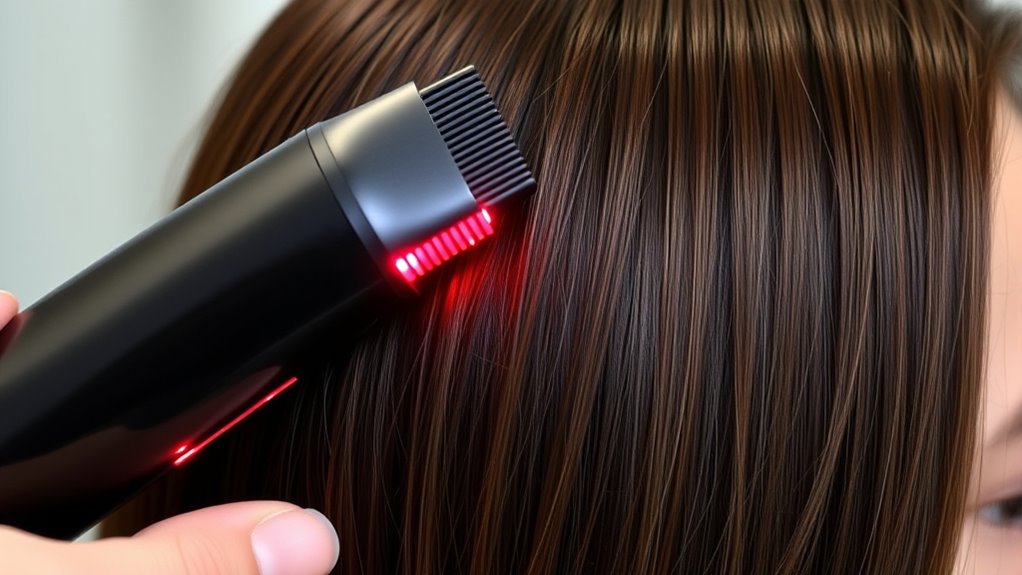
If you’re considering options for female pattern hair loss, laser combs are often marketed as a non-invasive solution. These devices use low-level laser therapy (LLLT) to stimulate hair follicles, promising improved scalp health and potential hair regrowth. The idea is appealing if you’re seeking a treatment that doesn’t involve surgery or harsh chemicals. However, it’s important to understand how effective laser combs truly are and what factors influence their success.
One key aspect to consider is scalp health. Healthy scalp tissue creates an ideal environment for hair growth. Laser combs aim to increase blood circulation, reduce inflammation, and promote cellular activity in the scalp, all of which contribute to better scalp health. When your scalp is in good condition, hair follicles can function more efficiently, potentially leading to thicker, stronger hair. That said, laser therapy isn’t a magic fix. It works best when combined with other strategies, such as maintaining a balanced diet and avoiding scalp irritants.
Many people also turn to hair growth supplements to support their hair health alongside laser treatments. Supplements containing biotin, iron, zinc, or vitamins D and E can bolster your overall scalp health and hair strength. While supplements alone aren’t a guaranteed solution, they can complement laser therapy by ensuring your body has the nutrients necessary for healthy hair growth. Combining these approaches might enhance the effectiveness of laser combs, especially if your hair loss is linked to nutritional deficiencies or other underlying health issues.
That said, laser combs tend to produce varying results depending on individual factors. Some users experience noticeable improvement after several months of consistent use, while others see minimal change. The effectiveness largely depends on the severity of your hair loss, how early you start treatment, and whether you follow the recommended usage guidelines. It’s also worth noting that laser therapy is not typically recommended as a standalone treatment for advanced hair loss. Consulting with a dermatologist can help determine if laser combs are suitable for your specific condition and whether they should be part of a broader treatment plan.
Frequently Asked Questions
Can Laser Combs Be Used Alongside Other Hair Loss Treatments?
Yes, you can use laser combs alongside other hair loss treatments. Combining therapies, known as combination therapy, often enhances results through treatment synergy. For example, pairing laser combs with topical minoxidil or oral medications can improve hair regrowth. Always consult your healthcare provider to guarantee the treatments work well together and avoid potential side effects or interactions, optimizing your overall hair loss management plan.
How Long Does It Typically Take to See Results?
Patience is key when using laser combs. Typically, you’ll start noticing subtle signs of shedding slowdown and new growth within 8 to 16 weeks of consistent treatment. The treatment duration varies depending on individual hair loss severity, so stay steadfast and committed. Remember, the more persistent your patience, the more promising your results. Keep using the laser comb regularly, and you’ll likely see improvements over time.
Are Laser Combs Safe for All Hair Types and Skin Tones?
Laser combs are generally safe for most hair types and skin tones, but safety concerns and skin compatibility may differ. You should check the device’s specifications and consult a healthcare professional if you have sensitive skin or darker skin tones, as some lasers may cause irritation or ineffective results. Always follow usage instructions carefully to minimize risks and ensure safe, effective treatment tailored to your individual needs.
Do Laser Combs Have Any Known Side Effects?
You might wonder if laser combs come with side effects or safety concerns. While generally safe, some users report mild scalp irritation, redness, or tingling after use. Rarely, prolonged exposure could cause discomfort. It’s important to follow manufacturer instructions carefully to minimize risks. Overall, laser combs are considered safe for most, but consulting a healthcare professional can help address any individual safety concerns before starting treatment.
What Is the Recommended Frequency for Using a Laser Comb?
You should follow the frequency guidelines provided with your laser comb, typically using it 3 to 4 times a week. For ideal usage times, aim for sessions lasting about 15 minutes, preferably during times when you’re relaxed and undisturbed. Consistency is key, so sticking to the recommended schedule helps maximize potential benefits. Avoid overusing the device, as this won’t speed up results and may cause irritation.
Conclusion
If you think laser combs are just a mild trick for hair growth, think again. They could be the game-changer that transforms your thinning hair into a full, luscious crown of glory—so magnificent, it’s almost like hair magic. While results vary, with consistent use, you might find yourself waving goodbye to hair loss and hello to a stunning, enviable mane. Don’t dismiss the power of laser technology—it could be your ultimate secret weapon.