For puffiness, cold therapy works best because it reduces swelling and inflammation by constricting blood vessels, providing quick relief. Use heat therapy to relax tense muscles and boost circulation if you’re feeling ongoing discomfort or stiffness. Alternating cold and heat, known as contrast therapy, can be especially effective for recovery. Keep in mind, applying these treatments correctly is key, so exploring the right approach for your needs can help you get better results faster.
Key Takeaways
- Cold therapy reduces puffiness and inflammation by constricting blood vessels, ideal for recent injuries or swelling.
- Heat therapy promotes blood flow and relaxes muscles, effective for tension and chronic discomfort.
- Alternating cold and heat (contrast therapy) can enhance recovery and improve circulation for ongoing issues.
- Use cold therapy immediately after injury; heat is better for ongoing muscle tension or stiffness.
- Proper timing and application are essential; consult a healthcare provider if symptoms worsen or persist.
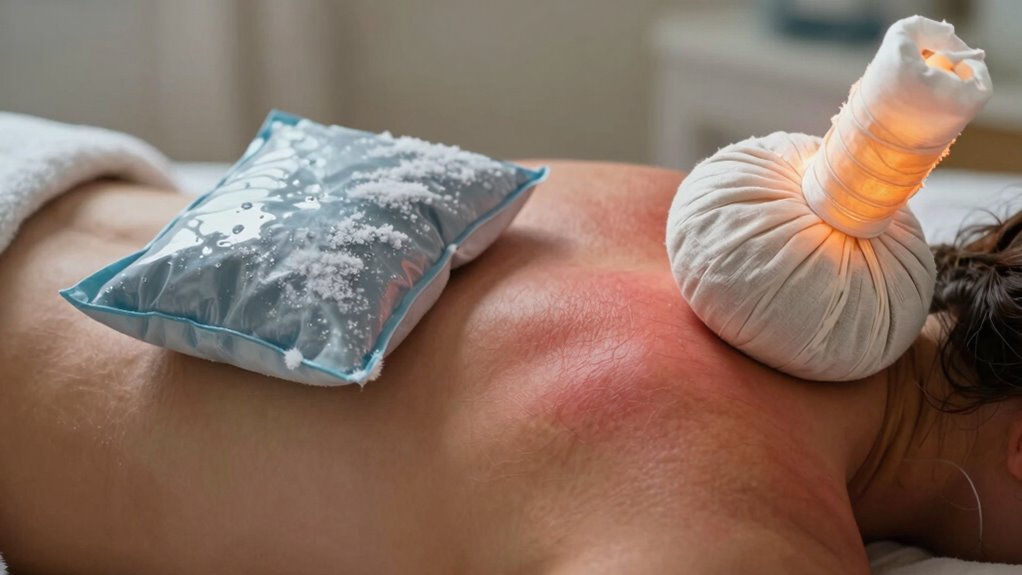
When dealing with puffiness, tension, or muscle recovery, choosing between cold and heat therapy can make a big difference. Your decision often depends on what you’re trying to treat and how quickly you want relief. Cold therapy, like ice packs or cold compresses, is generally best for reducing swelling, numbing pain, and calming inflammation. It constricts blood vessels, which helps decrease blood flow to the affected area and minimizes puffiness. If you’ve recently injured yourself or notice swelling after a workout, applying cold can give you fast relief. Conversely, heat therapy, such as heating pads or warm towels, promotes blood circulation, relaxes muscles, and eases stiffness. It’s ideal for tension that develops over time, like sore shoulders or tight neck muscles, especially if the discomfort persists beyond the initial injury phase.
While cold and heat treatments are often the go-to options, exploring alternative therapies can enhance your recovery process. Techniques like contrast therapy, which involves alternating cold and heat, can stimulate blood flow and reduce inflammation more effectively than using just one. Additionally, incorporating lifestyle adjustments like regular stretching, proper hydration, and good posture can prevent future issues. These small changes support your body’s natural healing and help maintain a balanced approach to managing puffiness and tension. For example, taking breaks during long periods of sitting and practicing mindfulness can reduce muscle tension caused by stress. Moreover, understanding the benefits of temperature therapy can help you choose the most effective treatment based on your specific needs. Recognizing the importance of proper timing for applying cold or heat is also essential for maximizing their benefits and avoiding potential side effects. Incorporating preventive measures into your routine can further minimize the likelihood of recurring discomfort.
Additionally, being aware of individual responses to temperature therapy can help you tailor treatments to your comfort, since reactions may vary from person to person. Remember, always listen to your body. If cold causes discomfort or if heat worsens your symptoms, stop and consult a healthcare provider. It’s also helpful to keep in mind that alternating cold and heat treatments can sometimes provide the best results, especially for chronic issues.
cold ice packs for swelling
As an affiliate, we earn on qualifying purchases.
As an affiliate, we earn on qualifying purchases.
Frequently Asked Questions
Can Cold or Heat Improve Sleep Quality?
Using temperature contrast, like a cool room or a warm blanket, can improve your sleep quality by promoting relaxation and comfort. Cold therapy helps lower your body temperature, signaling your body it’s time to rest, while heat encourages muscle relaxation. Incorporating these methods can enhance sleep, making it more restful. Adjusting your environment with temperature contrast creates an ideal setting for sleep enhancement and a more restorative night’s rest.
How Quickly Can I See Results From Cold or Heat Therapy?
You can typically see results from cold or heat therapy within minutes to a few hours, depending on your temperature duration and application techniques. For quick relief, apply cold packs for 15-20 minutes to reduce puffiness or tension, and use heat for 20-30 minutes to promote relaxation and recovery. Consistent application and proper technique are key to experiencing the full benefits of each therapy.
Are There Any Risks Associated With Long-Term Use of Cold or Heat?
Long-term use of cold or heat therapy can pose risks, especially if you use them excessively. You might develop skin sensitivity or even burns if you ignore proper precautions. Prolonged exposure can also reduce circulation or cause nerve damage. To avoid these long-term risks, limit therapy sessions, follow recommended durations, and listen to your body’s signals. Always consult a healthcare professional if you’re unsure about safe usage.
Can Cold or Heat Therapy Help With Chronic Conditions?
Yes, cold therapy and heat therapy can be game-changers for chronic conditions! Cold therapy, like ice packs, can drastically reduce inflammation and numb pain, while heat therapy can melt away stiffness and boost blood flow. Together, they fight chronic discomfort with the intensity of a superhero’s punch. Use cold therapy for swelling and heat therapy for muscle tension, and you might just turn your chronic pain into a distant memory.
Is There a Preferred Method for Sensitive Skin?
For sensitive skin, cold therapy is usually preferred because it’s gentler and helps reduce mild irritation without causing further discomfort. Cold applications can soothe inflammation and puffiness effectively. You should avoid heat, which might trigger redness or worsen irritation. Always use a barrier like a cloth and keep the temperature moderate to prevent any adverse reactions. Listen to your skin’s response and adjust accordingly for the safest, most comfortable relief.
heating pads for muscle tension
As an affiliate, we earn on qualifying purchases.
As an affiliate, we earn on qualifying purchases.
Conclusion
So, whether you prefer cold or heat, understanding their benefits helps you target puffiness, tension, and recovery effectively. Did you know that applying cold can reduce swelling by up to 20% faster? Next time you’re feeling puffy or tense, try switching between hot and cold treatments to see what works best for you. Listening to your body is key—you’ll find the perfect balance for feeling refreshed and relaxed.
contrast therapy packs
As an affiliate, we earn on qualifying purchases.
As an affiliate, we earn on qualifying purchases.
cold and heat therapy wraps
As an affiliate, we earn on qualifying purchases.
As an affiliate, we earn on qualifying purchases.