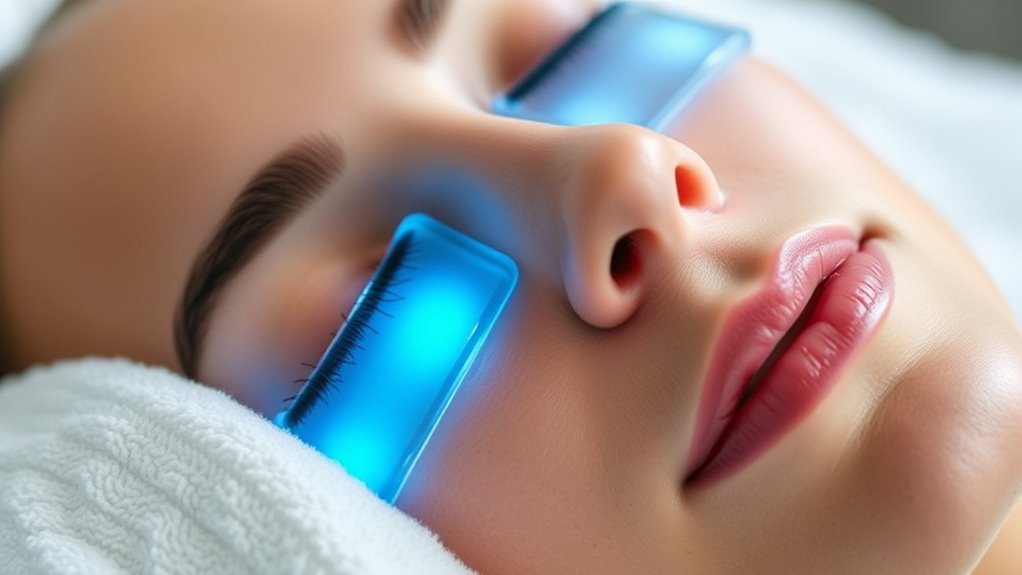

To reduce swelling after a procedure, apply cold compresses like an ice pack wrapped in a towel for 15-20 minutes every few hours. This constricts blood vessels, limits fluid buildup, and relieves pain effectively. Make sure not to place ice directly on your skin to avoid frostbite, and allow your skin to rest between applications. For more tips on safe and effective cold therapy, explore further guidance to aid your recovery.
Key Takeaways
- Apply a cold compress for 15-20 minutes every few hours during the first 48 hours post-procedure to reduce swelling.
- Wrap the cold source in a cloth to prevent skin damage and ensure gentle contact.
- Elevate the affected area during cold application to enhance fluid drainage and decrease swelling.
- Monitor skin for adverse reactions like redness or numbness and avoid direct contact to prevent frostbite.
- Repeat applications as needed, maintaining rest periods between sessions for effective swelling control.
After a medical procedure, swelling is a common concern, but applying cold compresses can markedly reduce it. This simple yet effective approach is often referred to as ice therapy, and it plays a crucial role in swelling management. When you use cold compresses promptly after your procedure, you help constrict blood vessels, which limits blood flow to the affected area. This process reduces the leakage of fluids into surrounding tissues, easing swelling and preventing it from worsening. Ice therapy is especially beneficial in the first 24 to 48 hours post-procedure, as it can significantly diminish discomfort and inflammation.
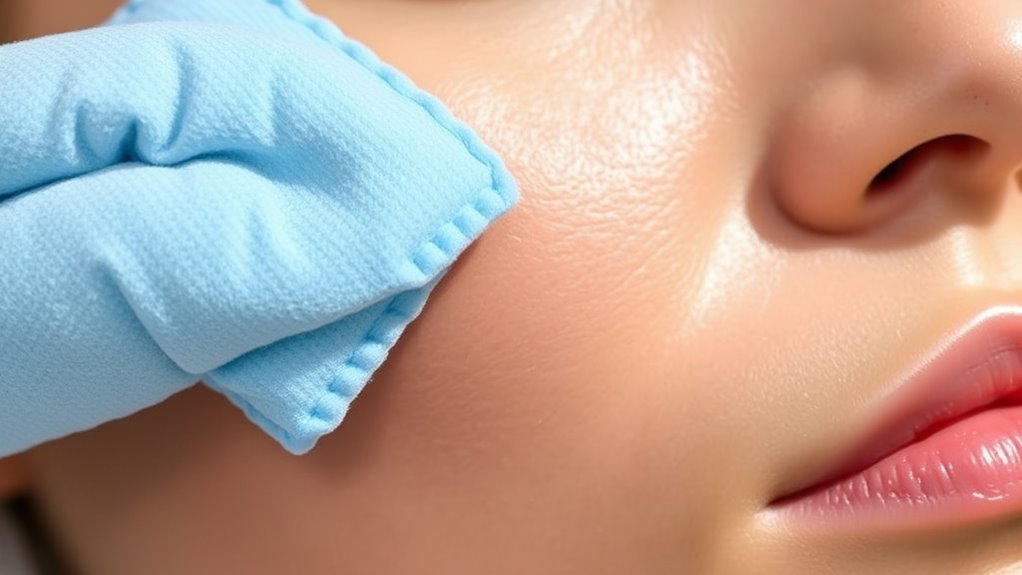
To start, make sure your cold compress is properly prepared. You can use an ice pack, a bag of frozen vegetables, or even a homemade ice wrap—just be sure to wrap it in a thin cloth or towel. Direct contact with ice can damage your skin, so always create a barrier to prevent frostbite or skin irritation. When applying the cold compress, place it gently on the swollen area for about 15 to 20 minutes at a time. It’s important to allow your skin to rest between applications, usually about 20 minutes, to avoid overcooling or tissue damage. This cycle can be repeated every few hours as needed, especially during the first day or two after your procedure.
Prepare your cold compress with a towel and apply gently for 15-20 minutes, resting between applications.
Consistent ice therapy can improve swelling management by helping to control inflammation and reduce pain. The cold causes blood vessels to constrict, which decreases blood flow and limits the accumulation of fluids that cause swelling. It also helps numb nerve endings, providing pain relief. You’ll notice that with regular use, swelling gradually subsides, and your comfort level improves. Remember, elevating the affected area while applying cold can enhance results, as elevation encourages fluid drainage and further reduces swelling. Additionally, understanding the importance of contrast ratio can help you appreciate how visual clarity and image quality impact overall recovery clarity, especially when monitoring swelling and healing progress at home.
While ice therapy is generally safe, it’s essential to monitor your skin for signs of excessive cold exposure, like redness or numbness. If you experience any adverse reactions or if swelling persists beyond a few days, consult your healthcare provider. Proper swelling management through cold compresses not only speeds up recovery but also minimizes discomfort, helping you get back to normal activities sooner. By incorporating these simple steps into your post-procedure routine, you harness the power of ice therapy to effectively reduce swelling and support your healing process.

4 Pack Reusable Ice Packs for Injuries, Soft Gel Ice Packs for Sprains
- Dual Purpose Hot and Cold Packs: Use for injuries or lunch cooling
- Durable Construction: Leak-proof and puncture-resistant
- Safe and Non-Toxic: Flexible, reusable, quick relief
As an affiliate, we earn on qualifying purchases.
As an affiliate, we earn on qualifying purchases.
Frequently Asked Questions
Can Cold Compresses Be Used Immediately After Any Medical Procedure?
Yes, you can use an ice pack immediately after most medical procedures, but make sure to prioritize skin safety. Wrap the ice pack in a thin cloth to prevent frostbite and apply it for 15-20 minutes at a time. Always follow your healthcare provider’s instructions, especially if there’s a specific post-procedure protocol. Cold compresses help reduce swelling and pain when used properly and carefully.
How Long Should Each Cold Compress Session Last?
Studies show that cold compresses can reduce swelling by up to 20%. For ideal results, you should follow the duration guidelines of each session, typically applying the compress for 15-20 minutes at a time. Avoid exceeding this session length to prevent frostbite or skin damage. It’s best to take a 10-minute break between sessions, ensuring your skin stays safe while effectively reducing swelling.
Are There Any Risks of Applying Cold Compresses Incorrectly?
Applying cold compresses incorrectly can pose risks, especially if you don’t do a proper risk assessment. You might cause frostbite or skin damage if you leave the cold on too long or apply it directly without a barrier. Always check for numbness or discomfort, and follow recommended guidelines. Proper application is key to avoid improper application, which could worsen swelling or cause other complications.
How Often Should I Apply Cold Compresses for Optimal Results?
For best results, follow the frequency guidelines of applying cold compresses every 15 to 20 minutes, with at least a 10-minute break in between. Keep application durations consistent, typically 15 to 20 minutes each time, to prevent frostbite or skin damage. Remember, moderation is key; overdoing it can cause more harm than good. Always listen to your body and consult your healthcare provider if unsure.
Can Cold Compresses Be Used Alongside Medication for Swelling?
Yes, you can use cold compresses alongside medication for swelling. Combining cold therapy with medication creates a beneficial combination therapy, enhancing overall swelling reduction. The cold compress helps constrict blood vessels and reduces inflammation, while medication provides additional relief through pain and inflammation control. Always consult your healthcare provider to guarantee medication synergy and safety, and follow their advice on timing and dosage when using both treatments together.
4 Pack Reusable Ice Packs for Injuries, Soft Gel Ice Packs for Sprains
- Dual Purpose Hot and Cold Packs: Use for injuries or lunch cooling
- Durable Construction: Leak-proof and puncture-resistant
- Safe and Non-Toxic: Flexible, reusable, quick relief
As an affiliate, we earn on qualifying purchases.
As an affiliate, we earn on qualifying purchases.
Conclusion
Applying cold compresses can effectively reduce swelling after your procedure, helping you heal faster and more comfortably. Remember, within the first 24 hours, swelling can increase by up to 50%, making cold therapy even more essential. By consistently using a cold compress, you can help limit this swelling and promote better recovery. So keep a cold pack handy—your swelling’s biggest enemy—because a cooler, calmer healing process starts with you.

Amazon Grocery, Mixed Vegetables, 12 Oz, Frozen
- Product Size: 12-ounce bag of mixed vegetables
- Preservative-Free: No preservatives or artificial ingredients
- Storage Instructions: Keep frozen
As an affiliate, we earn on qualifying purchases.
As an affiliate, we earn on qualifying purchases.

Chill Therapy The Gaze Reusable Cooling Eye Mask Ice Pack for Puffy Eyes, Post Procedure Cold Compress, Flexible Gel Eye Pads for Under Eye Cooling Relief, Hot & Cold Therapy, 2 Pack
- Targeted Eye Cooling: Contours comfortably around eyes
- Flexible Vegan Gel: Remains soft and moldable when chilled
- Hot & Cold Therapy: Provides both cooling and warming relief
As an affiliate, we earn on qualifying purchases.
As an affiliate, we earn on qualifying purchases.