TL;DR

Get wellness gear delivered free with Prime
- Fast, free delivery on millions of items
- Prime Video, Amazon Music and more included
- Member-only deals all year
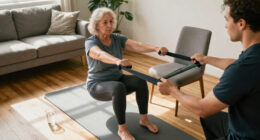
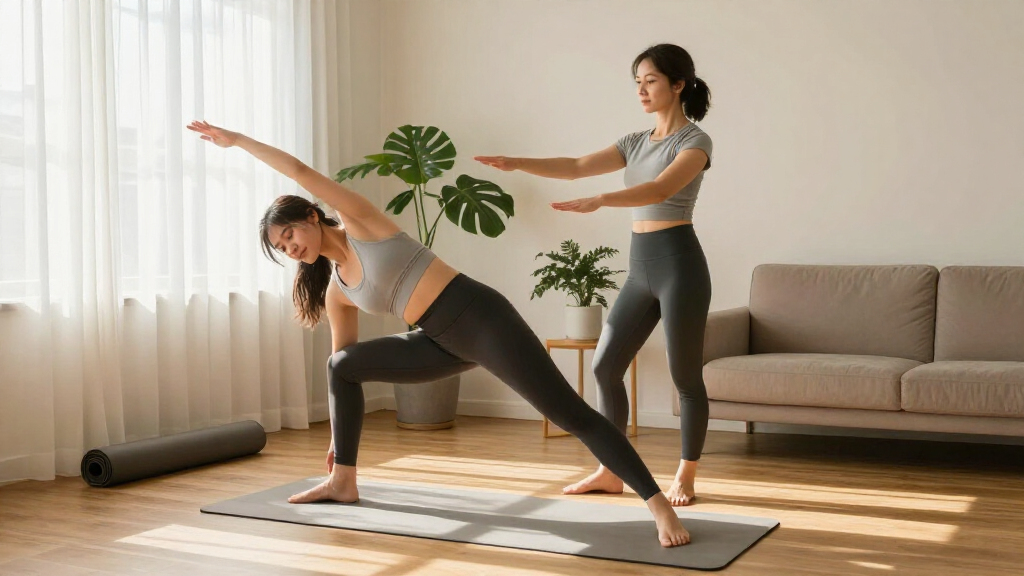
Physiotherapist and Pilates instructor Helen O’Leary shared four standing exercises for people who struggle with floor-based workouts. The moves target mobility, balance and core stability, and can be done with support from a chair or counter.
Physiotherapist Helen O’Leary, clinical director at Complete Pilates, has outlined four standing Pilates exercises for people who struggle to exercise on the floor. In a Fit&Well report, she said upright moves can challenge balance and core strength while offering an alternative to mat-based routines.
O’Leary’s selection includes the standing book opener, scooter, marching and standing hip abduction. The book opener involves rotating the rib cage and head from side to side while standing, with the pelvis facing forward to increase the turning challenge. Fit&Well lists three sets of four to five repetitions per side.
For the scooter, the person leans forward from the hips, shifts weight to one leg and slides the other foot backward and forward with its toes on the floor. The report suggests three rounds of 10 to 15 repetitions per side. A sock or towel beneath the moving foot can help it slide on a wooden floor, according to the instructions.
The marching move alternates lifting each leg while standing on the other, while hip abduction involves raising a straight leg out to the side. Fit&Well gives three rounds of 10 to 15 marches per side and up to 10 abductions per side. Both exercises can be done near a chair, table or counter for support; the report advises lowering the leg if balance begins to falter.
An Upright Option for Pilates
The exercises give readers who find getting down to and up from the floor difficult a way to try movements associated with Pilates without relying on a mat. They may also suit people seeking a short routine that can be performed near a stable surface, though the report does not describe them as a substitute for individualized exercise or rehabilitation advice.
O’Leary says standing work can challenge the body differently from floor-based exercises, particularly through balance and upright posture. Those are her explanations of the routine’s potential demands, not findings from a study presented in the Fit&Well report. The article provides suggested repetitions, but does not report measured outcomes or evidence that the exercises treat pain or a medical condition.
Readers should adapt the movements to their own ability. A nearby support can reduce the risk of losing balance, and anyone with an injury, health condition or concern about exercise can seek guidance from a qualified health professional before starting.
Products Worth Considering

Fitbit Sense Advanced Smartwatch – Sage Grey/Silver (One Size, S & L Bands Included)

Oura Ring 4 Smart Ring – Silver – Size 8

Garmin Forerunner 55 GPS Running Smartwatch, Black
As an affiliate, we earn on qualifying purchases.
From Mat Work to Standing Moves
Pilates is commonly associated with mat exercises and reformer equipment, but the Fit&Well report presents standing movements as another way to approach the practice. Its focus is specifically on people who have difficulty exercising on the floor, rather than a claim that standing Pilates is better for everyone.
The four exercises use body weight and, for the scooter, a sliding foot. No specialist equipment is listed. The instructions emphasize controlled movement, repeating each exercise on both sides, and using a stable surface when needed. O’Leary’s advice about keeping the pelvis forward during the book opener and the report’s suggestions for the other moves are practical cues, not a personalized assessment of each reader’s technique.
““Standing Pilates exercises might sound as though they’re easy, but they test you in many ways that floor-based moves won’t.””
— Helen O’Leary, physiotherapist and clinical director at Complete Pilates, as quoted by Fit&Well
What the Exercise Report Leaves Open
The Fit&Well report does not include a publication date, research data or a comparison of results between standing and floor-based Pilates. It also does not say how the exercises affect people with particular injuries or health conditions, or provide individualized modifications beyond using support and limiting the leg lift when balance becomes difficult.
The suggested sets and repetitions are presented as workout instructions, not as a plan tailored to each reader. How far someone can rotate or lift a leg will vary; the report says the hip-abduction range may improve with practice but does not give a timeframe or quantify expected change.
How Readers Can Try the Routine
The source offers a four-move sequence readers can try at home, but does not announce a follow-up program, new research or further guidance from O’Leary. Anyone choosing to follow it can start within a comfortable range, keep a stable chair or counter nearby for balance, and stop if a movement causes pain or feels unsafe.
Readers with health concerns or limitations can ask a physiotherapist or other qualified health professional whether these movements are suitable and how to adapt them. The available report does not provide individual screening or instruction.
Key Questions
Which standing Pilates moves does Helen O’Leary recommend?
O’Leary recommends the standing book opener, scooter, marching and standing hip abduction, according to Fit&Well.
Can the exercises be done with support?
Yes. The report suggests using a table, chair or high counter for support during moves that challenge balance. Choose a stable surface and keep it within easy reach.
What are the suggested repetitions?
Fit&Well lists three sets of four to five book openers per side, three rounds of 10 to 15 scooter repetitions per side, three rounds of 10 to 15 marches per side, and up to 10 hip abductions per side.
Do these moves have proven health benefits?
The report presents them as exercises intended to work on mobility, balance and core stability, and quotes O’Leary on the demands of standing work. It does not provide research results or evidence that the routine treats a health condition.
Who should check with a professional before trying them?
People with an injury, health condition or uncertainty about safe movement can ask a qualified health professional for advice before starting. The article does not offer individualized medical or exercise guidance.
Source: fitandwell.com