
TL;DR

Get wellness gear delivered free — and shop member deals
- Fast, free delivery on millions of items
- Access to Prime Big Deal Days deals on October 6–7
- Prime Video, Amazon Music and more included
Fit&Well published a 15-minute mobility routine from David Lloyd Clubs trainer Maxwell Thompson for people who spend long hours at a desk. It includes six movements performed as a circuit, but the source does not provide research showing that the routine reduces pain or improves posture.
Fit&Well has published a 15-minute mobility routine from Maxwell Thompson, a trainer at David Lloyd Clubs, for people who spend long stretches at a desk or screen. The six-move circuit is intended to move the back, shoulders, chest and hips through positions that desk work may leave underused; its promised effects on stiffness, lower-back tightness and posture are not established by evidence in the report.
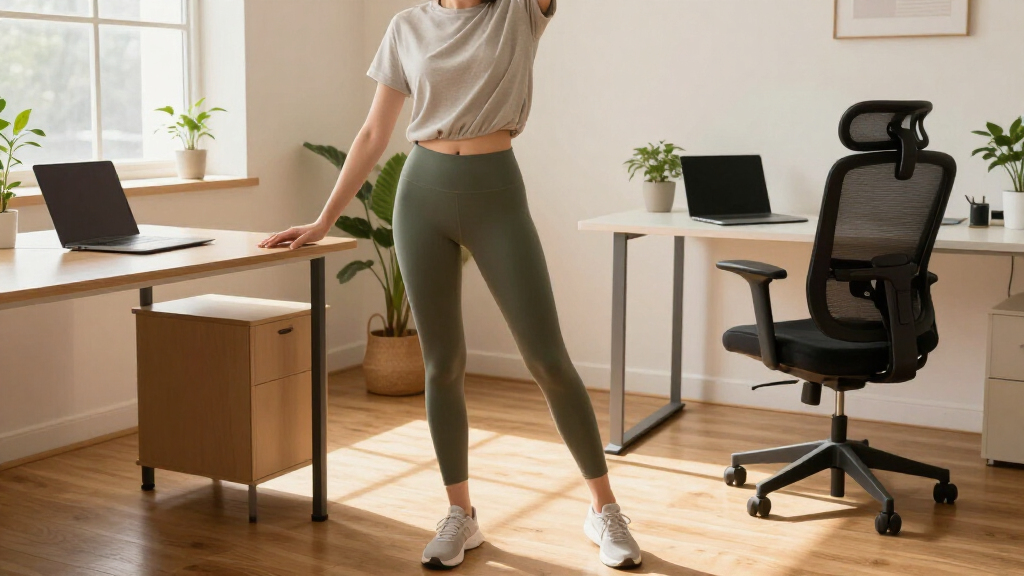
Thompson recommends the routine for people who spend six or more hours a day at a desk or screen, and suggests fitting it into a lunch break or doing it when the body feels stiff. The workout uses six exercises: cat-cow, thread the needle, band pull-aparts, wall slides, a half-kneeling hip-flexor stretch and a standing chest opener. A long-loop resistance band is listed for the pull-aparts; a towel can be used as an alternative to create tension.
The instructions call for completing the exercises in order for three or four rounds. They specify 10 cat-cows, eight thread-the-needle repetitions per side, 15 band pull-aparts and 10 wall slides. The hip-flexor stretch lasts 30 seconds per side, while the chest opener lasts 30 seconds. The routine lists 30 seconds of rest after each exercise. The report does not give a separate calculation explaining how those prescriptions add up to 15 minutes.
For the movements, the report advises working at a comfortable range and controlling the motion. Its cues include keeping the lower back against the wall during wall slides and avoiding an arched lower back in the hip-flexor stretch and chest opener. Thompson also recommends moving slowly and coordinating movement with breathing. These are the trainer’s instructions, not a finding that the routine prevents or treats a condition.
A Short Break From Desk Postures
The routine offers desk workers a structured way to take a movement break without needing a full gym session. Its exercises target several areas named in the report as commonly affected by desk posture, including the upper back, chest and hip flexors. A band or towel is needed for one move, while the remaining exercises use body weight and a wall.
That practical appeal should be kept separate from claims about results. Fit&Well frames the workout as a way to counter desk-related stiffness and support posture, but the supplied report gives no trial results, measurements or medical assessment showing that this particular sequence eases lower-back tightness or changes posture. Readers should treat it as a general mobility routine rather than a proven remedy.
As an affiliate, we earn on qualifying purchases.
The Routine and Its Trainer
The Fit&Well report places the workout alongside other ways to break up long periods of sitting, including using a standing desk, taking regular breaks and strengthening areas that may be vulnerable. It presents mobility as an additional option, rather than saying the six movements replace those practices.
Thompson is identified as a CIMSPA-certified personal trainer, an FRC-certified mobility specialist and a David Lloyd Academy Trainer. The report says he qualified in 2018 and works in mobility, strength and conditioning, and stress resilience. Those credentials identify the source of the routine; they do not by themselves establish its effectiveness for every reader.
“It’s ideal for anyone who spends six-plus hours a day at their desk or screen.”
— Maxwell Thompson, trainer at David Lloyd Clubs, speaking to Fit&Well
desk stretching exercise equipment
As an affiliate, we earn on qualifying purchases.
As an affiliate, we earn on qualifying purchases.
Evidence and Individual Suitability
The source material does not cite research testing this sequence or quantify any change in stiffness, lower-back tightness or posture. It also does not say whether the workout has been assessed across different health conditions, mobility levels or workplace settings. Thompson’s description of the routine as suitable for beginners is an attributed recommendation, not a guarantee that every movement is appropriate for everyone.
Readers with pain, a recent injury or a health condition may need individualized guidance before trying the movements. The report does not offer specific modifications for those circumstances, and it does not explain how to adjust the circuit if a movement causes discomfort.
As an affiliate, we earn on qualifying purchases.
How Readers Can Try It
The published instructions give readers a sequence to follow: perform the six moves in order, rest for 30 seconds between exercises and complete three or four rounds. Thompson suggests using a lunch break or another point in the day when stiffness sets in. Readers can use a towel instead of a long-loop band for the pull-apart, following the report’s suggestion to create tension safely and controllably.
The report provides no follow-up results or announced evaluation of the workout. Anyone trying it should keep movements comfortable and stop if they cause pain; people with an existing injury or condition should seek advice from a qualified health professional. Whether the routine delivers the stated benefits remains unverified in the material provided.
As an affiliate, we earn on qualifying purchases.
Key Questions
What exercises are in the 15-minute routine?
It includes cat-cow, thread the needle, band pull-aparts, wall slides, a half-kneeling hip-flexor stretch and a standing chest opener.
How many rounds does the workout call for?
The report says to do the exercises in order as a circuit for three or four rounds, with 30 seconds of rest after each exercise.
Do I need a resistance band?
A long-loop band is listed for the pull-aparts. Fit&Well says a towel can be used instead to create tension in the upper back.
Is the routine proven to ease back tightness or improve posture?
The report describes those as intended benefits, but supplies no research or outcome data demonstrating that this specific routine achieves them.
Who should get advice before trying the movements?
People with an existing injury, ongoing pain or a health condition should consider advice from a qualified health professional before starting. Stop if an exercise causes pain.
Source: rss
Fall Picks
fall essentials
As an affiliate, we earn on qualifying purchases.