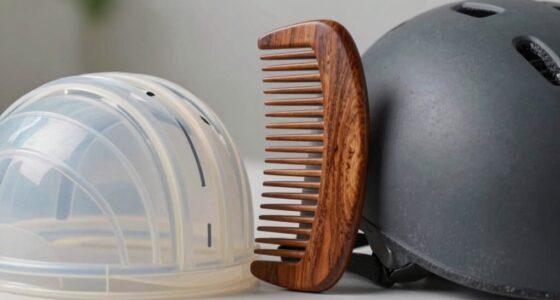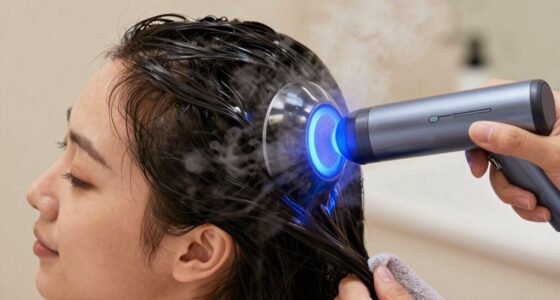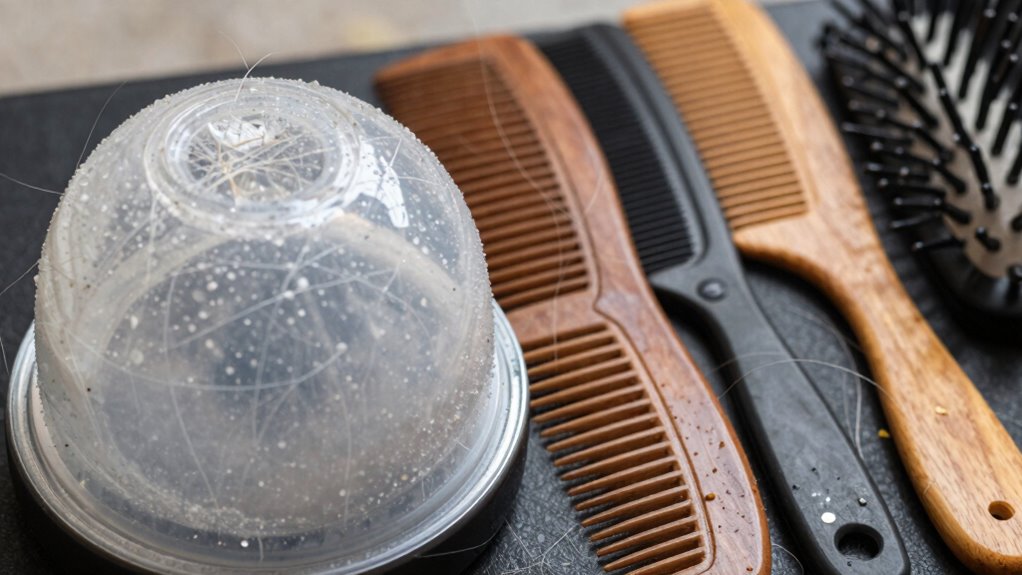

To clean your hair growth caps, combs, and brushes, start by removing hair strands with your fingers or a small tool. Soak them in warm water mixed with mild shampoo, white vinegar, or baking soda for 10-15 minutes. Use an old toothbrush to scrub away buildup, especially near the base and between teeth. Rinse thoroughly and let your tools air dry completely. Keeping these tools clean supports scalp health and extends their lifespan; discover more tips to keep them in top condition.

Get wellness gear delivered free with Prime
- Fast, free delivery on millions of items
- Prime Video, Amazon Music and more included
- Member-only deals all year
Key Takeaways
- Remove hair strands and debris from caps, combs, and brushes before cleaning.
- Soak tools in warm water mixed with mild shampoo, white vinegar, or baking soda for 10-15 minutes.
- Use a small brush or toothbrush to scrub bristles, teeth, and fabric parts thoroughly.
- Rinse all parts with warm water to eliminate residue and dirt.
- Shake off excess water and air dry tools completely on a towel.
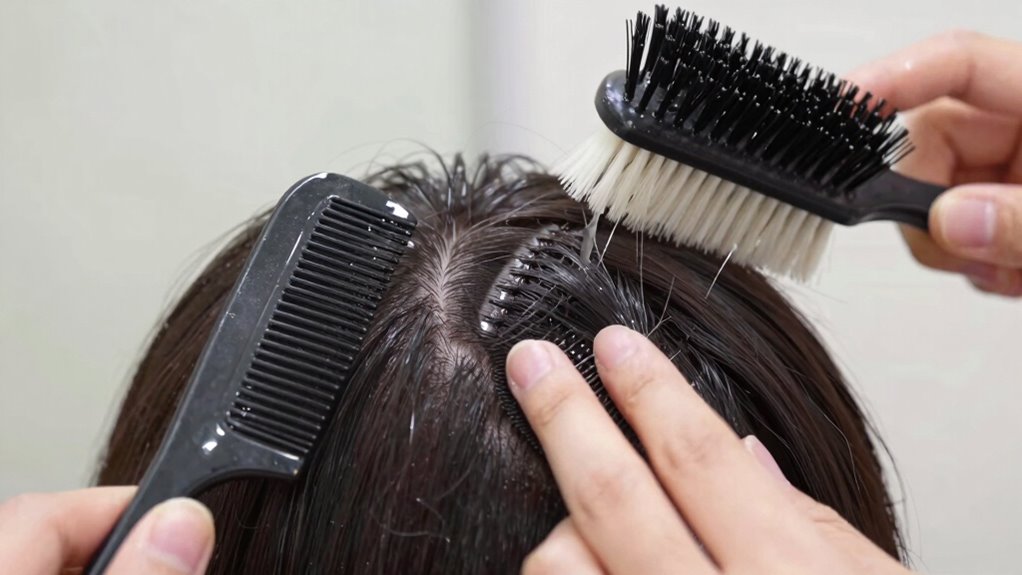
Regularly cleaning your hair growth caps, combs, and brushes is essential to maintain scalp health and prevent buildup of dirt, oil, and bacteria. When you neglect cleaning these tools, they can harbor product residue, dead skin cells, and bacteria that not only compromise scalp health but also hinder hair growth. Product buildup from styling products, conditioners, or oils can accumulate on your tools, making them less effective and potentially transferring unwanted grime back onto your scalp. Keeping your tools clean ensures they work efficiently, reducing the risk of clogged hair follicles and irritation.
Regular cleaning of hair tools prevents buildup and promotes healthy scalp and hair growth.
To get started, remove any hair strands from your combs and brushes first. Use your fingers or a small tool to dislodge hair stuck between the bristles or teeth. Once free, prepare a cleaning solution—warm water mixed with a mild shampoo or gentle soap is usually sufficient. For deeper cleaning, you can add a bit of white vinegar or baking soda to the mix, as these help break down product buildup and disinfect. Submerge your brushes and combs in the solution, ensuring all parts are covered. Let them soak for about 10-15 minutes. This step loosens dirt, oils, and residue, making removal easier.
After soaking, use an old toothbrush or a small brush to scrub the bristles and teeth gently. Focus on areas where buildup is most evident, such as close to the base of the bristles or between the teeth. Rinse thoroughly with warm water to wash away loosened grime. For hair growth caps, follow the same soaking and scrubbing process, paying attention to any fabric or elastic parts that can trap debris. If your caps are machine washable, check the manufacturer’s instructions, then wash them on a gentle cycle with mild detergent. Regular cleaning prevents bacterial buildup and prolongs the life of your tools, ensuring they remain safe and effective to use. Incorporating proper cleaning techniques can significantly improve your scalp’s health and reduce the risk of irritation caused by bacteria. Additionally, using appropriate cleaning agents helps ensure that no harmful residues remain on your tools after cleaning.
Once cleaned, shake excess water from your tools and lay them flat on a towel to air dry completely. Avoid using heat sources like a hairdryer, as high temperatures can damage plastic or rubber parts. Regular cleaning—at least once a week—keeps your scalp free from bacteria and product buildup, ensuring healthy hair growth and a clean scalp environment. Proper cleaning also helps remove bacteria and buildup, which is vital for maintaining a healthy scalp. Maintaining your tools in this way not only prolongs their lifespan but also supports overall scalp health, helping you achieve the best possible results from your hair care routine.
Products Worth Considering

Oral-B iO Series 7 Rechargeable Electric Toothbrush with 2 Brush Heads and Charging Travel Case

Philips Sonicare DiamondClean 9500 Electric Toothbrush with 3 Brush Heads – Black

Oral-B iO5 Rechargeable Electric Toothbrush with 3 Brush Heads and Travel Case, Black
As an affiliate, we earn on qualifying purchases.
Frequently Asked Questions
How Often Should I Clean My Hair Growth Caps?
You should clean your hair growth caps at least once a week to maintain proper hygiene and optimize your hair care routines. Regular DIY cleaning prevents buildup of oils and debris, ensuring the caps stay effective. Incorporate this step into your hair care routine to keep your scalp healthy and your hair growth caps functioning properly. Consistent cleaning not only prolongs the lifespan of your caps but also promotes better overall hair health.
Can I Use Vinegar to Disinfect Combs and Brushes?
Sure, vinegar sterilization is a natural disinfectant, but don’t expect it to turn your comb into a surgical tool overnight. Vinegar helps kill germs and bacteria, making it a handy, eco-friendly option for cleaning your brushes and combs. Just soak them in a mixture of vinegar and water for a few minutes, then rinse thoroughly. It’s a simple, cost-effective way to keep your grooming tools fresh and bacteria-free.
Are There Specific Cleaning Products for Hair Growth Caps?
Yes, there are specific cleaning products for hair growth caps, especially designed for different hair cap materials like silicone or fabric. You should follow cleaning frequency tips, such as washing your cap weekly or after every use, to prevent buildup. Use gentle cleansers or disinfectants suitable for the material, and avoid harsh chemicals. Regular cleaning guarantees your cap stays hygienic, prolongs its lifespan, and maintains its effectiveness.
How Do I Remove Hair Residue From Brushes Effectively?
Think of your brush as a garden in need of weeding. To remove hair residue effectively, use your fingers or a comb to loosen trapped hair. Then, dip a cleaning tool like an old toothbrush into warm, soapy water and scrub the bristles thoroughly. This Hair residue removal process helps keep your brushes clean and functional, ensuring your hair stays healthy and your styling tools last longer.
Is It Safe to Submerge Hair Growth Caps in Water?
It’s not safe to fully submerge hair growth caps in water because of potential water damage and material compatibility issues. Water can weaken or damage the cap’s materials, especially if they’re sensitive to moisture. Instead, spot clean with a damp cloth or use mild cleaning solutions suitable for the material. Always check manufacturer instructions to guarantee you don’t compromise your cap’s integrity or effectiveness.
Conclusion
By regularly cleaning your hair growth caps, combs, and brushes, you’re not just removing dirt—they’re like tiny gardens where healthy hair can flourish. Imagine each brush stroke as a gentle breeze clearing away debris from delicate leaves, making space for new growth to thrive. Keep these tools spotless, and you’ll nurture a cleaner scalp and brighter hair, turning everyday routines into acts of self-care that nourish both your hair and your confidence.