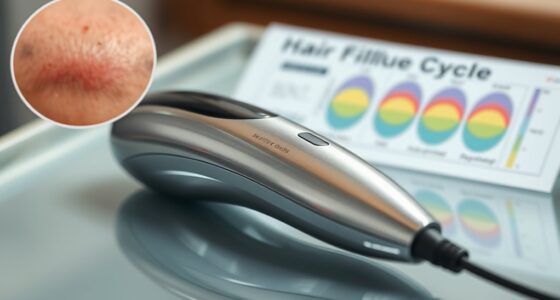
Laser hair therapy uses low-level laser light to stimulate hair follicles naturally, promoting gradual, long-term growth without medications. In contrast, topical minoxidil is a quick-acting solution applied directly to the scalp that can show faster results but requires ongoing use to maintain gains. Both methods work differently and suit different preferences—if you’re curious about which might fit your needs best, there’s more to explore below.

Get wellness gear delivered free — and shop member deals
- Fast, free delivery on millions of items
- Access to Prime Big Deal Days deals on October 6–7
- Prime Video, Amazon Music and more included
Key Takeaways
- Laser therapy stimulates hair follicles with low-level laser light for gradual, natural hair growth, while minoxidil enhances blood flow to promote quicker results.
- Laser treatments are non-invasive and drug-free, offering long-term benefits; minoxidil provides faster visible effects but requires ongoing application.
- Laser therapy typically involves multiple sessions over months with gradual improvements; minoxidil usually shows results within a few months with consistent use.
- Laser therapy suits those seeking a non-drug, natural approach with minimal side effects; minoxidil is ideal for quick, proven results but may cause scalp irritation.
- Effectiveness of both methods depends on individual factors like severity of hair loss and adherence to treatment routines.
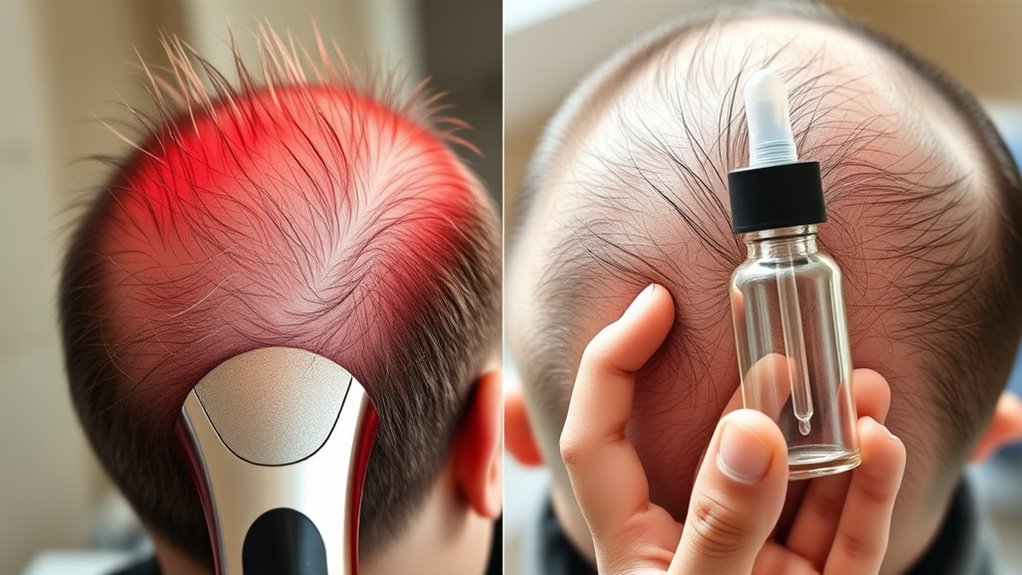
When it comes to combating hair loss, you have two popular options: laser hair therapy and topical minoxidil. Both aim to stimulate hair growth, but they approach the problem differently and vary in treatment effectiveness. Laser hair therapy uses low-level laser light to energize hair follicles, encouraging them to produce thicker, healthier hair. You might notice that this method promotes a gradual improvement in hair density over time, especially when used consistently. It’s considered a non-invasive, painless option that fits easily into your routine, and many users report visible results after several months. However, the treatment effectiveness can depend on factors like the severity of hair loss and adherence to scheduled sessions. It’s not a quick fix, but for some, it offers a natural way to stimulate hair growth without drugs or surgery.
On the other hand, topical minoxidil is a medication you apply directly to your scalp, usually twice daily. It’s FDA-approved and has a long history of helping people with androgenetic alopecia, or pattern baldness. Minoxidil works by increasing blood flow to hair follicles and prolonging the growth phase of hair cycles. You might see signs of new hair growth within a few months, but consistent application is essential to maintain those gains. It’s generally considered effective for many users, especially in the early stages of hair loss, but treatment effectiveness can vary widely. Some people experience significant improvement, while others see only minimal results or face side effects like scalp irritation. Because of its topical nature, it’s easy to use, but you need to stay committed to the daily routine for the best outcome.
While laser therapy’s main advantage lies in its non-invasive approach and potential for long-term benefits without medication, it often requires multiple sessions and a longer timeline to see results. Minoxidil, conversely, offers quick-to-start results and can be easily incorporated into your daily routine, but stopping treatment usually leads to the return of hair loss. Both methods show promise, but their effectiveness depends on your individual condition, consistency, and expectations. If you’re seeking a natural, non-drug approach with gradual results, laser therapy might be appealing. If you prefer a proven, straightforward treatment that can produce faster visible changes, topical minoxidil could be the better choice. Ultimately, understanding how each option affects hair growth and treatment effectiveness helps you make an informed decision tailored to your needs.
As an affiliate, we earn on qualifying purchases.
Frequently Asked Questions
Are There Any Side Effects Unique to Laser Hair Therapy?
Laser hair therapy generally has minimal side effects, but you might experience scalp irritation or redness temporarily. Unlike topical minoxidil, it doesn’t usually cause eye sensitivity, since the treatment targets the scalp directly. However, if your eyes are exposed to the laser light, there’s a slight risk of eye sensitivity or discomfort. Always wear protective eyewear and follow your provider’s instructions to minimize any risks.
How Long Does It Typically Take to See Results With Each Method?
You’ll usually see results within 4 to 6 months for laser hair therapy, with noticeable improvement as your treatment duration progresses. For topical minoxidil, expect initial signs of hair growth around 2 to 4 months, but full results often take up to a year. Patience is key, as both methods have different result timelines, and consistent use enhances your chances of success.
Can These Treatments Be Combined for Better Outcomes?
Think of combining treatments like a symphony, where each instrument boosts the harmony. Yes, you can blend Laser Hair Therapy with topical Minoxidil for better outcomes. This combination strategy creates treatment synergy, potentially accelerating hair growth and improving results. Always consult your healthcare provider to tailor a plan that safely maximizes benefits, ensuring the treatments complement each other without adverse effects.
Are There Age or Gender Restrictions for Either Treatment?
You should know that both treatments have demographic limitations; age and gender restrictions may apply. Generally, younger individuals and men are more likely to be eligible for Laser Hair Therapy, while topical Minoxidil is often suitable for adults of all genders. However, your eligibility depends on specific criteria, so consult your healthcare professional to determine if you meet the age and gender requirements for each treatment.
What Are the Long-Term Effects of Using Minoxidil Versus Laser Therapy?
You might notice that long-term minoxidil use can cause hormonal impact and metabolic changes, potentially leading to skin irritation or unwanted hair growth. Laser therapy typically has fewer long-term effects, with minimal hormonal influence. However, individual responses vary, so it’s wise to consult your doctor about the hormonal impact and metabolic changes associated with each treatment, especially if you plan to use them long-term.
Minoxidil topical solution for hair growth
As an affiliate, we earn on qualifying purchases.
As an affiliate, we earn on qualifying purchases.
Conclusion
Choosing between laser hair therapy and topical minoxidil is like picking your path through a forest—you can take the clear, well-trodden trail or explore a new, promising route. I once met someone who tried both and found their confidence bloomed like spring after finally finding what worked. Remember, your journey to hair regrowth is personal, and with patience, one of these options could be your breakthrough. Trust your instincts and take that first step today.
Low-level laser hair growth helmet
As an affiliate, we earn on qualifying purchases.
As an affiliate, we earn on qualifying purchases.
FDA approved minoxidil for hair loss
As an affiliate, we earn on qualifying purchases.
As an affiliate, we earn on qualifying purchases.
Fall Picks
fall essentials
As an affiliate, we earn on qualifying purchases.