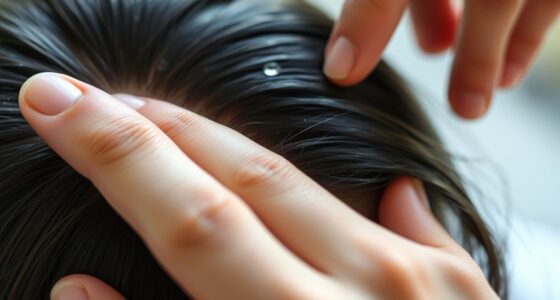
Treating your scalp like skin means focusing on its health by balancing microbiomes, staying hydrated, and nourishing it with gentle, effective ingredients. You should cleanse without stripping natural oils, restore microbial harmony, and keep your scalp’s environment clean and healthy. Supporting scalp health not only boosts hair growth but also improves strength and shine over time. To discover more about how this holistic approach works, continue exploring how scalp care can transform your hair.
Key Takeaways
- Hair skinification emphasizes treating the scalp with skincare principles to maintain its health and support hair growth.
- A balanced scalp microbiome prevents irritation, inflammation, and promotes optimal conditions for healthy hair follicles.
- Proper scalp care involves gentle cleansing, hydration, and nourishing ingredients to strengthen hair from the root.
- Addressing scalp health holistically improves both immediate appearance and long-term hair resilience.
- Recognizing regulatory standards ensures the use of effective, safe products that support scalp skinification.

Hair skinification is a pioneering concept that explores how the scalp’s health influences hair quality and overall appearance. Think of your scalp as skin — it needs proper care, nourishment, and attention just like the skin on your face or body. When you understand this, you realize that maintaining a healthy scalp isn’t just about preventing dandruff or itchiness; it’s about supporting the foundation that directly impacts your hair’s strength, shine, and growth.
Treat your scalp like skin—nourish, care for, and support its health for stronger, shinier hair.
A key aspect of skinification is understanding the scalp microbiome — the tiny community of microorganisms living on your scalp. Just like on your skin, a balanced microbiome promotes a healthy environment, preventing harmful bacteria or fungi from taking over. When this balance is disrupted, it can lead to issues like inflammation, irritation, or even hair loss. That’s why products that support your scalp microbiome, such as gentle cleansers or probiotics, are gaining popularity. They help restore harmony, reduce inflammation, and promote a thriving environment for your hair follicles.
Speaking of hair follicles, their health is central to the skinification approach. These tiny structures are where your hair begins, and their well-being determines hair strength and density. When your scalp is healthy, with a balanced microbiome and good blood circulation, your hair follicles receive the nutrients and oxygen they need. This fosters robust hair growth and minimizes thinning. On the flip side, neglecting scalp health can lead to clogged follicles, inflammation, and weakened hair roots, making your hair more prone to breakage or shedding.
Treating your scalp like skin means adopting a routine that emphasizes gentle cleansing, hydration, and targeted nourishment. Use products formulated to respect the scalp’s delicate balance. Avoid harsh shampoos that strip away natural oils and disrupt the microbiome. Instead, look for ingredients that soothe, hydrate, and support follicle health, such as niacinamide, biotin, or plant extracts. Regular scalp massages can also stimulate blood flow, delivering essential nutrients to hair follicles and promoting overall scalp health.
Understanding that your scalp’s health affects your hair’s appearance empowers you to take a more holistic approach. Instead of just focusing on hair remedies, you address underlying scalp conditions. By nurturing your scalp like skin, you improve not only how your hair looks today but also its long-term health. This modern perspective transforms hair care from superficial treatments to a thorough strategy that treats the root causes, ensuring that your hair remains strong, vibrant, and resilient.
Additionally, being aware of the regulatory frameworks surrounding scalp and hair product claims can help consumers make informed choices and select products that truly benefit scalp health.
Frequently Asked Questions
How Does Scalp Skin Differ From Facial Skin?
Your scalp skin differs from facial skin mainly in its thicker, oilier nature and unique hair follicle structure. It has a different pH level, which impacts scalp health and hair growth. Maintaining the right scalp pH is essential, as it helps prevent issues like dandruff and irritation. By understanding these differences, you can better care for your scalp, promoting healthy hair follicles and overall scalp health.
Can Skinification Improve Scalp Health Long-Term?
Ever wonder if skinification can truly enhance your scalp’s health long-term? It definitely can, by supporting your scalp microbiome and promoting healthier hair follicles. When you treat your scalp like skin, you boost its resilience, reduce issues like dryness or irritation, and foster a balanced environment. This approach helps maintain your scalp’s health over time, leading to stronger, shinier hair and a more comfortable scalp.
What Ingredients Are Best for Scalp Skinification?
You’ll want ingredients that boost scalp hydration and nourish follicles. Look for hyaluronic acid for deep moisture, which keeps your scalp hydrated and healthy. Incorporate nourishing oils like jojoba or argan to soothe and support follicle health. Vitamins such as biotin and niacin help strengthen hair and improve scalp circulation. These ingredients work together to promote a balanced scalp, encouraging long-term hair growth and overall scalp wellness.
How Often Should I Treat My Scalp Like Skin?
Think of your scalp as a delicate garden that needs regular care. You should treat your scalp like skin at least twice a week to maintain its pH balance and support scalp barrier repair. Overdoing it can cause imbalance, so listen to your scalp’s signals. Regular gentle treatments keep your scalp healthy, preventing issues and promoting vibrant hair growth. Consistency is key—nurture it, and it will thrive.
Are There Risks to Over-Dermatologizing the Scalp?
Yes, over-dermatologizing your scalp can increase risks like scalp sensitivity, irritation, or even damage. When you treat your scalp too often with harsh products or excessive exfoliation, you disrupt the natural balance and compromise the skin’s barrier. It’s important to find a balance, listen to your scalp’s signals, and avoid over treatment risks that could lead to inflammation or sensitivity. Proper care helps maintain a healthy, resilient scalp.
Conclusion
So, don’t let the idea of treating your scalp like skin intimidate you. Embracing this approach means you’re caring for your scalp’s health, just like your skin, leading to stronger, healthier hair. It’s a simple shift in your routine that can make a big difference. Remember, consistency is key, and with the right products and care, you’ll see real results. Trust the science—your scalp (and hair) will thank you!