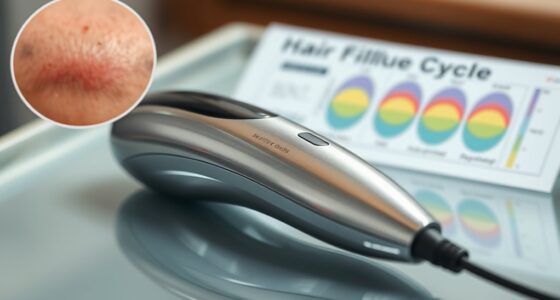
DHT is a powerful hormone that influences male development but can cause hair loss when levels are too high. It works by shrinking hair follicles and making hair finer, especially with genetic sensitivity. Some devices, like laser combs and low-level laser therapy, can help counteract DHT’s effects by stimulating blood flow and supporting follicle health. Keep exploring to discover ways to manage DHT and protect your hair effectively.
Key Takeaways
- DHT is a potent androgen derived from testosterone, essential for male development but linked to hair loss when elevated.
- 5-alpha-reductase enzyme converts testosterone into DHT; inhibitors can reduce DHT levels.
- Devices like laser combs and laser caps stimulate hair follicles, improve blood flow, and may counteract DHT-induced hair miniaturization.
- Combining topical treatments, medications, and devices enhances overall effectiveness in managing DHT-related hair loss.
- Maintaining hormonal balance through lifestyle and targeted therapies supports hair health and reduces DHT’s negative effects.
Have you ever wondered what causes hair loss or changes in your body during puberty? These shifts are often linked to hormone regulation, especially involving a hormone called dihydrotestosterone, or DHT. DHT is a potent androgen derived from testosterone, and it plays a vital role in male development. However, when DHT levels become imbalanced or overly active, it can lead to hair loss and other physical changes. Understanding how DHT works helps you grasp why some men experience thinning hair and what options are available to counteract these effects.
During puberty, your body ramps up hormone production, including testosterone. As this hormone circulates, an enzyme called 5-alpha-reductase converts a portion of it into DHT. For most people, this process is well-regulated, supporting healthy development. But in some cases, DHT levels become excessively high, especially in individuals genetically predisposed to hair loss. Elevated DHT binds to receptors in hair follicles, causing them to shrink—a process known as follicular miniaturization. As follicles shrink, hair growth slows, and hair becomes finer until it eventually stops growing altogether. This is the main reason behind male pattern baldness, which is directly linked to DHT’s influence.
Your body’s hormone regulation system is designed to keep DHT levels in check, but various factors can disrupt this balance. Genetics play a significant role, making some people more sensitive to DHT’s effects. Lifestyle, diet, and overall health can also impact hormone levels and regulation. When DHT becomes dominant, it not only affects hair but can also contribute to other symptoms like increased oil production, acne, and even prostate enlargement. Recognizing these signs can help you take proactive steps to manage DHT’s impact on your body.
Fortunately, there are devices and treatments designed to counteract DHT’s effects. Some therapies aim to inhibit the 5-alpha-reductase enzyme, reducing the conversion of testosterone into DHT. Topical solutions, oral medications, and specialized devices like laser combs are available options. Laser devices, for instance, stimulate hair follicles, promoting blood flow and encouraging healthier hair growth even in the presence of DHT. These tools work alongside other treatments, such as DHT-blocking shampoos or medications like finasteride, to help restore hormone balance and prevent further hair loss. Incorporating proper toilet maintenance and ensuring a healthy lifestyle can also support overall hormonal health and treatment success.
Frequently Asked Questions
Can DHT Levels Be Influenced by Diet?
Yes, your DHT levels can be influenced by your diet. A DHT diet, rich in certain DHT foods, can either boost or reduce DHT production. For example, foods high in zinc and saw palmetto may help lower DHT levels, while those with lots of saturated fats could increase it. By choosing your DHT foods wisely, you can potentially manage your DHT levels more effectively.
Are There Natural Remedies to Reduce DHT?
Yes, you can try natural remedies to reduce DHT. Natural supplements like saw palmetto, pumpkin seed oil, and pygeum may help inhibit DHT production. Herbal teas such as green tea and nettle tea are also beneficial, thanks to their antioxidant properties. You should incorporate these options into your routine, stay consistent, and consult a healthcare professional to guarantee safety and effectiveness in managing DHT levels naturally.
How Long Does It Take to See Results From DHT Treatments?
You can typically expect to see results from DHT treatments within 3 to 6 months, depending on the treatment type and consistency. Timing expectations vary, but patience is key. Most treatments need regular use over the treatment duration to be effective. If you stay consistent and follow your plan, you should notice improvements gradually, though individual results may differ.
Is DHT Linked to Other Health Conditions Besides Hair Loss?
Yes, DHT is linked to other health conditions beyond hair loss. You might experience hormonal imbalance, which can affect mood, energy, and overall well-being. Additionally, elevated DHT levels are associated with skin conditions like acne and oily skin. If you notice these symptoms, it is crucial to consult a healthcare professional to evaluate your hormone levels and discuss potential treatment options to restore balance and improve your health.
Do Age and Genetics Affect DHT Production?
Yes, age and genetics influence DHT production. Your genetic predisposition can determine how much DHT your body produces, affecting hair loss and other health conditions. As you age, age-related changes naturally lead to increased DHT levels in some cases, especially in men. This means that both your genetics and aging process play vital roles in DHT regulation, which can impact your overall health and hair growth patterns.
Conclusion
You might wonder if blocking DHT truly helps with hair loss, and research shows it can be effective for many. While some believe DHT is the sole cause, others argue genetics and lifestyle play roles too. So, while devices and treatments targeting DHT can offer benefits, they aren’t foolproof. Stay informed and consult a professional to understand what’s best for your unique situation—because tackling hair loss often requires a combination of approaches.