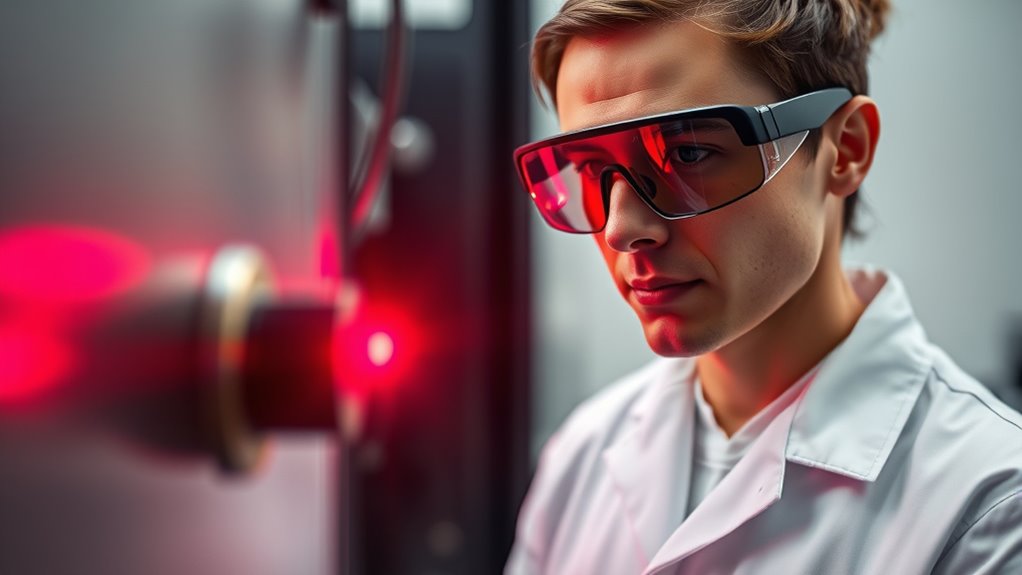

Protecting your eyes from laser hazards is essential because even brief exposure to powerful laser beams can cause permanent, irreversible damage. Laser light can focus quickly and damage your eyesight in a fraction of a second. Wearing proper eye protection designed for the specific laser type can markedly reduce this risk. Understanding laser safety protocols helps keep your vision safe during any activity involving lasers. Keep exploring to learn how you can best protect your eyes from these dangers.
Key Takeaways
- Laser beams can cause instant, irreversible eye injuries, making protective eyewear essential.
- Proper eyewear designed for the laser’s wavelength reduces the risk of eye damage.
- Consistent use of safety glasses in laser environments significantly lowers injury chances.
- Understanding laser hazards and following safe procedures prevents accidental eye exposure.
- Protecting eyesight with appropriate safety measures is vital for long-term vision health.

Did you know that laser beams can cause serious eye injuries if not handled properly? Laser hazards are a real concern in many environments, from industrial workplaces to medical facilities and even entertainment venues. The danger lies in the intense concentration of light that lasers produce, which can damage your eyes in fractions of a second. Without proper precautions, exposure to even a brief laser beam can lead to permanent vision loss or other eye injuries. That’s why understanding laser safety is vital, especially when it comes to protecting your eyesight.
Laser beams can cause rapid, permanent eye injuries—protect your eyesight with proper safety measures.
One of the most effective ways to prevent laser-related eye injuries is to always wear protective eyewear designed specifically for the laser’s wavelength and power. Not all glasses provide the same level of protection, so it’s essential to choose the right type for the specific laser you’re working with. Protective eyewear acts as a barrier, absorbing or reflecting laser energy before it reaches your eyes. This simple yet important piece of safety equipment can make the difference between a safe working environment and a potentially tragic accident. When working with lasers, your awareness of laser hazards and your consistent use of protective eyewear are your best defenses.
Many people underestimate the risk, thinking that laser safety is only a concern for professionals in specialized fields. However, laser hazards exist in a variety of settings, including laboratories, manufacturing plants, and even some hobbyist environments. If you’re involved in any activity that involves laser equipment, you need to recognize the importance of proper eye protection. Wearing protective eyewear isn’t just about compliance; it’s about safeguarding your vision for the future. Accidents can happen in an instant, and once your eyes are damaged, the effects are often irreversible.
Moreover, understanding laser hazards extends beyond just wearing protective eyewear. It involves knowing the laser’s power, the distance you should maintain, and the safe operating procedures. Never look directly into a laser beam, and always ensure that the laser is properly enclosed or shielded when not in use. By following these safety practices and consistently using protective eyewear, you greatly reduce your risk of injury. Your eyes are invaluable, and taking proactive steps to protect them is a responsible choice. Remember, laser safety isn’t just about compliance; it’s about preserving your sight and preventing avoidable injuries. Stay alert, stay protected, and respect the power of laser technology.
Additionally, with the development of advanced AI safety measures, the risk of accidental laser exposure in automated or semi-automated environments can be further minimized.
Frequently Asked Questions
How Do I Choose the Right Laser Safety Glasses?
To choose the right laser safety glasses, start by checking the wavelength compatibility with your laser. Make sure the glasses block the specific wavelength you’re working with. Also, prioritize fit and comfort so you can wear them for extended periods without discomfort. Look for adjustable straps and a snug fit that stays secure. Properly selected glasses protect your eyes effectively while ensuring you stay comfortable during laser activities.
Are Laser Safety Glasses Necessary for All Laser Types?
Laser safety glasses are necessary for most laser types because laser wavelength determines eye risk, and protective filters are vital. While some low-power lasers pose minimal danger, high-powered or specific wavelength lasers can cause serious eye injuries. You should always assess your laser’s wavelength and power, and choose safety glasses with appropriate filters. Don’t assume all lasers are safe without proper eye protection—your vision depends on it.
Can Laser Exposure Cause Permanent Eye Damage?
Yes, laser exposure can cause permanent eye damage, including laser retinal damage that can lead to vision loss. To prevent this, you must follow eye safety protocols and always wear proper laser safety glasses when working with or around lasers. Even brief exposure can be harmful, so never underestimate the risks, and prioritize eye protection to keep your vision safe from irreversible harm.
What Are the Signs of Laser Eye Injury?
Sure, spotting laser eye injury is as easy as missing your favorite show. You might notice symptoms like blurred vision, eye pain, or seeing flashes of light. If you ignore hazard recognition and symptom awareness, you could end up with permanent damage. Keep an eye out—literally—for discomfort, redness, or unusual visual effects. Acting quickly can save your sight, so don’t brush off these signs as mere eye strain.
How Often Should Laser Safety Equipment Be Inspected?
You should inspect your laser safety equipment regularly, ideally following the manufacturer’s maintenance schedule and recommended inspection frequency. Typically, this means conducting visual checks before each use and more thorough inspections at set intervals, such as monthly or quarterly. Regular inspections ensure that filters, protective eyewear, and barriers remain in good condition, reducing the risk of laser injury. Staying attentive to inspection frequency and maintenance schedules keeps you safe during laser operations.
Conclusion
Remember, safeguarding your eyes is like shielding a precious lighthouse amid a storm—essential for guiding you safely through the chaotic waves of laser exposure. By wearing proper eye protection, you act as a vigilant guardian, preventing unseen dangers from piercing your vision’s fragile glass. Don’t let a moment of neglect turn into a silent, destructive shadow. Stay alert, stay protected, and keep your sight shining bright as a beacon in the darkness.